
Air Duct Cleaning vs. Sanitizing: What’s the Difference?
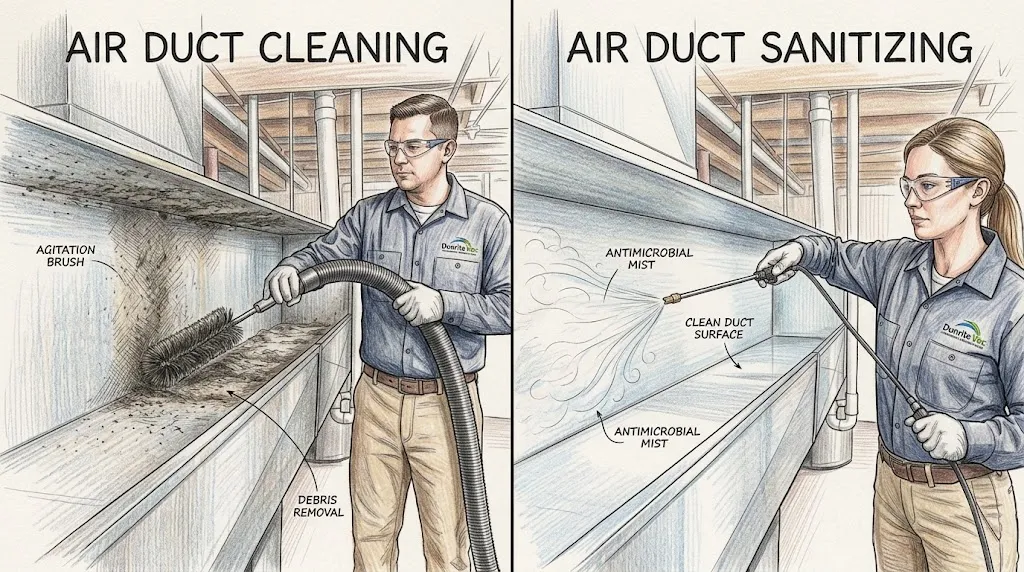
If you’ve been quoted for both “duct cleaning” and “duct sanitizing,” you may wonder why they are separate services. The short version is that they serve different purposes. Duct cleaning physically removes accumulated material from the HVAC system, while sanitizing refers to an additional treatment that may be considered in certain situations after cleaning.
Understanding the difference between air duct cleaning and sanitizing helps you ask the right questions before approving either service.
Quick Answer: Duct cleaning physically removes dust, debris, and other accumulated material using specialized equipment. Sanitizing is a separate treatment that may be considered after cleaning when there is a specific reason for its use. Any antimicrobial product used inside an HVAC system must be appropriate for the intended surfaces and application and used according to its current label instructions. Sanitizing is not a substitute for physical cleaning.
Air Duct Cleaning vs. Sanitizing: What a Lingering Odour Can Tell You
A musty or unusual odour can prompt homeowners to wonder whether the HVAC system needs additional treatment, especially if the smell remains after cleaning. But odour alone cannot confirm mold, bacteria, or another specific contaminant inside the ductwork.
The source could be elsewhere in the HVAC system or home, including moisture, a humidifier, a drain, a damp basement or crawl space, water intrusion, or another building condition. If an odour persists, the better next step is to investigate its source rather than automatically moving from cleaning to sanitizing.

What Air Duct Cleaning Physically Removes
Duct cleaning is primarily a mechanical source-removal process. NADCA describes proper cleaning as using agitation to loosen material while vacuum collection equipment maintains negative pressure and removes loosened debris from the HVAC system.
This process is intended to physically remove accumulated dust, debris, and other material rather than simply treating the surfaces chemically. You can learn more about Dun-Rite Vac’s furnace and duct cleaning service or review NADCA’s proper cleaning methods.

Cleaning and antimicrobial treatment therefore have different roles. If a condition involving suspected microbial contamination is discovered, an additional treatment may or may not be appropriate. The decision depends on what is actually present, whether the underlying source has been addressed, the HVAC materials involved, and the approved use of the specific product being considered.
What Air Duct Sanitizing Adds — and Why Cleaning Comes First
Sanitizing should not be used as a shortcut around physical cleaning. When an antimicrobial treatment is being considered, visible dust and debris should first be removed from the HVAC system.
NADCA recommends considering antimicrobial chemicals only after mechanical surface cleaning has been completed and the need for treatment has been established. The EPA similarly advises that chemical biocides, if used at all, should be applied only after the HVAC system has been properly cleaned of visible dust and debris.
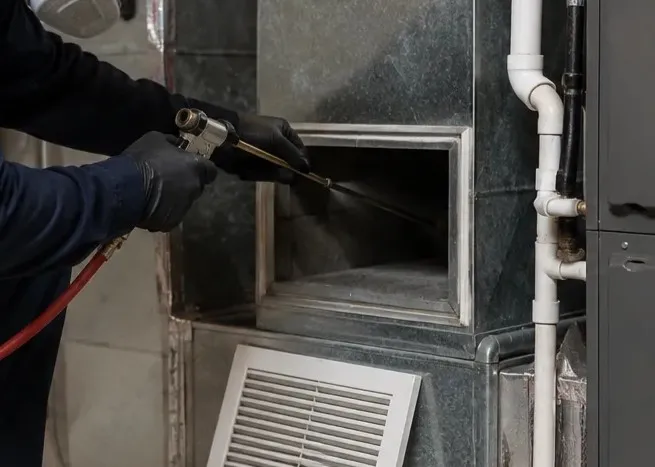
The product itself matters too. EPA guidance explains that HVAC applications have requirements that can differ from ordinary hard-surface disinfection. A product intended for another use should not automatically be applied inside ductwork.
For Canadian applications, the product must also be authorized for its intended use in Canada and applied according to its current label. Health Canada advises following the label for the approved treatment location, application instructions, safety precautions, and other requirements.
If you’re dealing with an odour or another concern after a previous cleaning, contact our team for a straightforward assessment and quote. The first step is determining what may be causing the problem rather than automatically adding another treatment.
Air Duct Cleaning or Sanitizing: Which Does Your System Need?
Not every duct or indoor-air concern requires either service. The appropriate response depends on what an inspection actually finds.
- Excessive dust, debris, or construction material: physical duct cleaning may be appropriate when substantial material has accumulated inside the HVAC system.
- Particles visibly being released from registers: the system should be inspected to determine where the material is coming from and whether cleaning is warranted.
- Suspected microbial growth: identify the extent of the problem and any moisture source first. Physical removal and moisture control are fundamental steps before considering an antimicrobial treatment.
- Persistent odour: investigate the source rather than assuming the duct surfaces need sanitizing. The cause may be elsewhere in the HVAC system or building.
- Water intrusion: determine what became wet, correct the moisture source, and evaluate whether the affected materials can be adequately cleaned or need replacement.
The duct material matters as well. EPA notes that porous fiberglass duct materials contaminated with mold may need to be replaced rather than treated as if they were bare sheet-metal surfaces.
Age of the home, pets, an unknown service history, or living in a rural property can provide background information, but none of those factors by itself establishes a need for sanitizing.
When to Schedule Air Duct Cleaning or Sanitizing
There is no specific season when every Saskatchewan home needs duct cleaning or sanitizing. The EPA recommends considering duct cleaning based on the condition of the system rather than using a routine schedule.
If inspection shows that cleaning is warranted, you can schedule the work at a convenient time for your household. If an additional treatment is also being considered, the need for that treatment should be established first and it should follow the required cleaning and preparation steps.
For Saskatchewan homeowners, booking before the busiest part of the heating season may be convenient, but seasonal timing does not determine whether either service is necessary.
Frequently Asked Questions
Is Air Duct Cleaning the Same as Sanitizing?
No. Duct cleaning physically removes accumulated material from HVAC surfaces. Sanitizing is a separate treatment that may be considered afterward in specific circumstances. They should not automatically be sold or performed together.
Can Sanitizing Be Done Without a Full Duct Cleaning First?
When an antimicrobial HVAC treatment is being considered, mechanical cleaning should come first. NADCA recommends considering antimicrobial chemicals only after mechanical surface cleaning, and EPA says biocides should only be applied, if at all, after visible dust and debris have been properly removed.
Do You Need Air Duct Cleaning or Sanitizing for an Odour?
An odour alone cannot tell you which service is needed. A persistent musty smell can have several possible sources, including moisture or conditions outside the ductwork. Identify the cause before deciding whether cleaning, another HVAC service, moisture correction, or an additional treatment is appropriate.
Does Air Duct Sanitizing Eliminate Mold?
It should not be presented as a universal mold solution. If mold or suspected microbial growth is present, the moisture source must be addressed and contaminated material evaluated for physical cleaning or replacement. Any antimicrobial claims also depend on the specific product’s approved label. See our comparison of sanitizing vs. mold remediation for more detail.
Is a Sanitizing Treatment a Permanent Fix?
No treatment should be described as a permanent fix for an unresolved moisture or contamination problem. If a leak, condensation issue, excessive humidity, or another source remains, the underlying condition can continue. Moisture control and correcting the cause are essential parts of preventing recurrence.
What Product Does Dun-Rite Vac Use for HVAC Sanitizing?
Ask our team for the current product name and label before treatment. The label should be used to confirm the product’s authorized uses, treatment surfaces, application instructions, safety precautions, ventilation requirements, and any requirements concerning occupants or pets.
You Might Also Find This Helpful
- How Air Duct Sanitizing Actually Works
- When Is Air Duct Sanitizing Necessary?
- Does Duct Cleaning Remove Mold?
- Air Duct Sanitizing vs. Mold Remediation
Not sure whether your system needs professional cleaning, HVAC sanitization, or another solution? Dun-Rite Vac can help you understand the available options based on the condition of your system.