
If you’re wondering when air duct sanitizing is necessary, start with the cause rather than the symptom. Not every odour, dust concern, or indoor-air complaint means your ducts need an antimicrobial treatment. In many situations, physical cleaning, correcting a moisture problem, or addressing another source is the more appropriate first step.
Sanitizing should be considered as a targeted additional treatment, not a routine upgrade to every duct-cleaning appointment. Whether it is appropriate depends on what is actually present in the HVAC system, the duct materials involved, and whether the specific product being considered is labelled for that use.
Quick Answer: Air duct sanitizing is not automatically necessary because of an odour, allergies, dust, or even material suspected to be mould. EPA recommends properly cleaning visible dust and debris first and controlling moisture. Before allowing a chemical biocide to be used, the provider should be able to show evidence of microbial growth, explain why physical removal and moisture control are not sufficient, and identify a product specifically labelled for the intended HVAC application.
In this post:
Cleaning, Sanitizing, and Why Homeowners Mix Them Up
Homeowners sometimes use “cleaning,” “sanitizing,” and “disinfecting” interchangeably, but they describe different processes.
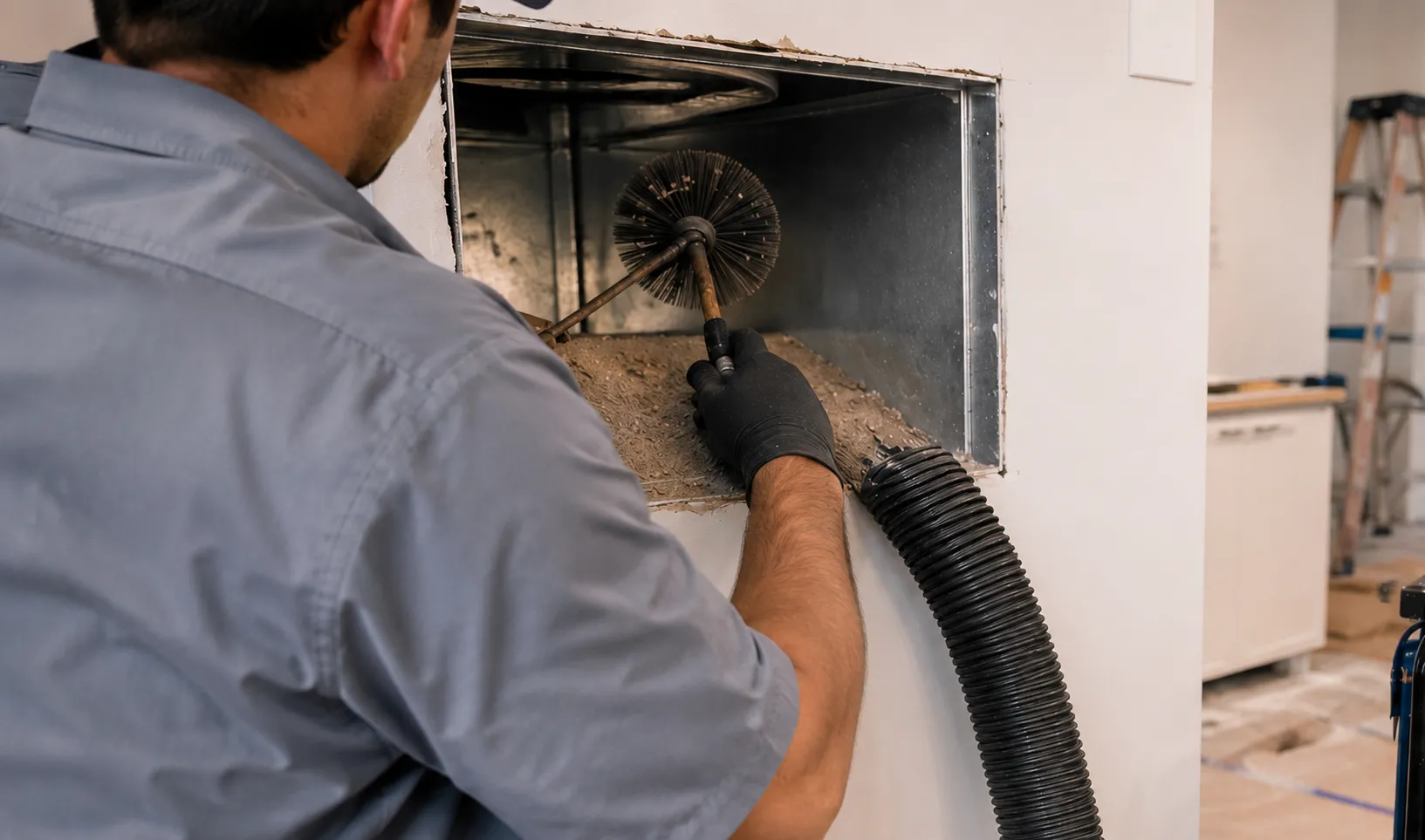
A standard duct cleaning physically removes accumulated dust, debris, and other material from the HVAC system. Professional source-removal cleaning uses agitation and vacuum collection to remove material rather than simply treating the surface chemically.
Sanitizers, disinfectants, and other antimicrobial products are chemical treatments. Their permitted uses depend on the specific product label. The U.S. Environmental Protection Agency states that antimicrobial products used in HVAC systems must be specifically labelled for the surfaces and applications where they are being used.
EPA also advises that chemical treatments, if used at all, should be applied only after the HVAC system has been properly cleaned of visible dust and debris. That makes physical cleaning the starting point rather than treating sanitizing as a stronger version of duct cleaning.

When Air Duct Sanitizing May Be Appropriate
There isn’t a simple symptom-based rule for deciding when to sanitize ductwork. An odour, allergy symptoms, or visible dust alone does not establish a need for chemical treatment.
Confirmed or credible microbial contamination: If material suspected to be microbial growth is found inside the HVAC system, the first steps are to determine the extent of the problem, identify and correct any moisture source, and determine whether the affected material can be physically cleaned.
EPA advises that before a chemical biocide is applied inside ductwork, the service provider should demonstrate visible evidence of microbial growth and explain why that growth cannot be adequately removed by physical means, such as brushing, while preventing regrowth through moisture control. Material that looks like mould may also require expert evaluation before it is positively identified.
The duct material and product label allow the treatment: Not every HVAC surface can legally or appropriately receive the same product. EPA states that products used as sanitizers or disinfectants in HVAC systems must be labelled for the specific application. EPA also notes that no chemical biocides are currently registered for use on fiberglass duct board or fiberglass-lined ductwork.
If porous fiberglass duct material becomes wet or mould-contaminated, EPA notes that cleaning alone may not prevent regrowth and recommends replacement of affected material rather than assuming a chemical treatment will solve the problem.
The practical order is: identify the problem, correct the source, physically clean the HVAC system where cleaning is appropriate, and only then consider an additional antimicrobial treatment if there is a justified reason and a product specifically labelled for that application.
Not sure what your system needs? Dun-Rite Vac can assess the condition of the furnace and duct system during a cleaning service and explain whether physical cleaning is sufficient or whether an additional treatment should even be considered. Contact us for a free quote.
When the Real Problem Isn’t in the Ducts at All
A musty or unusual odour does not automatically mean the ductwork itself is contaminated. Moisture and mould problems can originate from many parts of a home, including plumbing leaks, damp basements or crawl spaces, condensation, inadequate ventilation, bathrooms, humidifiers, and water infiltration.
Health Canada recommends inspecting for both moisture and mould when a musty or earthy odour is present. It also notes that when an odour appears to be associated with a fan-driven heating or cooling system, accessible filters and humidifiers should be inspected first. If the problem continues, the system may need evaluation by a qualified professional.
If moisture is the underlying problem, treating the duct surfaces without correcting that moisture does not address the cause. Health Canada recommends identifying and fixing water damage, excessive humidity, inadequate ventilation, leaks, condensation, and other moisture sources to prevent mould from returning.

Why Fixing the Source Comes First
A chemical treatment does not repair a water leak, control indoor humidity, improve inadequate ventilation, or remove damaged porous material. If moisture remains, mould can return regardless of what was applied to the duct surfaces.
Health Canada specifically advises fixing moisture problems and controlling indoor humidity to prevent mould growth and recurrence. Its guidance recommends keeping relative humidity between 30% and 50% and addressing leaks, condensation, inadequate ventilation, and other sources of excess moisture.
EPA makes a similar point for HVAC systems: preventing water and dirt from entering the system is one of the most effective ways to prevent contamination. If microbial growth is present, the moisture conditions that allowed it to develop need to be addressed along with any cleaning or treatment.
That is why Dun-Rite Vac does not treat sanitizing as an automatic add-on to every cleaning. The condition of the system, the underlying cause, the duct material, and the specific product instructions all matter.
FAQ
Should I sanitize my air ducts every time I get them cleaned?
No. EPA does not recommend routine application of chemical biocides as part of every duct cleaning. Physical cleaning should come first, and any additional antimicrobial treatment should have a specific reason for use and be permitted by the product label.
Is duct sanitizing worth it if I just want peace of mind?
Using an antimicrobial product without a specific reason is difficult to justify. EPA notes that the effectiveness and possible adverse health effects of many chemical treatments used inside ducts have not been fully researched. A better first step is to determine whether the HVAC system actually contains a problem that needs treatment.
Does a musty smell mean I should sanitize my ducts?
No. Odour alone cannot identify the source or confirm microbial growth inside the ductwork. Check for moisture, accessible filters, humidifiers, leaks, condensation, basements, crawl spaces, and other possible sources. If the odour persists or appears connected to the HVAC system, further evaluation may be appropriate.
If I’ve confirmed mould in my ducts, is sanitizing enough on its own?
Not necessarily. Moisture control and physical removal are fundamental parts of addressing mould. The duct material also matters. EPA notes that mould-contaminated fiberglass duct liner or duct board may require replacement because there are no EPA-registered biocides for those porous duct materials. Read our guide to air duct sanitizing vs. mould remediation for more detail.
What product does Dun-Rite Vac use for HVAC sanitizing?
Ask our team for the current product name and label information when requesting the service. The product’s approved uses, surfaces, application instructions, ventilation requirements, and any re-entry precautions should come from its current label rather than from general claims about HVAC sanitizers.
You Might Also Find This Helpful
- Does Duct Cleaning Remove Mold?
- Air Duct Sanitizing vs. Mold Remediation
- How Air Duct Sanitizing Works
If you’re weighing whether your situation calls for an additional HVAC treatment or standard cleaning alone, contact Dun-Rite Vac for a free quote. We’ll help you determine the appropriate next step based on the condition of the system.