
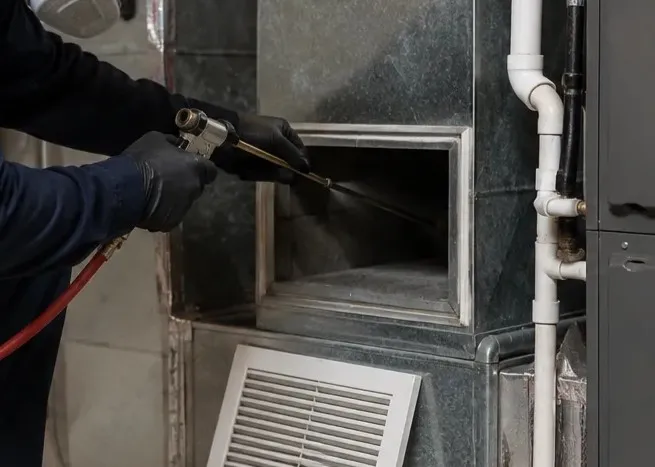
If you’ve had your ducts cleaned and someone still mentions sanitizing as a possible next step, it’s reasonable to ask what that treatment actually adds. To understand how air duct sanitizing works, start with one important distinction: sanitizing is separate from physical duct cleaning, and it should not be treated as a routine upgrade for every home.
Whether an antimicrobial treatment is appropriate depends on what is actually found inside the HVAC system, the surfaces involved, the underlying cause of the problem, and the approved uses and application instructions for the specific product.
Quick Answer: Professional HVAC sanitizing is a separate treatment that may be considered after the system has been properly inspected and cleaned. It is not a substitute for removing dust, debris, or contamination first. The exact product must also be suitable for the HVAC surface and application involved, and it should be used strictly according to its current label instructions.
How Air Duct Sanitizing Works: Why Cleaning Comes First
Physical cleaning and antimicrobial treatment serve different purposes. Duct cleaning removes accumulated dust, debris, and other material from HVAC surfaces. An antimicrobial product, when appropriate, is an additional treatment rather than a replacement for that cleaning.
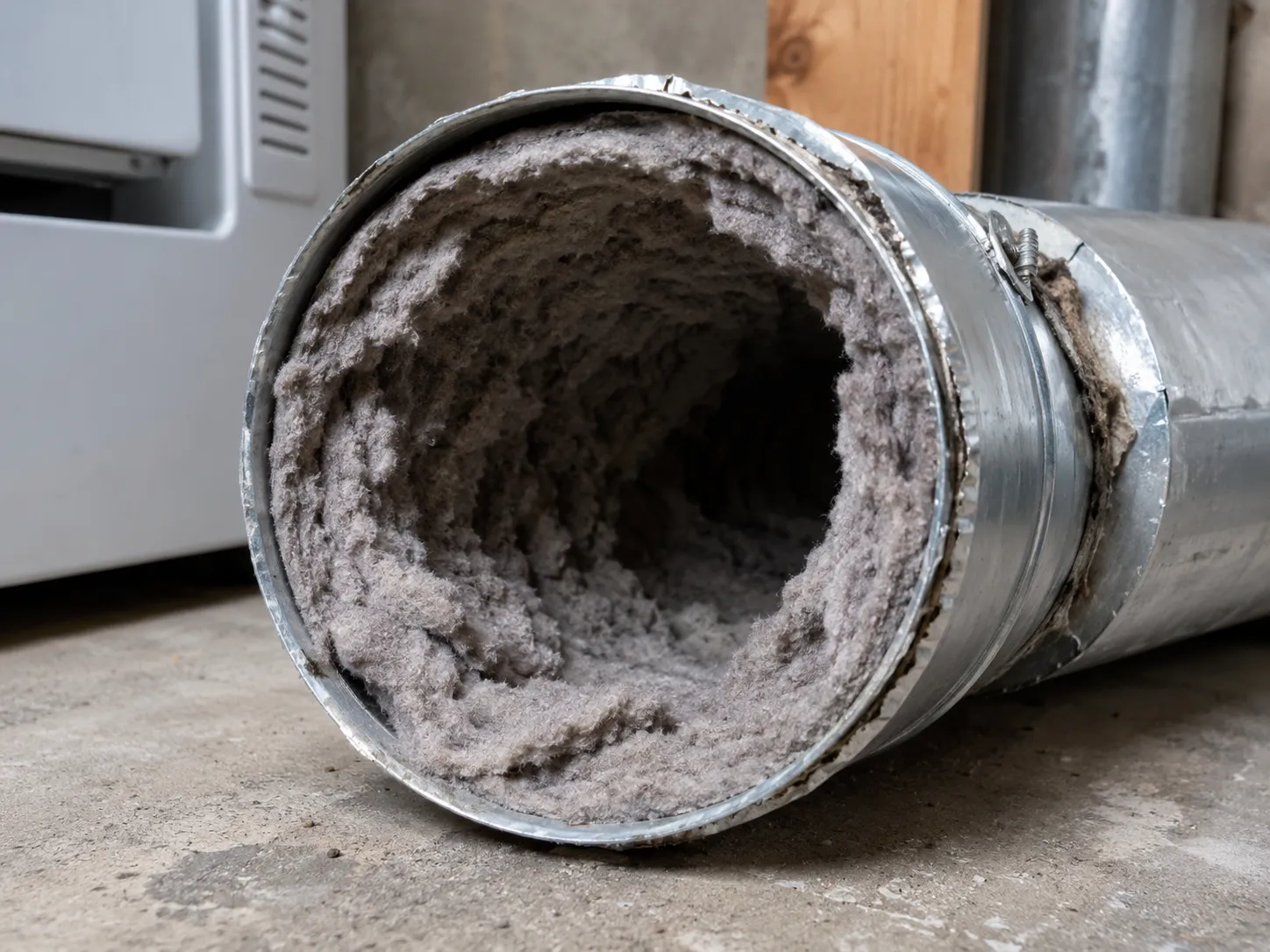
EPA guidance for HVAC systems says antimicrobial products, if used, should be applied only after the system has been properly inspected and cleaned of visible dust and debris. It also emphasizes that HVAC applications can use very different methods from ordinary hard-surface disinfection, so a product should not be applied simply because it is marketed as a general-purpose sanitizer or disinfectant. Read EPA’s HVAC antimicrobial guidance.
For Canadian homes, the product used must also be authorized for its intended use in Canada and applied according to its current label instructions. Health Canada emphasizes following the approved product label, including the intended treatment location, directions, safety precautions, and any requirements that apply before people or pets return to the treated area.
Dun-Rite Vac’s process starts with evaluating and cleaning the HVAC system before considering an additional treatment. The exact treatment and application requirements depend on the product being used and the surfaces involved.
Why Moisture Problems Need to Be Addressed First
A musty odour or suspected microbial problem does not automatically mean the ducts need sanitizing. Moisture can come from many places, including humidifiers, condensation, plumbing or building leaks, damp basements or crawl spaces, inadequate ventilation, and other parts of the home.
If moisture is contributing to a problem, treating a duct surface without correcting the source does not prevent that condition from returning. Moisture control therefore comes before relying on an antimicrobial treatment.
Changing seasons can make existing moisture issues more noticeable, but spring thaw alone does not establish that an HVAC system is contaminated or needs sanitizing. A recurring musty smell should be investigated rather than automatically attributed to the ductwork.

When an Antimicrobial Treatment May Be Considered
Dun-Rite Vac does not recommend sanitizing as an automatic addition to every duct cleaning. A specific reason should exist before an antimicrobial product is considered.
Evidence of microbial growth: EPA recommends that a service provider demonstrate visible evidence of microbial growth before proposing a chemical biocide inside ductwork. Material that appears to be mould cannot always be positively identified by appearance alone, so further evaluation may sometimes be appropriate.
Physical removal and moisture control are not sufficient on their own: EPA also recommends asking why the biological growth cannot be removed by physical means and further growth prevented through moisture control before agreeing to chemical treatment.
The duct material is suitable for the treatment: The construction of the duct system matters. EPA notes that antimicrobial treatment is possible on certain bare sheet-metal duct surfaces when an appropriate product is used, but it does not recommend assuming the same approach is suitable for porous duct materials. Wet or mould-contaminated fiberglass duct materials may require replacement instead.
The specific product is approved for the intended application: The product label should identify where and how the product may be applied. A general household disinfectant should not automatically be used inside an HVAC system simply because it has antimicrobial claims.
Recent illness, pets, an older home, or an unknown cleaning history can prompt homeowners to ask about sanitizing, but those circumstances alone do not establish that antimicrobial treatment is necessary.
If you’re unsure what your HVAC system needs, contact Dun-Rite Vac for a free quote. We can discuss the condition of the system and whether physical cleaning or another appropriate step should be considered.
Where Sanitizing Stops and Mold Remediation Starts
Sanitizing should not be presented as a substitute for mould remediation. If visible or suspected mould is associated with an ongoing moisture problem, the source of that moisture needs to be found and corrected.
The EPA emphasizes moisture control as a fundamental part of preventing microbial contamination in HVAC systems. It also notes that once fiberglass duct liner becomes contaminated with mould, cleaning may not be sufficient to prevent regrowth and replacement of affected material may be appropriate.

For more detail, read our guides on whether duct cleaning removes mold and how sanitizing differs from mold remediation. You can also learn about Dun-Rite Vac’s HVAC sanitization service and furnace and duct cleaning service.
FAQ
Can I Sanitize Air Ducts Myself Without Cleaning First?
No antimicrobial product should be applied inside an HVAC system simply because it is sold as a disinfectant or sanitizer. The product must be appropriate for the intended surface and application, and its label directions must be followed. Physical removal of visible dust and debris is a separate step that should be completed first when treatment is being considered.
How Long Does It Take to Notice a Difference After Sanitizing?
There is no universal timeline or guaranteed noticeable result. What happens after treatment depends on why the product was used, whether the underlying source of the problem was corrected, the HVAC system itself, and the product’s intended purpose. Expectations should be based on the specific product label rather than a general promise about HVAC sanitizing.
Does Sanitizing Need to Be Repeated Every Time I Get My Ducts Cleaned?
No. Sanitizing should not be treated as a routine part of every duct-cleaning cycle. Whether an antimicrobial treatment should be considered depends on the actual condition of the HVAC system and whether there is a justified reason for that specific treatment.
Should I Sanitize My Ducts After Someone in the House Has Been Sick?
Illness in the household alone does not establish that an HVAC antimicrobial treatment is necessary or that treating the ducts will prevent illness. If you are considering sanitizing for that reason, ask what contamination has actually been identified in the HVAC system and what claims the specific product is authorized to make.
Is Duct Sanitizing Appropriate for Homes With Pets or Young Children?
That depends on the specific product and its label instructions. Ask for the current product name and label information before treatment. Follow all instructions concerning application, ventilation, occupants, pets, re-entry, and other precautions. If someone in the household has particular sensitivities or health concerns, discuss those concerns with an appropriate healthcare professional.
What Sanitizing Product Does Dun-Rite Vac Use?
Ask Dun-Rite Vac for the current product name and label before treatment. That label is the appropriate source for its approved uses, application method, target claims, safety precautions, ventilation requirements, and any re-entry instructions.
You Might Also Find This Helpful
- Does Duct Cleaning Remove Mold?
- Air Duct Sanitizing vs. Mold Remediation
- When Is Air Duct Sanitizing Necessary?
Not sure whether your HVAC system needs standard cleaning or whether an additional treatment should be considered? Contact Dun-Rite Vac and we’ll help you understand the available options based on the condition of your system.