
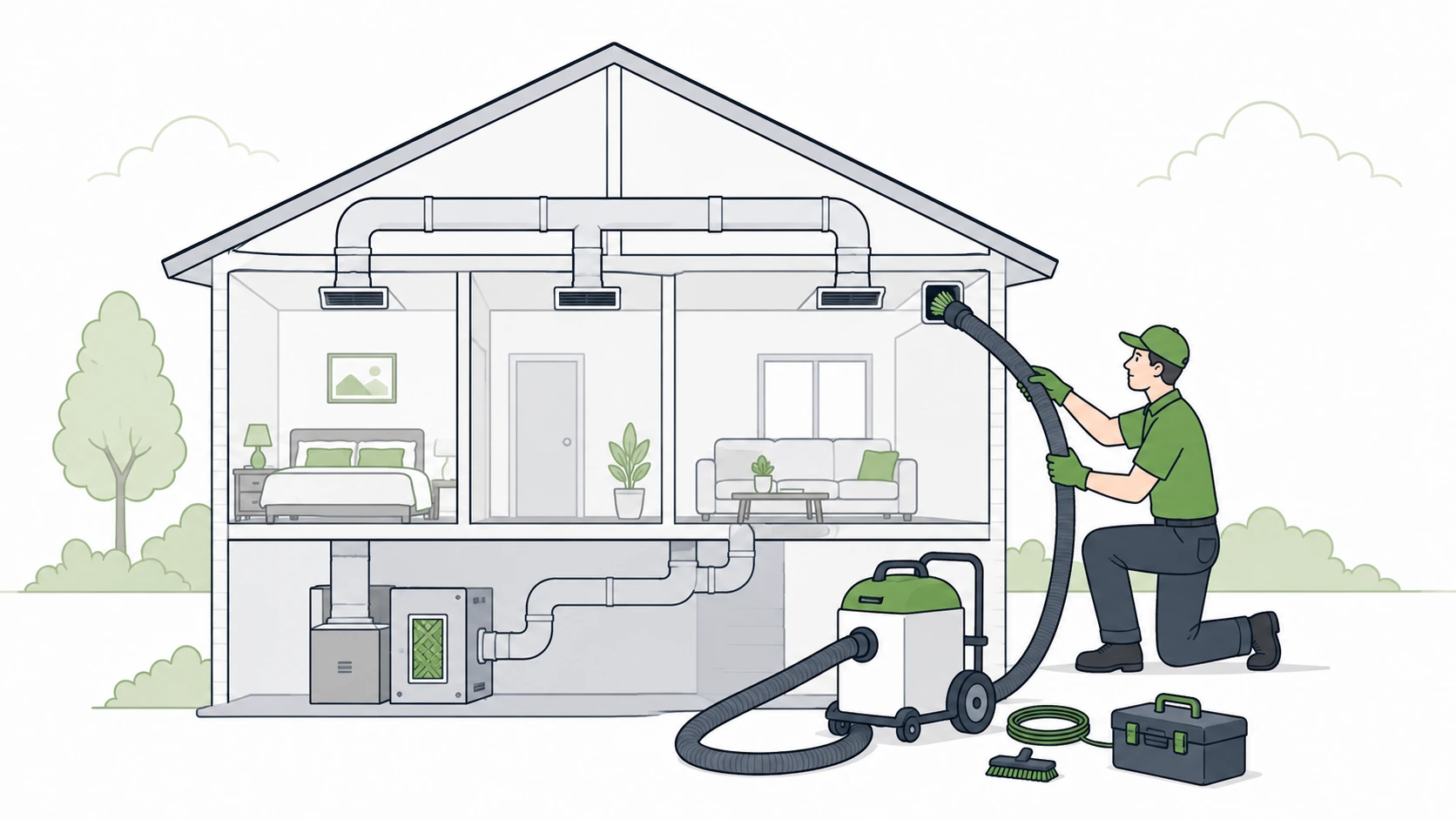
Professional air duct cleaning equipment goes beyond vacuuming the dust visible near a floor or wall register. Depending on the HVAC system and scope of work, technicians may use vacuum collection devices, agitation tools, compressed-air equipment, brushes, inspection tools, and controlled access points to loosen and remove accumulated material.
The largest vacuum is not automatically the best choice for every property. Cleaning quality also depends on the system layout, available access points, duct material, condition of the system, and whether the technician selects methods that can safely reach and clean the surfaces included in the job.
Quick Answer: Professional air duct cleaning equipment combines vacuum collection with tools that loosen accumulated material from HVAC surfaces. NADCA describes proper source removal as breaking contaminants loose with agitation and collecting them while the system remains under continuous negative pressure. The equipment and cleaning method should be selected for the particular HVAC system rather than judged by vacuum size alone.
Why Suction and Agitation Work Together
One of the most common misunderstandings about duct cleaning is that the vacuum does all the work. The vacuum collection device creates negative pressure and collects loosened material, while accumulated debris attached to HVAC surfaces may also require agitation.
Material can collect on duct surfaces, around seams, elbows, branch connections, and other parts of the HVAC system. What needs to be cleaned and which tools are appropriate depends on what an inspection finds and which components are included in the scope of work.
That is why professional duct cleaning tools are used as part of a coordinated process. Air whips, brushes, compressed-air devices, or other agitation tools can loosen material while the vacuum collection system directs it toward the collection point.
Negative pressure is also important for controlling loosened material during the cleaning process. NADCA’s proper cleaning guidance describes professional source removal as combining agitation with vacuum collection while the HVAC system remains under continuous negative pressure.
Truck-Mounted vs. Portable Air Duct Cleaning Equipment: Which Is Better?
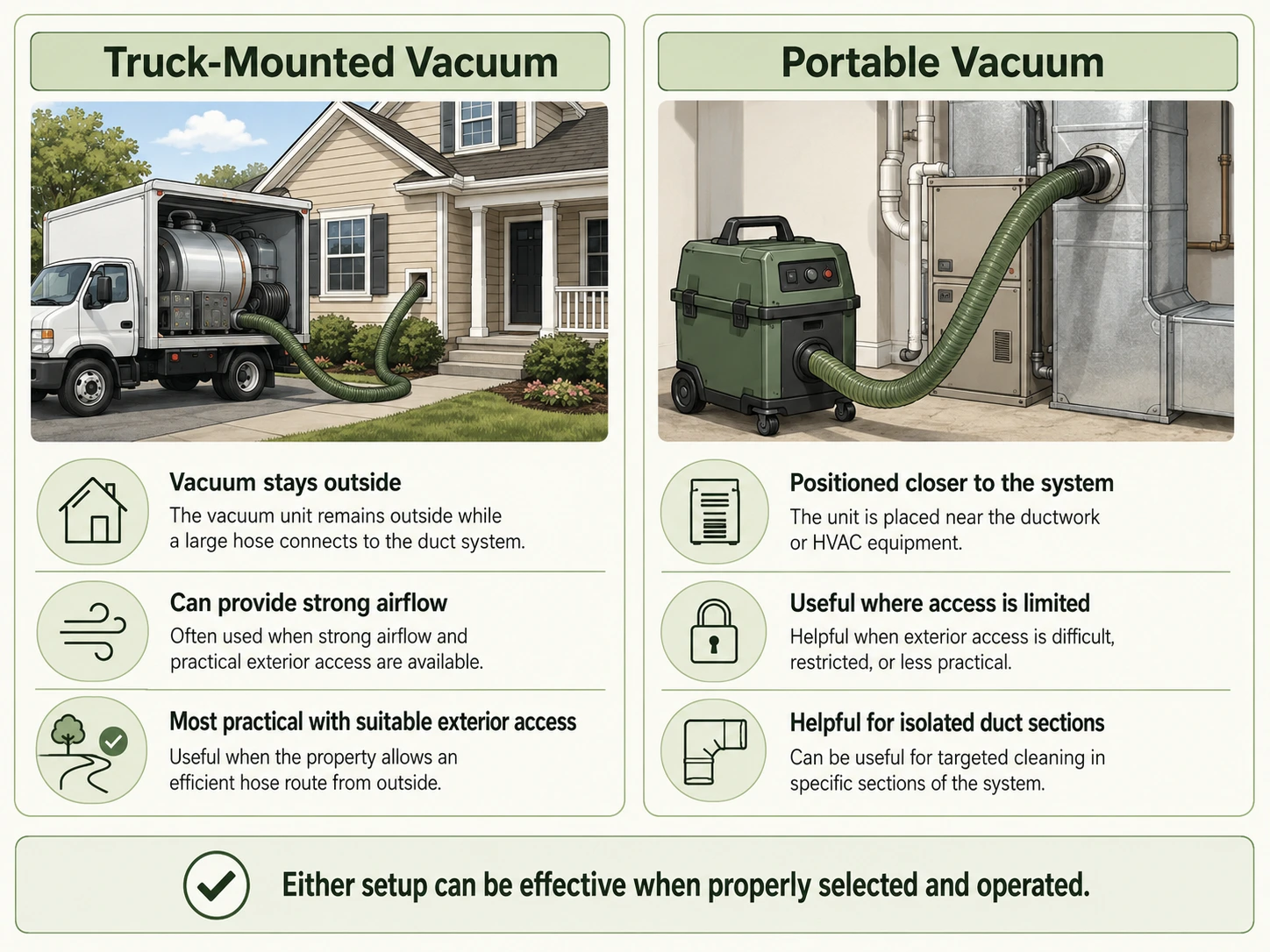
Truck-mounted vacuum collection equipment keeps the main vacuum unit outside the building while a large hose connects it to the HVAC system. NADCA notes that truck- or trailer-mounted equipment is generally more powerful than portable equipment, but power alone does not determine whether a system can be properly cleaned.
Portable vacuum equipment can be positioned closer to the HVAC system or the area being cleaned. This can be useful where exterior access is restricted, the mechanical room is far from an entrance, or the building configuration makes an exterior hose route impractical.
Neither equipment type automatically guarantees a complete result. The vacuum must have appropriate capacity for the job, and the contractor still needs suitable access, agitation, containment, and a cleaning plan appropriate for the system.
NADCA’s equipment guidance states that both truck-mounted and portable vacuum collection devices can be used to clean HVAC systems correctly when they are properly selected and operated.
How Vacuum and Agitation Tools Differ at a Glance
| Equipment | What It Does | Where It May Be Useful |
|---|---|---|
| Truck-mounted vacuum | Creates negative pressure with the primary collection equipment located outside the building. | Properties with suitable exterior access and a practical hose route to the HVAC system. |
| Portable vacuum | Allows collection equipment to be positioned closer to the HVAC system or section being cleaned. | Buildings with restricted exterior access, distant mechanical rooms, or layouts where portability is useful. |
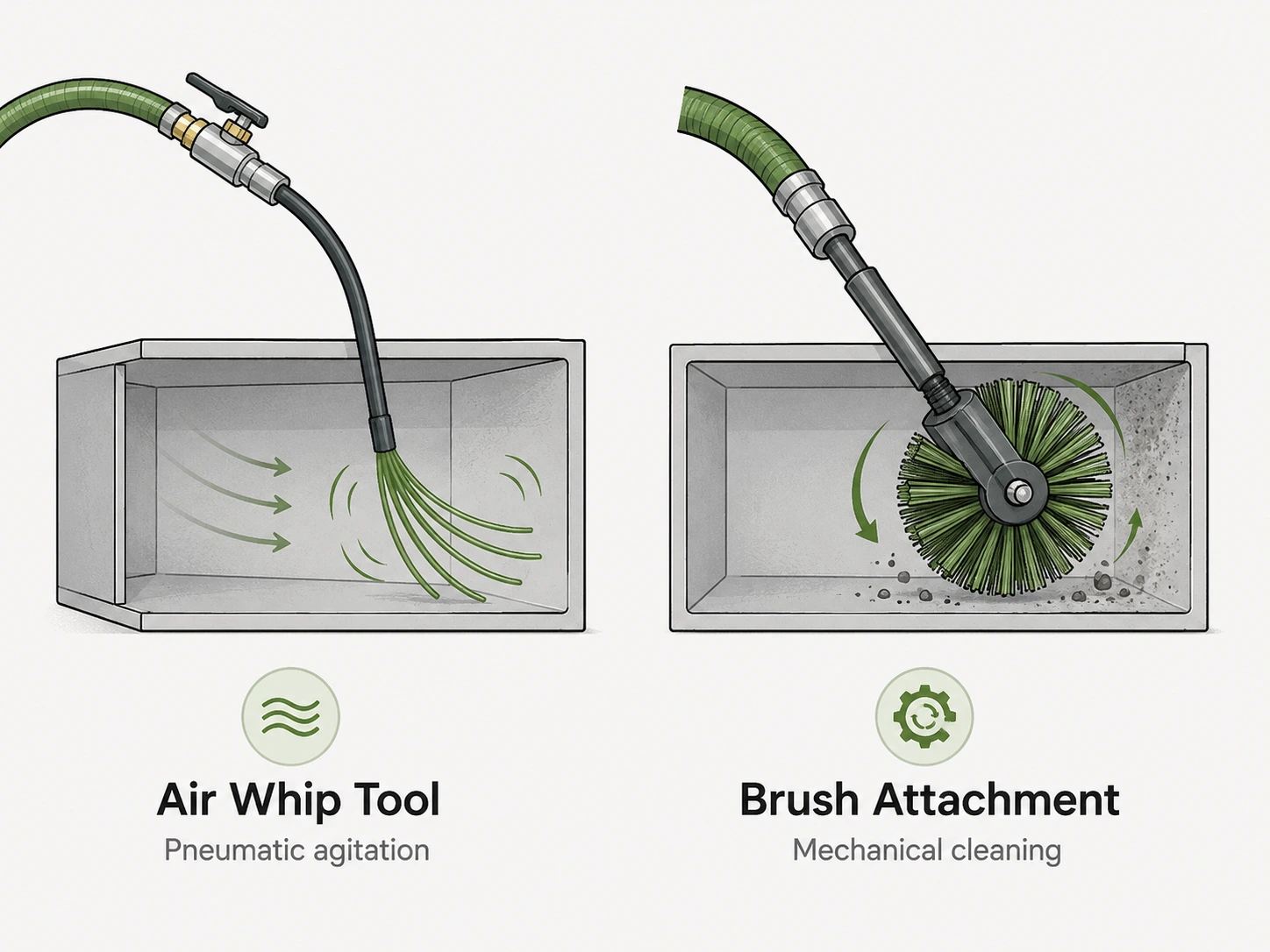
| Air whip | Uses compressed air to agitate material so it can be directed toward the collection device. | Duct sections where pneumatic agitation is appropriate for the material and configuration. |
| Brush | Provides mechanical agitation against suitable HVAC surfaces. | Surfaces where the duct material, construction, and condition permit brushing without damage. |
Air Whips and Brushes Solve Different Cleaning Problems
An air whip uses compressed air to agitate material inside appropriate duct sections and help move loosened debris toward the vacuum collection device. Its flexible configuration can make it useful in portions of a duct system where pneumatic agitation is suitable.
Brushes provide direct mechanical agitation. Technicians need to select the brush and cleaning method according to the duct material, dimensions, construction, and condition. The objective is to remove accumulated material without damaging the HVAC components being cleaned.
Tool selection can change throughout the HVAC system because straight trunks, elbows, transitions, branch runs, flexible duct, ductboard, and internally lined ductwork do not necessarily tolerate the same cleaning method.
NADCA’s equipment guidance specifically notes that fiberglass-lined metal ductwork, flex duct, and ductboard can be damaged by overly aggressive removal techniques and should be handled accordingly.
Access Points Affect Whether Cleaning Tools Can Reach the Required Surfaces
A contractor needs appropriate access to the HVAC surfaces included in the cleaning scope. Existing registers and service openings can provide useful access, but they may not provide an effective path to every trunk, branch, or component that needs to be cleaned.
Depending on the system, technicians may need to use existing service openings or create controlled access openings so inspection and cleaning tools can reach otherwise inaccessible areas.
This is one reason job duration can vary between buildings of similar size. The number of registers matters, but so do equipment location, finished areas, additions, duct geometry, access limitations, and the scope of HVAC components being cleaned. Our guide to how long air duct cleaning takes explains why appointment length can vary.
NADCA notes that service openings may sometimes need to be created to provide access for inspection and cleaning tools. Those openings also need to be properly closed after the work is complete.
Not sure how a contractor will clean the harder-to-access parts of your system?
Ask how the main ducts, return side, branch runs, and other components included in the quote will be accessed. Dun-Rite Vac can review your system and provide a free quote based on the actual scope of work.
Containment and Negative Pressure Are Part of the Cleaning Process
During professional source-removal cleaning, loosened material needs to be controlled and directed toward the collection equipment rather than released into occupied areas.
Technicians may isolate portions of the HVAC system, cover registers that are not being worked through, and secure vacuum or access connections as part of maintaining the required pressure relationship during cleaning.
NADCA’s cleaning-method guidance states that the HVAC system is placed under continuous negative pressure during cleaning to help prevent the spread of contaminants and collect loosened material.
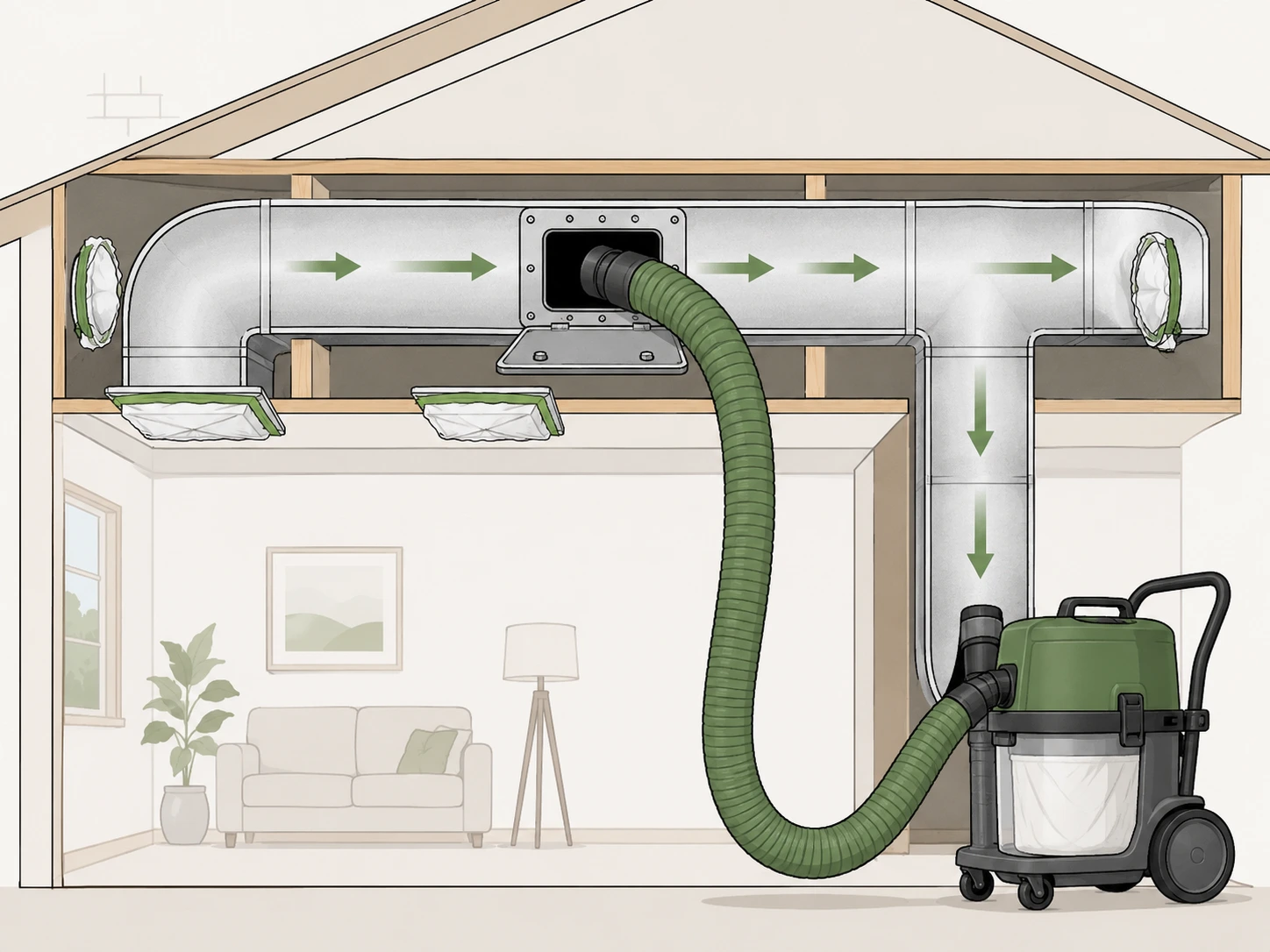
These containment principles apply regardless of whether the building is older or newer, tightly sealed or relatively leaky. The objective is to control loosened material during cleaning rather than allowing it to spread into occupied spaces.
The Equipment Is Only as Effective as the Cleaning Plan
Owning professional equipment does not by itself establish that a contractor will perform a complete cleaning. The crew still needs to assess the HVAC system, determine which components are included, establish appropriate negative pressure, choose cleaning tools that are compatible with the system, work through the required surfaces methodically, and properly close any service openings afterward.
Dun-Rite Vac has served customers since 1998. The company’s NADCA professional directory listing confirms that Dun-Rite Vac is a NADCA member serving residential and commercial projects and has ASCS-certified personnel.
ASCS certification provides individual professionals with education and demonstrated knowledge related to HVAC assessment, cleaning, restoration, health and safety, and applicable industry standards. It does not make one particular vacuum or agitation tool appropriate for every system.
You can read more about what NADCA membership and ASCS certification mean when comparing duct-cleaning companies.
A contractor should also be willing to explain when cleaning may not be necessary. Equipment cannot correct every HVAC concern, and visible dust around a register is not by itself proof that the complete duct system needs professional cleaning. The decision should be based on the condition of the system and what an inspection finds.
Questions Homeowners Ask About Air Duct Cleaning Equipment
Is Truck-Mounted Duct Cleaning Equipment Always Better Than Portable Equipment?
No. NADCA states that both truck-mounted and portable vacuum collection equipment can be used successfully. Truck-mounted systems are generally more powerful, while portable equipment can sometimes be positioned closer to the HVAC system. The appropriate setup depends on the building, system, equipment capacity, and cleaning plan.
Can a Contractor Clean Ducts Using Only a Vacuum Hose?
Vacuum collection is only one part of NADCA’s source-removal approach. Accumulated material may also need to be loosened with brushes, air whips, compressed-air nozzles, hand brushing, contact vacuuming, or another suitable agitation method before it can be collected and removed.
Can Air Duct Cleaning Tools Damage Flexible Ductwork?
Yes. NADCA warns that overly aggressive removal techniques can damage flex duct, ductboard, and fiberglass-lined metal ductwork. The cleaning tool and method should be selected based on the material and its condition.
Does a More Powerful Vacuum Mean Better Duct Cleaning?
Not by itself. Vacuum capacity is important, but cleaning also depends on proper access, agitation, containment, system isolation, equipment placement, and the technician’s cleaning plan. A powerful vacuum cannot compensate for HVAC surfaces that were never properly accessed or cleaned.
What Equipment Questions Should I Ask Before Booking a Duct Cleaning?
Ask how the contractor will establish negative pressure, what agitation methods may be used, which HVAC components are included, how difficult areas will be accessed, how loosened material will be contained, and how any newly created service openings will be closed. The answers should describe a cleaning process rather than relying only on the size or brand of the vacuum.
Continue Your Research Before Choosing a Contractor
- The Ultimate Checklist When Hiring an Air Duct Cleaning Company
- How Long Does Air Duct Cleaning Take?
- What Does NADCA Certification Mean?
Get a Cleaning Plan Based on Your Actual Duct System
Dun-Rite Vac provides professional furnace and duct cleaning across Saskatoon, Yorkton, Regina, Weyburn, and surrounding areas. We can explain the proposed cleaning scope, equipment, and access requirements before the work begins.