
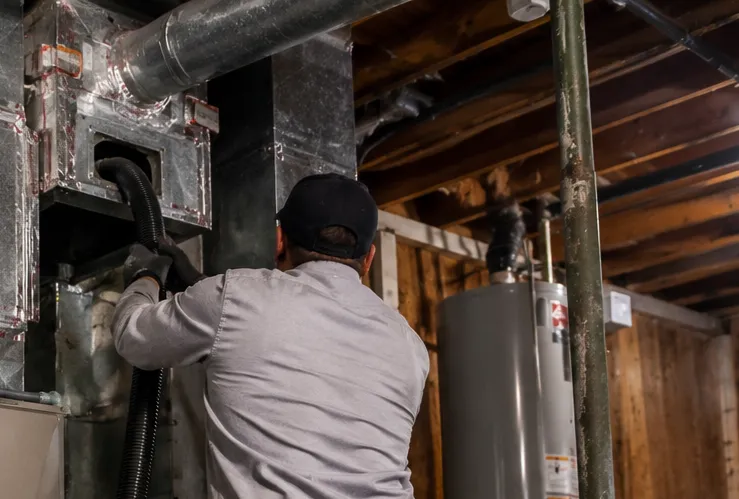
What Does NADCA Certified Duct Cleaning Mean?
“NADCA certified” appears on many duct-cleaning websites, but the terminology can be confusing. NADCA membership applies to a company, while Air Systems Cleaning Specialist (ASCS) certification is an individual credential held by qualified industry professionals.
NADCA — the National Air Duct Cleaners Association — develops ACR, The NADCA Standard for Assessment, Cleaning and Restoration of HVAC Systems. ASCS certification demonstrates an individual’s knowledge and skills related to professional HVAC system cleaning, including familiarity with ACR and other relevant industry standards. NADCA’s Certification & Education resources explain how membership, training, certification, and the ACR Standard fit together.
Quick Answer: “NADCA certified duct cleaning” is a common phrase, but there isn’t one certification that applies to every company, technician, and cleaning job. NADCA Regular Membership is held by companies and requires, among other things, at least one ASCS-certified individual on staff at each location, liability insurance, and agreement to clean according to ACR, The NADCA Standard. ASCS certification is an individual credential. A NADCA member company does not automatically mean every technician working for that company is ASCS-certified.
What NADCA Membership Requires From a Company
NADCA Regular Membership applies at the company level. According to NADCA’s current Regular Membership requirements, a member company must be actively involved in residential, commercial, or industrial air-duct cleaning, maintain liability insurance, and have at least one ASCS-certified individual on staff at each location.
NADCA also states that member companies agree to clean according to ACR, The NADCA Standard, and comply with its Code of Ethics.
The distinction matters because company membership does not mean every person working on every cleaning job holds an individual ASCS credential. When comparing companies, you can ask whether the business is a current NADCA member and which members of the team hold current ASCS certification.
You can learn more about Dun-Rite Vac’s furnace and duct cleaning service and what is included in the cleaning process.
What the ACR Standard and ASCS Certification Mean
ACR, The NADCA Standard establishes minimum performance and procedural requirements for assessing, cleaning, and restoring HVAC systems. The current 2025 edition includes guidance on system assessment, engineering controls and containment, equipment use, negative-air requirements, cleaning methods, safety, and cleanliness verification.
NADCA makes the current ACR Standard available online for contractors, building owners, facility managers, and others involved in HVAC cleaning projects.
ASCS certification is an individual professional credential. NADCA’s current ASCS program covers HVAC-system design and components, assessment, cleaning and restoration procedures, health and safety, risk management, and applicable standards and guidelines, including ACR. Learn more about NADCA’s ASCS certification.
Holding the credential demonstrates that an individual has met NADCA’s certification requirements. It does not guarantee that every possible job will produce a particular result, so the actual scope of work, equipment, methods, system condition, and post-cleaning verification still matter.
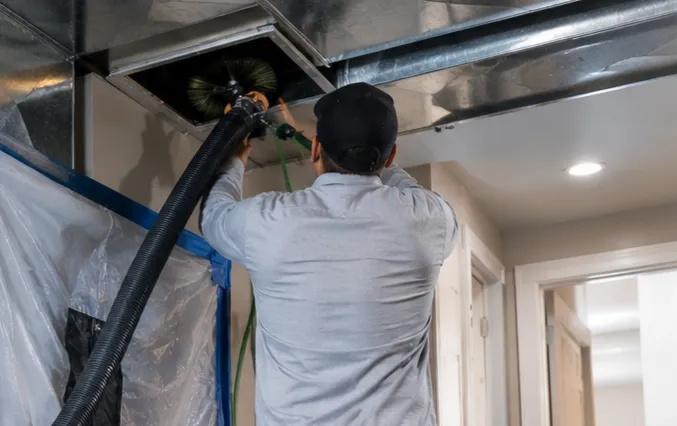
If you’re unsure whether your furnace and duct system actually needs professional cleaning, contact Dun-Rite Vac for a free quote. The need for cleaning should be based on the condition of the system rather than certification language alone.
Why the Distinction Matters When Comparing Companies
NADCA’s standards and certification requirements are the same regardless of whether a company is working in Saskatchewan, another province, or another country. Climate does not change what NADCA membership or ASCS certification means.
What does change from property to property is the HVAC system itself. Equipment design, duct materials, accessibility, contamination level, building use, renovations, and other conditions can all affect the cleaning plan.
That’s why it is more useful to ask how a contractor will assess and clean your specific system than to assume a certification badge alone tells you everything about the service.
Dun-Rite Vac has served customers since 1998. NADCA’s current member directory lists Dun-Rite Vac as a member since March 16, 2009, with ASCS-certified personnel.
What Commercial Facility Managers Should Confirm
Commercial HVAC systems can involve larger equipment, multiple zones, more access points, and more complex scopes of work than a typical residential system. The project specification should therefore clearly identify which systems and components are included and what standard the work is expected to meet.
NADCA publishes a General Specification for commercial HVAC cleaning in addition to the ACR Standard. The specification is intended to be adapted to the particular building and project rather than applied identically to every commercial system.
Before approving commercial HVAC cleaning, useful questions include:
- Is the contractor a current NADCA member?
- Who will be responsible for the project, and which personnel hold ASCS certification?
- Does the scope identify the HVAC systems and components being cleaned?
- What cleaning and containment methods will be used?
- How will completion and cleanliness be verified?
- What documentation will be provided for the completed work?
Certification should not be treated as proof that a particular fire-code, insurance, lease, or regulatory requirement has been satisfied. Those requirements depend on the building, jurisdiction, contract, and authority having jurisdiction.
For larger systems, review Dun-Rite Vac’s commercial air duct cleaning service.
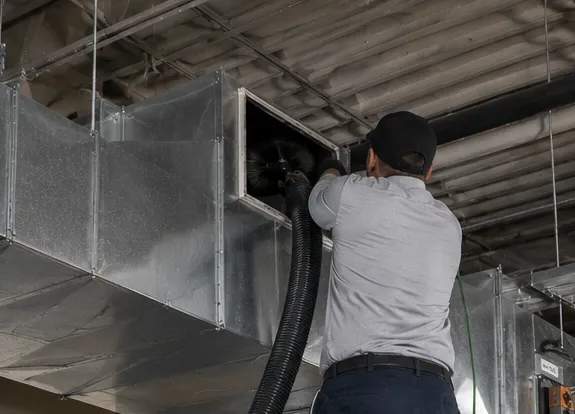
What to Verify Before You Hire
You don’t need to memorize the ACR Standard to compare contractors. Start by verifying the company’s current NADCA membership and asking who on the team holds ASCS certification.
You can also ask the contractor to explain:
- what components are included in the quote;
- how debris will be loosened and collected;
- how the HVAC system and occupied space will be protected during cleaning;
- what access points may be required; and
- how the completed work will be documented or verified.
Those details tell you more about the proposed job than relying on phrases such as “certified,” “licensed,” or “insured” without additional context. Licensing requirements vary by jurisdiction and by the type of work being performed, while insurance is one of NADCA’s company-membership requirements rather than an individual HVAC-cleaning credential.
For a broader comparison, see our full checklist for hiring an air duct cleaning company.
Dun-Rite Vac has served customers since 1998. The NADCA member directory currently lists Dun-Rite Vac as a member since 2009 and identifies ASCS-certified personnel with the company.
FAQ
Is NADCA Certified Duct Cleaning the Same as ASCS Certification?
No. NADCA membership is held by a company, while ASCS is an individual certification. A NADCA Regular Member must have at least one ASCS-certified individual on staff at each location, but that does not mean every employee or technician is individually ASCS-certified.
Does NADCA Certify Duct Cleaning Companies?
NADCA has company memberships and individual professional certifications. For that reason, “NADCA-certified company” can be imprecise wording. It is clearer to say that a business is a NADCA member company and identify whether the people responsible for the work hold individual credentials such as ASCS.
How Can I Verify NADCA Membership or ASCS Certification?
Ask the contractor for its current membership and certification information and verify it through NADCA’s resources when possible. For Dun-Rite Vac, NADCA’s current directory identifies the company as a member and lists its certified personnel.
Does ASCS Certification Guarantee a Better Cleaning?
ASCS certification demonstrates that an individual has met NADCA’s certification requirements and has knowledge relevant to HVAC assessment, cleaning, restoration, health and safety, and industry standards. It does not guarantee a particular outcome on every project. The actual scope, system condition, methods used, and quality of the completed work still matter.
Does Certification Cost More Upfront but Save Money Long-Term?
There is no universal price or savings relationship between certification and the cost of a cleaning. When comparing quotes, focus on the scope of work, contractor qualifications, cleaning methods, and what is included rather than assuming a particular credential guarantees lower long-term costs.
Does NADCA Certification Apply Differently to Commercial Buildings Than Homes?
The ASCS credential does not change based on whether the project is residential or commercial. Commercial projects can be more complex, however, so the scope of work, responsible personnel, building-specific requirements, and documentation deserve particular attention.
You Might Also Find This Helpful
Want to know what NADCA membership and ASCS certification mean for your cleaning?
Dun-Rite Vac is listed in NADCA’s member directory and has ASCS-certified personnel. Contact our team if you’d like us to explain the cleaning scope before you book.