
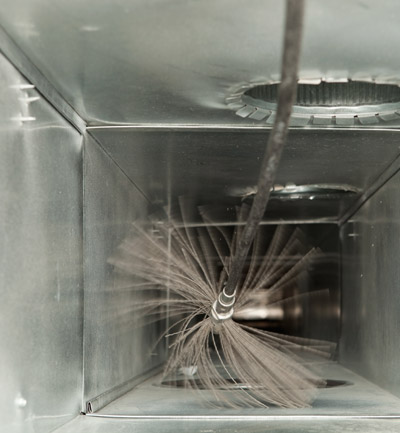
If you manage a commercial property, HVAC duct cleaning services may not be top of mind until tenants report dust, airflow changes, unusual odours, or another maintenance concern. Because much of the ductwork and HVAC equipment is out of sight, it can be difficult to know whether the system actually needs cleaning without looking at its condition.
Commercial HVAC systems also vary widely. An office, retail property, multi-tenant building, restaurant, and industrial facility can have very different equipment, occupancy patterns, ventilation requirements, and maintenance needs. That is why commercial duct cleaning should be based on an assessment of the actual system rather than a standard calendar interval.
Quick Answer: There is no universal schedule for commercial HVAC duct cleaning. The appropriate timing depends on the condition of the system, building use, renovation activity, moisture or pest problems, and the amount of accumulated material inside HVAC components. An assessment can help determine whether cleaning is warranted and what parts of the system should be included in the scope of work.
Where Dust and Debris Can Accumulate in Commercial HVAC Systems
Commercial HVAC systems can collect dust and other particulate in return ducts, plenums, air-handling equipment, filters, coils, blowers, and other components. How much material accumulates depends on the building, filtration, occupancy, maintenance practices, renovations, and how the HVAC system is designed and operated.
A clean-looking supply register does not necessarily tell you what condition the rest of the system is in. Areas farther inside the HVAC system may require inspection before a property manager can determine whether professional cleaning is justified.
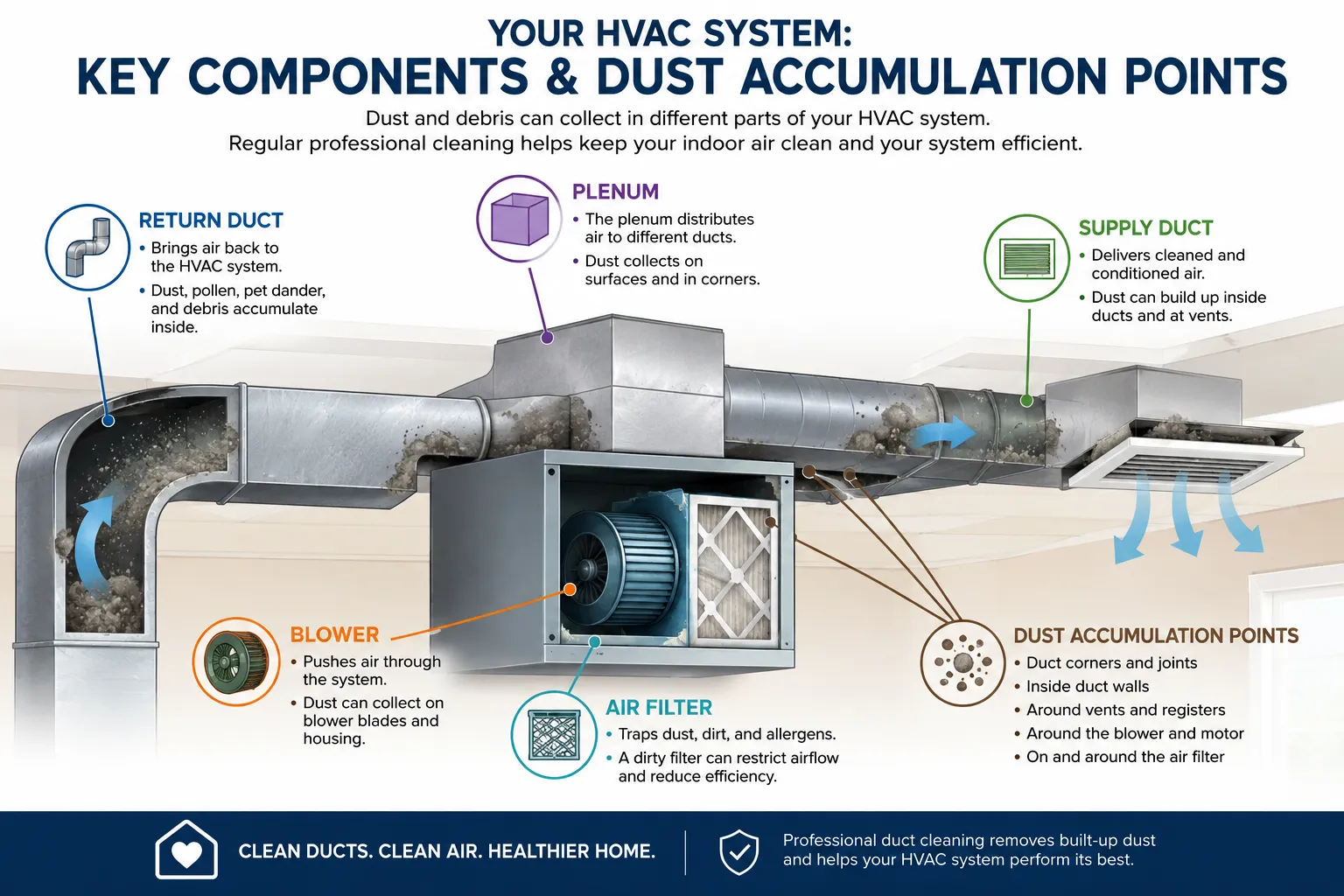
If excessive material is found, cleaning may form part of the building’s HVAC maintenance plan. Fire-code requirements, insurance requirements, and cleaning rules vary by building type and equipment, so those questions should be confirmed with the applicable authority, insurer, equipment provider, or other qualified professional rather than assuming ordinary duct dust automatically creates a fire-code violation.
If you’re unsure what condition your building’s ductwork is in, contact Dun-Rite Vac for a quote. We can help determine whether professional HVAC cleaning may be appropriate based on the system and what you’re seeing.
How to Respond to Tenant Air Quality Complaints
Tenant complaints about dust, odours, stuffiness, temperature, or other indoor-air concerns deserve investigation, but they do not automatically mean the ductwork needs cleaning.
The U.S. Environmental Protection Agency notes that indoor-air problems in commercial buildings can involve several factors, including pollutant sources, housekeeping, moisture, occupant activities, and the design, operation, and maintenance of the ventilation system.
In multi-tenant properties, the HVAC arrangement also matters. Some units may share air-handling equipment or return-air pathways, while others may have separate systems or zones. A building-specific assessment is necessary before assuming material from one tenant space is circulating through every other unit.
If an inspection identifies excessive debris inside the HVAC system, professional cleaning may be part of the response. If moisture, suspected biological growth, odours, or another contamination concern is involved, the underlying cause should be investigated separately rather than assuming duct cleaning alone will solve the complaint.
Dun-Rite Vac also offers HVAC sanitization as an optional treatment when appropriate. Physical cleaning comes first, and any additional product should have a clear reason for use and be applied according to its approved label directions.
How Often Commercial Buildings Need HVAC Duct Cleaning Services
There is no single cleaning interval that applies to every commercial property. Building size, occupancy, filtration, renovations, moisture, pest activity, operating hours, and the HVAC system itself can all change how quickly components become contaminated.
Instead of scheduling automatically every few years, consider an HVAC assessment when circumstances give you a reason to suspect the system needs attention:
- ✅ Excessive visible dust or debris: Significant material is present inside accessible HVAC components or is being released from registers.
- ✅ Renovation or construction work: Drywall dust, sawdust, or other construction material may have entered the HVAC system.
- ✅ Pest activity: Rodents, insects, or other pests have entered affected parts of the system.
- ✅ Moisture concerns: Water intrusion, condensation, or suspected biological growth is present and the source needs to be investigated.
- ✅ Unknown system condition: A newly acquired or older property has little maintenance history and the actual condition of the HVAC system is unclear.
Restaurants and other food-service properties may also have different HVAC and exhaust-system maintenance requirements from a standard office. Kitchen exhaust hoods and grease ducts are separate from ordinary comfort-HVAC ductwork and should follow the applicable fire, equipment, and maintenance requirements for those systems.
Likewise, maintaining a rooftop unit does not necessarily mean the entire connected duct system has been inspected or cleaned. Property managers should confirm what components are actually included in each maintenance contract instead of assuming one service covers everything.
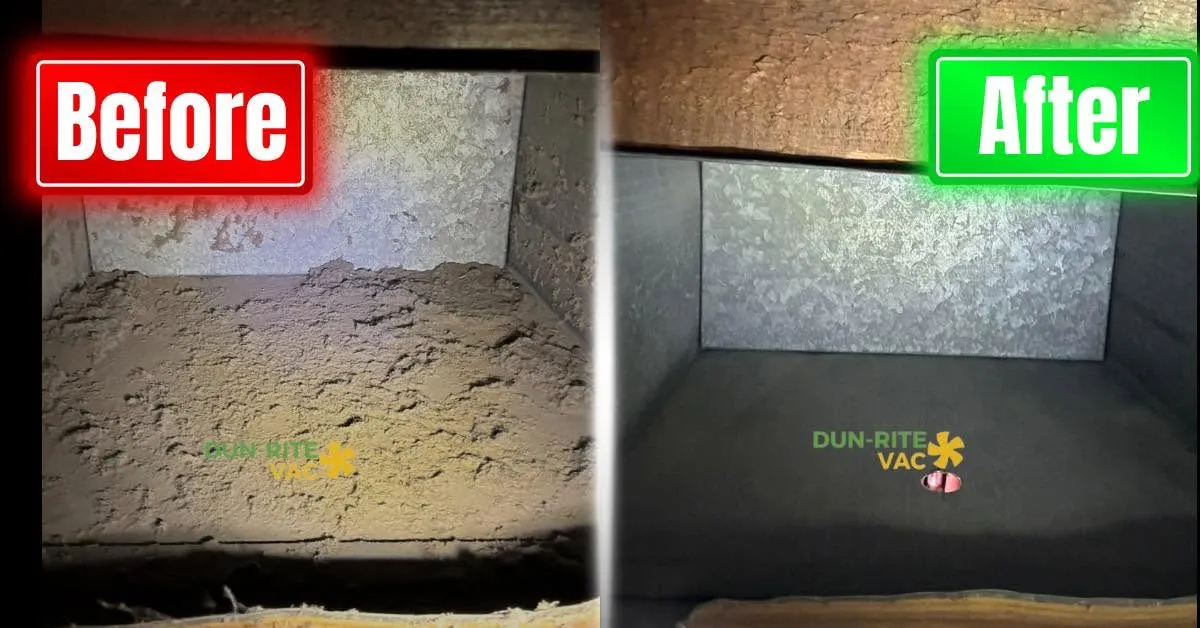
Signs a Commercial HVAC System May Need Inspection
Property managers rarely see the inside of the ductwork during normal building operations, so changes elsewhere in the system can provide a reason to investigate.
Examples include visible debris around registers, particles being discharged from vents, unexplained airflow changes, unusual odours, pest evidence, moisture around HVAC components, or contamination following construction or renovation work.
None of those symptoms proves that duct cleaning is the solution. Airflow problems can come from filters, dampers, controls, equipment condition, system balancing, or duct design, while odours can have many sources. The purpose of an assessment is to determine what is actually causing the problem before selecting a service.
What to Look for in a Commercial HVAC Cleaning Contractor
Commercial HVAC cleaning can involve large systems, occupied spaces, multiple zones, specialized access requirements, and project-specific containment. That makes the contractor’s process and qualifications important.
NADCA’s commercial specifications and ACR, The NADCA Standard provide guidance for assessing, cleaning, and verifying HVAC-system cleanliness. Professional projects may include continuous negative pressure, containment of removed material, mechanical cleaning or source-removal methods, and post-cleaning verification depending on the project scope.
Dun-Rite Vac is listed with NADCA and has ASCS-certified personnel. We’ve served customers since 1998 and provide commercial HVAC cleaning across Saskatchewan and Western Manitoba.
When comparing contractors, ask what parts of the HVAC system are included, how the system will be placed under negative pressure, how loosened material will be collected, how occupied areas will be protected, and how the completed work will be verified.
FAQ
How often should a commercial building have its HVAC ducts cleaned?
There is no universal commercial cleaning interval. The decision should be based on the condition of the system, building use, maintenance history, renovation activity, moisture or pest problems, and whether significant contamination is actually present.
Do insurance policies or fire codes require commercial duct cleaning?
Requirements vary by property, occupancy, equipment, jurisdiction, and insurer. Ask your insurance provider, local authority, property-management team, or other qualified professional about requirements that apply specifically to your building. Ordinary comfort-HVAC duct cleaning should not be confused with separate requirements that may apply to systems such as commercial kitchen exhaust ducts.
Who’s responsible for HVAC duct cleaning in a leased commercial space — landlord or tenant?
The lease agreement and building-maintenance arrangements usually determine responsibility, and the answer can vary considerably between properties. In multi-tenant buildings, shared equipment can make responsibility less obvious, so confirm the maintenance obligations in writing rather than assuming.
Does duct cleaning help with tenant air quality complaints?
It may be relevant if excessive dust, debris, or another confirmed HVAC contamination problem is contributing to the complaint. However, indoor-air concerns can have many sources, and duct cleaning should not be presented as a guaranteed solution. Investigate the complaint and the HVAC system first so the appropriate maintenance or corrective action can be identified.
Not sure whether your building’s ductwork needs professional cleaning?
Learn more about our commercial air duct cleaning services, part of our broader furnace and air duct cleaning services across Saskatoon, Yorkton, Regina, and Weyburn.