

How long does air duct cleaning take? For many residential properties, professional furnace and air duct cleaning can be completed within a few hours. The exact timeline depends on the size and layout of the HVAC system, the number of supply and return runs, accessibility, the condition of the system, and what is included in the service.
If you’re trying to plan your day around an appointment, the best estimate is one based on your actual home and system rather than square footage alone. Here’s what typically happens from arrival through final review.
How Long Should You Allow for Air Duct Cleaning?
There isn’t one appointment length that applies to every home. For many residential systems, the work can be completed within a few hours, but larger or more complex systems can take longer.
For more detail on what may be included in a home appointment, see our residential furnace and air duct cleaning service page.
The National Air Duct Cleaners Association explains that the size and scope of an HVAC cleaning project are two of the main factors that affect how long it takes. A straightforward residential system will naturally require less time than a large home, multi-unit property, or commercial building with multiple HVAC units. Learn more about the cleaning process from NADCA.
The number of registers alone doesn’t tell the whole story. Access to the furnace and trunk lines, system layout, contamination level, and any additional services being completed during the visit can all affect the total time.
How Is Air Duct Cleaning Done? A Step-by-Step Guide
Understanding the cleaning process helps explain why the appointment takes more than a quick vacuum around the registers. Professional source-removal cleaning combines mechanical agitation with vacuum collection to loosen and remove accumulated material from the HVAC system. NADCA identifies continuous negative pressure and agitation tools such as air whips, brushes, and compressed-air devices as common parts of professional HVAC cleaning. See NADCA’s proper cleaning methods.
- Initial inspection and walkthrough. The technician reviews the furnace and duct system, access points, and anything that may affect the work before cleaning begins.
- Setup and protection. Cleaning equipment is staged and the work area is prepared to help protect flooring, furnishings, and surrounding areas.
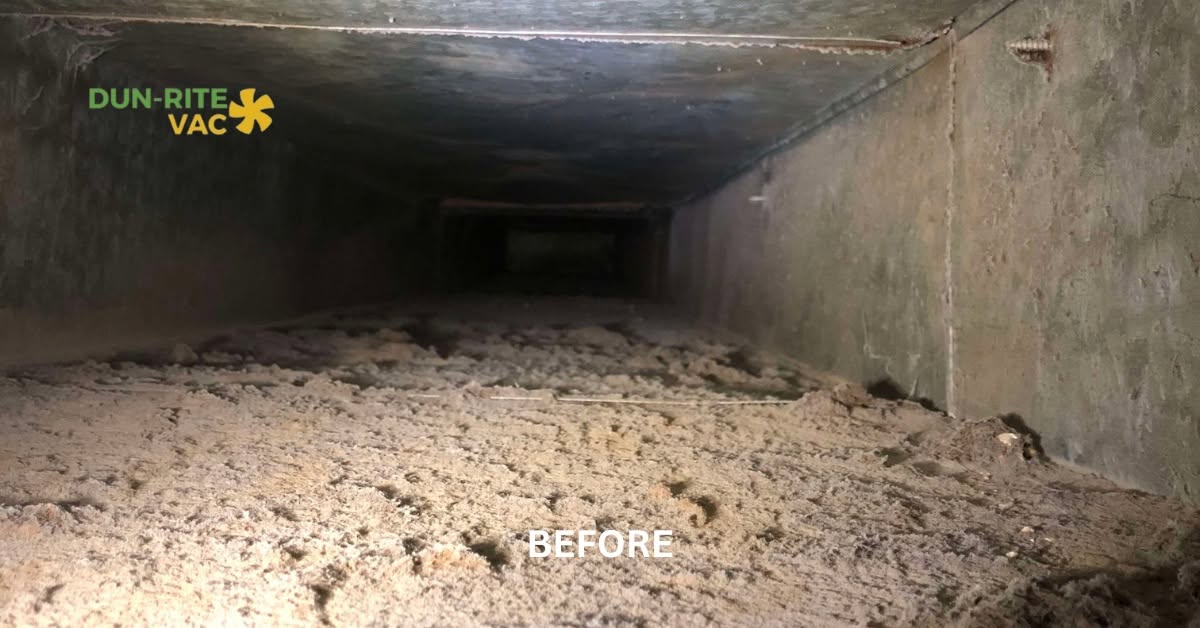
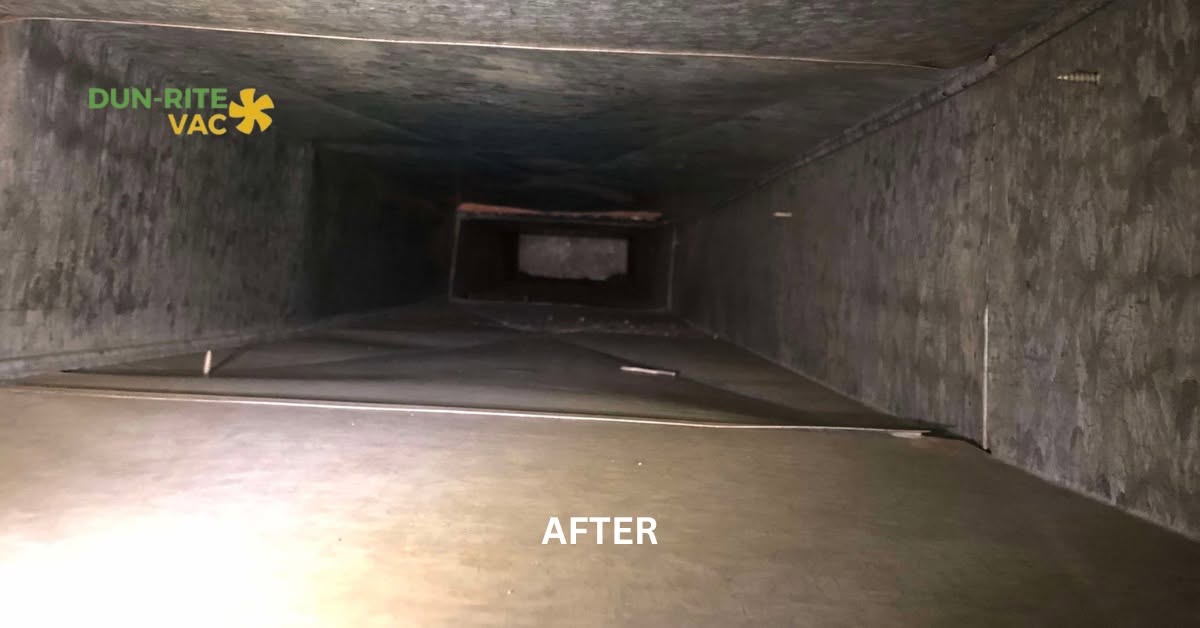
- Supply and return duct cleaning. The system is placed under negative pressure while professional agitation equipment is used to loosen accumulated dust and debris so it can be collected and removed.
- Registers, trunk lines, and accessible HVAC components. The areas included in the service are cleaned according to the system layout and what can be safely accessed.
- Final review and reassembly. Registers and other components that were removed are returned to position, the work area is checked, and the completed service is reviewed.
What to Expect During the Appointment
A few practical things are worth knowing before the crew arrives:
✅ The equipment will be noticeable. Professional vacuum and compressed-air equipment operates during much of the cleaning process, so expect more noise than during a normal furnace cycle.
✅ The system is controlled during cleaning. Proper source-removal cleaning uses negative pressure to collect material as it is loosened rather than allowing dislodged debris to spread through the home. NADCA identifies continuous negative pressure as a key part of professional HVAC cleaning.
✅ Many homeowners remain at home. Unless there is a specific reason otherwise, homeowners can often stay in the property during a standard duct-cleaning appointment. Clear access to registers, the furnace, and work areas is the most important preparation.
What Can Make the Job Take Longer
Several factors can increase the amount of time required on-site:
- More supply and return runs — larger systems naturally involve more areas to clean.
- Limited access — finished basements, tight utility areas, built-ins, or other obstacles can make access more involved.
- System layout — multiple furnaces, unusual trunk-line layouts, or other non-standard configurations can increase the scope.
- Heavier contamination — significant debris or material from construction or renovation may require additional work.
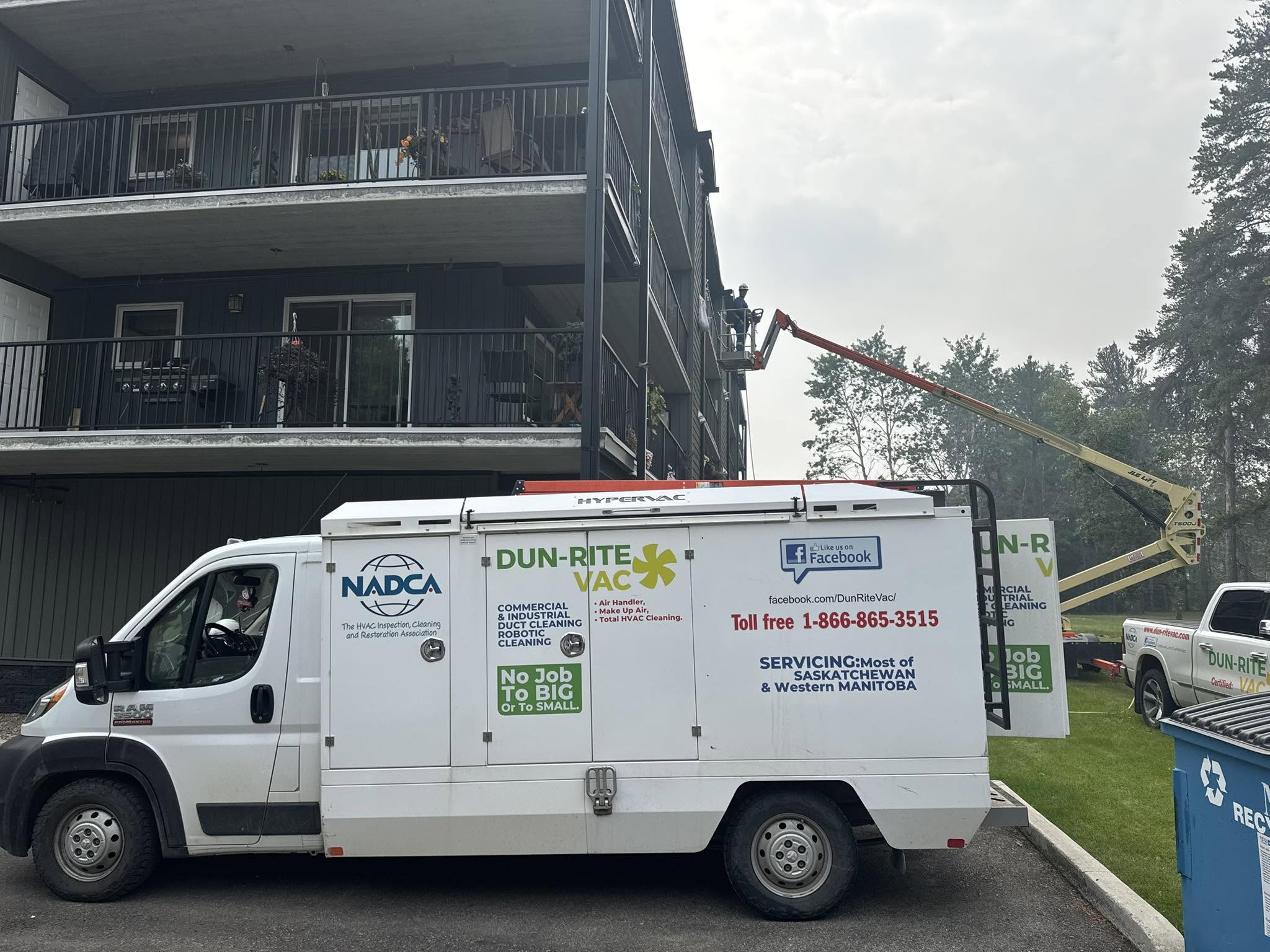
- Commercial or multi-unit systems — multiple HVAC units, zones, and access requirements can significantly affect project length.
- Additional services — adding services such as dryer vent cleaning or air exchanger cleaning increases the total time on-site.
That’s why the most useful time estimate is based on the actual system and the services being booked rather than square footage alone.
How to Prep So We Can Work Efficiently
A little preparation can help keep the appointment moving:
- Clear furniture, storage bins, or other items blocking registers.
- Make sure the furnace and mechanical area are accessible.
- Let us know about registers or HVAC areas that may be difficult to reach.
- Secure pets away from active work areas and equipment.
If you’re still deciding whether your system needs cleaning in the first place, our guide to whether air duct cleaning is necessary explains the conditions that are worth looking for.
Why the Process Matters as Much as the Time
The fastest appointment is not necessarily the most thorough one. Professional HVAC cleaning involves more than vacuuming around the visible registers. The system needs to be accessed appropriately, accumulated material needs to be loosened, and that material needs to be captured and removed.
NADCA describes source removal as a combination of agitation and vacuum collection, with the HVAC system maintained under negative pressure during cleaning. The amount of time required therefore depends on how much system needs to be cleaned and how accessible it is—not on meeting an arbitrary time target.
FAQ
Do I need to be home for the entire appointment?
That depends on the access arrangements for your property. Someone generally needs to provide access at the beginning of the appointment, and the technician may need information about the system or property before work begins. Ask when booking if you need to leave during the visit.
Will cleaning take longer if I’ve never had it done before?
Possibly, but cleaning history alone doesn’t determine the timeline. A system with substantial debris, difficult access, or more duct runs can require additional time, while another older system may be relatively straightforward. The condition and layout of the system are more useful indicators.
Can you clean my dryer vent or air exchanger during the same visit?
Additional cleaning services may be scheduled with a furnace and duct cleaning appointment depending on availability and the services requested. Adding work such as dryer vent or air exchanger cleaning will increase the total amount of time needed on-site.
What if my home has unusual or hard-to-access ductwork?
Let Dun-Rite Vac know when you book. Access limitations, multiple HVAC systems, finished areas, or unusual layouts can all affect the scope and appointment time.
How long will air duct cleaning take at my specific home?
For many homes, expect the work to take a few hours, but the most accurate estimate depends on your actual furnace and duct system. Dun-Rite Vac can give you a better idea of the expected appointment length when you request a quote.
Want a time estimate specific to your home or business before you book? Contact Dun-Rite Vac and we’ll help you understand what to expect based on the size and scope of the job.