
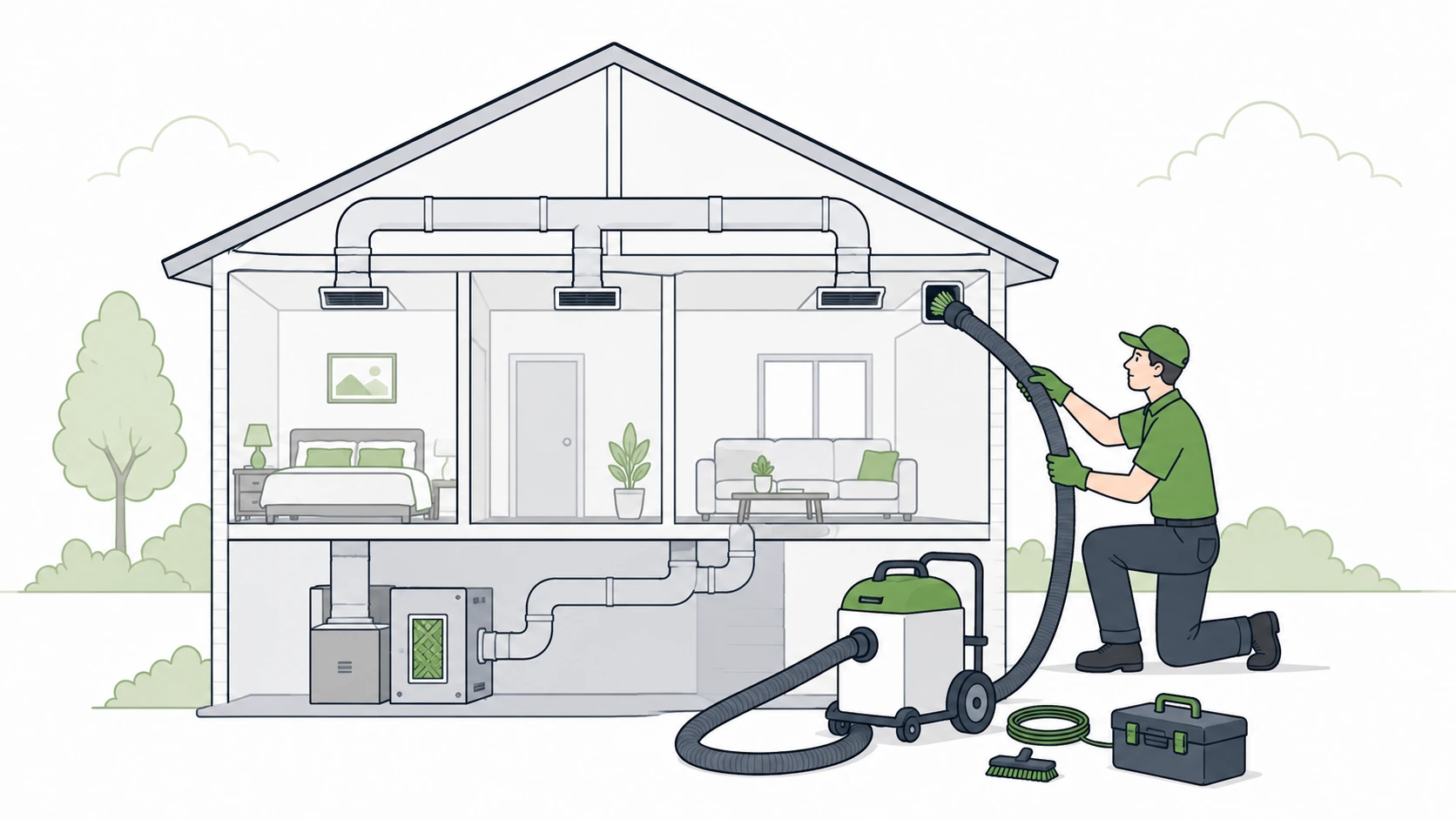
Professional air duct cleaning equipment cleans the full HVAC duct system—not just the dust visible near a floor or wall register. A complete service combines vacuums, agitation tools, compressed-air devices, brushes and controlled access points. Together, these tools loosen debris, move it through the ductwork and contain it until it leaves the building.
The largest vacuum is not automatically the best choice for every property. Cleaning quality also depends on the system layout, the available access points, the duct material and the technician’s ability to match each tool to the section being cleaned.
Quick Answer: Professional air duct cleaning equipment combines a high-powered vacuum with tools that loosen dust and debris. Cleaning quality depends on full-system reach, proper containment and complete debris removal. The goal is to remove loosened material, not simply disturb it.
A Powerful Vacuum Cannot Remove What the Tools Never Loosen
One of the most common misunderstandings about duct cleaning is that the vacuum does all the work. The vacuum creates negative pressure and gives loosened debris somewhere to go, but material that has settled onto the interior surfaces of the ductwork may not release through suction alone.
Dust can collect along seams, elbows, branch connections and horizontal sections where airflow is weaker. During Saskatchewan’s long heating season, the furnace moves air through the same network for months, allowing fine debris to accumulate in areas that cannot be seen from a floor or wall register.
That is why professional duct cleaning tools are used together. The vacuum maintains airflow toward the collection point while an air whip, brush or other agitation device loosens material from the duct surface. Without adequate agitation, a contractor may produce strong airflow at the opening while leaving buildup farther inside the system largely undisturbed.
The opposite problem can also occur. Agitating debris without sufficient negative pressure can allow dust to move toward registers or escape into occupied areas. Effective cleaning requires the suction and agitation steps to work as one controlled process. NADCA’s proper cleaning guidance describes professional source removal as a combination of loosening contaminants with agitation devices and collecting them while the system remains under continuous negative pressure.
Truck-Mounted vs. Portable Air Duct Cleaning Equipment: Which Is Better?
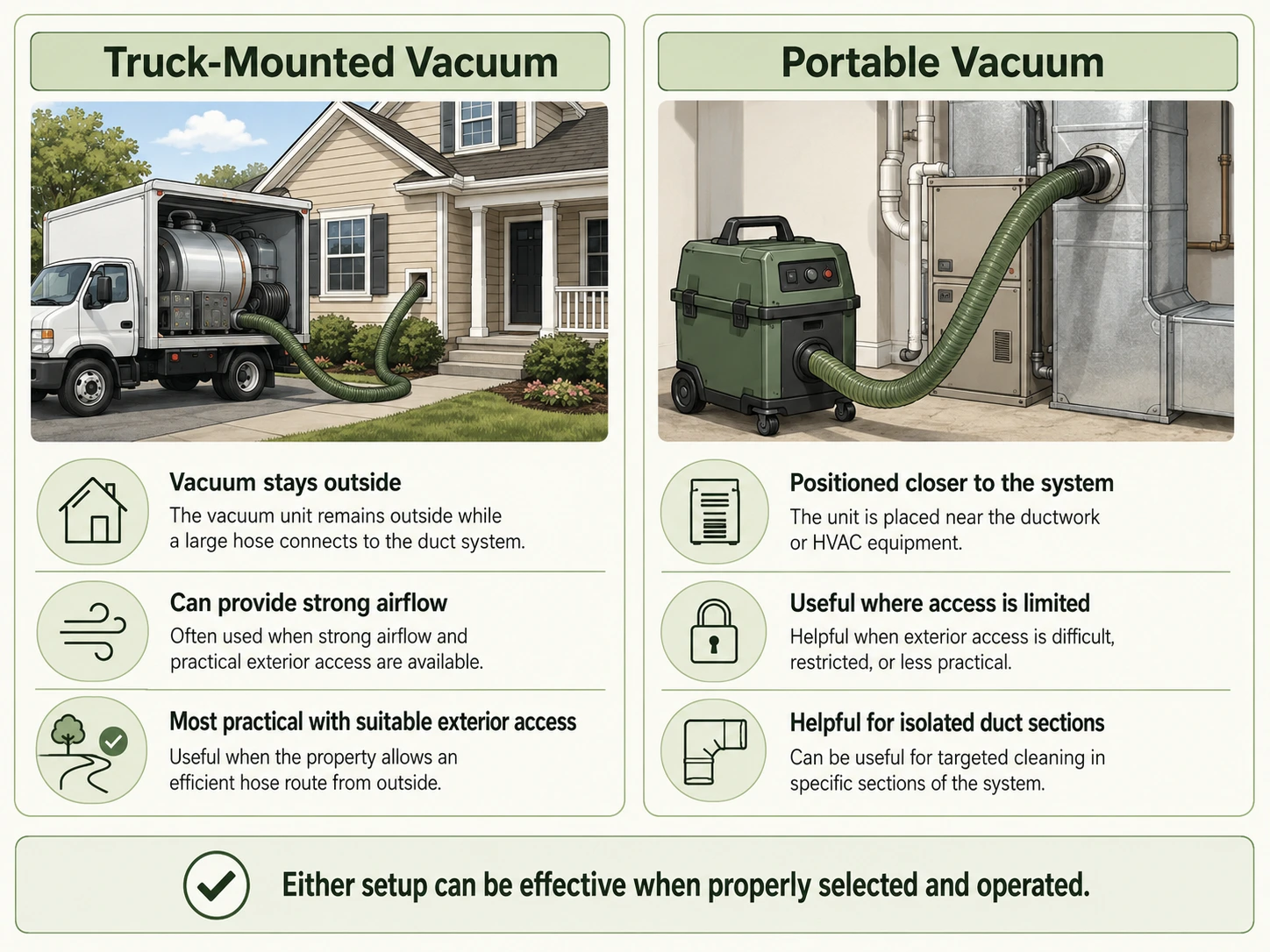
Truck-mounted duct cleaning equipment can create strong airflow and move large volumes of debris. The vacuum unit stays outside the building while a large hose connects it to the ductwork. Technicians can use this setup when the property provides suitable exterior access and a practical hose route.
A portable duct cleaning vacuum serves a different purpose. Technicians can position it closer to the system. This may help in buildings with restricted exterior access, isolated duct sections or mechanical rooms located far from an entrance.
Neither label guarantees a complete cleaning. A truck-mounted unit can underperform when technicians fail to isolate or agitate the ductwork properly. A portable unit can work well when technicians choose the correct capacity, use suitable filtration and plan around the system layout. NADCA notes that both truck-mounted and portable equipment can clean an HVAC system correctly when used properly.
One thing we see regularly in Saskatchewan homes is a system that looks straightforward at the registers but becomes much more complex once the main trunks and branch lines are traced. The equipment decision therefore has to be based on the actual duct configuration, not on a blanket assumption that one machine is always superior.
How Vacuum and Agitation Tools Differ at a Glance
| Equipment | What It Does | Where It May Fit Best |
|---|---|---|
| Truck-mounted vacuum | Creates strong airflow while the main vacuum unit remains outside the building. | Properties with suitable exterior access and a practical hose route to the duct system. |
| Portable vacuum | Allows the collection equipment to be positioned closer to the section being cleaned. | Restricted-access buildings, distant mechanical rooms or isolated duct sections. |
| Air whip | Uses compressed air to loosen and direct dust or light debris toward the vacuum. | Longer runs and areas where flexible agitation is useful. |
| Brush | Provides direct mechanical contact with buildup on suitable duct surfaces. | More firmly attached material where the duct type and condition permit brushing. |
Air Whips and Brushes Solve Different Cleaning Problems
An air whip uses compressed air to disturb and direct debris toward the vacuum collection point. Its flexible lines can move through sections of ductwork and agitate multiple surfaces without relying on direct manual contact at every point.
Brushes provide more direct mechanical contact. Technicians choose the brush according to the duct material, dimensions and condition. A suitable brush can loosen material that clings more firmly to the interior surface. The goal is controlled removal, not maximum aggression.
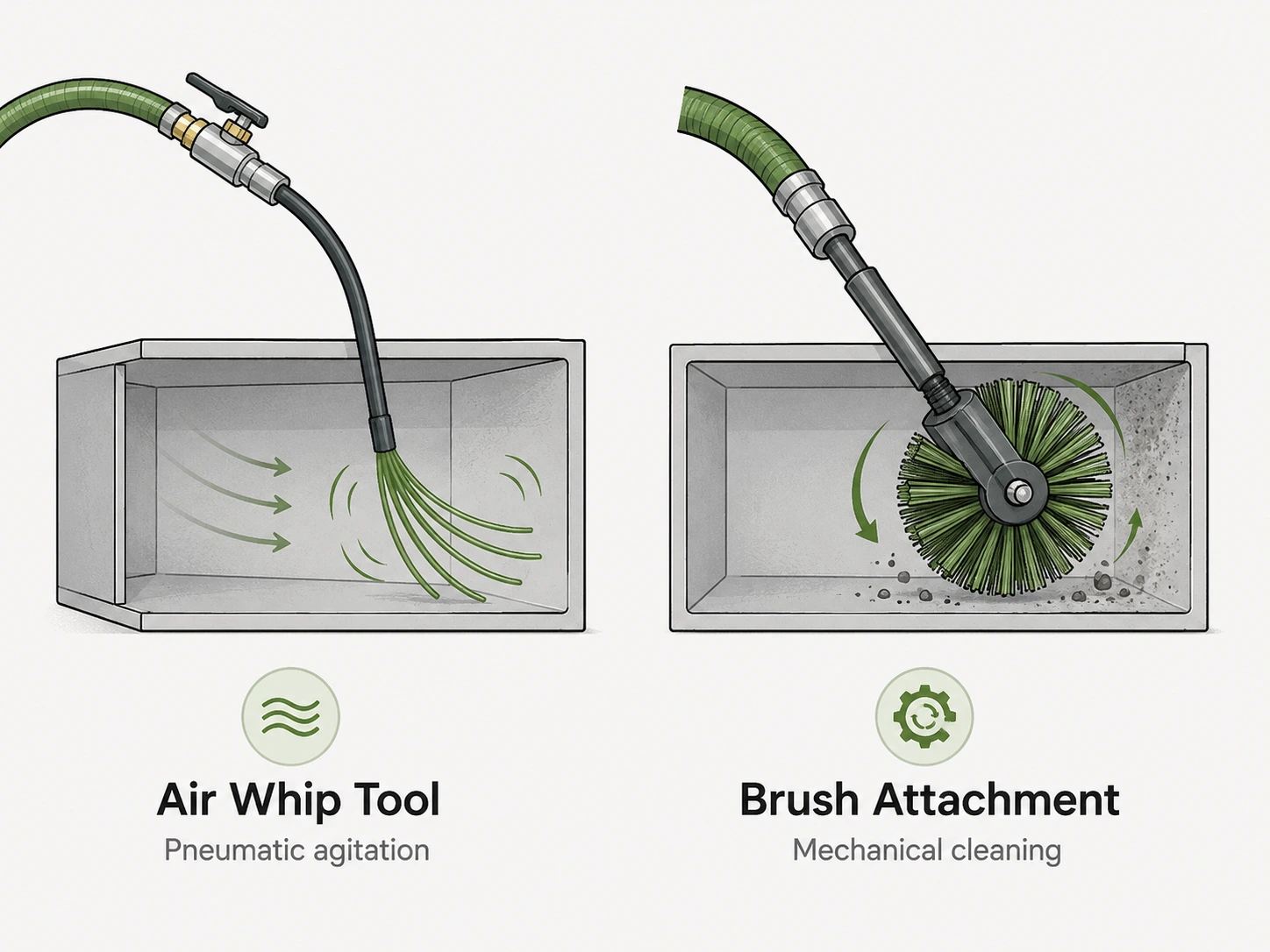
Tool choice matters most around elbows, transitions and branch lines. A device that moves easily through a straight metal trunk may stop or clean unevenly in a tighter section. Flexible ducting also needs more care than rigid sheet metal. NADCA’s equipment guidance distinguishes brushes from pneumatic tools such as air whips. It also warns that aggressive methods can damage flex duct, ductboard and fibreglass-lined ductwork.
On larger acreage properties, additions and long duct runs can create sections that respond differently to the same tool. Our technicians may need to change the agitation method as they move through the system rather than relying on one attachment from start to finish.
Access Points Determine Whether the Tools Reach the Full Duct Run
A contractor cannot clean a surface that the equipment cannot reach. Registers provide useful entry points, but they do not always offer a direct path to every trunk line, branch connection or enclosed section of the system.
Our technicians often find difficult branch runs in older bungalows. The nearest floor register may provide access to only part of the run. An elbow or transition can stop the tool, so the technician may need another entry point or a controlled service opening.
This is one reason job duration can vary between houses of similar size. The number of registers matters, but so do furnace-room access, finished ceilings, additions, duct geometry and the ability to isolate sections. Our guide to how long air duct cleaning takes explains how these practical factors affect the schedule.
Access equipment may include removable panels, temporary openings, sealing materials and fittings that allow tools and vacuum hoses to be connected without leaving uncontrolled gaps. Properly closing those access points after cleaning is part of the job, not a cosmetic extra.
Not sure how a contractor will clean the harder-to-access parts of your system?
Ask how the main trunks, return side and difficult branch runs will be accessed before the work begins. Dun-Rite Vac can review your system and provide a free quote without pressuring you into service your property may not need.
Containment Is Part of the Equipment, Not an Optional Add-On
A vacuum may collect a large amount of debris, but the job is incomplete if loosened dust escapes through open registers or poorly sealed connections. Containment keeps that material moving toward the collection equipment instead of back into the building.
Before agitation begins, technicians may seal or isolate parts of the system so airflow follows the intended direction. They may also cover registers that are not being cleaned. Secure hose and access connections help maintain negative pressure. NADCA’s cleaning-method guidance explains that controlled service openings help technicians reach duct interiors. Continuous negative pressure also helps keep loosened contaminants out of occupied areas.
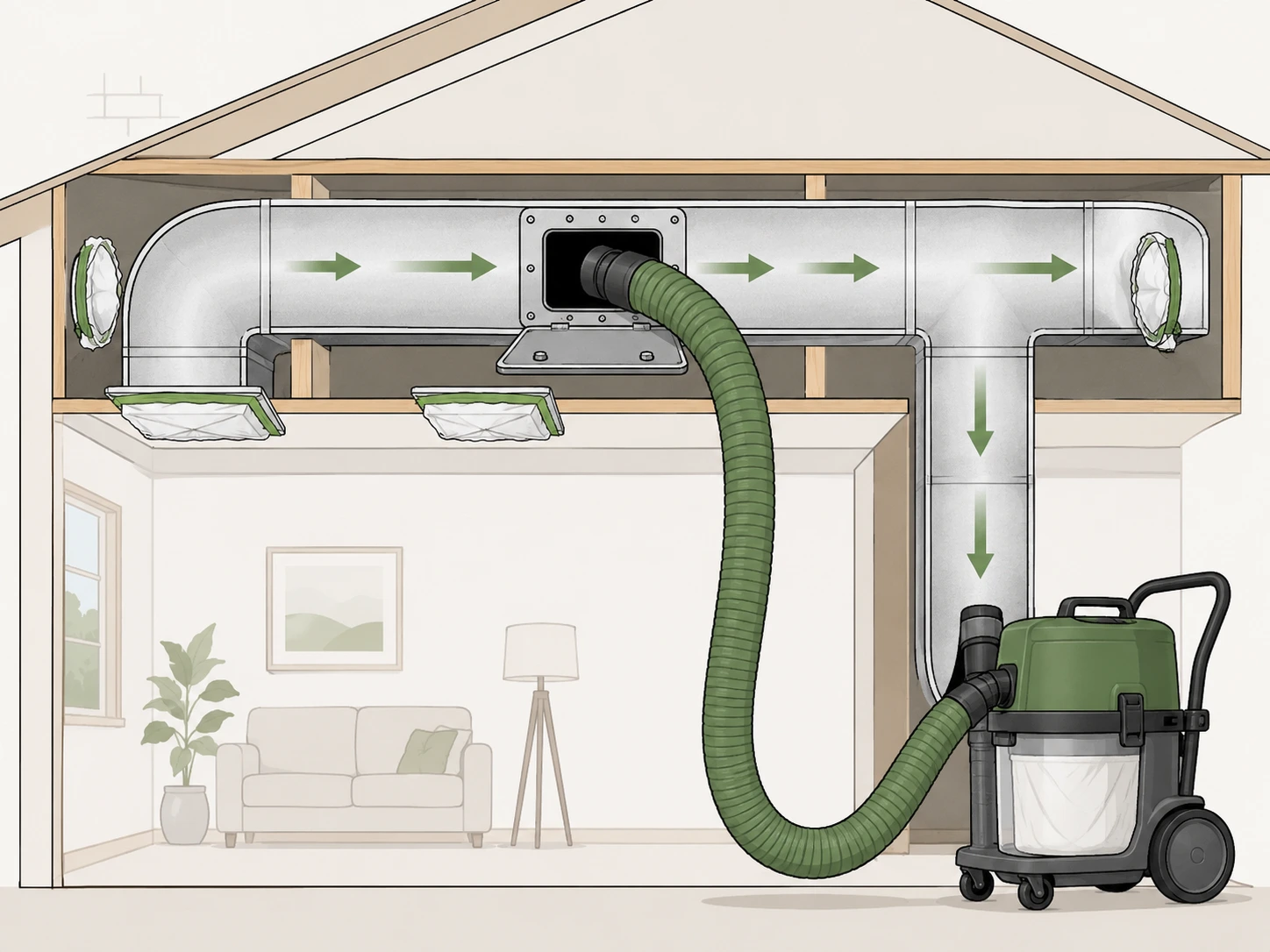
This becomes more important in tightly sealed cold-climate homes. Dust released indoors does not simply disappear, and disturbing a duct system without controlling the debris can create the exact indoor mess the service was supposed to prevent.
Good containment also protects the furnace area and finished portions of the home. Drop protection, hose routing and careful equipment placement may look less impressive than the vacuum itself, but they are part of conducting the work responsibly.
The Equipment Is Only as Effective as the Technician’s Cleaning Plan
Owning professional equipment does not prove that a contractor knows how to use it. The technician still has to identify supply and return sections, establish proper airflow, choose compatible agitation tools, work through the system methodically and verify that access points are closed correctly afterward.
Dun-Rite Vac opened in 1998 and remains a third-generation family-run business. We have completed more than 50,000 jobs and offer a 100% Satisfaction Guarantee, as outlined on our company website. Our NADCA professional directory listing identifies us as a residential and commercial member company. It also lists ASCS-certified personnel. Those qualifications and decades of field experience guide our equipment choices and cleaning process.
NADCA certification matters because it connects equipment use to a broader cleaning process. You can read more about what NADCA certification means and why training helps distinguish a complete system cleaning from a surface-level service.
A reputable contractor should also be willing to explain when cleaning may not be urgent. Equipment cannot correct every HVAC concern, and visible dust on a register is not by itself proof that the entire system needs immediate service. The decision should be based on the condition of the system, the property’s history and what can actually be reached and removed.
Questions Homeowners Ask About Air Duct Cleaning Equipment
Is truck-mounted duct cleaning equipment always better than portable equipment?
No. Truck-mounted equipment can provide strong airflow, but the better setup depends on access, system size, hose distance and duct layout. A properly selected portable system may be more practical in certain buildings, while either type can produce incomplete results if agitation and containment are poor.
Can a contractor clean ducts using only a vacuum hose?
A vacuum hose may collect loose debris near an opening, but attached material farther inside usually needs agitation. Professionals pair negative pressure with air whips or brushes. These tools loosen debris and direct it toward the collection equipment.
Can air duct cleaning tools damage flexible ductwork?
Yes, the wrong tool or technique can damage flexible ductwork. Technicians should inspect the ducting before using aggressive mechanical agitation. They must adjust the tool, pressure and method to suit the material and its condition.
What equipment questions should I ask before booking a duct cleaning?
Ask how the contractor will create negative pressure, what agitation tools will be used, how the return side will be cleaned, how difficult runs will be accessed and how debris will be contained. The answers should describe a complete process rather than focusing only on the size of the vacuum.
Continue Your Research Before Choosing a Contractor
- The Ultimate Checklist When Hiring an Air Duct Cleaning Company
- How Long Does Air Duct Cleaning Take?
- What Does NADCA Certification Mean?
Get a Cleaning Plan Based on Your Actual Duct System
Dun-Rite Vac provides professional furnace and duct cleaning across Saskatoon, Yorkton, Regina, Weyburn and surrounding areas. Our 100% Satisfaction Guarantee covers every job. We will also explain the equipment and access plan before starting the work.