
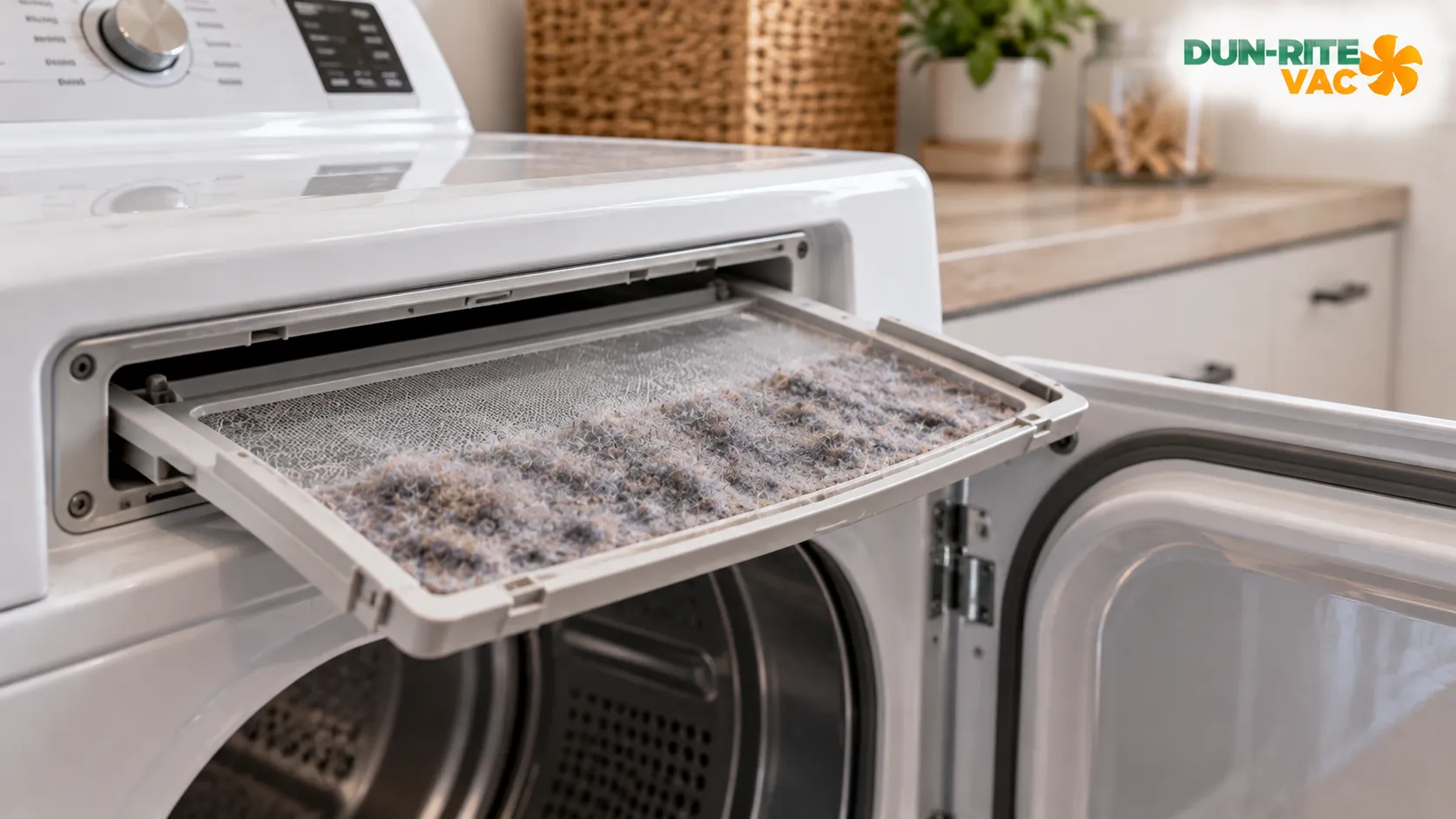
Pull the screen after a load of towels and the lint peels off in one soft sheet, which feels like the job is finished. For dryer lint trap cleaning, though, that sheet is only the part of the story you can see. The screen is the first checkpoint in a path that runs through the dryer, a connector, and a duct to the outside, and most of that path is out of sight.
This guide covers what you can reasonably do yourself, how to clean the screen and its residue, and where routine care ends and the vent itself comes into play.
Quick Answer: Empty the lint screen after every load, and wash off any residue film now and then, following your dryer manufacturer’s instructions. Limit hands-on cleaning to the screen and loose lint you can see at the opening. If drying times stay long even with an emptied screen, the venting is one of the next things worth checking, alongside load size, cycle settings and the dryer itself.
In this article
- Where the Lint Screen Ends and the Rest of the Dryer Path Begins
- Dryer Lint Trap Cleaning: What to Do and What to Leave Alone
- Dryer Lint Filter Residue: The Film a Clean-Looking Screen Hides
- When Laundry Stays Damp Even Though You Empty the Screen
- What Full-Run Dryer Vent Cleaning Covers
- Frequently Asked Questions
Where the Lint Screen Ends and the Rest of the Dryer Path Begins
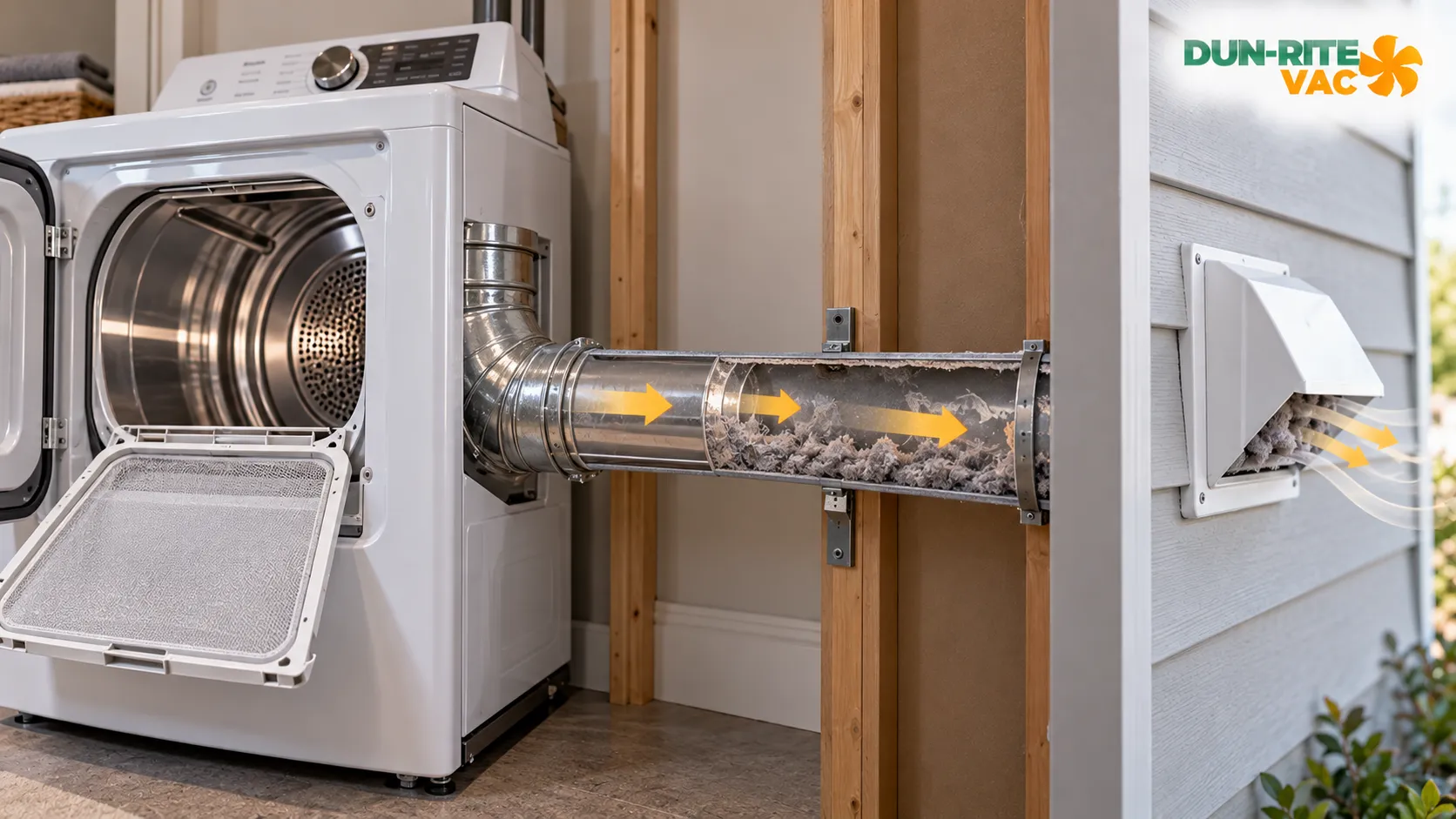
It’s easy to assume the lint trap catches all the lint. In reality, lint can accumulate in the dryer and the exhaust duct even when the screen is emptied faithfully. U.S. Consumer Product Safety Commission testing found that lint can begin accumulating inside a dryer during normal use even when the lint screen is cleaned after each use and the dryer is properly exhausted. The diagram below separates the four parts people tend to blur together.
Parts one and two are covered by everyday screen maintenance. Parts three and four can also collect lint, and they sit beyond that routine, which is why a spotless screen on its own doesn’t confirm the whole path is clear. Our recommended approach is to have those sections cleaned as part of a full-run cleaning.
Dryer Lint Trap Cleaning: What to Do and What to Leave Alone
The routine is short. Follow your dryer’s manual, since manufacturers differ on what they approve.
- Pull the screen out and peel the lint off by hand after each load.
- Shine a flashlight into the housing slot and look for loose lint within easy reach.
- Remove only what you can see at the opening, using your fingers or a vacuum crevice tool if your manual allows it.
- Check the mesh for residue (covered in the next section), then slide the screen back in fully.
Just as important is knowing where routine cleaning should stop. Don’t remove appliance panels or push brushes or vacuum hoses deep into the slot to chase lint you can’t see unless your dryer manufacturer specifically instructs you to do so. Whirlpool’s lint-filter cleaning guidance recommends gently vacuuming accessible lint around the lint-screen area. If debris is deeper inside the dryer or vent path, follow the appliance manual or have the system inspected rather than probing blindly.
Dryer Lint Filter Residue: The Film a Clean-Looking Screen Hides
A lint screen can look clean while the mesh itself is coated with residue. Maytag dryer documentation notes that dryer-added fabric-softener sheets can create a waxy residue on the lint screen and that this buildup can reduce dryer efficiency. The coating may not be as obvious as loose lint, which is why the mesh itself is worth checking.
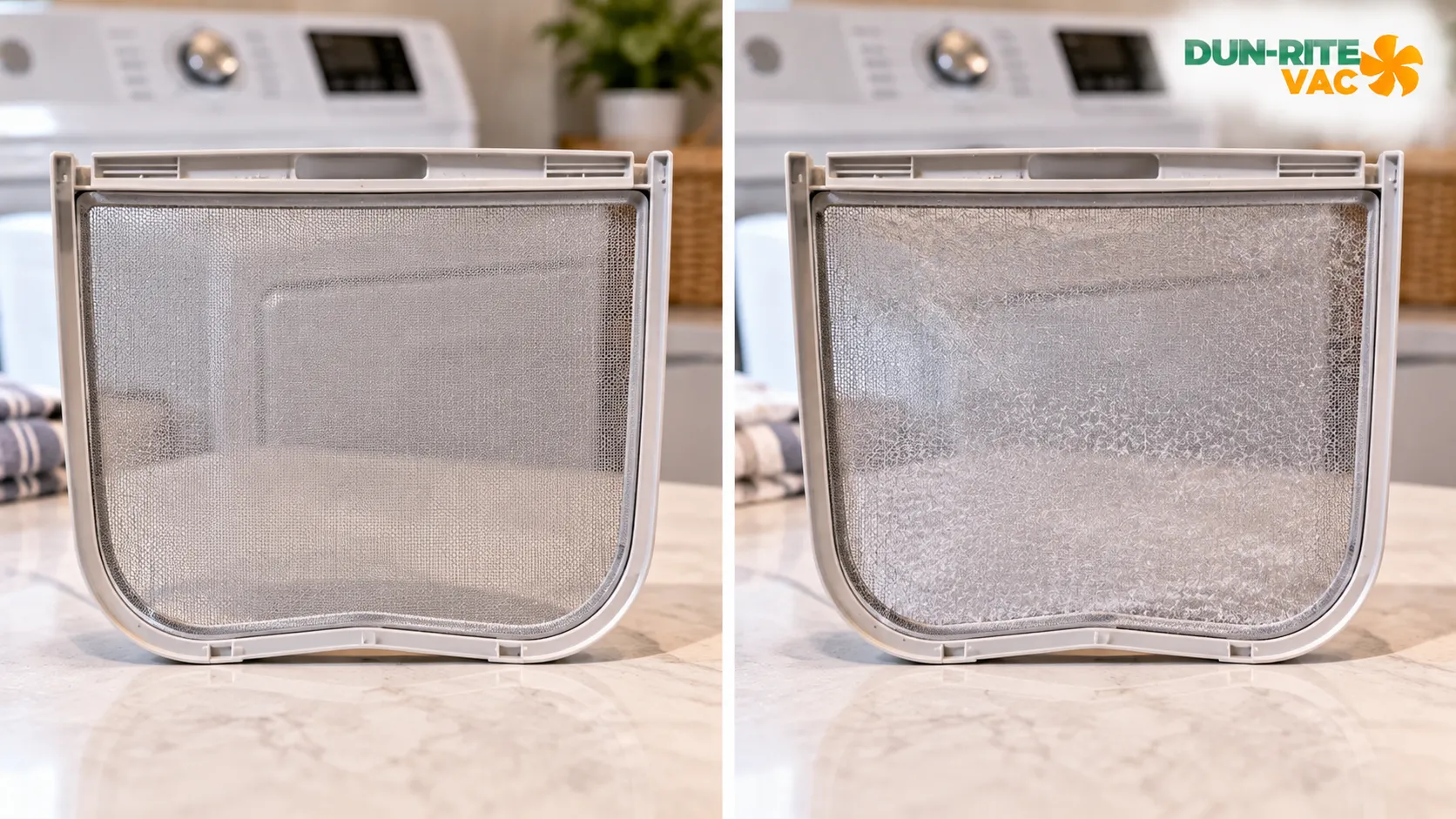
To check, hold the screen up to a light. Mesh that looks cloudy, stiff or glossy may have residue on it. Many manufacturers allow washing the screen with warm, soapy water and a soft brush, then drying it fully before it goes back in. Check your manual before choosing a cleaner, and avoid anything it warns against.
Residue buildup can contribute to longer drying times, so a quick wash is a small job with a practical payoff. It’s also worth deciding whether sheets and softener are worth the extra upkeep.
When Laundry Stays Damp Even Though You Empty the Screen
Towels that need a second cycle are frustrating, and the cause isn’t always the vent. Whirlpool’s troubleshooting guidance for long drying times lists factors such as load size, mixed fabrics, cycle settings, heating problems, lint-screen issues and restricted ventilation. So if the screen is clean but drying times remain long, the exhaust path is one of several things worth checking.
Saskatchewan’s long heating season means many households lean on the dryer for months at a stretch, so a vent that’s due for attention is worth catching before winter settles in.
These signs point toward checking the venting. U.S. Consumer Product Safety Commission dryer-safety guidance identifies unusually long drying times and reduced exhaust airflow as warning signs that the exhaust path may be restricted:
- Clothes still damp after a normal drying cycle
- Drying times becoming noticeably longer than usual
- Little or no airflow at the outside hood
- A burning smell while drying. Stop using the dryer until the cause has been checked. GE Appliances notes that a burning odor from an installed dryer can be associated with lint buildup in the venting.
If drying times stay long after you’ve ruled out the load and settings, restricted venting is a reasonable next thing to look at. Describe what you’re seeing through our contact page, and we’ll help you decide whether a full cleaning makes sense.
What Full-Run Dryer Vent Cleaning Covers
A professional full-run cleaning covers the connector and the exhaust duct from the dryer to the outside hood. Dun-Rite Vac has been a family-run business since 1998, with more than 50,000 completed jobs, and our technicians are ASCS-certified through NADCA, the National Air Duct Cleaners Association.
For the full process, see our dryer vent cleaning service.
We’ll also be straight about timing: if your dryer is performing well and the outside hood moves air freely, there’s no need for an urgent visit. A good screen routine and a watchful eye on the signs above are often enough until something changes.
Frequently Asked Questions
Can I wash my dryer lint screen with water?
Often yes, but check your manual first. Many manufacturers approve warm soapy water and a soft brush to remove residue, as long as the screen is fully dry before it goes back in. Don’t use harsh abrasives or anything your manual cautions against.
Is it safe to vacuum the lint screen slot?
Many manuals allow a crevice attachment at the opening to lift out visible loose lint, so check yours. Don’t push a hose or brush deep into the slot, and don’t remove dryer panels to reach lint you can’t see. Anything beyond the accessible opening is a job for a full-run cleaning.
Do dryer sheets really clog the lint screen?
They can contribute. Sheets and liquid softener can leave a film on the mesh that isn’t obvious at a glance. If the mesh looks cloudy or stiff, wash it per your manual, and consider using sheets less often.
Not sure what’s behind the dryer? Every cleaning is backed by our 100% Satisfaction Guarantee, and a free quote costs you nothing.