
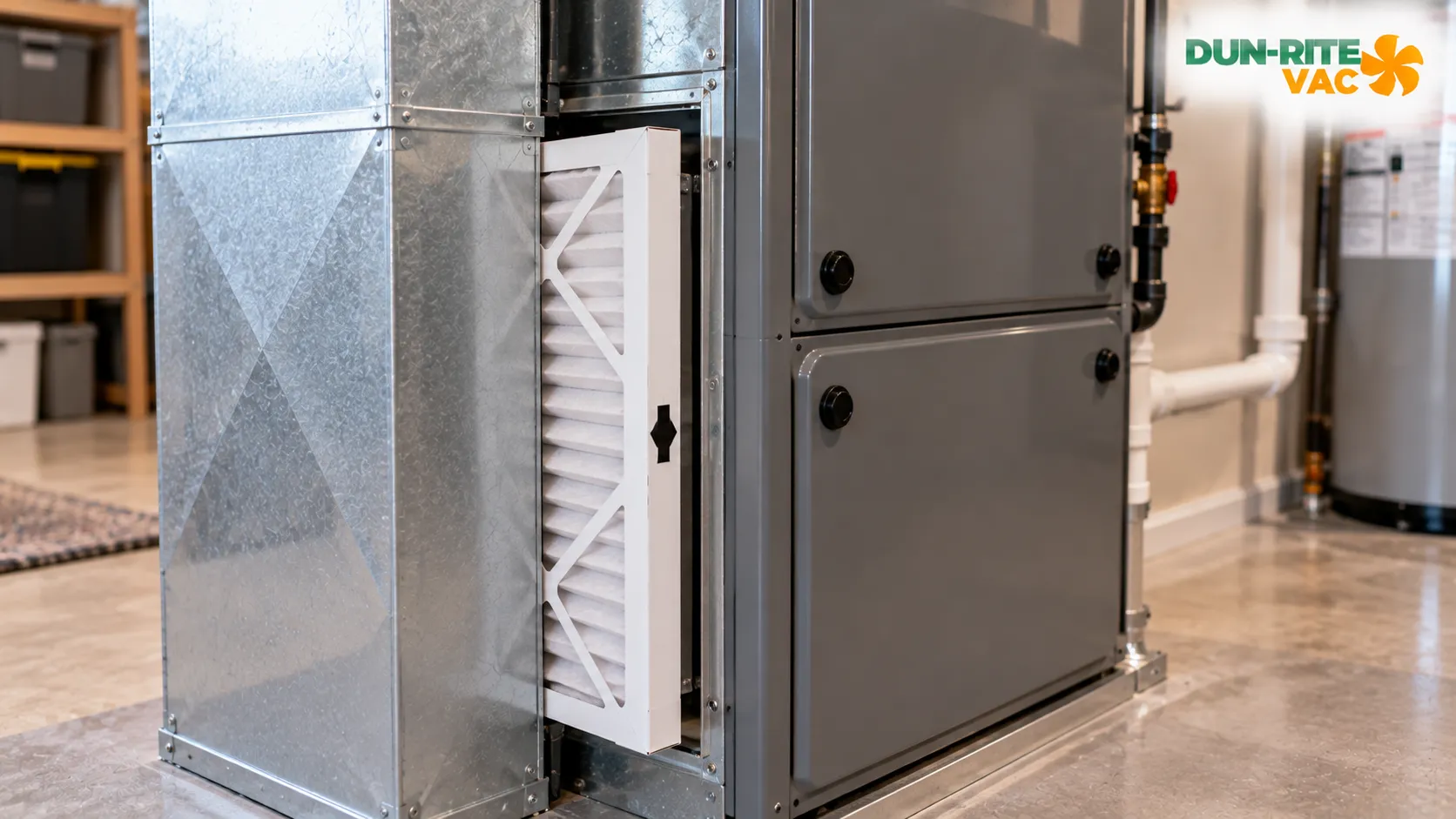
Most people learn how to change a furnace filter the same way: they pull out the old one, notice a small arrow printed on its cardboard frame, and wonder whether it matters. It does. It also helps to know where the filter lives, because on some furnaces it isn’t where you’d expect.
This walkthrough covers all three: where to find it, which way it faces, and how to swap it cleanly. Your furnace’s model manual gets the final word on anything specific to your unit.
Quick Answer: Turn the furnace off, find the filter slot where the return-air duct meets the furnace (or behind a wall or ceiling return grille), and slide the old filter out. Confirm the correct size, then install the new filter with the arrow on its frame pointing toward the furnace, in the direction the air is travelling. Close the cover firmly and turn the furnace back on.
In this article
- Finding the filter: the three places it usually hides
- Why the arrow matters, and what a backwards filter does
- How to change a furnace filter without dumping dust into the blower
- When the manual overrules the rule of thumb
- How often should you change a furnace filter?
- What a fresh filter can’t do
- Furnace filter questions homeowners actually ask
Finding the Filter: The Three Places It Usually Hides
You’ve opened the furnace cabinet, and there’s no filter. That’s a common first snag, and it often means the filter isn’t in the furnace at all. Manufacturers note that placement varies from system to system.
The furnace filter location depends on how your system was set up. These are the three spots to check, in order:
- A slot on the furnace itself. Look along the side or bottom of the unit, right where the large return-air duct enters. You’ll often see a thin cover or a gap that a rectangular filter slides into.
- The blower compartment. On some upright furnaces, the filter sits inside the cabinet beneath the blower, behind a removable door.
- A return-air grille. Many homes have a large grille on a wall, ceiling, or floor, with the filter sitting right behind it.
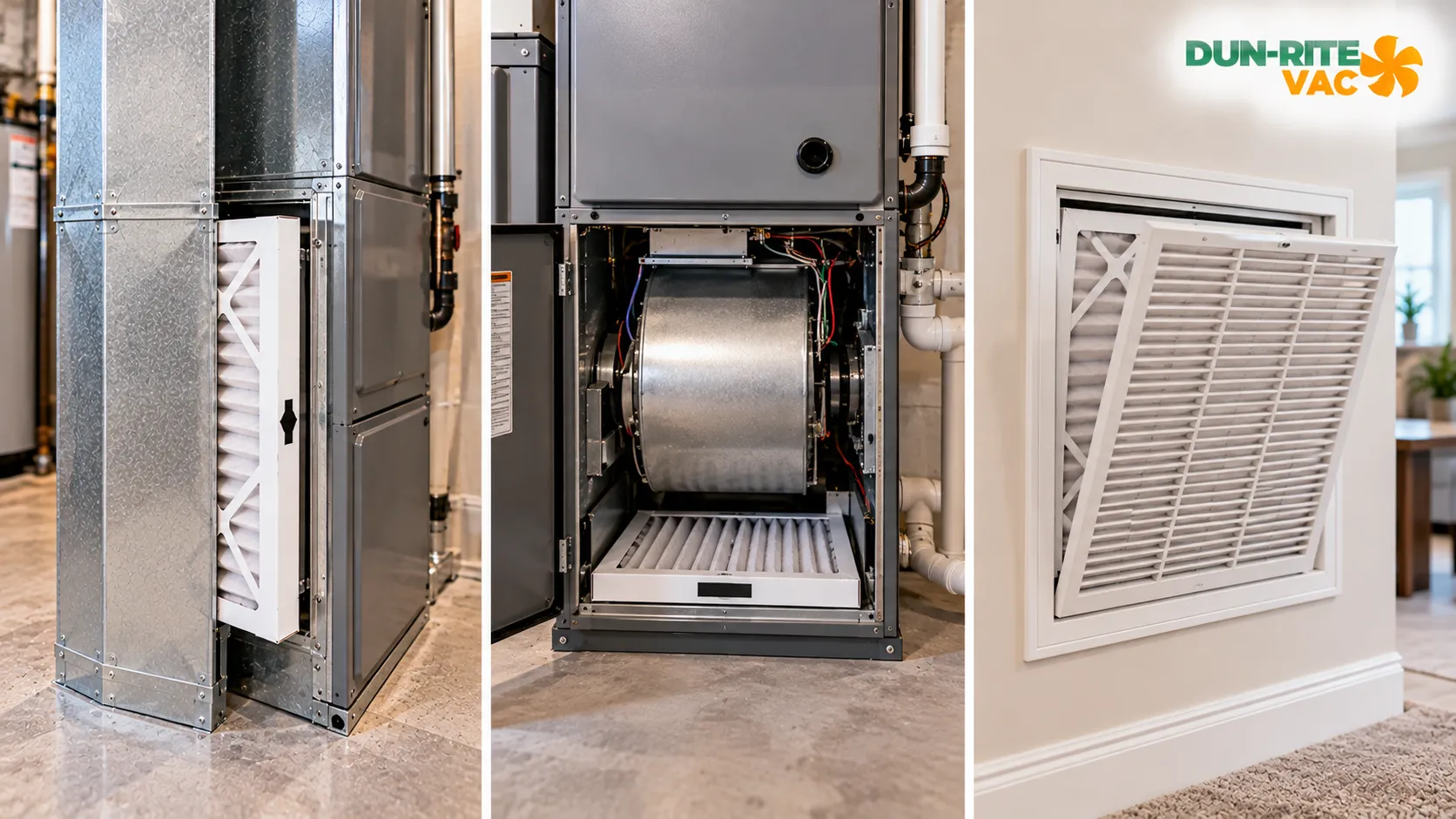
Filter arrangements vary by system, so don’t add a second filter unless your furnace design or manufacturer specifically calls for one. Some manufacturer service instructions specify one filter location rather than another, which is why your own model manual should be the final authority. Carrier service documentation is one example of a furnace with manufacturer-specific filter placement, while EPA guidance on residential air filtration emphasizes matching filtration to what the system fan and filter slot can accommodate. If you can’t find your filter after checking the three common locations above, check your furnace manual.
Why the Arrow Matters, and What a Backwards Filter Does
A lot of people assume a filter works the same whichever way it faces. It doesn’t. The printed arrow on the frame shows the direction air is meant to flow through it, and getting the furnace filter arrow direction right is the most important part of the swap.
So which way does a furnace filter go? The arrow points toward the furnace blower, away from the return duct or room grille. In other words, it points in the direction the air is travelling, ending up at the furnace. Carrier’s furnace-filter guidance likewise instructs homeowners to point the airflow arrows toward the blower motor.
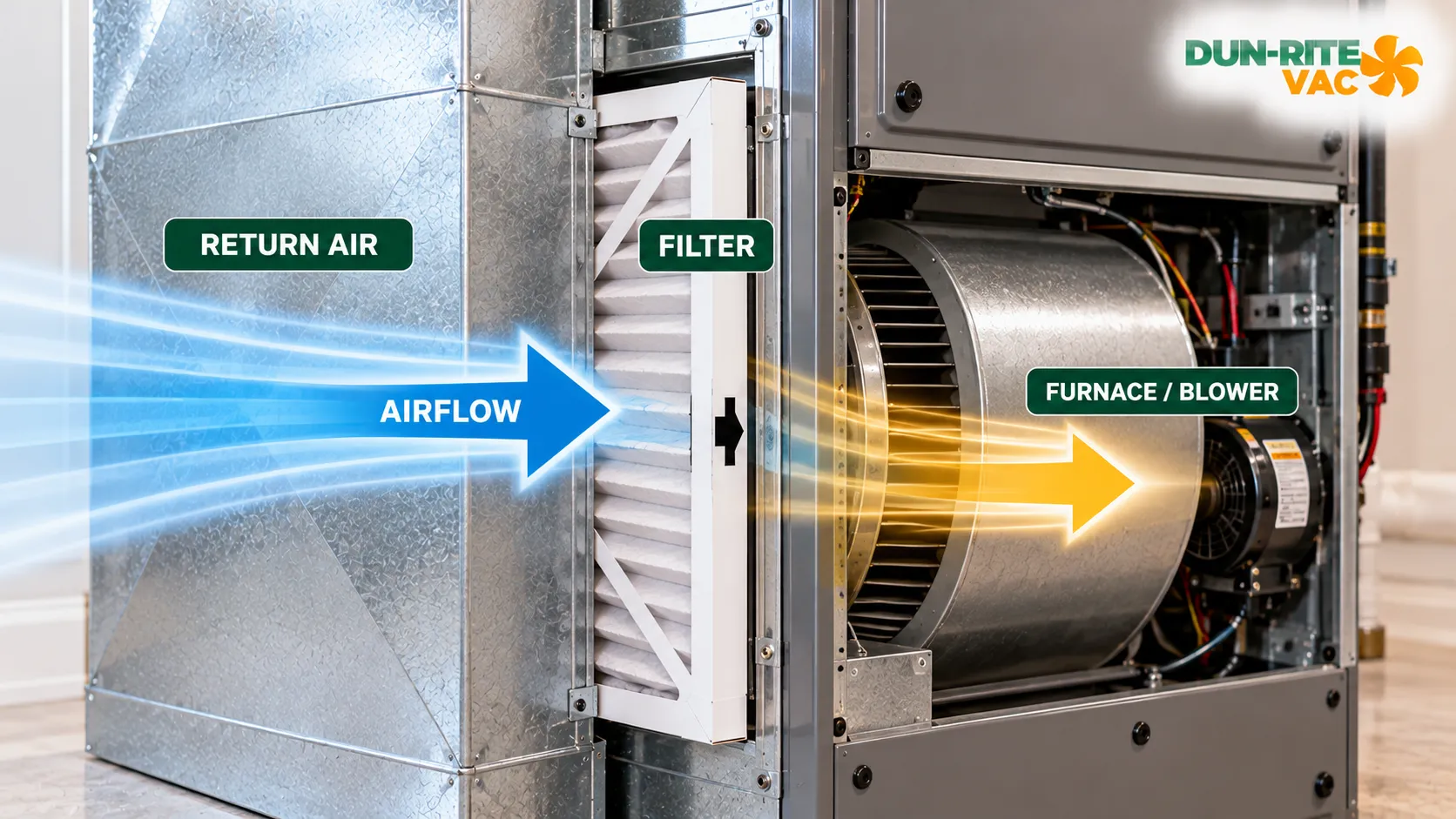
Installed backwards, a filter may not seat or perform the way it was designed to. You can glance at how the old filter came out, but don’t assume it was right, because a previous owner may have put it in backwards. Go by the arrow and the manual, and make sure it points toward the furnace cabinet or blower.
How to Change a Furnace Filter Without Dumping Dust Into the Blower
This is usually a quick job. What matters is the order, because a loaded filter is full of loose dust that you don’t want falling into the cabinet.
- Turn the furnace off at the thermostat, and at the furnace’s own switch if it has one, so the blower isn’t pulling air while the filter is out.
- Slide the old filter out slowly and level, then carry it away flat. Tilting it shakes dust loose.
- Check the size. The dimensions printed on the old filter’s frame (length × width × thickness) are a good starting point. If you’re not sure it was the right size, confirm against the label on the filter cabinet or in your model manual. Don’t trim or force a near fit.
- Check the slot. Wipe away any visible dust or debris at the opening with a dry cloth or vacuum hose.
- Slide the new filter in with the arrow pointing toward the furnace, and make sure it sits snug with no gaps along the edges.
- Close the cover or door firmly, then turn the furnace back on and make sure it runs normally.
When the Manual Overrules the Rule of Thumb
The steps above fit most homes, but your furnace’s model manual is the real authority on a few points. It will tell you the correct filter size and thickness, the location of the slot, and what type or rating the manufacturer recommends. That last point matters because U.S. EPA guidance on MERV ratings recommends using higher-efficiency filtration only up to the level your system’s fan and filter slot can accommodate. A very dense filter can restrict airflow on a system that wasn’t designed for it.
The model number is usually on a sticker inside the furnace door. If the paper manual has long since disappeared, searching that model number online will usually turn up a PDF of the same documentation.
How Often Should You Change a Furnace Filter?
The right interval depends on the filter type, whether you have pets, and how heavily the system runs. Trane’s furnace maintenance guidance recommends checking or replacing filters on a schedule that can range from roughly 30 to 90 days depending on the filter and household conditions, with some thicker filters lasting longer. Follow the instructions for your specific filter and furnace. For Saskatchewan homeowners, checking at the start of the heating season and again partway through is a practical routine. If the filter looks visibly dirty or clogged, replace it. For other maintenance worth doing before and after winter, see Dun-Rite Vac’s services.
What a Fresh Filter Can’t Do
A filter’s job is to catch particles before they enter the system. It can’t remove debris that has already settled inside the ductwork. That said, if dust keeps returning or the furnace smells stale when it starts up, the ducts aren’t automatically the cause. Dust and odours can come from many sources around a home. The U.S. EPA’s residential air-duct guidance notes that dirty ducts are only one potential source of household particles and recommends duct cleaning on an as-needed basis rather than as routine maintenance for ordinary household dust.
Some situations do deserve a closer look: heavy visible debris in the ducts or at the registers, signs of pests, suspected mould, or dust actually blowing out of the supply registers. In those cases, professional cleaning may be appropriate. Dun-Rite Vac has been cleaning duct systems in Saskatchewan since 1998, and our technicians hold ASCS certification through NADCA. You can read more on our residential duct cleaning page.
Not sure whether what you’re seeing points to the ducts? Tell us what you’ve noticed, and we’ll help you work out whether a cleaning makes sense. Ask for a free quote whenever you’re ready.
For the bigger picture on how cleaning works across homes and buildings, see our main furnace duct cleaning page.
Furnace Filter Questions Homeowners Actually Ask
Can I change the filter while the furnace is running?
It’s better not to. Turn the system off first, so the blower isn’t pulling air (and dust) through an open slot while the filter is out.
What if I can’t tell which way the arrow should point?
The arrow points toward the furnace blower, in the direction the air flows. Don’t rely on how the old filter was sitting, since it may have been installed backwards. If the airflow direction still isn’t clear, check your furnace manual.
Is it okay to use a thicker or higher-rated filter than the one I had?
Not automatically. A denser or thicker filter can restrict airflow on a furnace not designed for it, and it may not fit the slot at all. Check your model manual for what the manufacturer recommends.
There’s a gap around my filter. Is that a problem?
Yes. Air takes the path of least resistance, so a gap lets unfiltered air bypass the filter entirely. Replace it with the correct size and make sure it seats snugly.
Dun-Rite Vac has served Saskatchewan families since 1998. With 50,000+ completed jobs, ASCS-certified technicians, and a 100% Satisfaction Guarantee, we’d be glad to look at your ductwork whenever it makes sense for you.