
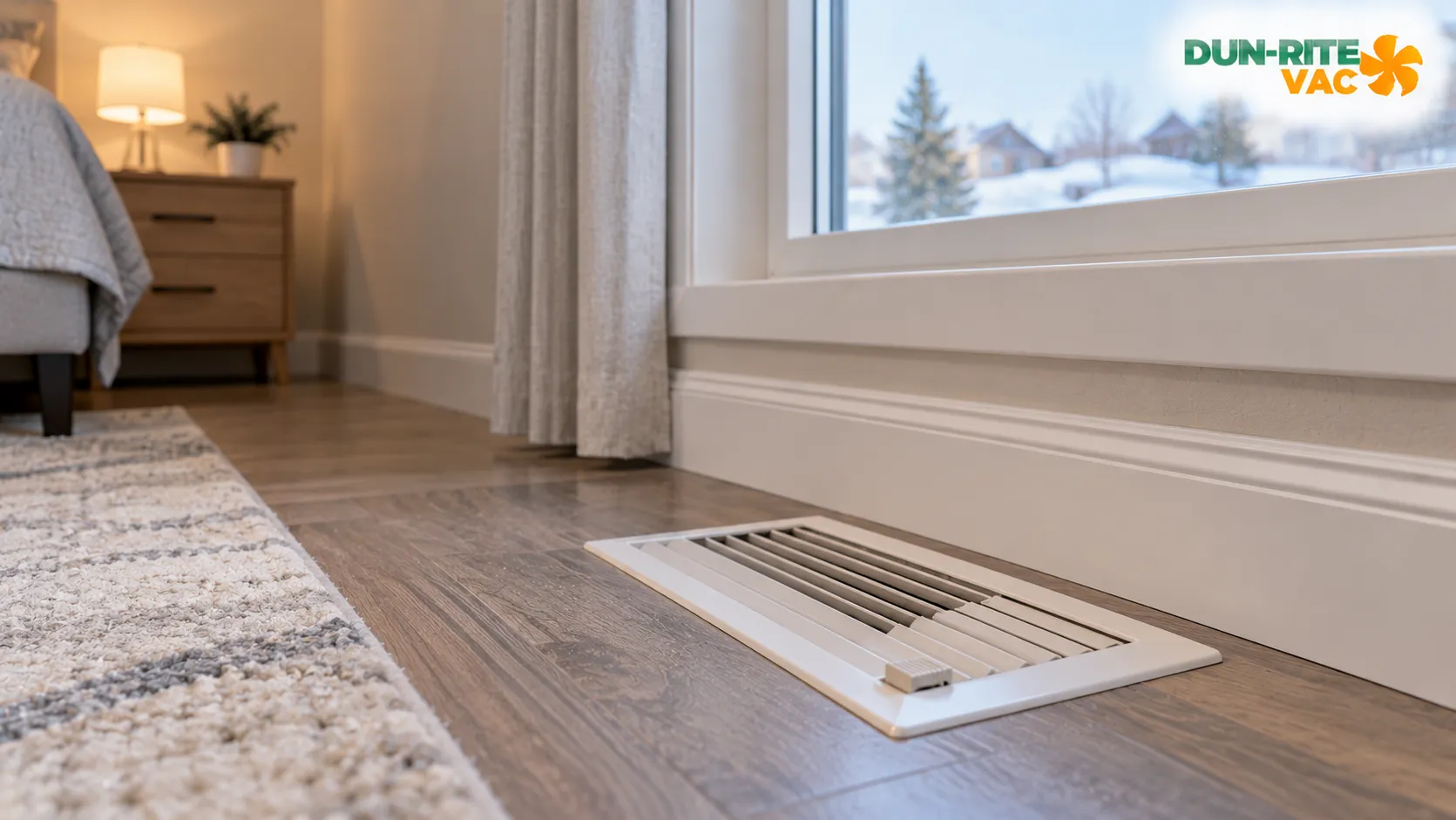
Should You Close Vents in Unused Rooms? What Saskatchewan Homeowners Should Know
Every fall, the same thought crosses a lot of Saskatchewan minds: the spare bedroom is empty, so why heat it? Closing vents in unused rooms sounds like a simple way to trim the heating bill, but the honest answer depends on what kind of system is in your walls.
Here’s what’s worth knowing before you reach for the louvre lever.
Quick Answer: In most single-zone forced-air homes, closing registers is not a reliable way to save energy, and it can cause new problems. Closing register energy savings are never guaranteed, because the furnace blower still has to move air that now has fewer places to go. Systems that are built with zoning are the exception. If a room is too hot or too cold, have a qualified HVAC provider look at it rather than working around it with the registers.
In this article
- Three Things People Call “Closing a Vent” That Aren’t the Same
- Should You Close Air Vents? Why It Doesn’t Always Save Energy
- The Blocked Return Air Vent Nobody Notices
- Why Closed-Off Rooms Need Extra Attention in a Saskatchewan Winter
- When Closing Airflow Is Actually the Design
- Where Duct Cleaning Fits, and Where It Doesn’t
- Frequently Asked Questions
Three Things People Call “Closing a Vent” That Aren’t the Same
Most of the confusion comes from lumping three very different situations into one phrase. Sorting them out first makes every other question easier.
- Closing a supply register by hand. You slide or turn the louvres on a register so less air enters the room. A standard furnace has no way of adjusting for it.
- Blocking a return. Furniture, a rug, a drape or a stack of boxes ends up covering the grille that pulls air back to the furnace. Nobody decided to do this; it just happened.
- Designed zoning. Motorized dampers and separate thermostats deliberately shut airflow to one area, and the system was built to handle it.
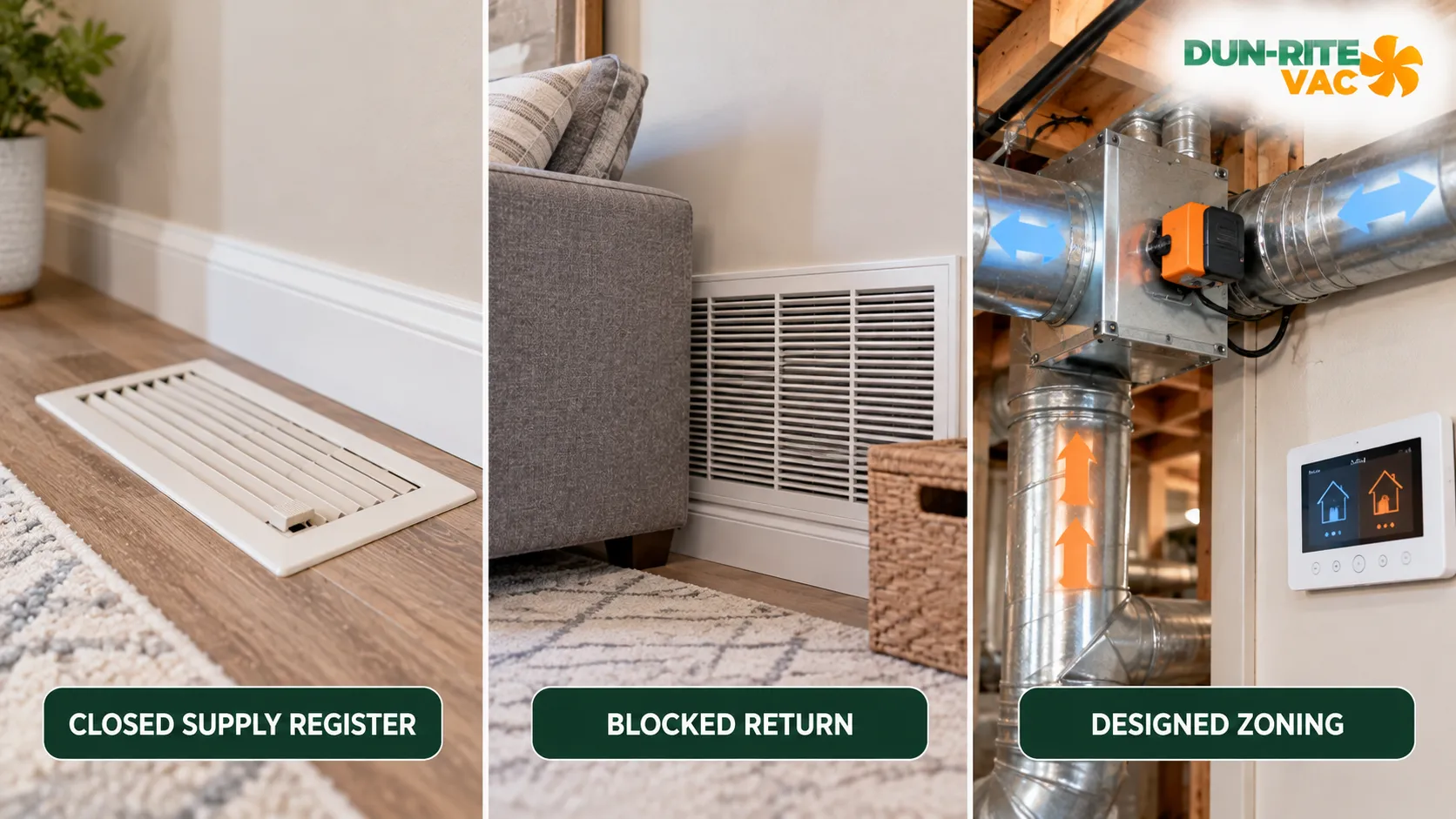
The first is a choice you can undo in a second. The second is usually an accident, and it can disrupt return airflow and system pressure. The third is engineering. Treating them as one thing is how a well-meant energy-saving habit turns into a comfort complaint.
Should You Close Air Vents? Why It Doesn’t Always Save Energy
Closing vents in unused rooms rests on an intuitive idea: less air into an empty room means less heat wasted. In many forced-air systems, though, the furnace blower doesn’t simply ease off because you shut a register. The air it moves still has to go somewhere, and that can mean higher pressure in the ductwork, more noise at the remaining registers, or more leakage at duct joints. U.S. Department of Energy HVAC guidance similarly advises against shutting vents in unused rooms because doing so can reduce airflow, create pressure imbalances and put additional stress on duct connections.
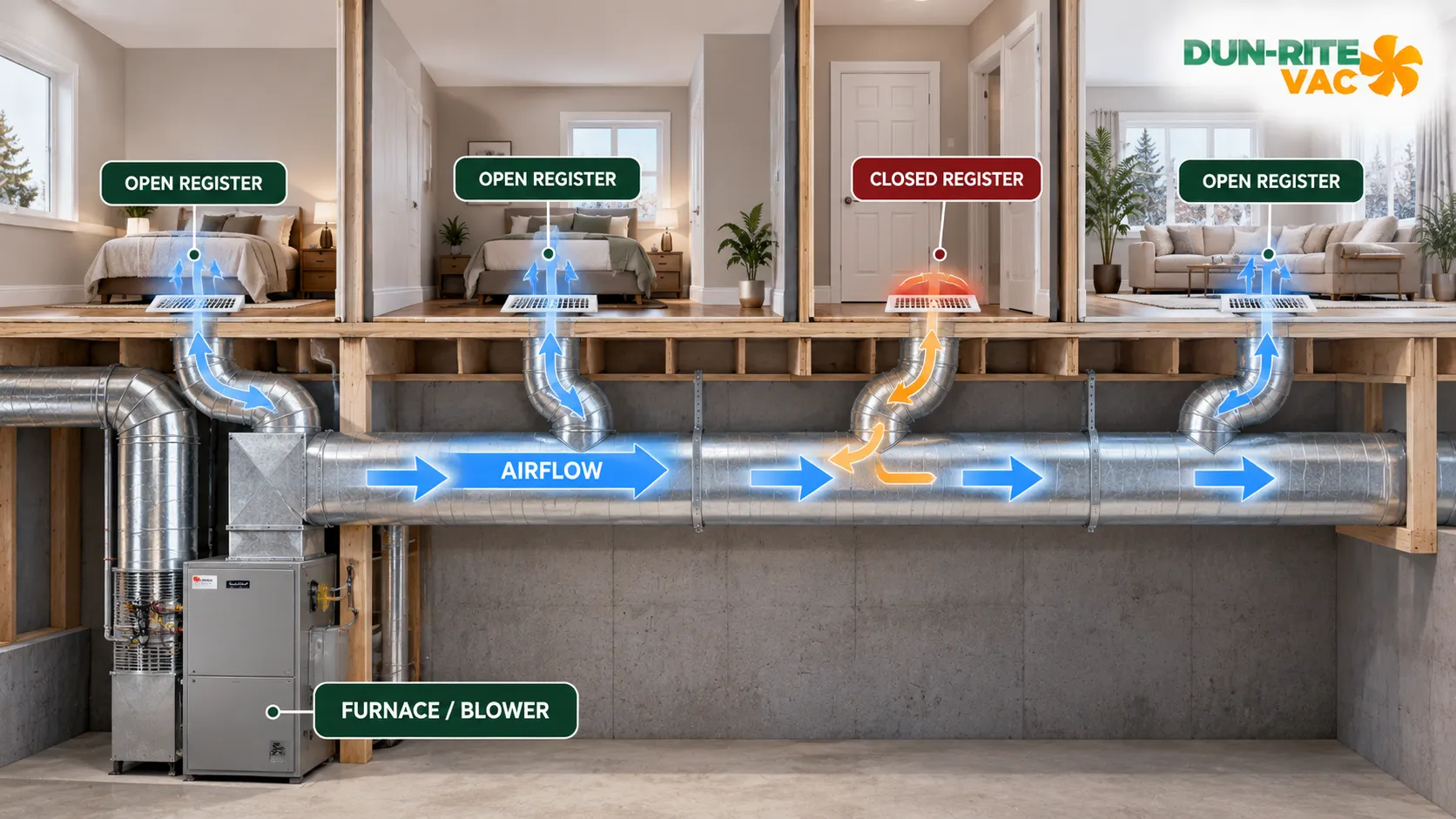
Restricted airflow can also be hard on equipment. Carrier Canada’s furnace troubleshooting guidance notes that restricted airflow from issues such as dirty filters or obstructed room vents can contribute to an overheating heat exchanger and short cycling. How much a closed register matters depends on the furnace, blower type, duct design and how many registers are involved, which is why a general rule of thumb isn’t enough. Your furnace or air handler manufacturer’s documentation says what your equipment tolerates, and a qualified HVAC provider can interpret it for your home.
The Blocked Return Air Vent Nobody Notices
If one level of the house is always cooler than the rest, the furnace seems to run constantly, or the system sounds like it’s working harder than it should, a blocked return air vent is one possible cause worth checking. It’s only one of several; insulation, duct design, equipment sizing and a clogged filter can produce similar symptoms.
Supply registers push conditioned air into rooms, and return grilles pull it back so the system has a steady loop to work with. When a return is starved of air, the whole loop suffers, not just the room it sits in. Trane’s guidance on return-air vents recommends keeping returns clear of furniture and drapes so air can move freely back to the HVAC system. A dirty filter can restrict return airflow in a similar way, so following your manufacturer’s filter schedule matters too.
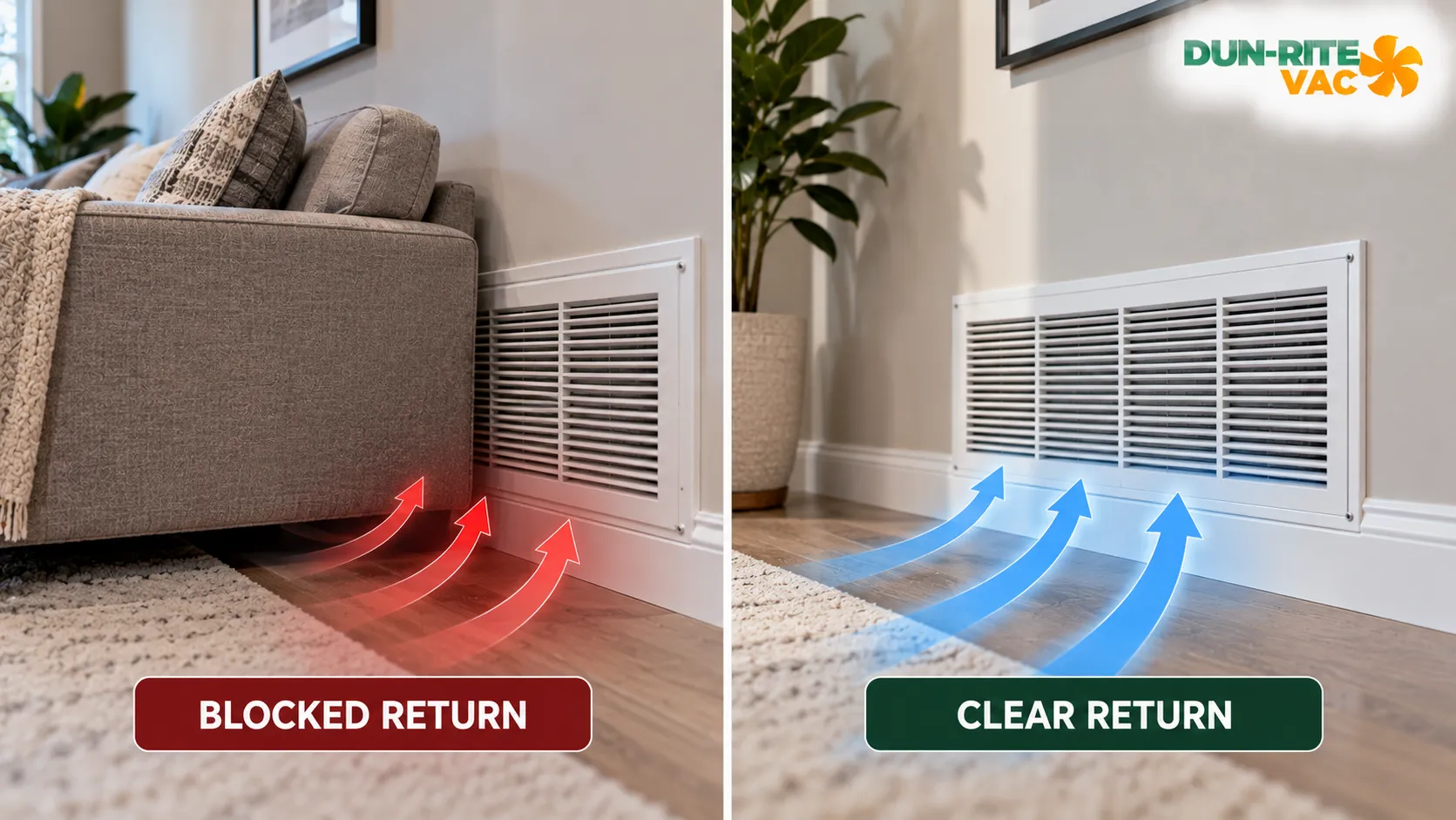
If you’re not sure which opening in your home is which, our guide on how to tell supply vents from return vents walks through the difference. Identify first, and avoid covering or closing anything until you know what it does.
Why Closed-Off Rooms Need Extra Attention in a Saskatchewan Winter
The Saskatchewan heating season changes the math on unused rooms. A spare room on an exterior wall that gets little or no supply air can become much colder during a cold snap. Natural Resources Canada guidance on moisture and condensation advises against cutting off heat to unused rooms because circulating warm air helps keep cold surfaces warmer and reduces condensation risk. U.S. Department of Energy HVAC guidance also cautions against shutting heat off entirely in unused areas and notes the need to maintain sufficient winter temperatures where pipes could freeze.
Newer homes can add another wrinkle. Modern construction is generally more airtight, so how the system moves air matters more than it used to, and many newer homes also have a separate ventilation system such as an HRV or ERV. If you have one, ask your HVAC contractor how closing registers fits with it before changing anything.
None of this means a closed vent is always a problem. It means the effect varies by house, and a room that feels fine in October can behave differently in January.
Not sure whether your house is breathing the way it should? Send us a message at our contact page and tell us what you’re noticing. We’ll let you know whether duct cleaning is relevant or whether you’d be better served by an HVAC contractor.
When Closing Airflow Is Actually the Design
Zoned systems are the exception that makes the rule. In a properly designed zoned system, airflow is managed with controlled dampers and separate zone controls rather than by someone simply closing registers by hand. U.S. Department of Energy research on HVAC zoning describes centralized zoning systems in which thermostats control dampers in the supply ductwork so individual zones receive the intended airflow. That’s fundamentally different from sliding a register shut on a single-zone furnace.
The difference matters most in larger buildings. In a facility with multiple HVAC zones, manually closing registers can undermine how the system was designed to work. We provide commercial duct cleaning, but zoning changes and HVAC airflow balancing belong with your HVAC contractor.
Where Duct Cleaning Fits, and Where It Doesn’t
Dun-Rite Vac is a third-generation, family-run company that has been cleaning air systems since 1998. We’re a NADCA member company, our technicians hold ASCS certification, and we’ve completed more than 50,000 jobs. We’re duct cleaning specialists, not HVAC balancing contractors, and part of earning trust is being clear about that line.
If a room is persistently too hot or too cold, or you suspect a closed or blocked register is behind it, start with a qualified HVAC provider who can assess airflow for your specific equipment. We’re not going to give you DIY balancing steps, because a wrong adjustment on the wrong system does more harm than good. And we won’t tell you that cleaning your ducts will lower your energy bill, because that isn’t something we can promise.
What we can do is clean the system itself. See our residential duct cleaning page or our broader furnace duct cleaning service for what that involves, or browse all of our services.
Frequently Asked Questions
Does closing vents save money?
Not reliably. Savings aren’t guaranteed, and in a single-zone forced-air system, closing registers can add pressure and strain without a clear payoff.
Is it bad to close vents in winter?
It can be. In addition to airflow concerns, a closed-off room on an exterior wall can get cold enough to raise condensation and pipe-freezing concerns during the Saskatchewan heating season.
Does closing vents make my furnace work harder?
It can add airflow restriction, though the effect depends on your furnace, blower and ductwork. Your manufacturer’s documentation and an HVAC provider can tell you what your equipment tolerates.
Is closing a vent the fix for a room that’s too cold or too hot?
It’s usually a workaround rather than a fix. Uneven temperatures can involve airflow or balancing, among other causes such as insulation or equipment sizing, so an HVAC professional should diagnose it.
How do I know if a vent I closed was a supply or a return?
Our guide to supply versus return vents explains how to tell them apart. If you’re unsure, leave it uncovered and open until you know.
Is it okay to put furniture or a rug over a vent?
It’s best not to, especially over a return. Blocking either kind of opening can restrict airflow, and it’s one of the easiest problems to create without realizing it.
You Might Also Find This Helpful
- Seasonal HVAC maintenance checklist
- Which HVAC cleaning services do I need?
- How often should you clean your air ducts?
Questions about your ductwork? Ask us, and we’ll give you a straight answer. Every job is backed by our 100% Satisfaction Guarantee.