
The drywall is sanded. The paint is dry. The crew has gone home. Yet a week later, a fine grey film keeps settling on your countertops no matter how many times you wipe them down. That’s usually the first sign homeowners notice that drywall dust has spread through their air ducts. Air duct cleaning after renovation is one of the most overlooked final steps, and skipping it often leaves a “finished” project feeling unfinished. Our furnace duct cleaning service routinely addresses this problem after renovation projects.
Quick Answer: If your renovation involved drywall sanding, demolition, or work near a return vent, schedule duct cleaning within two weeks after the project wraps up. Book it even sooner if the furnace fan ran during construction. In our experience, waiting lets fine dust settle deeper into the ductwork. That makes it more likely to recirculate every time the system cycles.
How Drywall Dust Actually Gets Into Your Return Air System
Most homeowners picture renovation dust as something that stays on the floor and gets swept up. In practice, the return vent in or near the work area is usually the biggest entry point. Sanding drywall creates a fine, static-charged powder that stays airborne longer than sawdust. If the furnace fan turns on during that time, it pulls the dust straight into the return duct. Drywall isn’t the only source. Sawdust from framing or cabinetry, flooring dust, and loose insulation fibers behave the same way. Once airborne near a running vent, the system can pull them into the ductwork. As the EPA notes, remodeling work readily generates airborne dust that spreads through a home unless it’s contained right at the source.
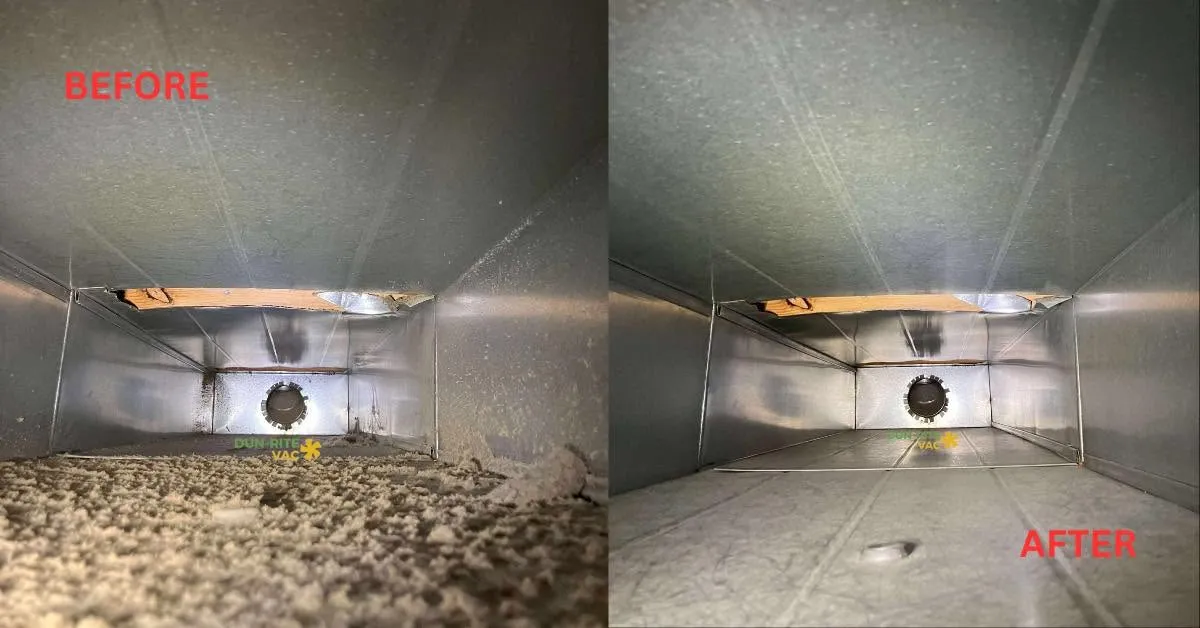
Our technicians regularly find a thick, almost paste-like coating inside the first few feet of return duct closest to the renovated room. Most homeowners would never spot it with a flashlight. It doesn’t stop there. Once fine dust enters the ductwork, the blower pulls it through the system. It can then reach every supply vent in the house, not just the renovated room.
Why Waiting Until the Reno Wraps Up Costs You More
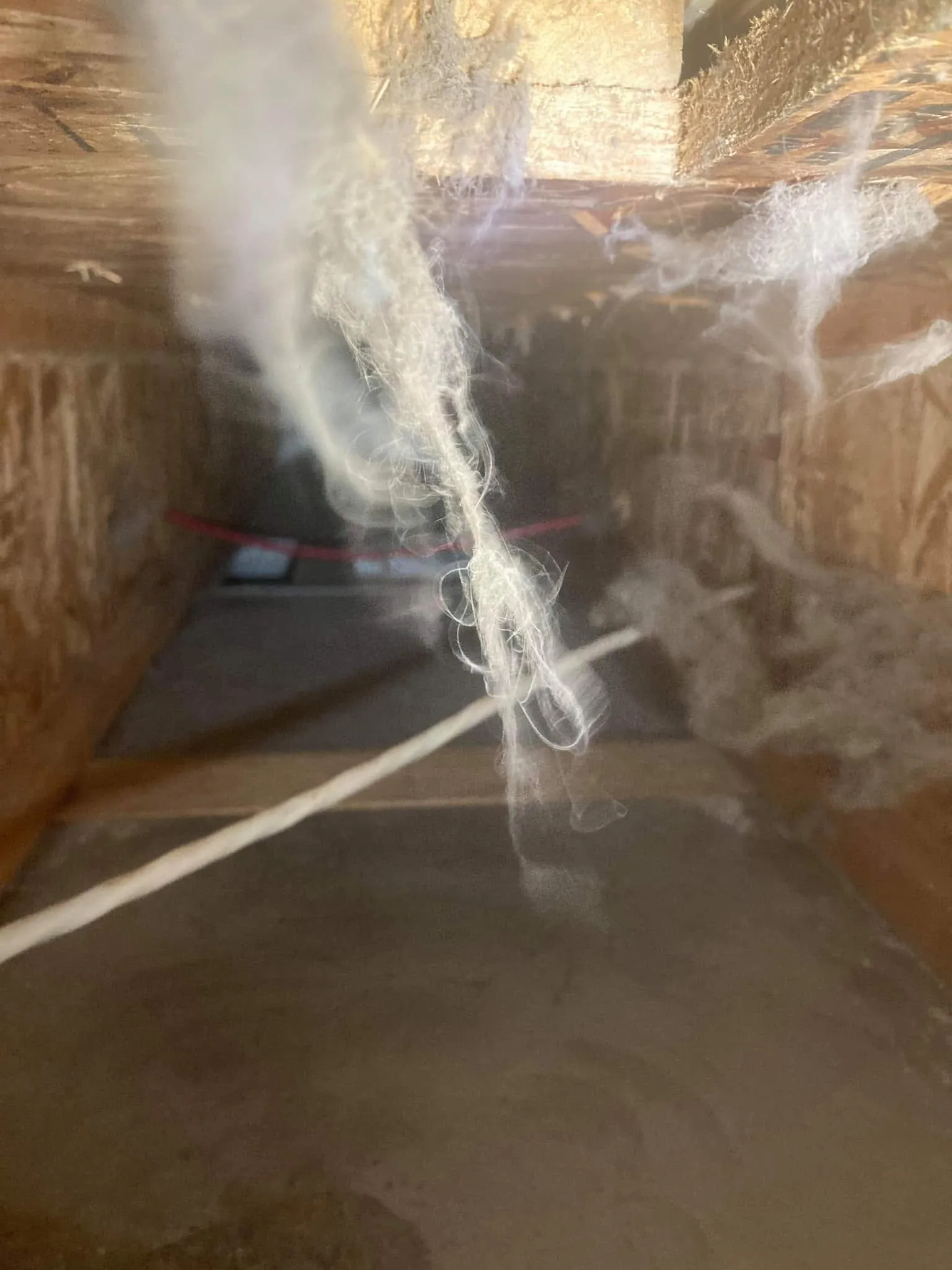
The instinct is to finish the project, clean the visible surfaces, and treat the ductwork as a “someday” task. The problem is simple. Drywall dust doesn’t stay put once it enters the ductwork. Every heating cycle pushes some of it back into your living space. Each cycle also packs more dust onto the blower components and filter. It’s why the EPA lists ducts clogged with substantial dust or debris as one of the clear signs a system needs attention.
Even a two-week kitchen renovation can put the blower through dozens of dusty heating cycles before anyone schedules a cleaning. In our experience, the longer that gap runs, the more fine dust tends to settle into low-airflow sections of the duct run — corners, elbows, and the plenum — where it’s harder to fully remove and more likely to keep shedding into the air for months, a pattern that lines up with NADCA’s source-removal approach to settled duct contamination. Scheduling post construction duct cleaning within a couple of weeks of the work finishing is the difference between a one-time cleanout and dust that keeps reappearing every fall when the furnace starts running harder.
If your renovation is finished and dust keeps settling after you clean, have someone inspect the ductwork. It’s best to do that before another heating season packs the dust in deeper. Reach out for a free quote and we’ll tell you plainly whether a full cleaning is warranted or if it can wait.
Protecting Your Ductwork While the Work Is Still Happening
If you’re still planning the renovation, prevent dust from entering the ducts from the start. That approach is much easier than cleaning up afterward. This isn’t complicated, but it does need to happen before the sanding or demo starts, not after:
- ✅ Seal the return and supply vents in the work area with plastic sheeting and painter’s tape before any sanding begins.
- ✅ Turn the furnace fan to “off” or manual for the duration of dusty work, so it isn’t actively pulling debris into the system between cycles.
- ✅ Change the furnace filter as soon as heavy dust work wraps up, even if it isn’t due yet — a clogged filter from construction dust restricts airflow and stresses the blower motor, as Carrier’s own maintenance guidance confirms.
- ✅ Keep the work area under negative pressure where possible (a box fan exhausting to a window) so dust is pulled away from vents rather than toward them.
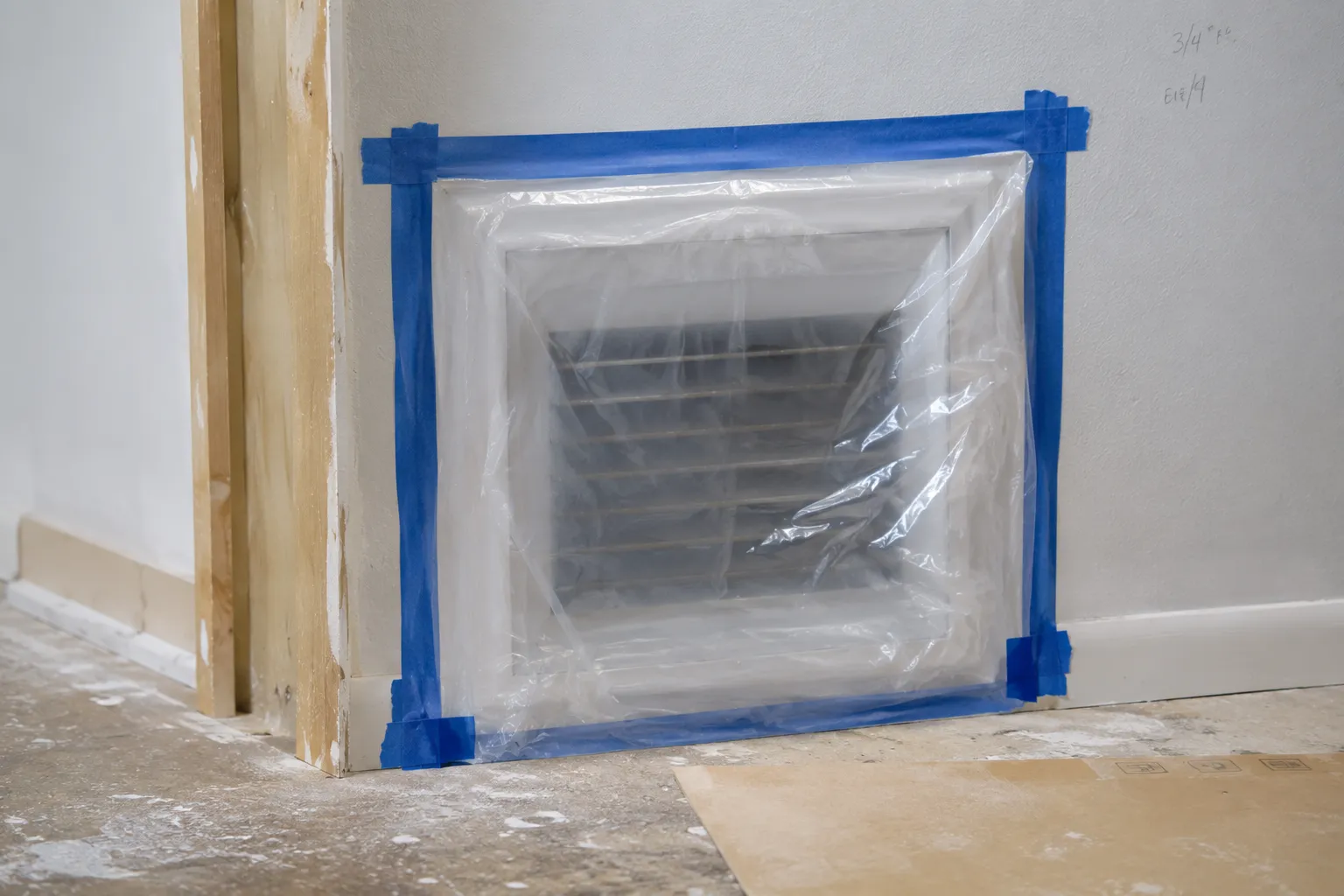
These steps won’t eliminate the need for duct cleaning. Some dust still gets past careful sealing. However, they reduce how deeply dust travels into the duct system and make post-renovation cleaning easier.
What a Post-Renovation Cleaning Actually Checks For
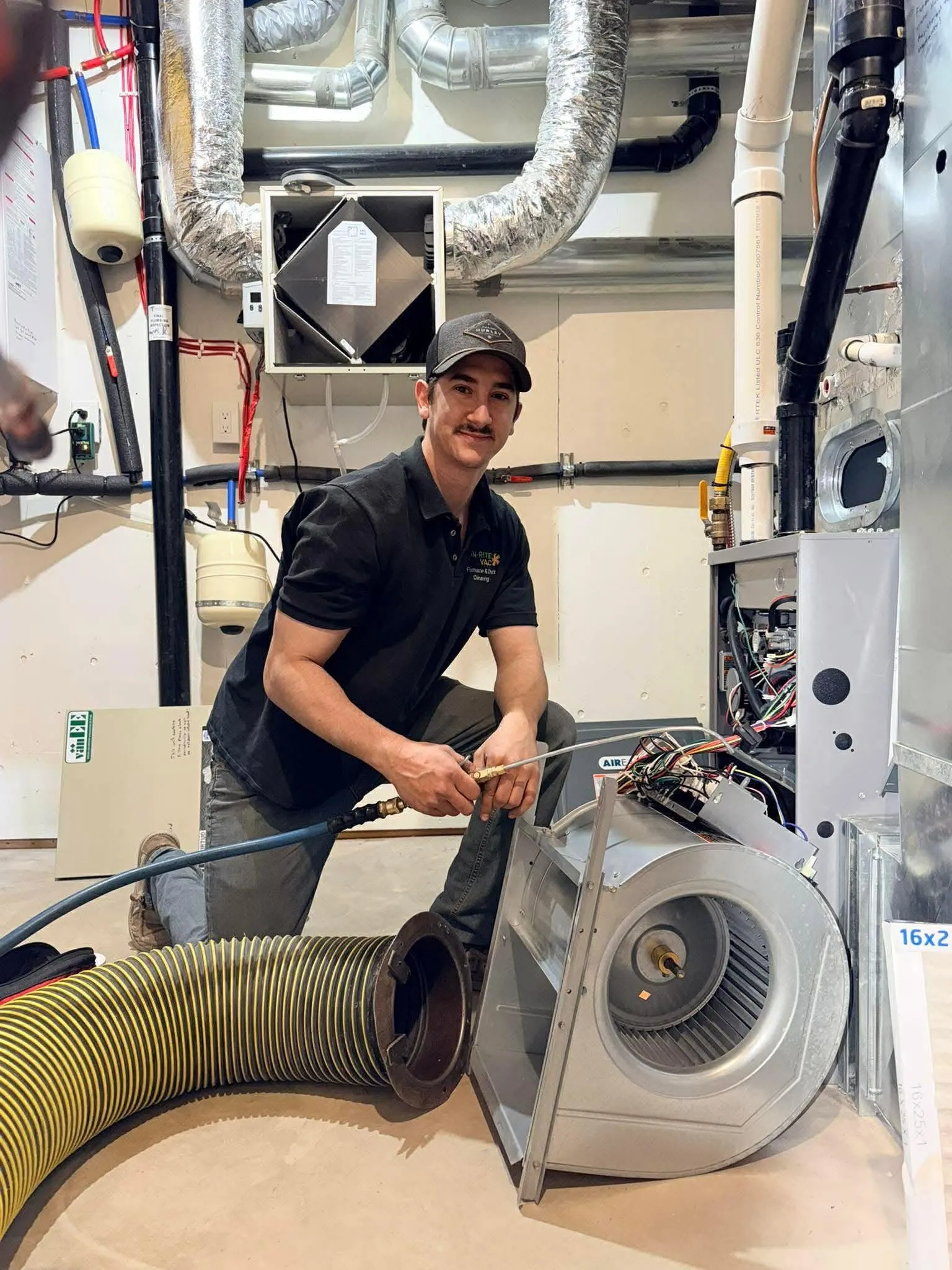
A cleaning after renovation work isn’t just running a brush through the main trunk line. As part of every residential furnace duct cleaning visit, our NADCA-certified technicians look at the full picture: the return runs closest to the work area, the blower compartment and motor housing where fine dust tends to accumulate, the evaporator coil if the system has central A/C, and the condition of the furnace filter itself.
When we remove vent covers during a renovation, we can usually see how far the debris traveled. Sometimes it settles within a few feet. Other times it reaches almost all the way to the plenum, especially if the fan ran without proper protection. That inspection tells us whether a standard cleaning is enough. It also shows whether the blower assembly needs extra attention.
Older Yorkton Homes vs. New Builds: Different Renovation Risks
The risk profile isn’t the same across the region’s housing stock. Older homes around Yorkton often have original ductwork with more seams and looser joints. Many also have register boots that don’t meet today’s sealing standards. Those gaps give fine dust more places to enter and hide during a renovation.
Newer homes have a different challenge. Their tighter construction keeps more dust inside the HVAC system. As a result, dust often builds up in the return duct and furnace filter. Either way, a renovation is a legitimate reason to treat the ductwork as part of the project scope, not an afterthought once the drywall dust has already settled everywhere else.
FAQ
How soon after a renovation should I book duct cleaning?
Ideally within one to two weeks of the dusty work finishing, especially if the furnace fan ran during sanding or demolition. Whether you call it a renovation or a remodel, follow the same timeline. The longer fine dust sits inside the ducts, the farther it settles into low-airflow areas that take more effort to clean.
Can drywall dust actually damage my furnace?
Fine dust clogs filters faster than normal household dust. It also coats the blower motor and other internal components. That extra buildup forces the system to work harder. Left unresolved, that added strain can contribute to extra wear on moving parts over time — Carrier notes the same dynamic in its own blower motor guidance.
Do I need to seal off vents before starting demolition or sanding?
It’s not mandatory, but it’s one of the most effective ways to limit how much dust reaches the ductwork in the first place. Sealing vents in the work area with plastic and tape before dusty work begins is a simple step that pays off later.
Is a post-renovation cleaning different from a regular duct cleaning?
The process is the same NADCA-certified cleaning we do for any home, but technicians pay closer attention to the return runs and blower area nearest the renovated space, since that’s where construction dust concentrates most.
You Might Also Find This Helpful
- Dust Coming From Your Air Vents? Here’s What It Usually Means
- How Cleaning Your Air Ducts Can Save You Money
Just wrapped up a renovation? Let’s get the dust out before it settles in for good.
We’ve been doing this as a family since 1998, we’re NADCA-certified, and every job comes with our 100% Satisfaction Guarantee — so there’s no guesswork on whether it was done right.