
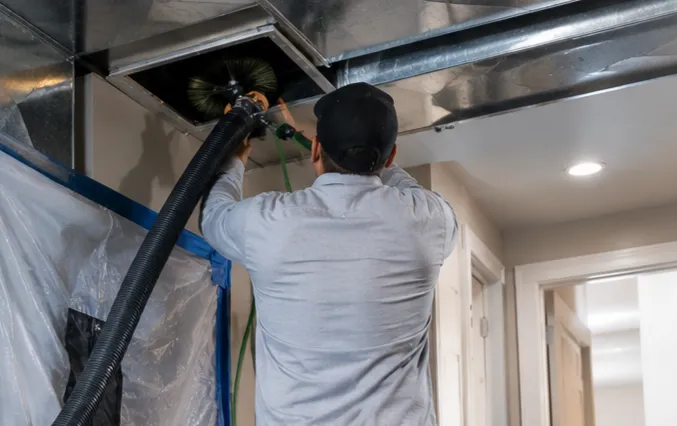
Quick Answer: Specifically, four issues usually cause dust coming from air vents. First, a dirty register or dusty boot can release debris. Second, an overdue furnace filter lets particles bypass filtration. Furthermore, leaky ductwork pulls dust from an attic or crawlspace. Finally, years of buildup inside the ducts can also become airborne. Ultimately, the fix depends on the specific problem, so it isn’t always duct cleaning.
Why the Register Itself Is Often the First Suspect
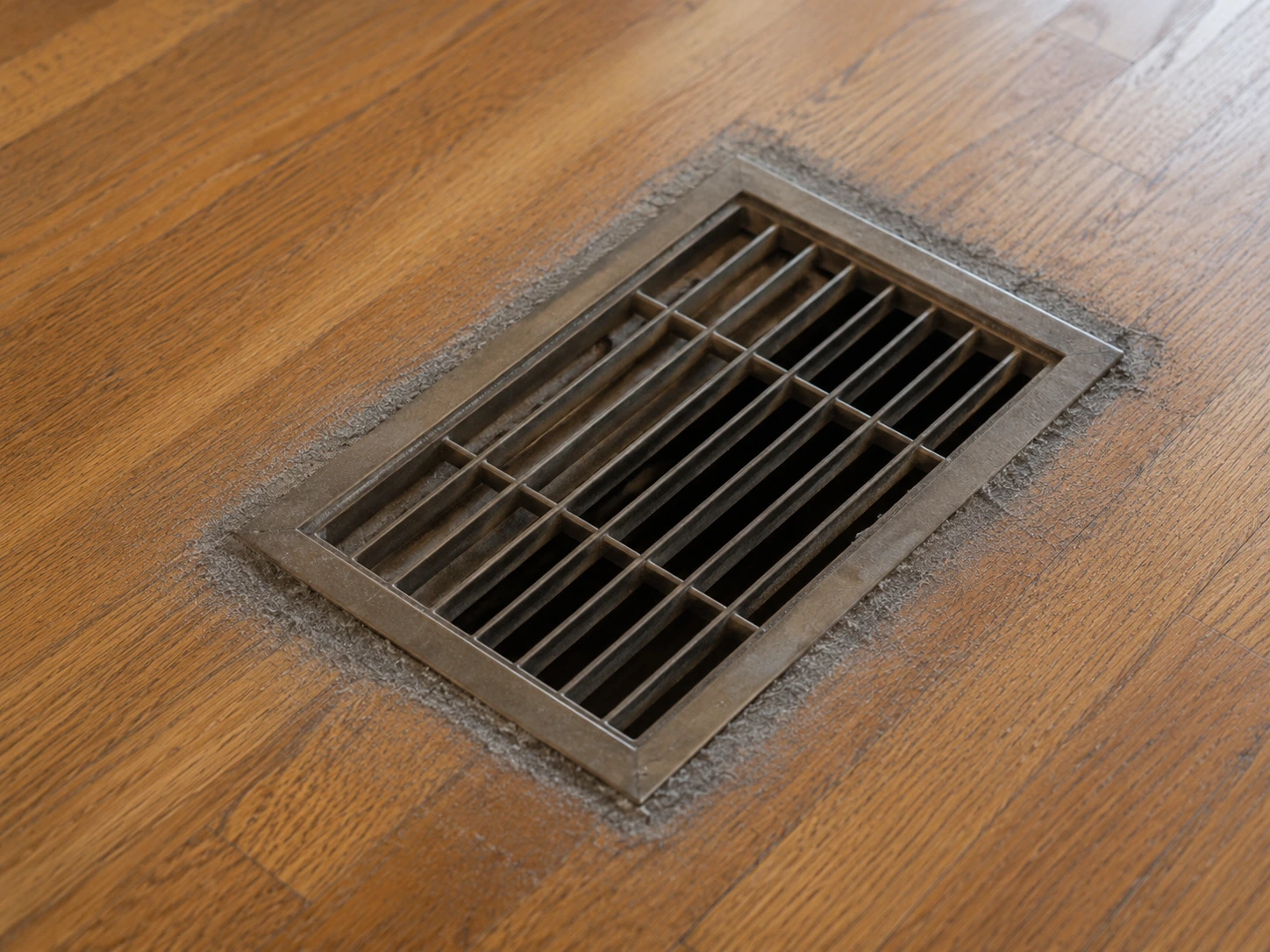
Before assuming the whole duct system needs attention, check the register cover and the metal boot behind it. This short piece links the vent to the duct, and it collects dust differently than the rest of the system. Specifically, airflow slows down here right before entering the room.
In older Yorkton or Saskatoon homes, we often remove registers during service calls. During these visits, we frequently find years of dust and pet hair packed against the boot. Surprisingly, many homeowners never notice the buildup until they start investigating dusty vents. Fortunately, vacuuming the register and boot with a crevice attachment reduces visible dust. As a result, you might not even need a cleaning appointment.
If dust around air vents appears in only one or two rooms, check the register first. After all, carpet, pets, and heavy foot traffic often contribute to localized buildup.
How an Overdue Filter Turns Into Visible Dust at the Vent
Our technicians often see return ducts running through unheated crawlspaces on acreage properties. Consequently, these ducts pull dust and insulation fibers through poorly sealed gaps. Similarly, older homes in our service towns have similar attic issues. Installers taped sheet metal seams decades ago. Now, however, that tape fails. ENERGY STAR notes that sealing ducts reduces this risk. In fact, it stops pollutants from dusty attics or crawlspaces from circulating through your home. Moreover, builders construct cold-climate homes tightly for energy efficiency. This creates negative pressure in the system. Consequently, the pressure pulls hard on weak points. Therefore, we see this issue more often here than in older, draftier houses.
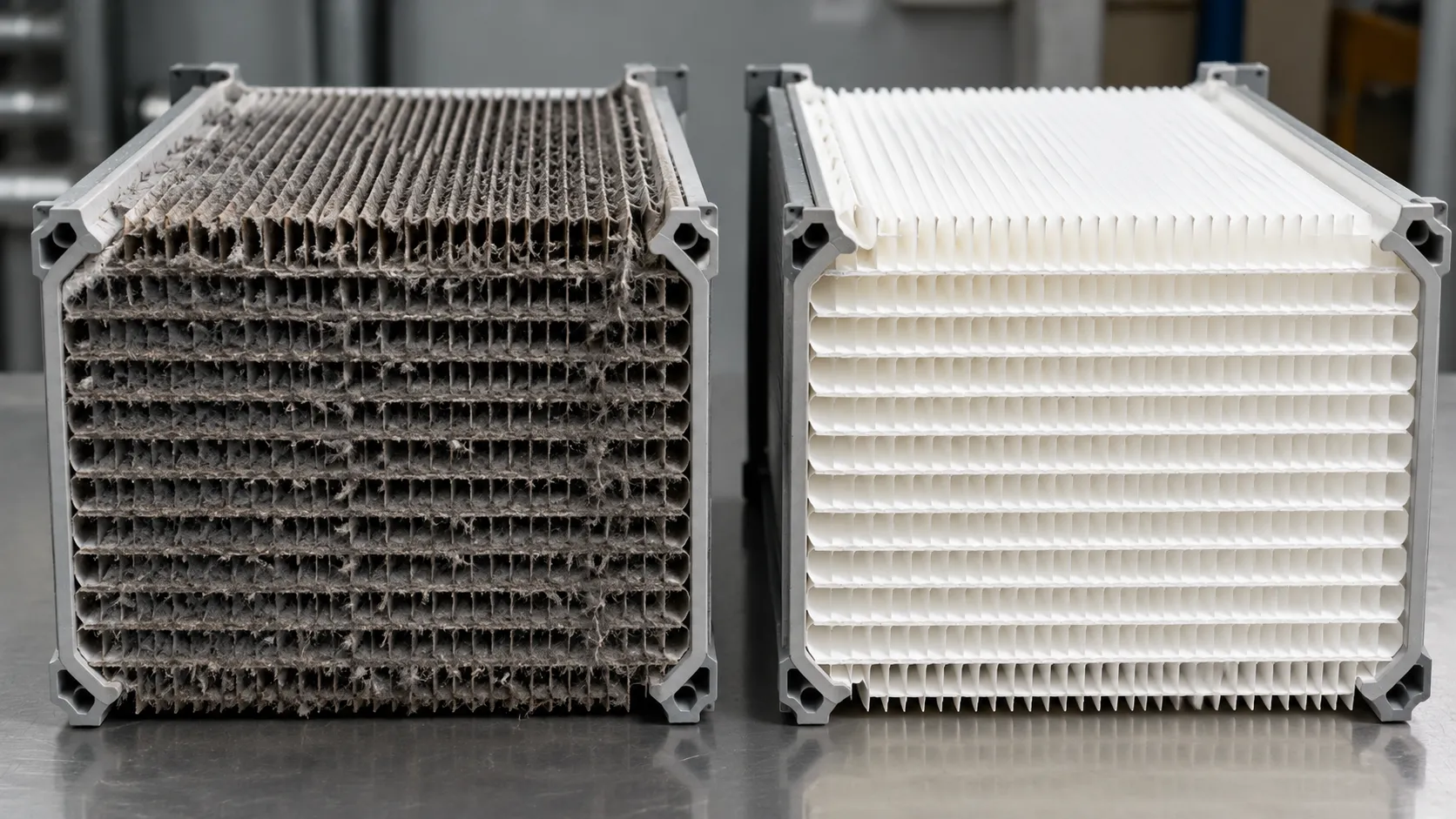
Treat this as both a maintenance and diagnosis issue. For example, if dust appears gradually throughout the house, check the filter. An overdue filter or the wrong MERV rating often explains the problem perfectly. Additionally, Saskatchewan has a long heating season. Because furnaces run many hours each day, this heavy use shortens the actual lifespan of your filter.
Swap the filter and check again after a few days. Ultimately, this simple step helps rule out the filter before you consider complex solutions.
When It’s Not the Vent — It’s a Leak Upstream
Registers and filters explain a lot of dust coming from air vents. However, they do not explain all of it. If you already ruled those out, inspect the duct run next. Specifically, check whether the joints stay sealed along the entire path.
Our technicians frequently find unsealed return ducts in acreage crawlspaces. As previously mentioned, these gaps pull in dust and insulation fibers. Likewise, older homes face similar problems with attic duct joints. Workers taped these sheet metal seams decades ago. Today, unfortunately, that old tape fails. Because builders make modern cold-climate homes airtight for efficiency, this tightness creates strong negative pressure. Consequently, the system pulls hard on vulnerable duct joints.
Standard duct cleaning alone cannot fix leaky ductwork. Instead, a clean system with an open leak simply pulls in new dust. Therefore, professionals must seal the leaks before or during cleaning. This ensures a lasting fix, overall.
Does the dust get worse in specific rooms over time? If so, ask a technician to inspect the system. After all, catching the issue early prevents larger repairs. Reach out for a free quote and we’ll help you find the source.
Why Dust Coming From Air Vents Often Means Years of Buildup Inside the Ducts
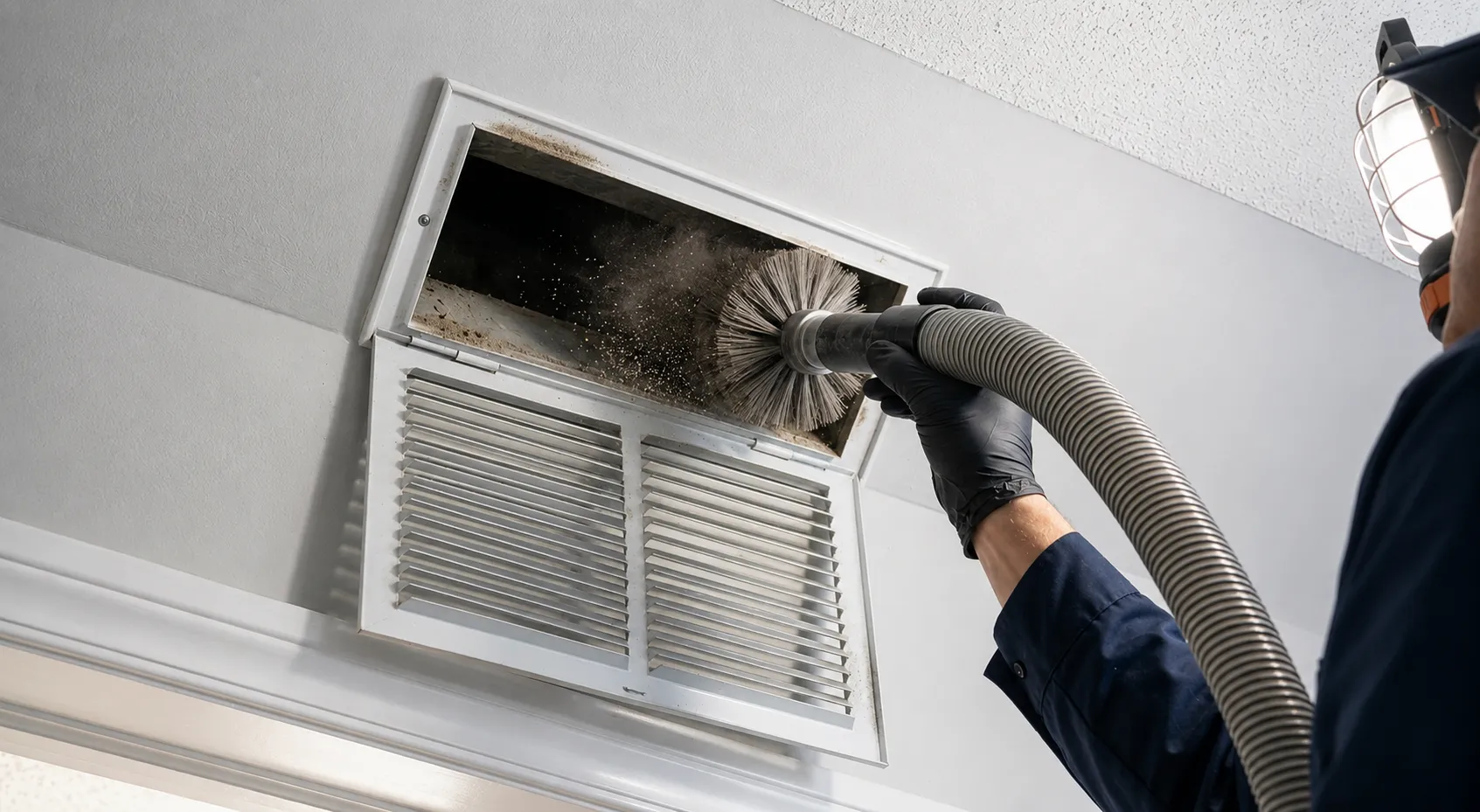
Have you ruled out registers, filters, and leaks? Then the remaining explanation is straightforward. Your ductwork has collected dust and debris for years. Now, subsequently, the airflow stirs this buildup loose.
NADCA-certified duct cleaning specifically targets this exact scenario. To do this, our ASCS-certified technicians use negative-pressure equipment. Through this method, they remove debris from the entire system. NADCA’s standards exist to prevent poor cleaning practices. For instance, amateurs might loosen debris without fully removing it. Consequently, this mistake leaves homeowners with even more visible dust. Meanwhile, our technicians also inspect the system while they work. We flag any leaks or damaged sections immediately. Plus, you never receive a separate bill for this inspection.
Perhaps your home needs its first duct cleaning. If you already checked the filter and register, then internal buildup likely causes the dust.
When Dust from Vents Isn’t a Duct Cleaning Problem at All
We want to be upfront. Namely, not every dusty vent requires a full duct cleaning. Did professionals clean your system recently? If dust comes from one specific vent, suspect a mechanical problem instead of buildup. For example, you might have a disconnected duct or a damaged flex line. Alternatively, a loose register box also causes this issue.
In those cases, duct cleaning removes nothing. Instead, you simply need a physical repair. Fortunately, a technician quickly identifies the difference by checking the affected run. Therefore, always have an expert assess specific symptoms. In short, do not default straight to a cleaning appointment.
FAQ
Why are my vents dusty in just one room of the house?
A single dusty room points to a local issue. For instance, look for a disconnected duct or damaged flex connector. Additionally, a register might also pull air from an unfinished space. Ultimately, these are localized problems, not whole-system failures.
Can a new furnace filter make vent dust worse before it gets better?
In some systems, yes, briefly. Because a higher-efficiency filter changes airflow resistance, the new airflow can stir loose nearby dust left by the old filter. However, this only lasts a day or two after the swap. Moreover, it doesn’t happen in every system.
Does dust from vents mean my air quality is unsafe?
Not automatically. Visible dust causes comfort and cleaning nuisances more often than health hazards. However, the EPA lists dust as an asthma and allergy trigger. Thus, sensitive individuals should take note. Regardless, persistent dust is always worth addressing.
How long does duct cleaning take if dust turns out to be the cause?
We complete most residential duct cleanings in a single visit. However, the exact time depends on the size of the home. Furthermore, heavy duct accumulation also adds to the service time.
You Might Also Find This Helpful
Learn more about our residential duct cleaning process. Essentially, it is part of our broader furnace and duct cleaning services.
Not sure which of these is causing your dust?
We gladly inspect your system and honestly recommend next steps. Furthermore, our 100% Satisfaction Guarantee backs every visit. Above all, you will experience no pressure either way.