
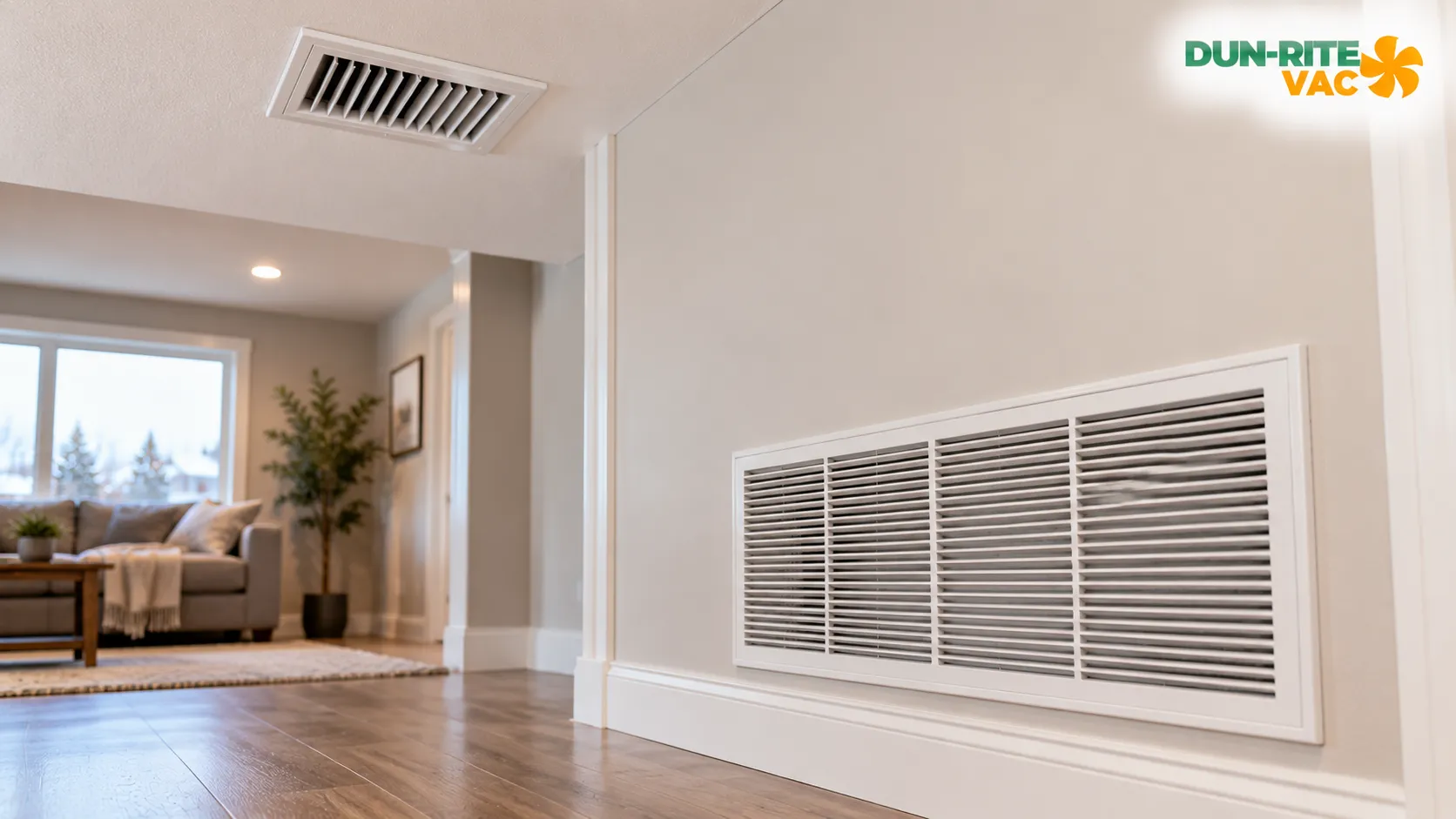
Stand in almost any Saskatchewan home in January and you can feel the difference between two kinds of vents: one pushes warm air at your ankles, the other quietly pulls air away. Understanding supply vs return vents is the first step to knowing what you can safely wipe down yourself and what belongs to a professional.
This guide covers how to tell them apart, what not to confuse them with (the dryer hood and the air exchanger openings outside your house are not part of this), and where a quick surface clean stops being enough.
Quick Answer: A supply vent blows heated (or cooled) air out into the room. A return air vent pulls room air back to the furnace so it can be filtered and heated again. With the furnace fan running, hold a single square of tissue near the opening: if it’s pushed away, it’s a supply; if it’s pulled against the grille, it’s a return.
In this article
Supply vs Return Vents: The Air Loop in One Picture
A forced-air furnace doesn’t make air from nothing. It moves the same air around your home on repeat. Supply vents are the exits, return vents are the entrances, and the furnace fan sits in the middle keeping the loop moving.
That’s why blocking either side can cause problems. A Lawrence Berkeley National Laboratory study on register closing found that closing registers can increase duct pressures and leakage and, when too many are closed, restrict system airflow. Return openings also need to stay clear so air can move back through the system.
Simplified illustration. Real homes have many supply registers and often only one or two return grilles.
How to Identify Supply and Return Vents Without Any Tools
Most people guess based on size or location: returns are bigger, supplies are on the floor, a return air vent is high on the wall. Each of those holds often enough to feel reliable, and each fails often enough to mislead you. Supplies can be in ceilings and walls, and a return can sit low near a baseboard.
A more dependable approach is to use what the vent does, then confirm with what it looks like:
- The tissue test. With the furnace fan running, hold a single square of tissue near the opening. Pushed away means supply. Pulled toward the grille means return.
- The hand test. You’ll feel air moving out of a supply and a gentle, steady pull at a return.
- The grille itself. Supplies often have adjustable louvres or a small lever to direct the air. Return grilles tend to be larger and generally don’t use adjustable dampers like supply registers. Carrier’s return-air guidance also explains that supply vents blow conditioned air into rooms while return vents draw air back into the HVAC system.
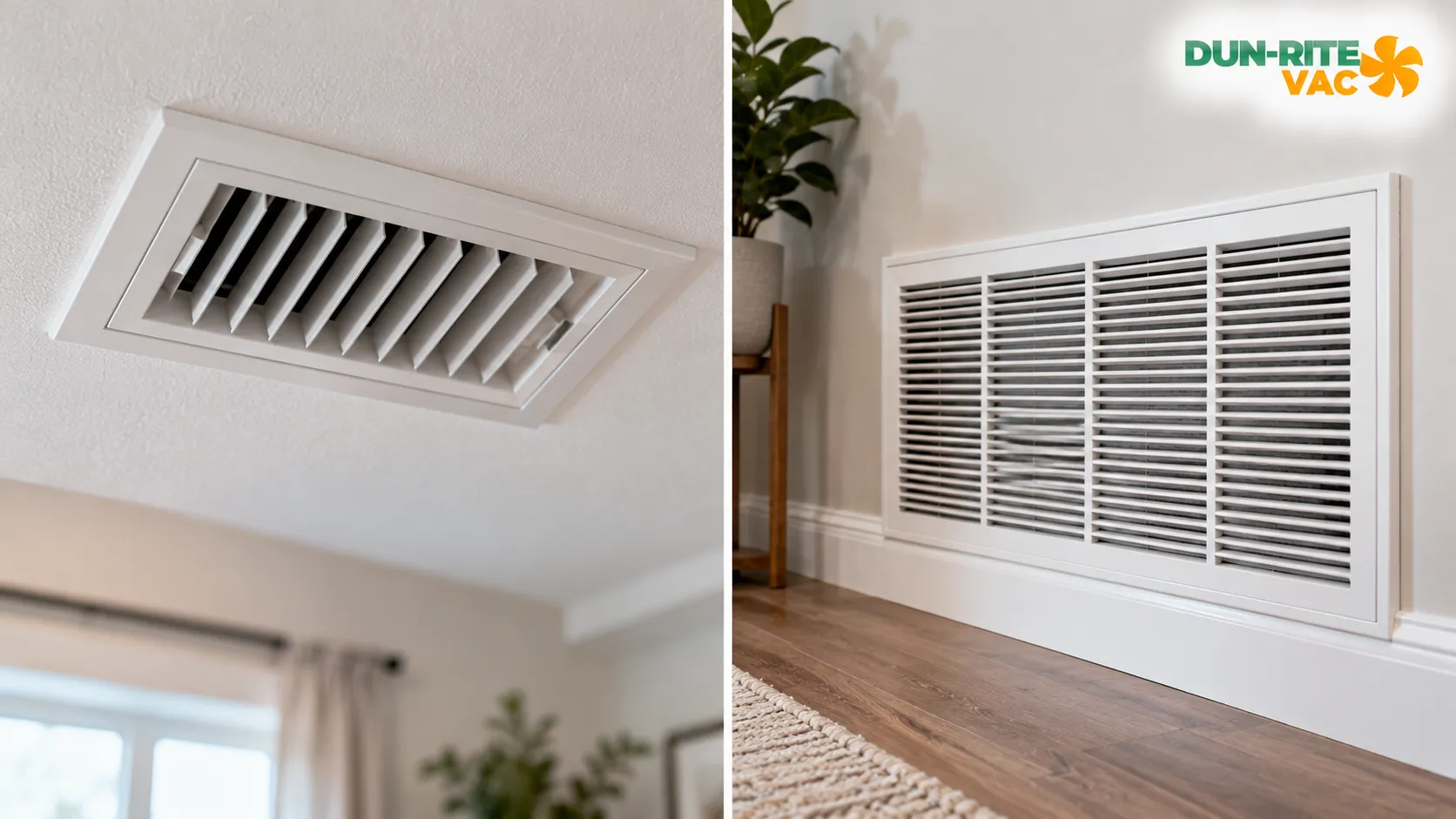
Some homes, older bungalows in particular, rely on a single large return grille in a hallway to serve every room. It’s easy to mistake that grille for a big “cold air vent” and put furniture in front of it. Because that one opening feeds the whole system, blocking it affects the entire house, not just the hallway.
Openings That Look Like Vents but Aren’t Part of This Loop
A few openings get mistaken for supply or return vents, mostly because they’re round, metal and sit on an outside wall. They belong to separate systems, so the supply-and-return rules above don’t apply to them.
The dryer exhaust hood is a single outdoor opening, usually with a flap, that carries warm, lint-laden air out of the house. It has nothing to do with your furnace’s supply and return. If that hood is a concern, our dryer vent cleaning page covers it.
An air exchanger (HRV or ERV) often has separate outdoor openings, one drawing fresh air in and one sending stale air out. In a tightly sealed Prairie home it’s easy to look at those two hoods and wonder which one is the furnace vent. Neither is. Natural Resources Canada explains that HRVs and ERVs use outdoor-air intake and exhaust paths, and that installations may connect with an existing forced-air distribution system or use dedicated ductwork. See our air exchanger cleaning page for that system.
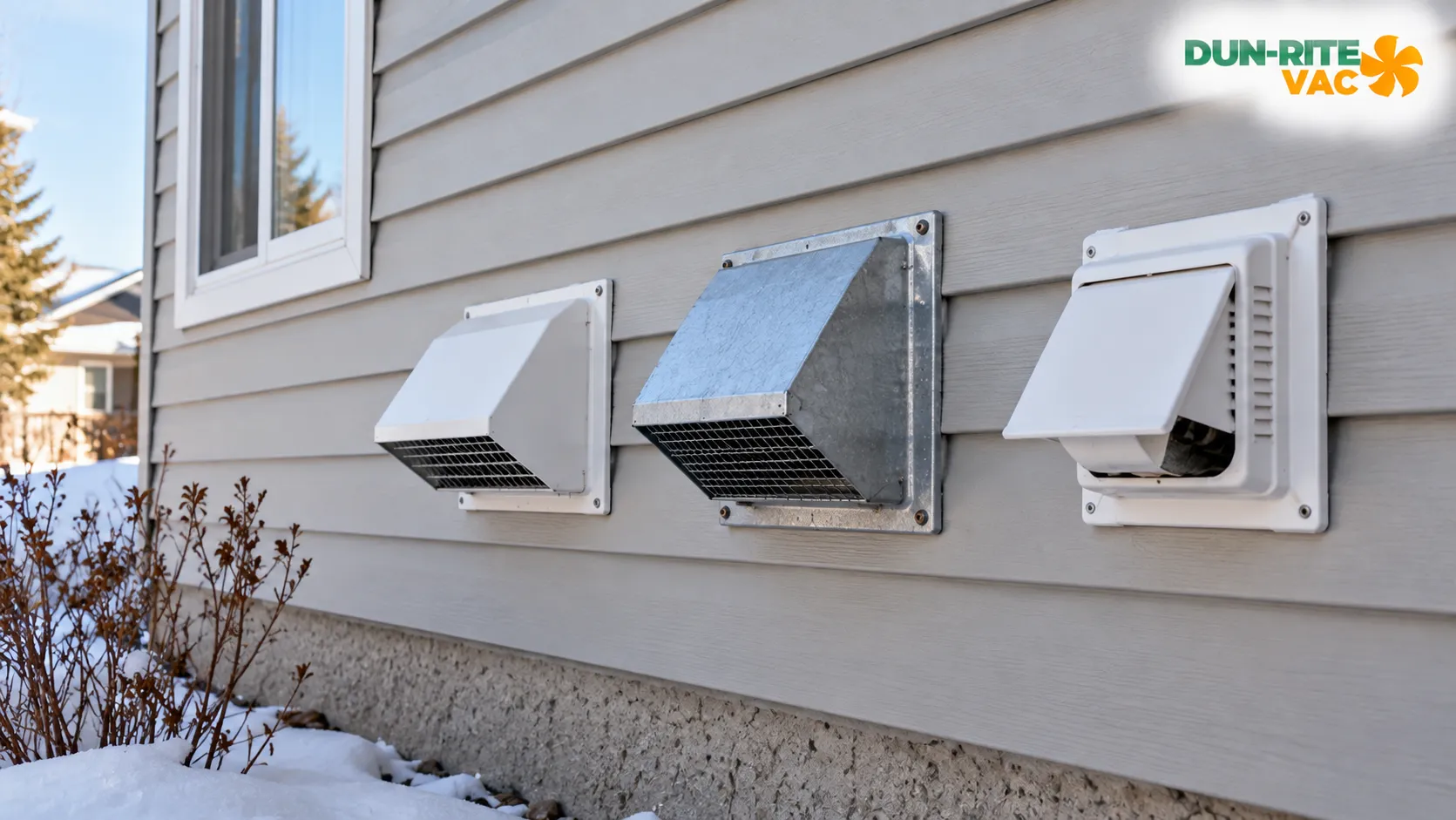
Bathroom and kitchen fans are the same story: they exhaust air outside and aren’t part of the furnace loop either.
What You Can Safely Clean Yourself, and How to Read Dust at the Return
The visible face of both vent types is fair game for ordinary housekeeping. It’s tidiest to turn the furnace fan off first, then vacuum the grille with a soft brush attachment and wipe it with a damp cloth. Keep rugs, curtains and furniture clear of every opening, supply or return, so air can actually move.
What not to do is just as useful. Don’t close off supply vents around the house as a way to push more heat into a cold room. That can reduce airflow and throw the system out of balance, and the internal dampers in your ductwork are set to suit the system’s design. If a room runs cold, have an HVAC professional look at it rather than adjusting things yourself.
The return is also where dust can become visible, and some of it is normal. The U.S. EPA notes that return registers commonly become dusty because dust-laden room air is pulled through them, and that this alone does not mean the ducts are heavily contaminated. If the buildup seems unusually heavy, check that the filter is clean and fits properly so air cannot bypass it, then see whether the dust returns at the same rate.
Not sure whether what you’re seeing is normal dust or something more? Send us a quick message and we’ll give you a straight answer, even if the answer is that you’re fine.
When a Surface Clean Stops Being Enough
Wiping a grille only cleans the part you can see, but it also isn’t proof that anything deeper is wrong. It helps to separate what’s worth a closer look from what’s a stronger reason to call someone.
Worth a closer look
- Dust that returns unusually fast even after the filter is checked and the surfaces are cleaned
- A musty smell when the furnace fan kicks on. Odours can have several sources, including moisture, so the first job is finding where it’s coming from.
- Dust after a renovation. Look at the registers and any ductwork you can see. Covering registers during dusty work helps prevent this next time.
Stronger reasons to consider professional cleaning
- Substantial visible debris or dust buildup inside the ducts, not just on the grille face
- Visible mould growth, or signs of pests in the ductwork
- Dust or debris actually blowing out of the supply registers when the fan starts
EPA guidance on residential air ducts recommends considering cleaning when ducts have substantial visible mould growth, vermin infestation, excessive dust or debris, or when particles are actually being released into the home from supply registers.
If you land in that second group, our furnace duct cleaning is the next step. Dun-Rite Vac has been family-run since 1998, with NADCA certification, ASCS-certified technicians and more than 50,000 completed jobs. Our HVAC sanitization is a separate service and not a default fix for odours. A cleaning visit also lets you see the condition of your supply and return runs directly.
In fairness, clean grilles, a filter that’s changed regularly and no odours don’t suggest an obvious need for cleaning. If you do spot unusual debris or contamination, it’s still worth having it looked at. You can browse everything we do on our services page.
FAQ
Can I tell supply and return vents apart just by whether they’re on the floor or the ceiling?
Not reliably. Location is a hint, not a rule. Supplies show up in floors, walls and ceilings, and so do returns. The tissue test with the fan running is a better indicator.
Should I cover or close a return air vent to send more heat to a cold room?
No. The return is how the furnace gets air back, and restricting it can reduce airflow through the whole system. If a room runs cold, that’s a question for an HVAC contractor rather than something to fix by blocking vents.
Why is my return air vent noisy or pulling hard?
Start with the simple stuff: a clogged filter or something blocking the grille. If the noise continues after both are clear, have an HVAC professional look at it rather than adjusting anything yourself.
Not sure what’s going on behind your vents? Every job is backed by our 100% Satisfaction Guarantee, and a quote costs you nothing.