
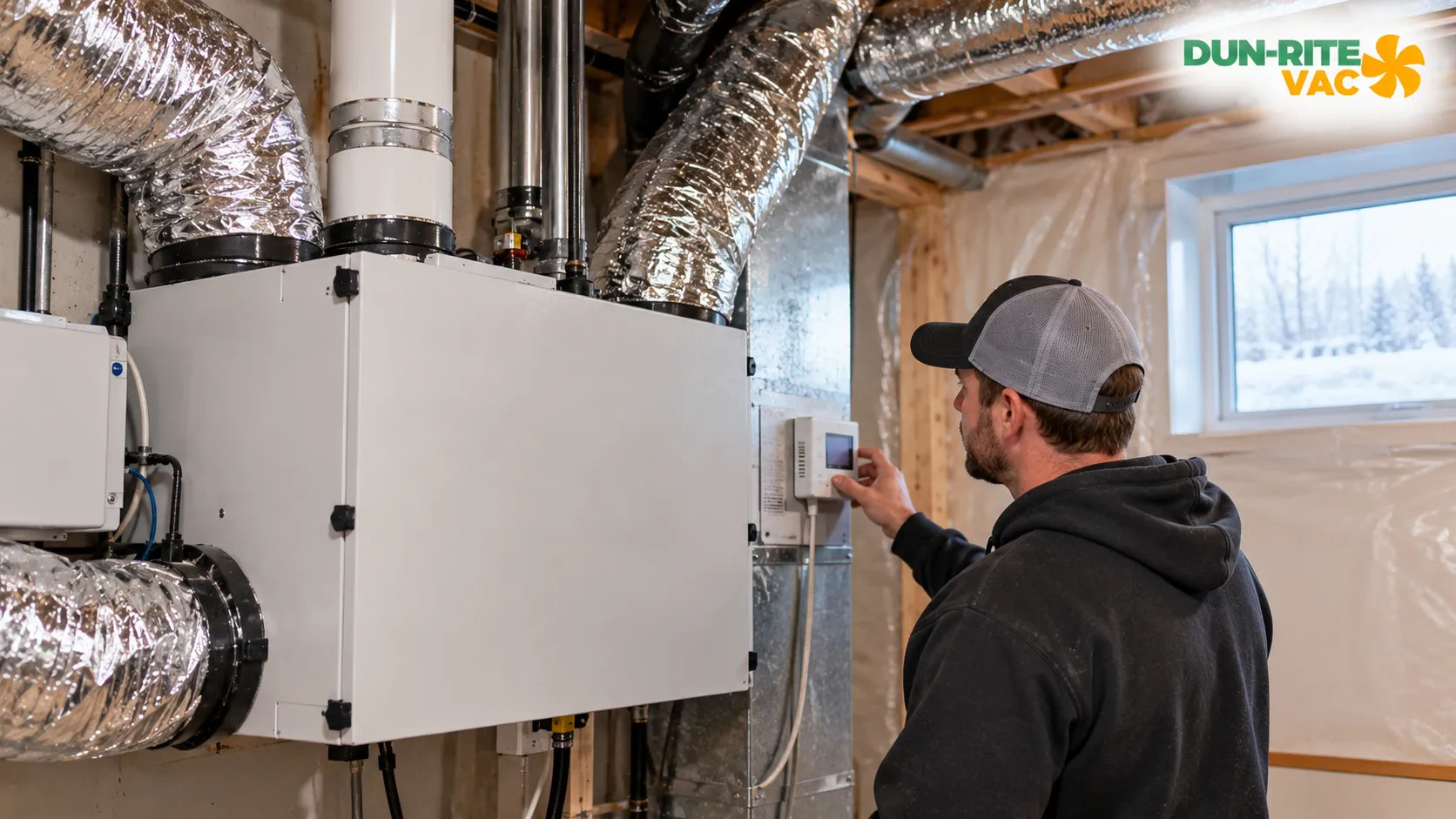
Most homeowners never touch their air exchanger controls until a cold snap fogs up the windows or a humid July afternoon makes the house feel stuffy. Then comes the question: what is the right air exchanger winter setting, and does it change in summer? The honest answer is that it depends on your specific unit, your house, and what your manufacturer’s manual says.
This guide explains what the seasonal controls are generally doing, how to think through each season’s decision, and how to tell an operating question apart from a maintenance one.
Quick Answer: There is no single correct winter or summer setting. Controls such as speed, humidity control, and any summer or recirculation mode vary by brand and model, so your manufacturer’s manual is the authority. In general, winter settings are about managing indoor moisture, and summer settings are about how your unit should operate in warm, humid weather. Changing a setting doesn’t clean anything, and it doesn’t explain every frost problem.
In this guide
What an Air Exchanger Winter Setting Is Really Controlling
A common assumption is that winter is the season to turn your air exchanger down to save heat. That isn’t always the right call. In homes that rely on mechanical ventilation, an HRV or ERV can be an important part of moving stale indoor air out and bringing outdoor air in. Health Canada’s ventilation guidance identifies HRVs and ERVs as balanced mechanical ventilation systems that exhaust stale indoor air while supplying outdoor air.
Many controls include a humidity or ventilation setting that helps manage indoor moisture in winter. Cooking, showers, and laundry all add moisture indoors, and window condensation can be one sign that indoor humidity is elevated. Health Canada’s guidance on home ventilation discusses household moisture sources and winter condensation. How the controls behave still differs by brand and model. For example, Lifebreath’s residential HRV homeowner manual provides model-specific dehumidistat guidance tied to outdoor conditions during the heating season.

Your manual will tell you what each position does. If you can’t find it, the model number is usually printed on the unit’s label, so you can look the manual up online. We’d rather you follow that than a neighbour’s rule of thumb, because the same dial position can mean different things on different units.
Air Exchanger Settings for Summer: Why HRV vs. ERV Matters
Summer is where the type of unit you own starts to matter. An HRV transfers heat between the outgoing and incoming air, while an ERV transfers heat and also transfers some moisture between the two airstreams. Natural Resources Canada’s HRV and ERV guidance explains this distinction and why moisture transfer matters when comparing the two types of systems. That difference is why advice for one type of unit doesn’t automatically carry over to the other.
| HRV | ERV | |
|---|---|---|
| What it transfers | Heat | Heat and some moisture |
| Why it matters in summer | Humidity control relies more on ventilation settings | Designed to move some moisture between airstreams |
| Where to confirm | Unit label or manufacturer’s manual | |
Some models also offer a dedicated summer or bypass mode, and others don’t. What the right summer operation looks like depends on your model’s controls and on the outdoor temperature and humidity, so there’s no blanket answer we can honestly give.
If your home feels clammy or stuffy once the weather turns, write down what you changed and when. A few days of notes tell you far more than guessing, and they’ll help if you end up calling your installer.
Frost on the Air Exchanger Core: Settings Issue or Something Else?
Say you open the unit on a very cold morning and see frost on the core. Whether that is expected depends on the unit and its cold-weather controls. Some HRV and ERV models include automatic defrost functions that activate as outdoor temperatures fall. Lifebreath’s HRV/ERV installation and operation manual, for example, describes an electronically controlled defrost cycle for cold-weather operation. Check your own manufacturer’s troubleshooting guidance rather than assuming visible frost is normal for every unit.
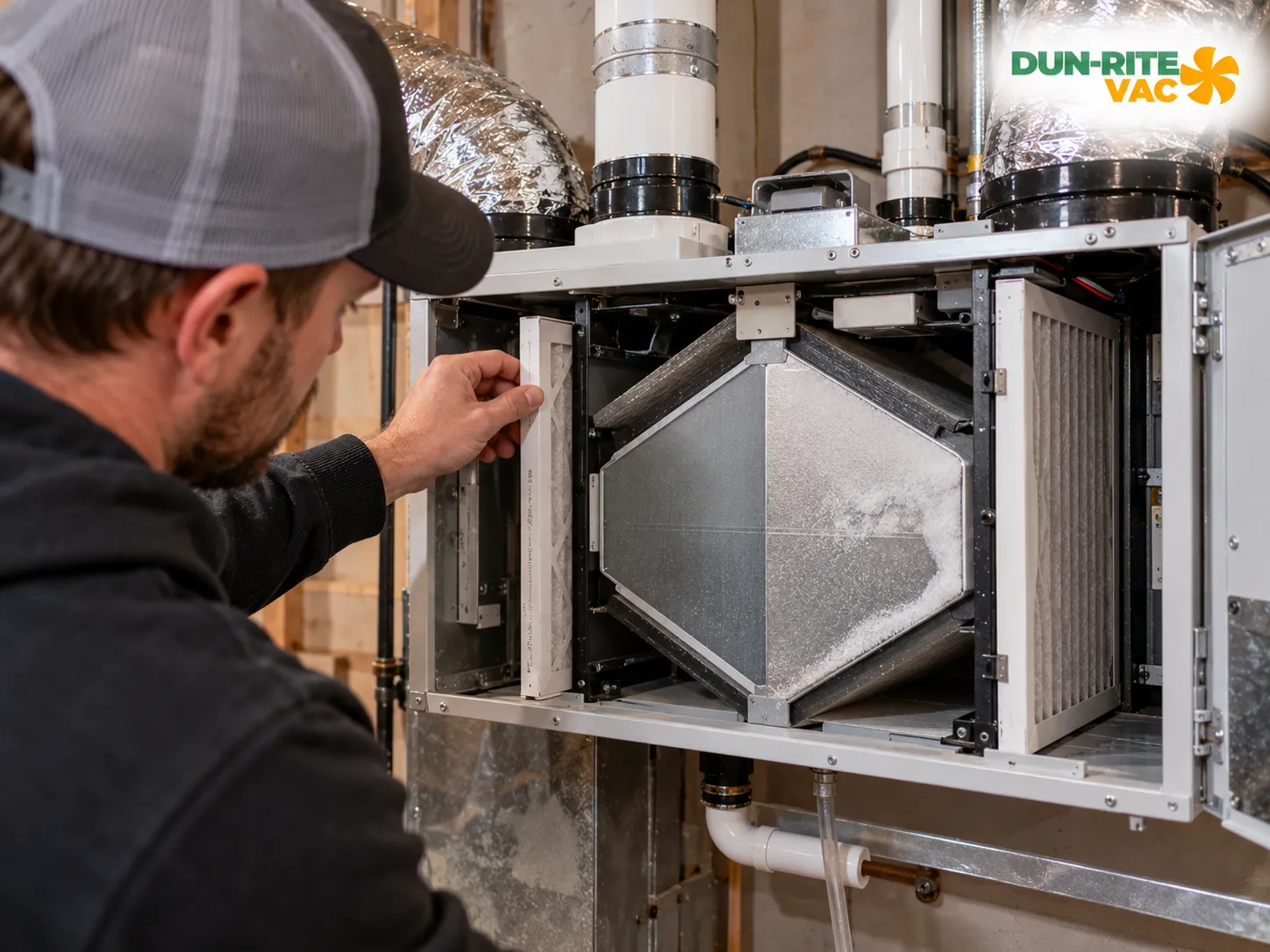
Frost doesn’t automatically mean the filter or core is dirty. It can have several causes, and we can’t tell which one applies to your unit from a description. Persistent or recurring ice is a question for your installer or a qualified HVAC contractor, and we don’t want to suggest that a cleaning will resolve it.
Here’s a sensible order to work through: check your manual’s defrost guidance, confirm the settings match what it recommends for the outdoor temperature, and look at any filters the manufacturer says you can check yourself. If frost keeps coming back, bring in a professional.
Not sure whether your air exchanger just needs a cleaning or a closer look from an installer? Send us a note describing what you’re seeing, and we’ll tell you honestly whether it’s something we can help with.
Why the Dial Can’t Do a Cleaning’s Job
It’s tempting to treat settings and cleaning as one maintenance task, but they answer different questions. Settings determine how the unit operates, while maintenance deals with components such as filters and the heat- or energy-recovery core. Fantech’s HRV/ERV installation and operation manual provides model-specific inspection and cleaning intervals and notes that maintenance needs can vary with operating conditions. Follow the schedule and procedures specified for your own model.
Changing a control setting doesn’t physically remove dust or debris from the filters or the core. Dun-Rite Vac has been family-run since 1998, is a NADCA member company, and has technicians who hold ASCS certification. With more than 50,000 completed jobs, we can help determine whether what you are seeing is likely a cleaning issue or whether it should be assessed by an HVAC professional.
The reverse is also true. A freshly cleaned unit is not a fix for a setting that doesn’t suit your house, and we don’t claim cleaning will repair a mechanical fault. If you’d like to know what a cleaning involves, our air exchanger cleaning service page covers it in detail.
Frequently Asked Questions
Should I turn my air exchanger off for the summer?
Summer operating recommendations vary by model, so check your manufacturer’s manual before changing or disabling ventilation. A sealed home may rely on the unit for fresh air, which is one more reason to look it up first.
Why is there still condensation on my windows if the air exchanger is running?
A running unit isn’t always running at the level your household’s moisture load calls for. The speed or humidity control may be worth checking against the manual, and other factors such as the windows themselves can also play a part. If condensation persists after you’ve followed the manual’s guidance, involve your installer.
Does it matter whether I have an HRV or an ERV?
Yes. An HRV transfers heat, while an ERV transfers heat and some moisture, so seasonal advice written for one may not suit the other. The unit’s label or manual will say which you have. If your air exchanger is tied into your furnace ductwork, our furnace duct cleaning page explains how that side of the system is serviced.
Want a second opinion on your air exchanger? Every job we do is backed by our 100% Satisfaction Guarantee, and a quote costs you nothing.