
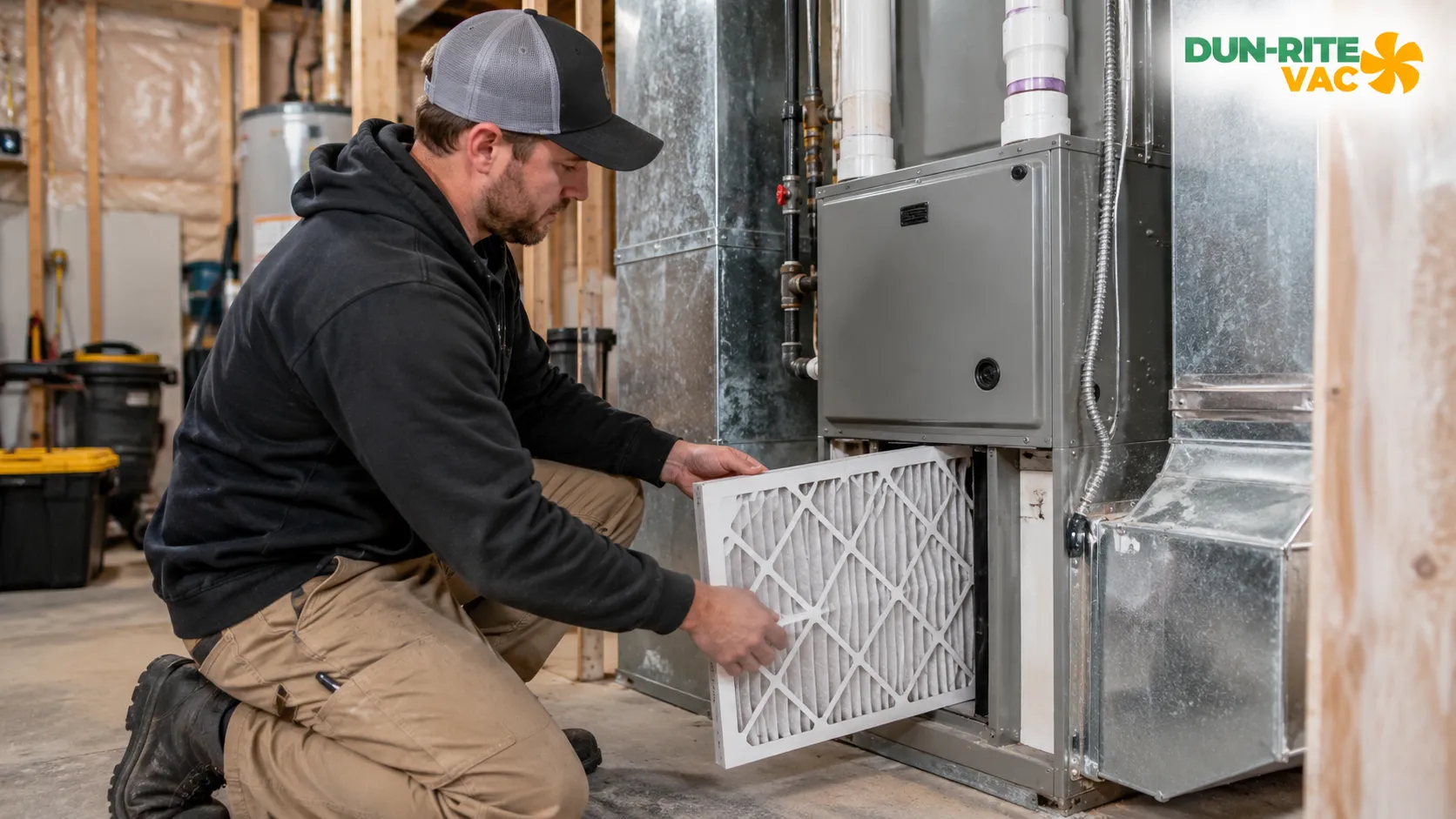
Walk down the filter aisle and you will see numbers everywhere: a MERV rating, a size like 16x25x1, and labels like “pleated” or “allergen.” If you have ever wondered what a furnace filter MERV rating actually means, or whether a higher number is automatically better, you are asking the right question. The answer is more nuanced than the packaging suggests.
We have been cleaning furnace systems across Saskatchewan and Western Manitoba since 1998. This guide covers how to read the size on the frame, how the common filter types differ, and how to match the rating to what your furnace is built to handle.
Quick Answer: MERV (Minimum Efficiency Reporting Value) is a standardized number describing how well a filter captures particles of different sizes. Higher-efficiency filters can create more airflow resistance, so the right filter is the one that is compatible with your furnace and filter housing, in the size your slot requires.
In this guide
- What Is a Furnace Filter MERV Rating, and What Is It Not Telling You?
- Why the Size Printed on the Edge Isn’t the Size You Measure
- Furnace Filter Types and Where Each One Falls Short
- Matching the Rating to Your Furnace, Not to the Packaging
- What a Long Prairie Heating Season Changes About Filter Choice
- Frequently Asked Questions
What Is a Furnace Filter MERV Rating, and What Is It Not Telling You?
MERV stands for Minimum Efficiency Reporting Value. It comes from a standardized laboratory test, ASHRAE Standard 52.2, that measures a filter’s efficiency across different particle-size ranges. ASHRAE’s guidance on particulate air cleaners explains how MERV ratings are based on performance across these particle-size ranges. In general, a higher MERV rating indicates greater efficiency at capturing smaller particles, but that does not automatically make the highest rating the right choice for every furnace.
| MERV range | General filtration range |
|---|---|
| 1–4 | Lower-efficiency filtration primarily intended for larger airborne particles |
| 5–8 | Improved capture in the larger particle-size range, including particles around 3–10 micrometres |
| 9–12 | Greater efficiency for particles in approximately the 1–3 micrometre range |
| 13–16 | Higher efficiency for smaller particles, including particles in approximately the 0.3–1 micrometre range |
Treat that table as a general explanation of the rating scale, not as a shopping recommendation. ASHRAE’s particulate filtration guidance provides the technical efficiency ranges behind MERV ratings. Specific filter products vary, and what suits a given furnace is a separate question, covered below.
Here is the assumption that causes trouble: that the highest number on the shelf is automatically the best choice. Filter resistance depends on factors such as the media, design, surface area and how loaded the filter becomes. The U.S. EPA’s technical summary on residential air cleaners explains that filtration efficiency and pressure drop need to be considered together because added resistance can affect airflow through an HVAC system. That is why a higher-efficiency filter still needs to be compatible with the furnace and filter housing.
The rating also says nothing about fit or condition. A high-rated filter that is overdue for replacement can serve your system worse than a modest one that is fresh. The number describes the filter media under test conditions, not the whole system in your home.
Why the Size Printed on the Edge Isn’t the Size You Measure
Start with the symptom: you measure your filter slot with a tape, buy a filter matching those numbers, and it is loose or will not seat properly. That usually comes down to nominal versus actual dimensions.
Furnace filters may be described using nominal dimensions rather than their exact measured dimensions. Trane’s HVAC filter guidance distinguishes between nominal filter size and actual dimensions, which can differ slightly. Before buying a replacement, check the size marked on the existing filter and compare it with the furnace or filter-housing documentation and the product’s listed dimensions.
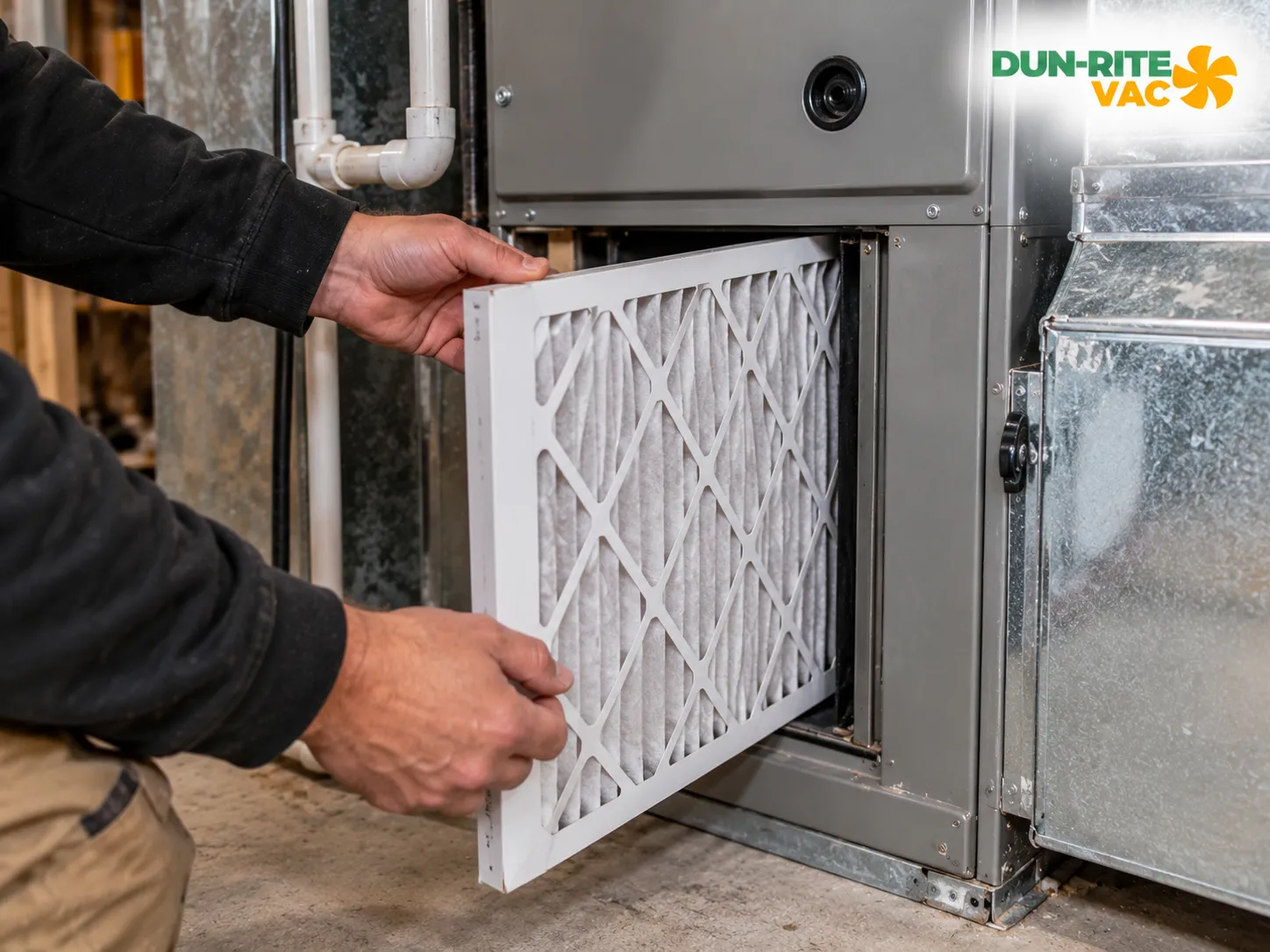
The practical rule: read the size printed on the frame of the filter currently installed and match that label, using a tape measure only to confirm. Thickness matters as much as length and width. A slot built for a one-inch filter cannot take a thicker one, however good the rating.
When we open up return-air ductwork, one pattern we run into fairly often is a filter that was only a close fit, leaving a gap along one edge. A poor fit can let some return air bypass the filter, which reduces filtration and lets more particles reach the ducts and blower. In those cases the filter itself can look fairly clean while the system behind it tells a different story. That is a big part of why proper fit matters more than a bigger number.
If you suspect dust has been slipping past your filter for a while, the ductwork behind it is worth a look. We can tell you honestly whether a free quote makes sense for your situation, or whether a better-fitting filter is all you need.
Furnace Filter Types and Where Each One Falls Short
Instead of ranking furnace filter types from best to worst, it is more useful to look at how their design affects filtration and airflow. The U.S. EPA’s technical summary on residential air cleaners explains that filter construction, surface area, efficiency and airflow resistance can vary substantially between products.
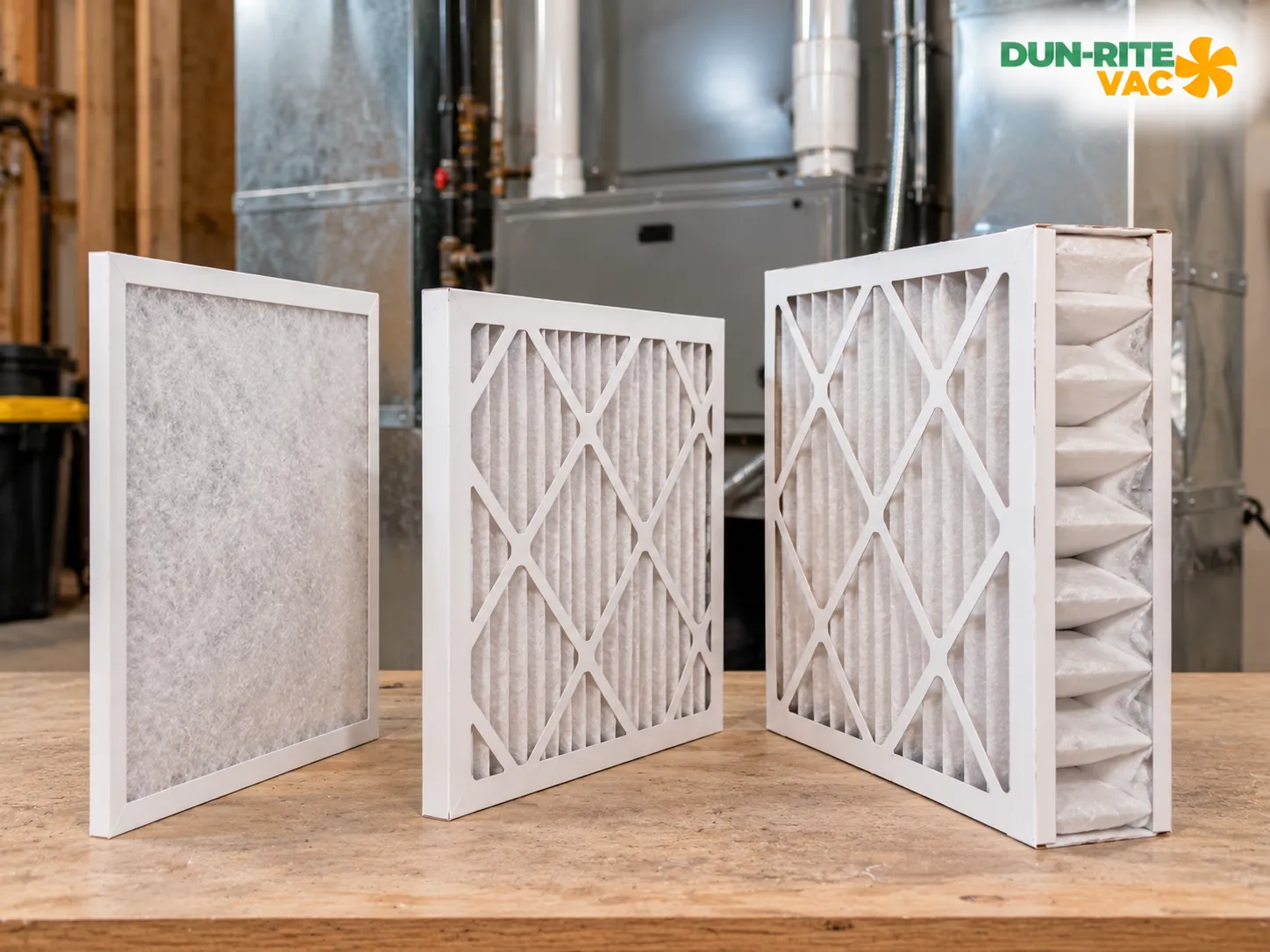
- Flat-panel filters: generally have relatively low resistance to airflow but also lower efficiency for smaller particles compared with higher-efficiency media filters.
- Pleated filters: folded media provides more surface area than a flat panel. Efficiency and airflow resistance vary by product, so the filter still needs to suit the furnace and filter housing.
- Electrostatically charged media: use an electrical charge in the filter media to improve particle capture. Performance varies according to the particular filter design.
- Deeper pleated media: additional media surface area can allow higher filtration efficiency while managing airflow resistance. If you are considering a deeper filter, confirm that your filter housing is designed for that depth before changing sizes.
A situation our technicians sometimes run into is a homeowner who switched to a thick, dense filter hoping for cleaner air, only to find the filter loads up quickly or the furnace seems to be working harder. The filter was not a bad product in general. It was the wrong match for that furnace and slot.
Matching the Rating to Your Furnace, Not to the Packaging
There is no universal MERV rating that is right for every home, and we are not going to hand you one. Start with the documentation from your furnace and filter-housing manufacturer for the required size, type and any airflow or filtration limits. If you cannot find the manual, the model number on the furnace data plate is usually enough to look it up.
Two decisions follow from that. First, confirm the required size and thickness. Second, check whether the manufacturer limits how restrictive the filter can be; some manuals specify dimensions or airflow limits rather than a simple MERV number. If yours does not make this clear, a licensed HVAC technician who services your furnace is the right person to ask, because their answer will reflect your equipment.
We should also be clear about what filters can and cannot do. A good filter helps keep debris out of your furnace and ducts, but it does not clean duct surfaces that are already dusty, and we cannot promise any filter will change how anyone feels in their home. If you are curious about the duct side, our residential furnace duct cleaning page explains what a visit involves, and the broader furnace duct cleaning overview covers how duct cleaning in Saskatchewan and Western Manitoba works with us.
What a Long Prairie Heating Season Changes About Filter Choice
During Saskatchewan’s long heating season, furnaces can run for extended stretches, and tighter cold-climate housing means the same indoor air passes through the filter many times. That puts a premium on a filter that fits well and suits the furnace.
Homes near gravel roads, farmland or wood heat may see filters load differently than a typical city house, depending on air leakage, ventilation and household conditions. A furnace filter replacement schedule therefore depends on several things: the manufacturer’s instructions, the filter type and thickness, how much the furnace runs, how loaded the filter looks, and the dust conditions around the home. Checking it more often during heavy use is a sensible habit. How to actually swap one out is covered in a separate how-to article.
If your home has an air exchanger (HRV or ERV), it has its own filters and cores, separate from your furnace filter. Each serves different equipment and should be maintained according to its own manufacturer’s instructions. See our air exchanger cleaning page for that side of the system.
Frequently Asked Questions
Can I use a filter that is slightly smaller than my filter slot?
It is best not to. A gap lets air go around the filter and carry particles into the system. Match the size on the frame of your current filter and confirm it against the actual dimensions in the product details.
Does a higher MERV number mean my furnace will run better?
Not necessarily. A higher number means finer filtering, and higher-efficiency filters can resist airflow more. Whether one suits your furnace depends on what the manufacturer specifies, so check the documentation for your model first.
Where do I find out which filter my furnace requires?
Start with the owner’s manual or the data plate on the furnace, which lists the model number. The filter size is often also printed on the edge of the filter already installed. If neither answers it, ask the technician who services your furnace.
Not Sure What Your System Needs?
We have been family-run since 1998, with more than 50,000 completed jobs. Dun-Rite Vac is a NADCA member company, and our technicians hold ASCS certification. We are glad to look at your setup and give you a straight answer, and every job is backed by our 100% Satisfaction Guarantee.