
Ask five facility managers how often to clean commercial air ducts, and you will likely get five different answers. Surprisingly, all five could be correct for their building. For example, a busy 24-hour call center and a quiet single-tenant office need entirely different schedules. Therefore, square footage alone does not dictate the timeline. Instead, occupancy, building use, recent construction, and system behavior all shift the right commercial duct cleaning frequency.
Do not treat commercial duct cleaning like a standard oil change. In fact, a fixed interval ignores what happens inside the building. Consequently, you might pay for unnecessary cleanings. On the other hand, you might wait too long. Unfortunately, this delay lets contamination or airflow issues become serious tenant complaints.
Quick Answer: No single interval fits every commercial building. Rather, cleaning frequency depends on several dynamic factors. First, consider occupancy levels, daily use, and recent renovations. Additionally, technician findings, tenant air quality complaints, and overall system health also matter. Ultimately, a high-occupancy or recently renovated building needs attention sooner than a lightly used space.
Why Occupancy and Building Use Influence Commercial Duct Cleaning Frequency
Many assume two similarly sized commercial buildings need the identical cleaning interval. However, in practice, occupancy density and indoor activities matter more than square footage. For instance, daycares, restaurant kitchens, and fitness facilities push high levels of debris, grease, or moisture through the system. As a result, their ductwork fills up much faster than a lightly staffed professional office. Therefore, the calendar interval matters significantly less.
Building use heavily dictates the type of debris. Specifically, retail and warehouse spaces near loading docks pull in outdoor particulates through open doors. Meanwhile, medical and dental offices maintain strict infection-control standards; as noted by the NIH Division of Occupational Health & Safety, these facilities require tighter intervals, often following the NADCA ACR Standard to ensure compliance and safety, even at moderate occupancy. In short, base your commercial cleaning schedule on actual building use, not just building size.
Renovation and Construction: When to Reset Your Commercial Duct Cleaning Schedule
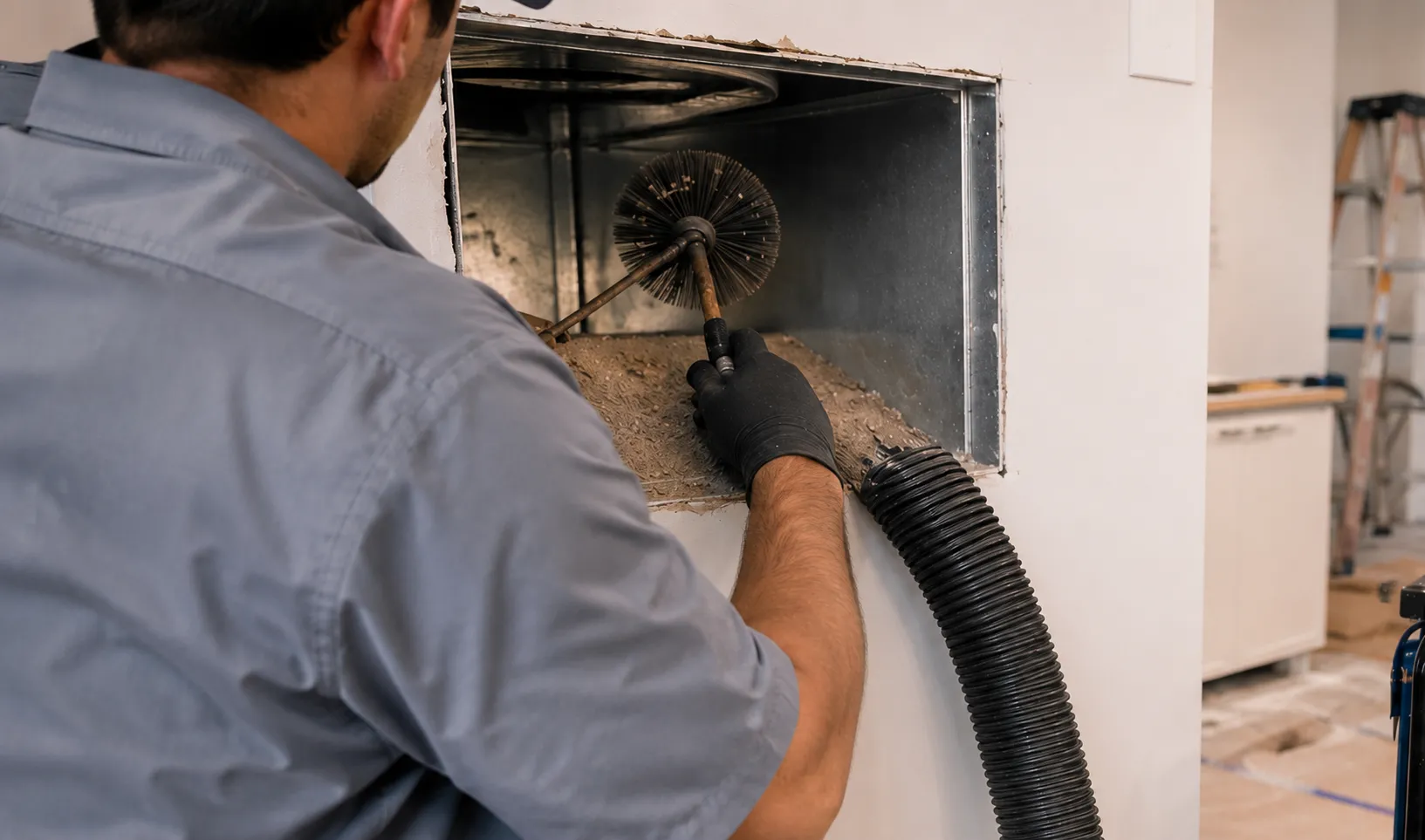
Tenant buildouts, drywall work, flooring replacements, or ceiling tile removals add serious mess. Moreover, they also introduce a heavy load to the duct system. Consequently, normal intervals cannot handle this excess debris. Typically, the system pulls fine construction dust deep into the return air. Subsequently, this dust settles far beyond the visible ceiling grille—a scenario where, according to SMACNA’s IAQ Guidelines, unprotected return-air openings allow contaminants to migrate deep into the ductwork.
A pattern we run into a lot in strip-mall and multi-tenant office buildings across Saskatoon and Regina is a schedule that was set once, years ago, and never revisited even after a tenant mix change or a full HVAC retrofit. Thus, any renovation, tenant fit-out, or major HVAC work should immediately reset your HVAC cleaning schedule. Ideally, close out the construction project with a thorough system cleaning. Above all, do not blindly rely on the old interval.
Contamination Signals That Override Your Commercial Duct Cleaning Schedule
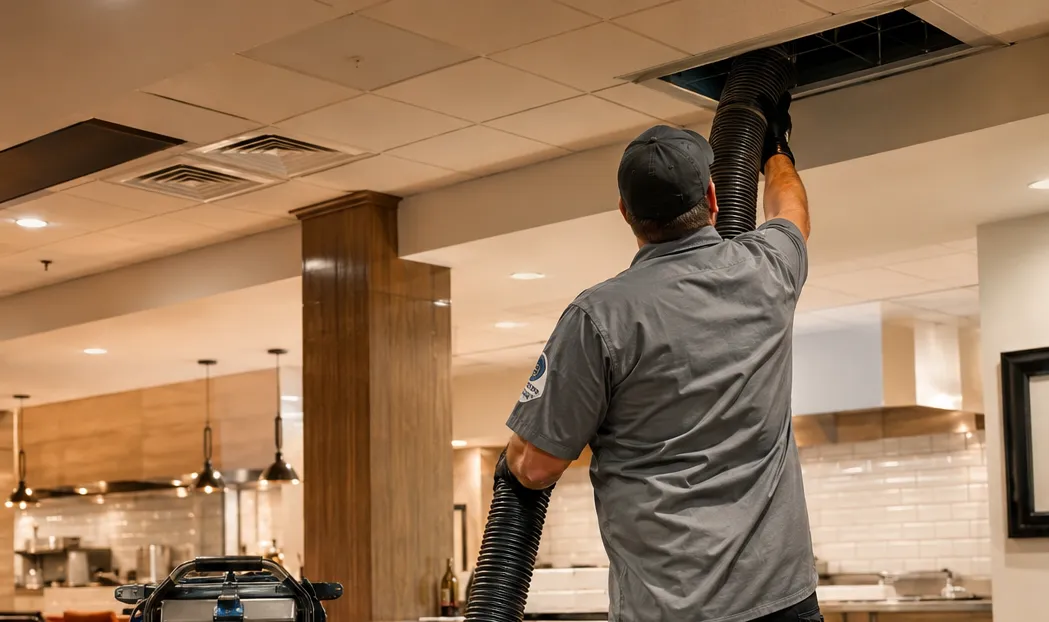
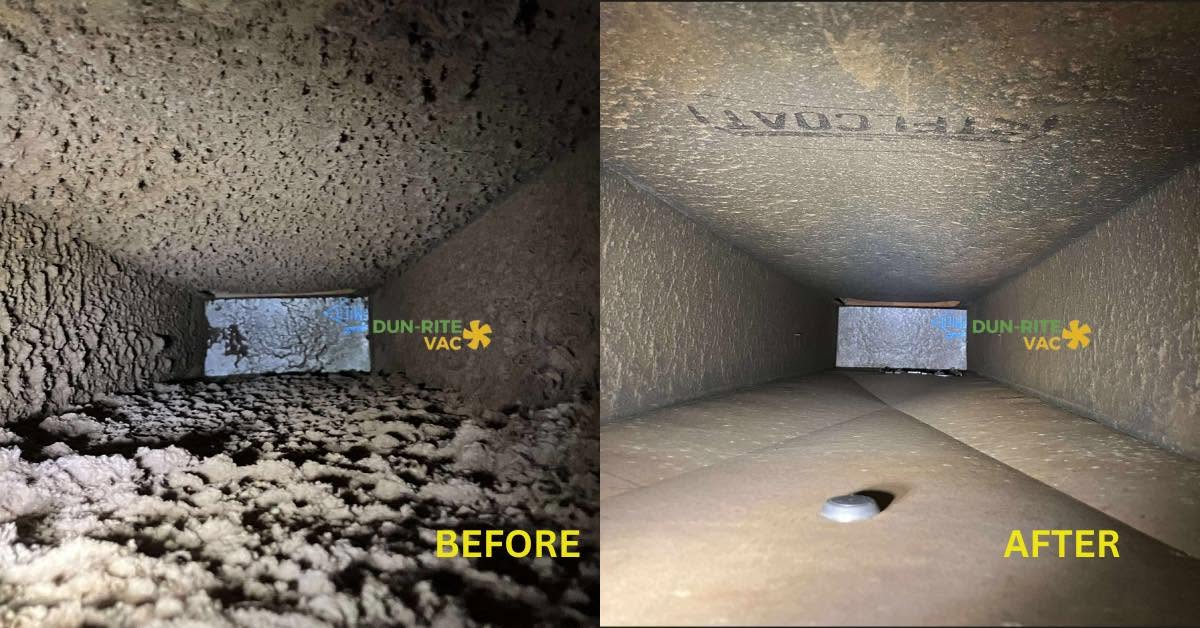
Occasionally, some buildings need cleaning completely off-schedule. Indeed, the ductwork often shows signs before the calendar does. For example, watch for musty odors near supply vents or visible dust around diffusers. Furthermore, increased dust on desks between regular cleanings strongly signals trouble. Ultimately, these signs mean the system is overdue, regardless of the last scheduled cleaning date.
Additionally, higher humidity raises the risk of mold or microbial growth inside ductwork. As outlined in the U.S. EPA’s Mold Course, high relative humidity and hidden moisture in basements or areas with poor drainage are primary conditions for mold growth. Unfortunately, a standard cleaning interval might completely miss this growth. Therefore, mold requires separate attention from routine dust buildup. Preferably, technicians should evaluate this specific issue during a cleaning visit. Stop guessing at the problem entirely. Instead, if you suspect mold or bacterial contamination, sanitization addresses it directly.
What Tenant Complaints Reveal About Commercial Duct Cleaning Frequency
Facility managers often treat tenant complaints about stuffiness, odors, or dust as minor comfort issues. Consequently, they mistakenly ignore them as vital maintenance signals. When considering how often to clean commercial air ducts, you must treat these reports as actionable data. What we find when we’re called out after a tenant complaint, rather than on a set schedule, is that the ductwork is often carrying more than dust — pollen, insulation fibers, and in older buildings, a fair amount of construction debris that never got cleaned out after the last renovation.
Conversely, repeated complaints from one specific zone usually point to a localized duct or diffuser issue. Rarely do they indicate a building-wide air quality problem. Accordingly, this distinction drastically changes the urgency and scope of the cleaning project.
Do tenants raise the exact same comfort or odor complaints repeatedly? If so, have a professional inspect the system before the problem escalates. Reach out for a free quote. We will happily explain the real situation.
How System Condition Changes How Often You Should Clean Commercial Air Ducts
Older systems do not automatically require more frequent cleaning. However, they undeniably reduce your margin for error during schedule delays. For instance, NADCA’s industry guidance confirms that older ductwork often features more seams, aging insulation lining, and components that allow debris to accumulate and redistribute unpredictably. In contrast, newer, tighter systems handle maintenance delays much better.
This is exactly where NADCA-certified, ASCS-certified technicians add real value here. Specifically, they assess actual system conditions during every single visit. Furthermore, they provide far more than a simple box-check. We proudly bring experience from 27 years and 50,000+ completed jobs across Saskatoon, Regina, Yorkton, and Weyburn. Ultimately, this expertise creates a custom schedule rather than a wild guess.
Frequently Asked Questions
Does a strict maintenance plan determine how often to clean commercial air ducts?
No. A schedule effectively sets a baseline. Nevertheless, events like renovations or HVAC repairs quickly disrupt this timeline. Additionally, sudden tenant complaints demand immediate action. Therefore, your system might need attention long before the next scheduled visit.
Do multi-tenant buildings require more frequent commercial duct cleaning services?
Often, yes. Tenant turnover frequently involves messy interior buildouts. Moreover, different tenants often share the very same HVAC zones. Consequently, NADCA’s commercial specifications emphasize the importance of developing building-specific schedules that account for usage and occupancy rather than relying on generic intervals. Ultimately, this heavy usage and shared air volume mean you should monitor debris levels more proactively.
Can we extend the commercial duct cleaning frequency if our system is in good condition?
Sometimes. However, base this decision strictly on actual technician findings from the last visit. Furthermore, you must thoughtfully evaluate occupancy, daily use, and recent building activity. In short, never assume you can extend the interval automatically.
Should commercial duct cleaning schedules be part of a facility maintenance plan?
Yes. Build this frequency directly into a broader building duct maintenance plan. Additionally, pair it flawlessly with standard HVAC servicing. By doing this, the strategy makes tracking incredibly easy and prevents reliance on memory or random requests.
Want a closer look at the complete commercial cleaning process? Fortunately, our commercial duct cleaning page covers the details. Furthermore, this sits conveniently under our broader furnace duct cleaning services.
Not sure where your building falls on this?
Perhaps you recently finished a major renovation. Or maybe tenants complain frequently. Alternatively, you might simply feel unsure about your current system needs. As a NADCA-certified, third-generation family business, we fully back our work with a 100% Satisfaction Guarantee. Most importantly, we always provide honest assessments, never just an easy sales pitch.