

Most homeowners with a built-in central vacuum system have never actually cleaned any part of it beyond running the hose over the carpet. That’s usually fine for a while, until suction starts to drop and there’s no obvious reason why. Knowing how to clean central vacuum components yourself helps you stay on top of routine maintenance. It also helps you recognize when a problem is no longer a simple DIY maintenance task.
This guide explains what you can typically handle at home and which parts of the system are better left alone unless your manufacturer’s instructions provide a specific homeowner procedure. That’s especially useful in older homes where the pipe network may have been installed many years ago.
Quick Answer: Routine central vacuum maintenance usually includes emptying the collection canister or replacing the bag and maintaining the filter according to the manufacturer’s instructions. If suction remains weak after those basic steps, check the hose and accessible attachments before assuming there is a problem deeper inside the piping or power unit. Avoid opening the power unit or forcing tools into the pipe network unless your system’s instructions specifically allow it.
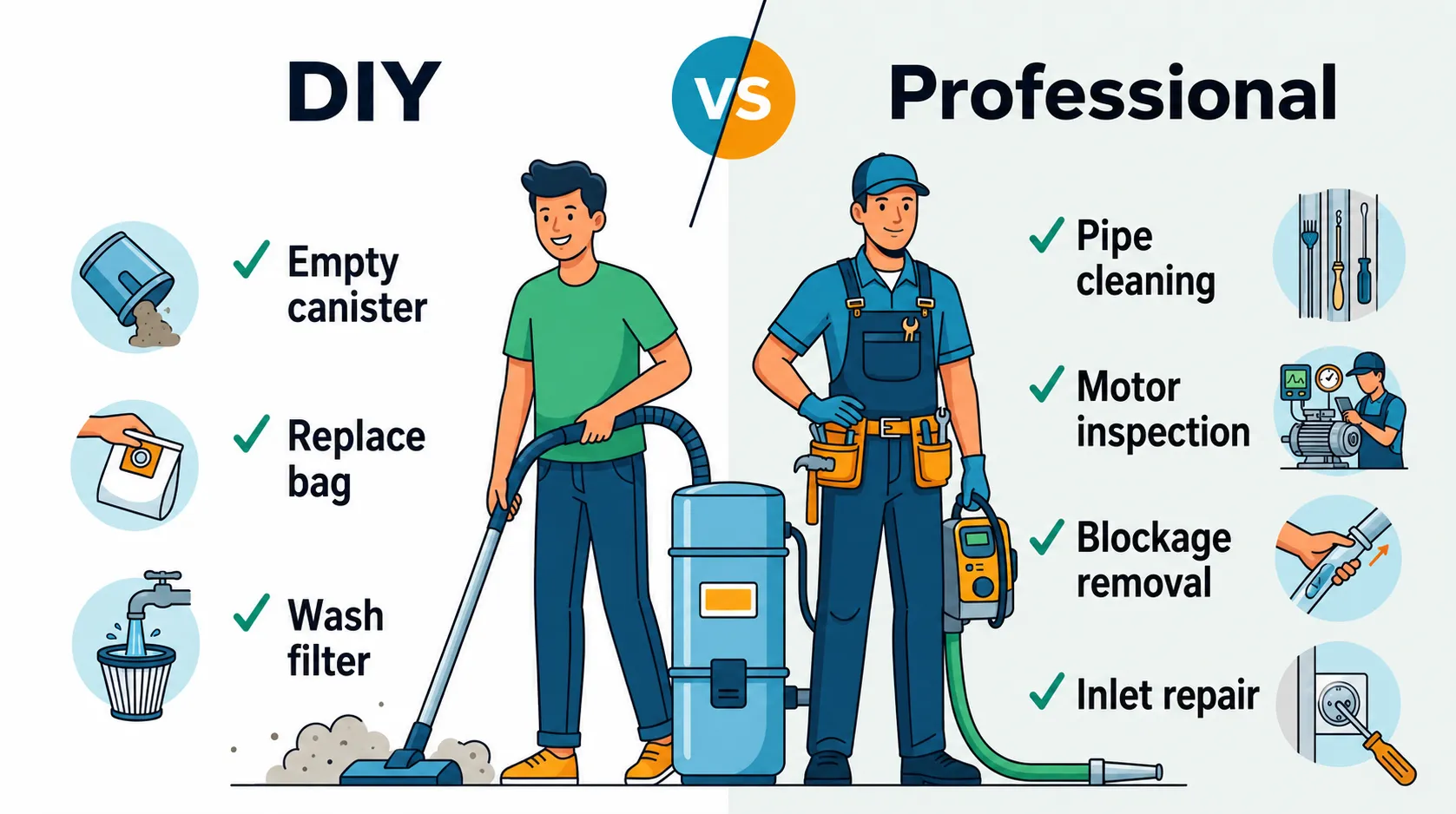
The Central Vac Cleaning Tasks Homeowners Can Handle
For many central vacuum systems, the main routine maintenance points are the collection canister or disposable bag and the filter. The exact process varies by model, so check your owner’s manual before removing, washing, or replacing any component.
What you may need:
- A garbage bag for canister debris
- A replacement bag if your system uses disposable bags
- Water only if your filter is specifically designed to be washed
- A dry, ventilated space where a washable filter can dry completely before reinstallation
Emptying the canister is usually the simplest maintenance task. Check it regularly and empty it before it becomes overly full. If your unit uses a disposable bag, replace the bag according to the manufacturer’s instructions rather than allowing it to become tightly packed with debris.
Filter maintenance depends on the system. Some central vacuum filters are washable, while others should be cleaned another way or replaced. If yours is washable, rinse it according to the manufacturer’s directions and let it dry completely before reinstalling it. Do not wash a filter unless the manufacturer identifies it as washable.
Routine canister, bag, and filter maintenance is worth checking first whenever suction begins to decline. A full collection container or restricted filter can contribute to lower airflow and make the system feel weaker than usual.
Why Older Central Vacuum Systems Can Be Harder to Clean
Older homes in Saskatoon, Regina, and other Saskatchewan communities may have central vacuum systems with pipe networks that were installed many years ago. Depending on the original installation, those systems may include long pipe runs, multiple floors, branches, and several elbows.
The canister and filter are easy to see and maintain, but the pipe network behind the walls is much less accessible. If debris becomes lodged inside the piping, pushing a rod, hose, or other makeshift tool into a wall inlet may move the obstruction farther into the system or damage accessible components.
An older central vacuum system does not automatically need its pipes cleaned. Plenty of systems continue to perform normally with routine maintenance. Pipe-related problems become worth investigating when suction remains noticeably weak after the canister or bag, filter, hose, and other accessible components have already been checked.
What a Drop in Central Vacuum Suction Can Tell You
Let’s say you recently emptied the canister or replaced the bag and maintained the filter, but suction still feels noticeably weaker than usual. That does not necessarily mean the entire system needs replacing. Reduced suction can come from a blockage, the hose or attachments, an inlet or seal, the piping network, or the power unit.
If the problem appears at only one inlet, the issue may be closer to that part of the system. If suction is weak throughout the home, check the hose and routine maintenance items first before assuming the main pipe network or power unit is responsible.
Unusual sounds, smells, repeated shutdowns, or other changes in the way the power unit operates are reasons to stop using the system and have the problem properly diagnosed rather than continuing to run it.
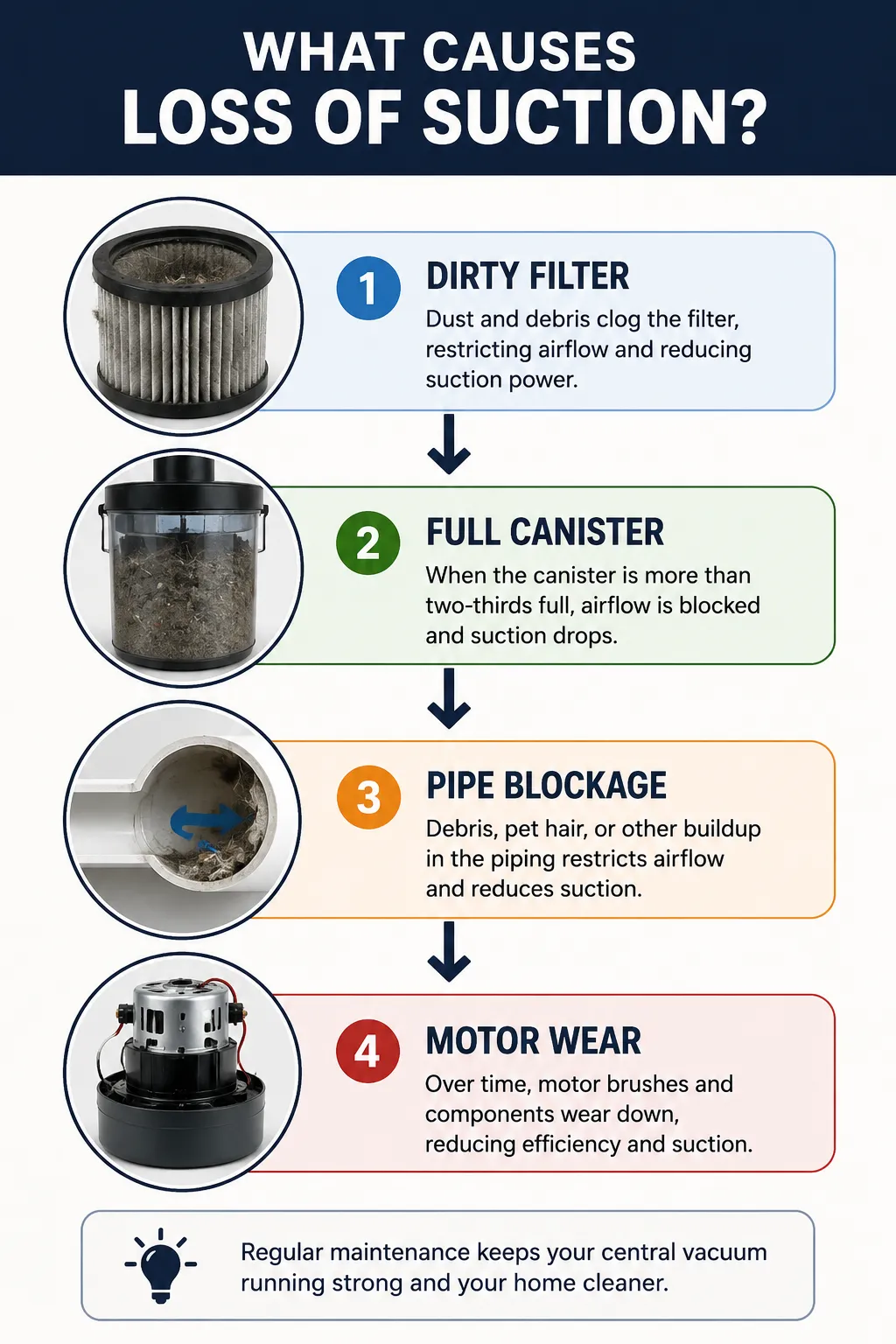
If your suction has dropped and the canister or bag, filter, hose, and accessible components have already been checked, get in touch for a free quote. Dun-Rite Vac can help determine whether central vacuum cleaning may be an appropriate next step.
The Central Vacuum Motor Unit and Wall Inlets: When to Stop DIY Work
The central vacuum power unit usually sits in a garage, basement, or utility room and contains electrical and mechanical components that are different from routine homeowner maintenance items such as the canister, bag, or filter.
Unless the manufacturer’s instructions provide a specific homeowner-service procedure, avoid opening or disassembling the power unit. Warranty terms also vary by manufacturer, and unauthorized repairs or disassembly can affect coverage on some systems.
Wall inlets should also be handled carefully. They’re designed primarily for connecting the vacuum hose, not as general access points for cleaning the pipe network. If you suspect a blockage behind an inlet, avoid forcing tools into the piping unless your system’s manufacturer provides a specific procedure for doing so.
When debris is lodged deeper inside the central vacuum piping, specialized equipment may be needed to locate or clear the obstruction without relying on improvised methods. Dun-Rite Vac has served Saskatchewan customers since 1998 and provides professional central vacuum cleaning for systems with accumulated debris or blockages.
Central Vac Maintenance at a Glance
Maintenance requirements vary by central vacuum model, so use your manufacturer’s instructions as the primary guide. The table below gives you a simple checklist of what to monitor.
| Component | What to Do |
|---|---|
| Canister | Check regularly and empty before it becomes overly full. |
| Filter | Clean or replace according to the manufacturer’s instructions. Only wash a filter designed to be washed. |
| Disposable bag | Replace according to the manufacturer’s guidance before it becomes overly full. |
| Hose and attachments | Check for visible obstructions if suction drops. |
| Pipe network | Investigate further if suction remains weak after routine maintenance and hose checks. |
| Power unit | Have unusual sounds, smells, shutdowns, or persistent performance problems properly diagnosed. |
FAQ
Can I use a shop vac to clean central vacuum pipes myself?
Avoid using improvised pipe-cleaning methods unless your central vacuum manufacturer recommends them. Depending on the system layout, attempting to push or pull an obstruction from a wall inlet may move the blockage farther into the piping or damage accessible components.
How often should I clean a washable central vac filter?
Follow the maintenance interval recommended for your specific system. If your filter is washable, clean it according to the manufacturer’s instructions and allow it to dry completely before reinstalling it. Some central vacuum filters are not washable, so check before using water.
Can DIY cleaning affect my central vac warranty?
Routine maintenance performed according to the owner’s manual is different from opening or repairing the power unit. Warranty terms vary by manufacturer, and unauthorized disassembly or repairs can affect coverage on some systems. Check your warranty before opening components that are not intended for routine homeowner access.
Is it normal for an older central vac system to need pipe cleaning eventually?
Not every older central vacuum system needs its pipes cleaned. If suction remains strong and routine maintenance is being performed, additional pipe cleaning may not be necessary. It becomes worth investigating when suction remains weak after the canister or bag, filter, hose, and other accessible components have already been checked.
Can I clean central vacuum pipes myself if I don’t have a blockage?
There usually isn’t a reason to perform preventive pipe cleaning when the system is operating normally. Keep up with the routine maintenance recommended for your model, and avoid putting tools or cleaning products into the pipe network unless the manufacturer provides a specific procedure.
You Might Also Find This Helpful
- Common Central Vacuum Problems — for a deeper look at troubleshooting suction and performance issues
- What Is Central Vacuuming? — a good starting point if you’re newer to how these systems work
Not sure whether your central vac needs a pipe cleaning or just routine maintenance?
Contact Dun-Rite Vac and our team can help determine whether central vacuum cleaning is an appropriate next step.