

If you’re weighing a central vacuum system against an upright or stick vacuum, you’ve probably seen plenty of opinions about whether central vacuums are worth it. The answer depends on your home, how the system is installed, how you prefer to clean, and how well the system is maintained over time.
Dun-Rite Vac services central vacuum systems across Saskatchewan and Western Manitoba. In older homes and newer properties alike, the condition of the hose, canister or bag, filter, piping, inlets, and power unit can all affect how useful the system feels to the homeowner.
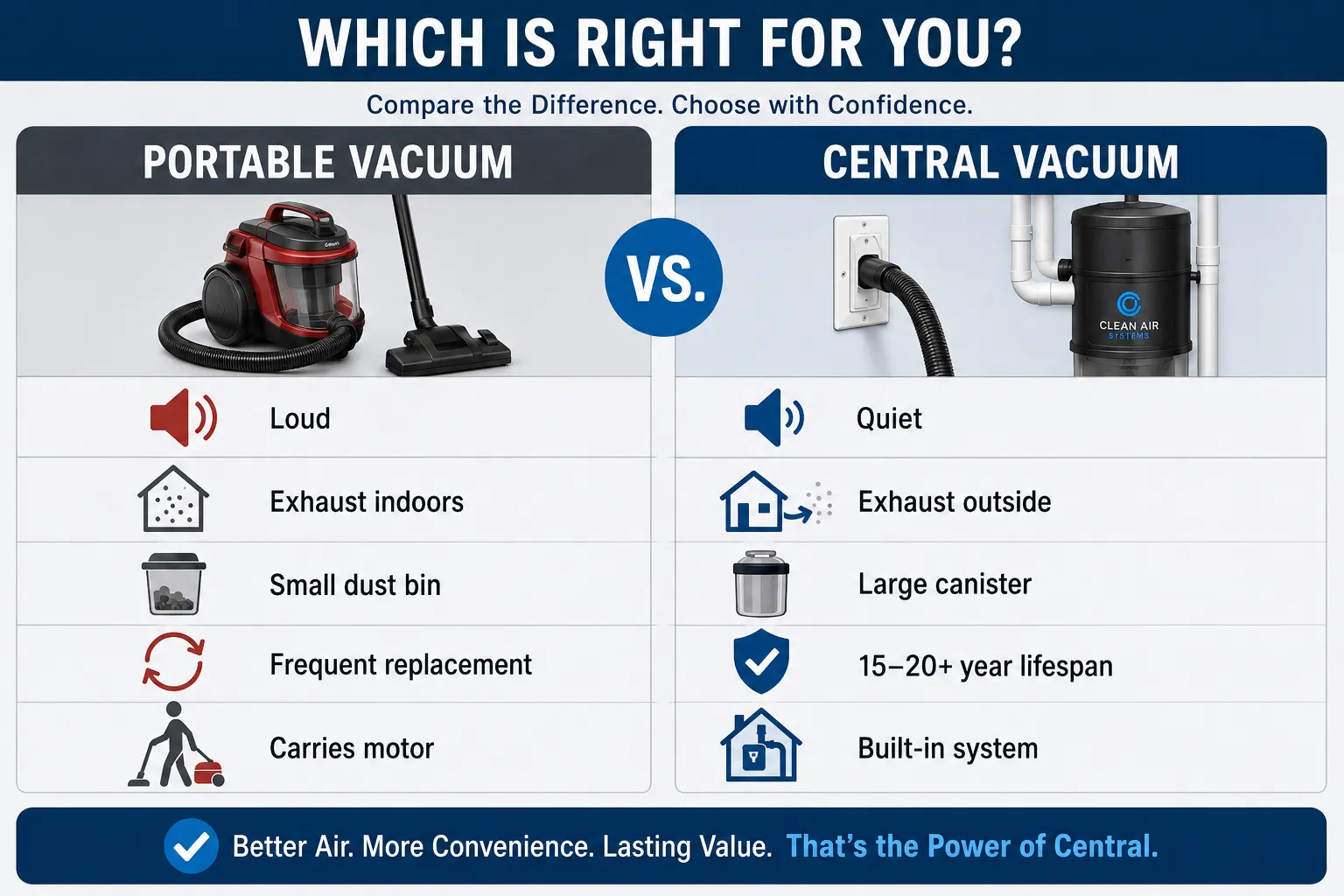
Quick Answer: A central vacuum can be worth it if you value having the main power unit located away from the rooms you’re cleaning, prefer a built-in system, and don’t mind handling and storing a longer hose. Some systems can also exhaust vacuumed air outside depending on the model and installation. The long-term value depends on the condition of the system, the original installation, routine maintenance, and your cleaning preferences.
The Noise Difference With a Central Vacuum
One practical difference between a central vacuum and a portable vacuum is where the main motor is located. With a portable vacuum, the motor moves through the room with you. A central vacuum typically places the power unit in a garage, basement, utility room, or another location away from the immediate cleaning area.
That separation can reduce how much motor noise you hear in the room you’re cleaning, although the actual noise level depends on the power unit, installation, hose, attachments, and location of the equipment.
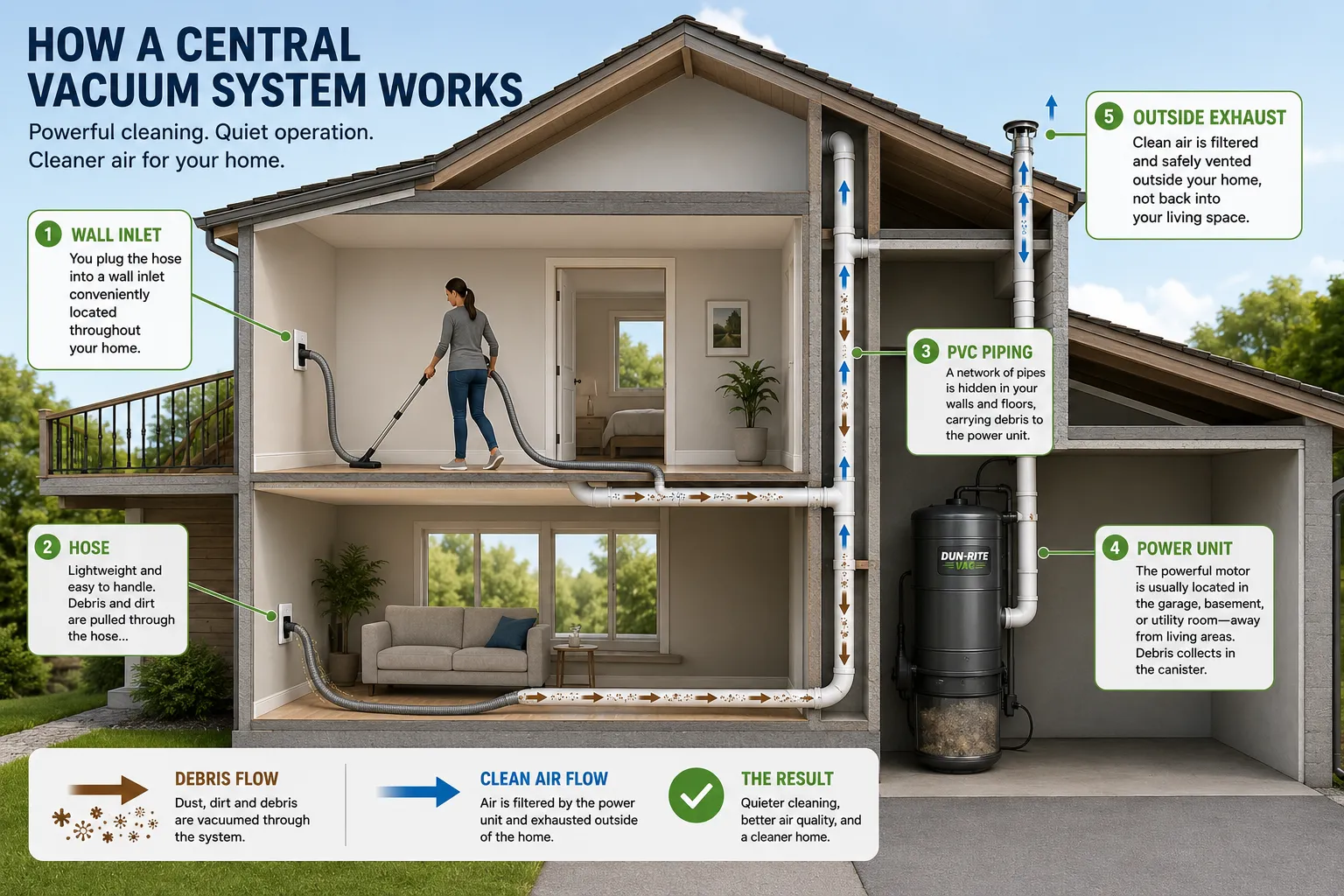
Installation matters as well. A power unit mounted close to a frequently used room may be more noticeable than one located farther away. If you’re considering a new system, the location of the power unit is worth discussing along with the equipment itself.
What to Know About Central Vacuum Exhaust and Filtration
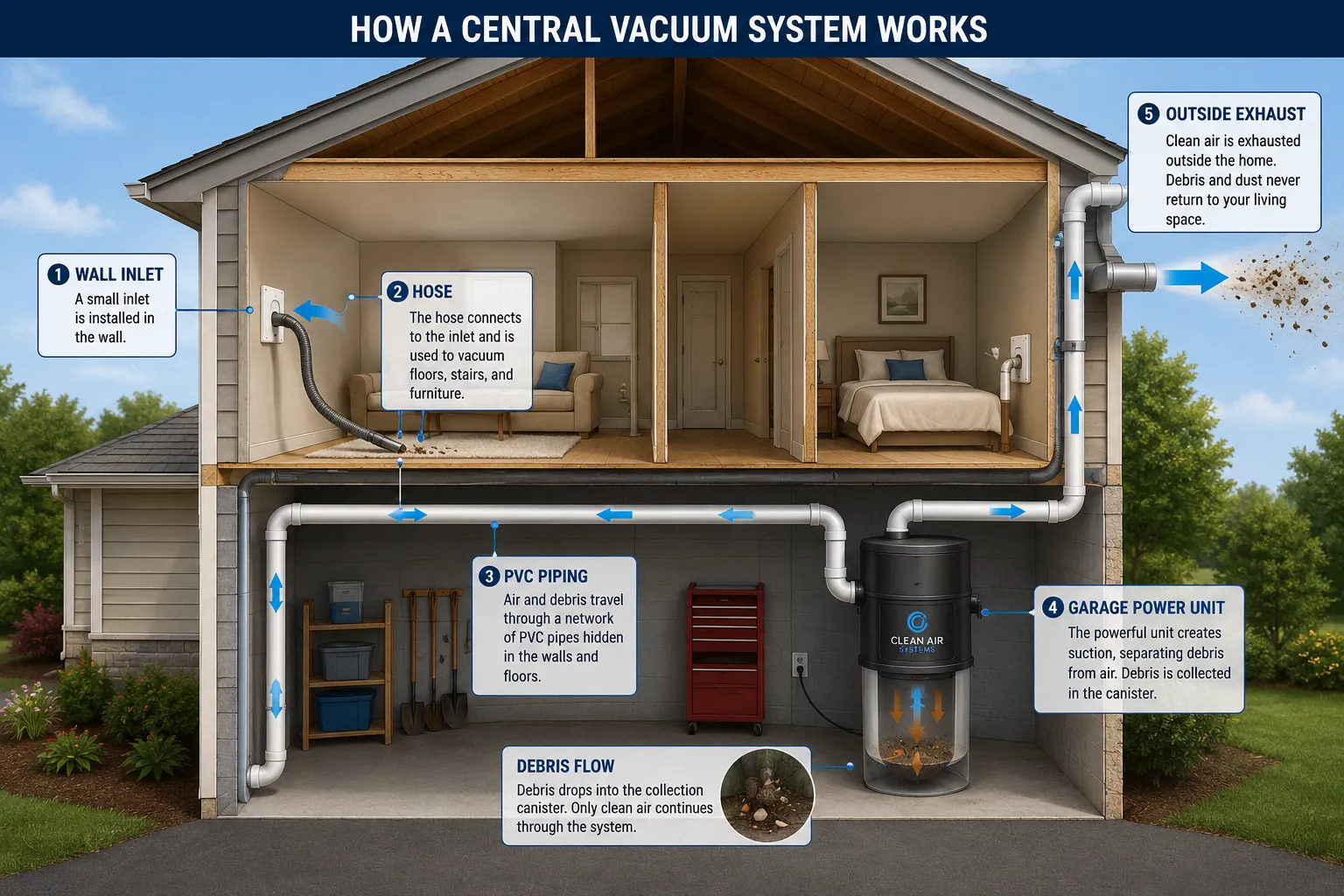
Central vacuum systems use different filtration and exhaust designs depending on the manufacturer and model. Some systems can be vented outdoors, while others use filtration at the power unit without requiring an exterior exhaust connection.
When a system is properly configured to exhaust outdoors, air leaving the vacuum can be directed outside instead of being discharged at the power unit inside the home. However, outdoor exhaust is not a universal feature of every central vacuum installation, so check the specifications of the system you’re considering or already own.
Filter maintenance also varies. Some central vacuum systems use disposable bags, replaceable filters, washable filters, or self-cleaning filtration designs. Follow the manufacturer’s instructions for the system you have rather than assuming every central vacuum uses the same filtration setup.
A central vacuum should also be considered separately from your home’s HVAC system. Central vacuum cleaning does not replace professional furnace and air duct cleaning, because the two systems use separate piping or ductwork for different purposes.
Are Central Vacuums Worth It Long-Term?
There isn’t one lifespan that applies to every central vacuum system. How long a system remains useful depends on the power unit, installation, frequency of use, availability of replacement parts, and how the system is maintained.
Routine maintenance matters because a full collection container, restricted filter, blocked hose, or obstruction elsewhere in the system can reduce suction. Addressing those issues when they appear can help keep the system operating as intended and can make it easier to distinguish a maintenance problem from a problem with the power unit itself.
Whether that makes a central vacuum a good long-term investment is ultimately a household decision. Someone who values built-in cleaning equipment and already has a well-designed system may see substantial value in maintaining it. Someone who prefers quick spot cleaning or doesn’t like storing and handling a long central-vac hose may prefer a portable vacuum.
If your existing central vacuum doesn’t seem to have the suction it once did, don’t assume the entire system needs replacing. Reach out for a free quote and Dun-Rite Vac can help determine whether accumulated debris or a blockage may be contributing to the problem.
Why Central Vacuum Maintenance Still Matters
Because most of a central vacuum system is out of sight, routine maintenance can be easy to overlook. The collection canister or bag and filter may need attention even when the system still appears to be operating normally.
Start with the maintenance recommended by your system’s manufacturer. Depending on the model, that may include emptying the canister, replacing a disposable bag, maintaining the filter, and checking the hose or attachments if suction begins to decline.
Professional pipe cleaning is not automatically required on a fixed schedule. If suction remains strong and the system is operating normally, routine manufacturer-recommended maintenance may be all that’s needed. If suction stays weak after accessible components and the hose have been checked, professional central vacuum cleaning may be worth considering if accumulated debris or a blockage is suspected.
If you’re already noticing weaker suction, unusual sounds, power problems, or other specific symptoms, our guide to common central vacuum problems covers those issues in more detail.
FAQ
Is a central vacuum better than a portable vacuum?
It depends on what matters to you. A central vacuum keeps the main power unit away from the room you’re cleaning and uses fixed inlets throughout the home. A portable vacuum can be easier for quick cleaning, requires no built-in piping, and may be simpler to replace. Neither option is automatically better for every household.
How long does a central vacuum system last?
There isn’t a reliable universal lifespan for every central vacuum system. Service life varies with the power unit, installation, frequency of use, maintenance, operating conditions, and availability of replacement parts. If an older system still provides normal suction and operates properly, age alone doesn’t necessarily mean it needs replacement.
Why do some homeowners decide a central vacuum isn’t worth it?
Common practical considerations include storing and handling the hose, the location and number of wall inlets, maintenance requirements, repair needs on an older system, and personal preference for portable cleaning equipment. The installation and condition of an existing system can also make a significant difference in how convenient it feels to use.
Does a central vacuum help keep vacuum exhaust out of the room?
It can, depending on the system. Central vacuum units that are configured to exhaust outdoors direct discharged air outside the home. Other models use different filtration and exhaust arrangements. Check your system’s specifications rather than assuming every central vacuum vents outdoors.
You Might Also Find This Helpful
- What Is Central Vacuuming? A Breakdown of How These Systems Work
- Common Central Vacuum Problems (And What They’re Telling You)
If your central vacuum has lost some of its suction or you’re not sure whether accumulated debris is affecting the system, contact Dun-Rite Vac. We can help determine whether professional central vacuum cleaning may be an appropriate next step.