

If you’ve moved into an older home, you may have noticed round inlets near the baseboards and wondered what is central vacuuming and what those openings are for. A central vacuum, sometimes called a built-in vacuum system, isn’t an appliance you plug in and push from room to room. Instead, it uses piping installed inside the home that connects wall inlets to a central power unit, usually located in a garage, basement, or utility room.
For many homeowners, especially those who bought a resale property where the system predates them, that’s about as far as the understanding goes. The inlets exist, the hose fits somewhere, and beyond that the system can remain a mystery until suction starts to fade or another problem appears.
Quick Answer: Central vacuuming uses wall inlets, hidden piping, a hose, and a central power unit. Dirt and debris travel through the pipe network to a collection canister or bag located elsewhere in the home. Routine maintenance generally focuses on the collection container and filter, while suction problems may require additional troubleshooting if the hose, piping, inlets, or power unit are involved.
You Bought the House — Now What Are These Wall Inlets For?
This is usually where the question starts. A new homeowner walks through a resale property, notices several inlet valves near the floor in different rooms, and isn’t sure what they’re looking at. If the system was installed years before they bought the home, there may not be an owner’s manual or any service history left behind.
Those inlets connect to piping installed through the walls and floors of the home. That piping leads back to a central power unit and collection container. When the system is operating, dirt and debris picked up through the hose travel through the pipe network instead of being collected in a portable vacuum that moves from room to room.
What Is Central Vacuuming, Mechanically? The Pipe Network and Power Unit Explained
A typical central vacuum system includes wall inlets, piping that connects those inlets, a hose and cleaning attachments, and a central power unit with a collection canister or bag.
Many systems also use a low-voltage control circuit that activates the power unit when the hose or inlet control is engaged. The exact control method varies by manufacturer and system design, but the basic idea is the same: the power unit creates airflow that carries dirt through the piping to the collection area.
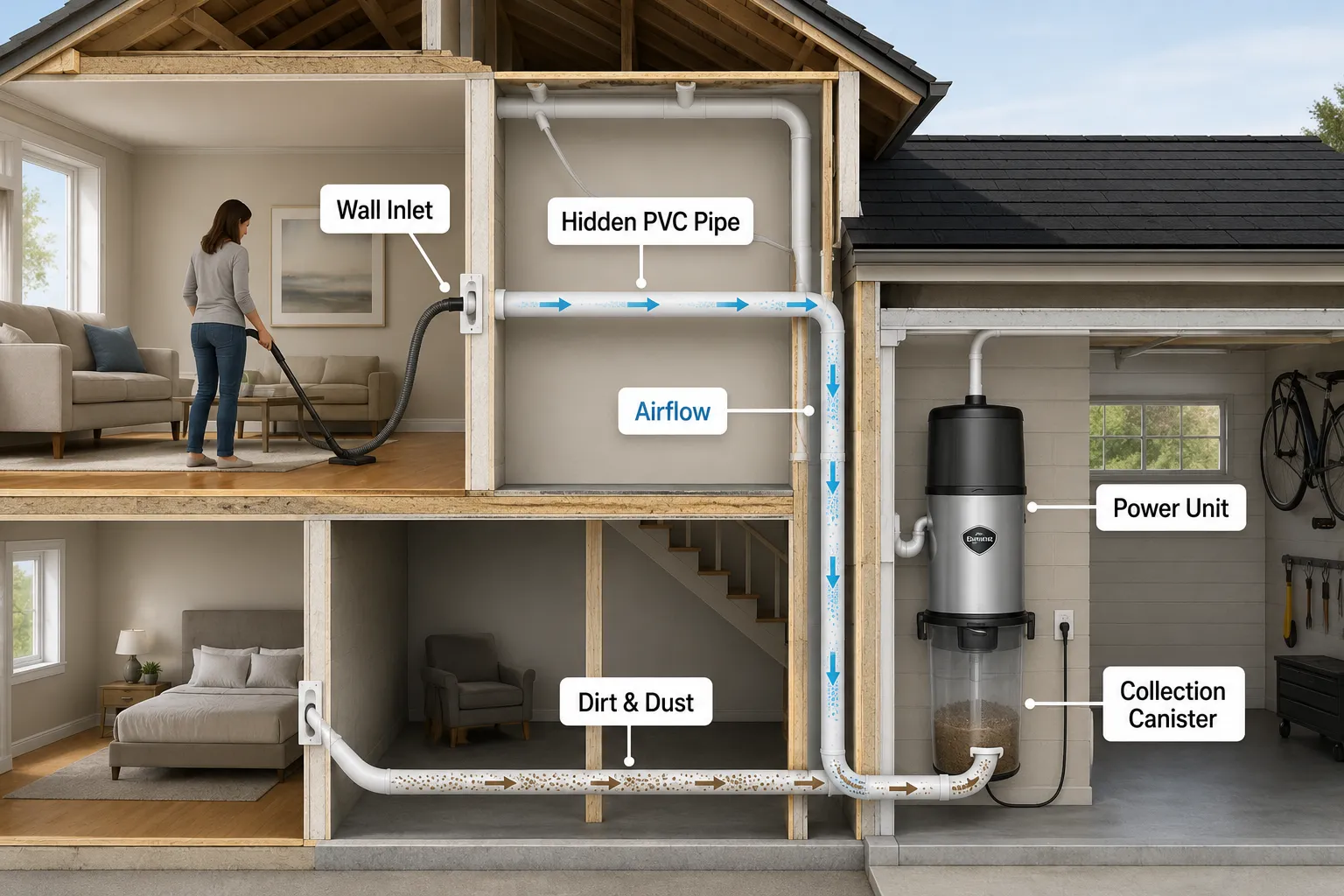
Because several components work together, weak suction doesn’t automatically mean the motor has failed. A problem with the hose, collection container, filter, inlet, seal, piping, or power unit can all affect how the system performs.
Why a Central Vac Can Run but Still Have Weak Suction
A motor that turns on and a system that provides normal suction aren’t necessarily the same thing. The power unit may still run even when airflow is being restricted somewhere else in the system.
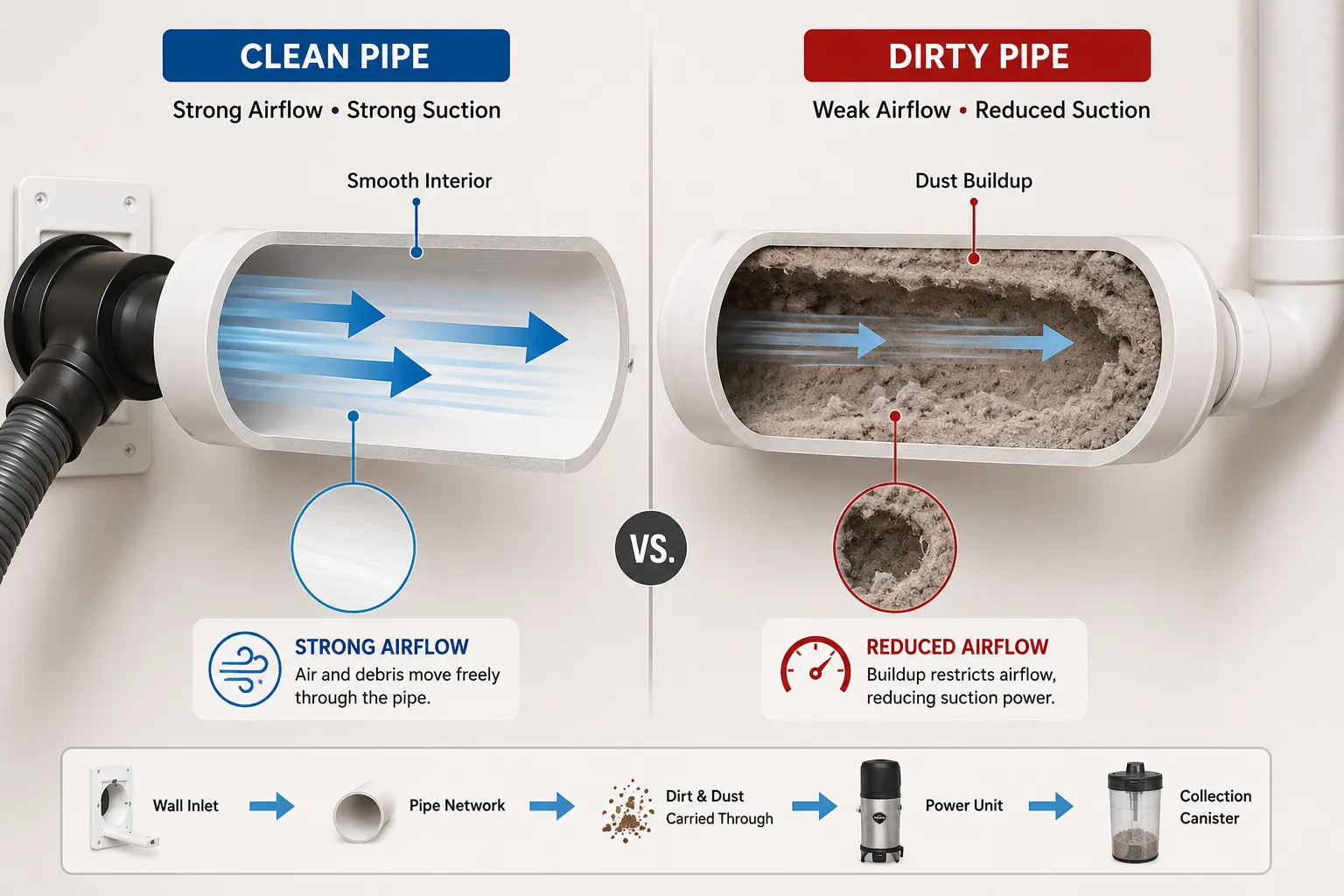
Before assuming there is a problem inside the hidden piping, start with the accessible components. An overly full canister or bag, a restricted filter, or an obstruction in the hose or attachment can all contribute to weaker suction.
If those items have already been checked and suction remains weak, debris or a blockage inside part of the pipe network may be one possible cause. Inlet problems, air leaks, or issues with the power unit can also affect performance, so the symptoms should be diagnosed rather than assuming the piping is always responsible.
If suction has been fading, don’t assume the entire system has failed. Start with routine maintenance and basic troubleshooting. If the problem remains, get in touch for a free quote and Dun-Rite Vac can help determine whether central vacuum cleaning may be an appropriate next step.
When Routine Maintenance Doesn’t Fix the Problem
Central vacuum systems still require routine maintenance, even though the collection container is located away from the rooms you’re cleaning. Depending on the model, that may include emptying a canister, replacing a disposable bag, and maintaining or replacing the filter according to the manufacturer’s instructions.
Those maintenance steps only address the components they are designed to service. If an obstruction develops inside the hose or pipe network, emptying the canister or maintaining the filter won’t remove that blockage.
That’s where the distinction matters. Our central vac cleaning service is intended for systems where accumulated debris or blockages inside accessible areas of the system may be contributing to poor performance. It isn’t a substitute for the routine maintenance recommended by your central vacuum manufacturer.
What Changes When You Inherit an Older Central Vacuum System
A resale home can come with a central vacuum system that has already been used for many years. You may not know how regularly the previous owner emptied the canister, changed bags, maintained filters, or addressed previous suction problems.
That doesn’t mean an older system automatically needs professional cleaning. Plenty of older central vacuum systems continue to perform normally. Start by checking the accessible maintenance components and seeing how the system performs at different inlets.
If the system runs but suction remains weak after routine maintenance and hose checks, further troubleshooting can help determine whether the piping, inlets, seals, or power unit need attention.
If you’re already noticing specific symptoms — such as unusual smells, repeated shutdowns, a system that won’t start or stop normally, or significant differences between inlets — see our guide to common central vacuum problems.
Frequently Asked Questions
How Do I Know if a Central Vacuum Is Still Working Properly After Buying a Resale Home?
Start by checking the collection canister or bag and filter according to the manufacturer’s instructions. Then use the system normally at several wall inlets and compare the suction. If one inlet doesn’t operate normally, suction varies significantly between areas, or the power unit behaves unusually, the system may need further troubleshooting.
Does Central Vacuuming Use a Bag, and How Often Does It Need Emptying?
Central vacuum systems may use a disposable bag, a bagless collection canister, or another collection and filtration design depending on the manufacturer. There isn’t one emptying schedule that applies to every system or household. Check the collection container regularly and follow the maintenance interval recommended for your specific model.
If My Furnace Ducts Were Just Cleaned, Does That Cover the Central Vacuum Too?
No. Your furnace and air-duct system and your central vacuum use separate networks for different purposes. Cleaning the HVAC ductwork does not clean the central vacuum piping, and central vacuum cleaning does not clean the home’s HVAC ducts.
How Often Should the Central Vacuum Pipe Network Be Cleaned?
There isn’t a universal calendar interval for central vacuum pipe cleaning. If the system is operating normally, routine maintenance according to the manufacturer’s instructions may be all that’s needed. Pipe cleaning becomes worth considering when suction remains weak after the canister or bag, filter, hose, and other accessible components have already been checked, or when there is reason to suspect an obstruction inside the piping.
Dun-Rite Vac has served customers since 1998. If you’ve inherited a central vacuum system and aren’t sure what condition it’s in, contact our team and we can help determine whether central vacuum cleaning may be appropriate based on the problem you’re experiencing. Request a Free Quote