
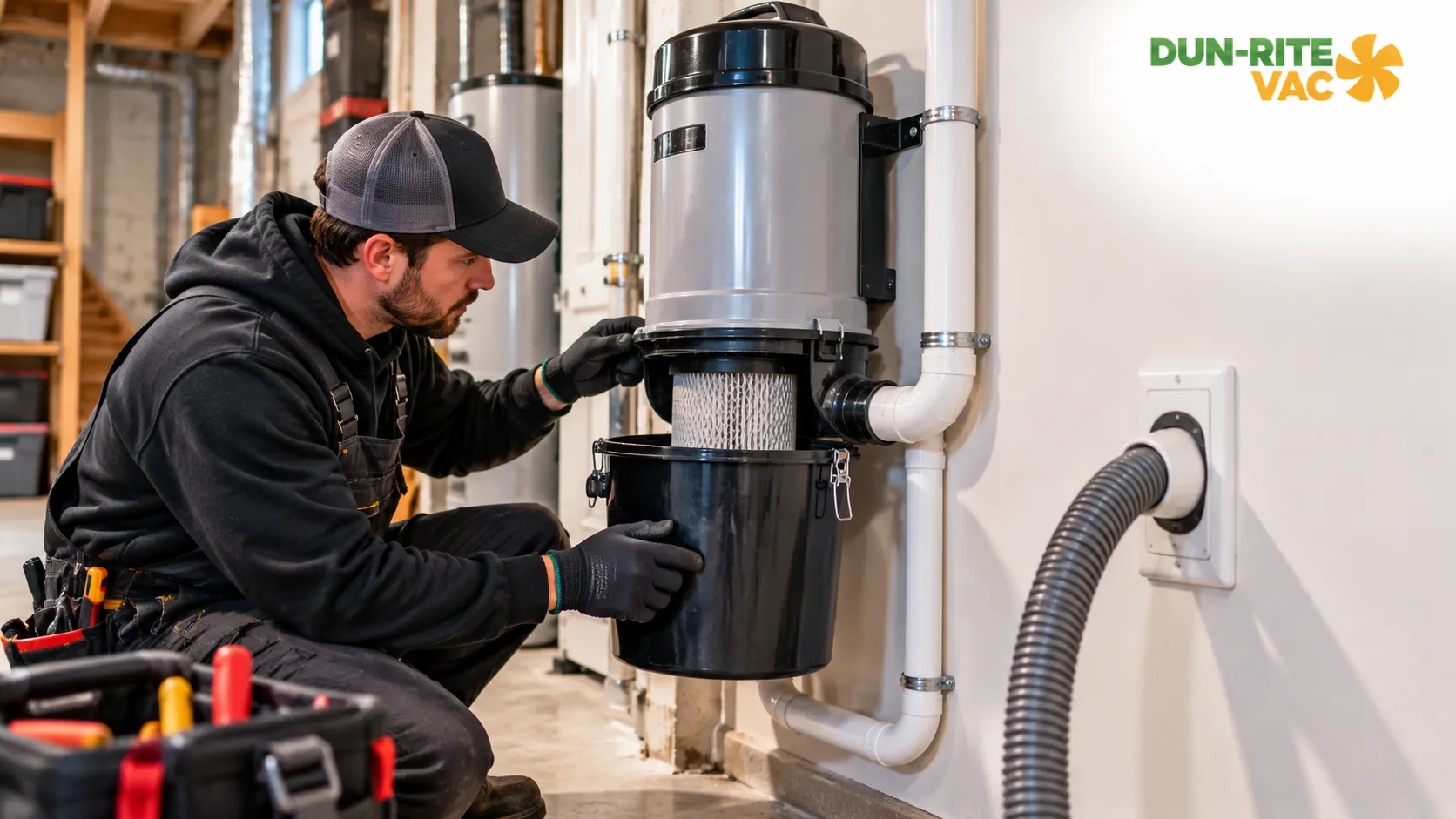
When a central vacuum starts losing its pull, most people blame the hose or the attachment and keep vacuuming harder. Low suction in a central vacuum system often has a cause further along the line, such as a worn inlet, buildup in the piping, or a full canister. This post explains what a professional central vacuum cleaning service looks at, what it can and can’t fix, and which checks are safe to try yourself first.
Quick Answer: A professional central vacuum cleaning service looks at suction across your inlets, the inlets themselves, the pipe network and the canister, then checks how the system performs afterward. Cleaning removes debris and buildup. If weak vacuum suction continues after that, possible causes include a worn motor, an air leak, or a hose or attachment problem, and those are repairs rather than cleaning.
In This Post
- What We Check First
- Inspecting Vacuum Inlets for Leaks and Obstructions
- Pipe Network and Hidden Buildup
- A Full Canister Can Mimic a Failing Motor
- Safe Checks for Weak Vacuum Suction Before You Call
- Confirming the Cleaning Worked, and What It Means If It Didn’t
- What Happens When You Contact Us
- Frequently Asked Questions
What a Central Vacuum Cleaning Service Looks At First
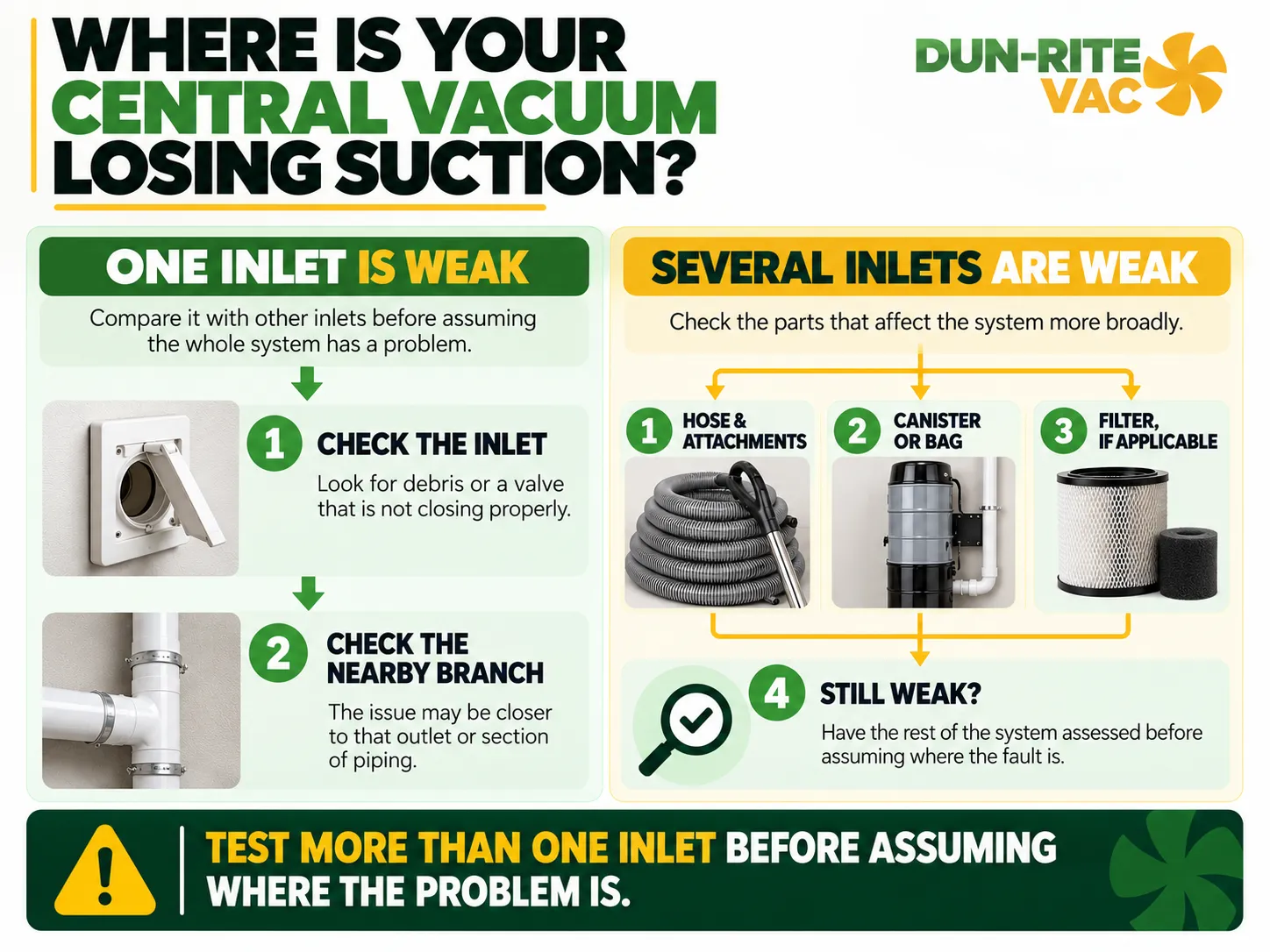
Before taking anything apart, first identify where the system is losing suction. Compare several inlets instead of testing only the one that first showed a problem.
Testing several inlets can help narrow down the source. Drainvac’s troubleshooting guidance recommends testing each outlet and notes that a blockage may be near an outlet with no suction. When several inlets perform poorly, check the rest of the system before assuming where the fault is.
This first pass also shows whether more extensive cleaning is justified, or whether the fix is smaller than you expected. You can review what the service includes here.
Inspecting Central Vacuum Inlets for Leaks and Obstructions
A weak inlet is worth checking before assuming the problem is deeper inside the piping. VACUFLO’s valve troubleshooting guidance notes that debris inside an inlet valve can prevent it from closing properly and allow air to continue flowing through the valve.
That is why the inlet itself is part of the assessment. If debris is keeping the valve from closing, cleaning may solve that specific issue. If the valve still does not close properly afterward, it may need service rather than more pipe cleaning.
Central Vacuum Pipe Cleaning and Buildup You Can’t See
You can’t see most of the central vacuum pipe network, so locating restrictions can take more work. Drainvac’s piping guidance notes that certain short-radius elbows can collect debris. The piping layout can also affect airflow and suction. For that reason, technicians may need to check fittings, bends and concealed pipe sections when performance drops.
Clearing that buildup is the core of central vacuum pipe cleaning. The method used depends on the system and what the assessment finds, and we walk through it when we quote the job.
Suspect a restriction somewhere behind your walls? Send us a note and tell us what you’re noticing.
A Full Canister Can Mimic a Failing Motor
Low suction does not automatically mean the central vacuum motor is failing. Cana-Vac’s troubleshooting guidance lists a full dirt receptacle or bag, an improperly attached dirt container and piping obstructions among possible causes of decreased suction.
That makes the canister or bag a sensible place to check before assuming the problem is the motor. Empty or replace it as appropriate for your system, make sure the container is seated correctly, and then check whether suction improves.
Central Vacuum Cleaning Service: Safe Checks for Weak Suction
Some causes of low suction in a central vacuum are easy to rule out yourself:
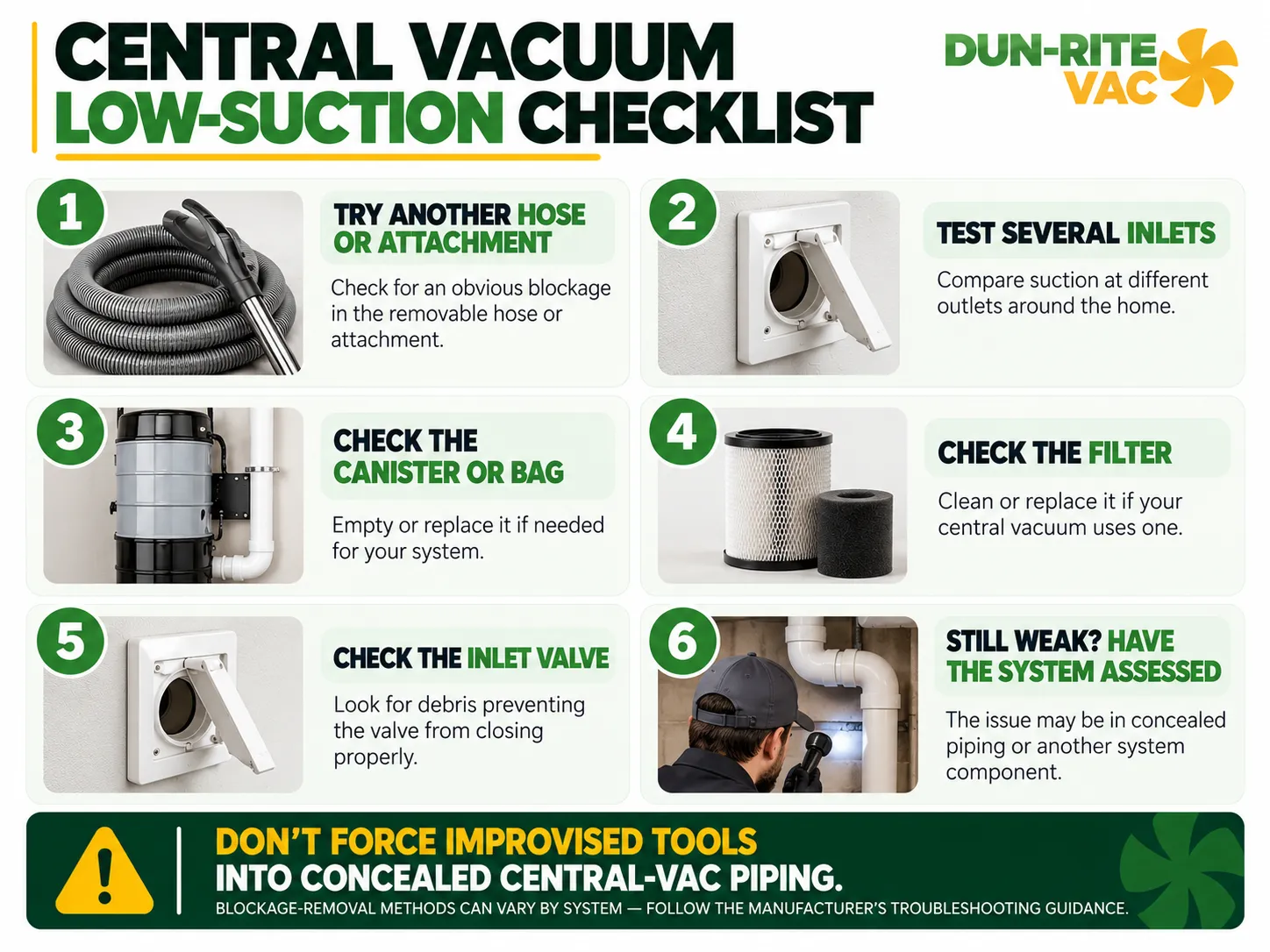
- Try a different hose or attachment, and look through the hose for a visible clog.
- Try several inlets. One weak inlet and several strong ones tells you where to focus.
- Empty the canister, and clean or replace the filter or bag if your system has one.
If suction is still weak after that, the cause is probably beyond what you can see.
We don’t recommend improvising with a rod or coat hanger inside concealed central-vac piping. Blockage-removal methods can vary by system, so follow the troubleshooting instructions for your equipment or have the line assessed rather than forcing an improvised tool into piping behind the walls.
Confirming the Cleaning Worked, and What It Means If It Didn’t
Comparing suction before and after is how you know a cleaning made a difference, and you should expect that check from anyone doing this work.
Sometimes the answer isn’t the one you wanted. Cleaning removes debris and buildup. If suction is still weak afterward, possible causes include a motor nearing the end of its life, an air leak, or a hose or attachment problem. Those are separate repairs, and we’d rather tell you so than imply a cleaning solves everything.
If your system is pulling well, there’s no urgency to book anything. Noticeably weaker suction, a canister that fills faster than it used to, or inlets that perform very differently from one another are the signs worth acting on.
What to Expect From Our Central Vacuum Cleaning Service
Dun-Rite is a third-generation, family-run company in business since 1998, with more than 50,000 completed jobs. The company holds NADCA certification and employs ASCS-certified technicians. Start by telling us what you’re noticing, and we’ll provide a free quote. Questions about how long the work takes, how often to schedule it and what affects the quote are best answered once we know your system. You can see what’s included in the service, and our completed work is backed by our 100% Satisfaction Guarantee. If your furnace ducts are also on your mind, ask us about our furnace duct cleaning service.
Central Vacuum Cleaning Service FAQs
Can I tell whether low suction is a blockage or a motor problem myself?
Partly. Testing several inlets can help narrow the problem down. A single weak inlet may point to that outlet or branch. When several inlets are weak, check the hose and dirt canister or bag before blaming the motor. Still getting poor suction? An assessment can help determine whether the issue is in the piping, inlets or power unit.
Is emptying the canister enough to keep a central vac running properly?
Emptying it regularly helps, but it doesn’t reach the inlets or the pipe network, where buildup can restrict airflow even when the canister is clear. Think of it as routine upkeep, not a substitute for a full cleaning if performance has dropped.
Is it safe to clear a blockage myself with a rod or coat hanger?
We don’t recommend using improvised tools inside concealed central-vac piping. Different systems may call for different blockage-removal methods, so follow the manufacturer’s troubleshooting instructions for your equipment. If the obstruction appears to be inside the piping behind the walls, have it assessed rather than forcing a tool farther into the system.
Noticing weaker suction from your central vac?
Tell us what you’re seeing and we’ll give you a free quote. We back every job with our 100% Satisfaction Guarantee.