
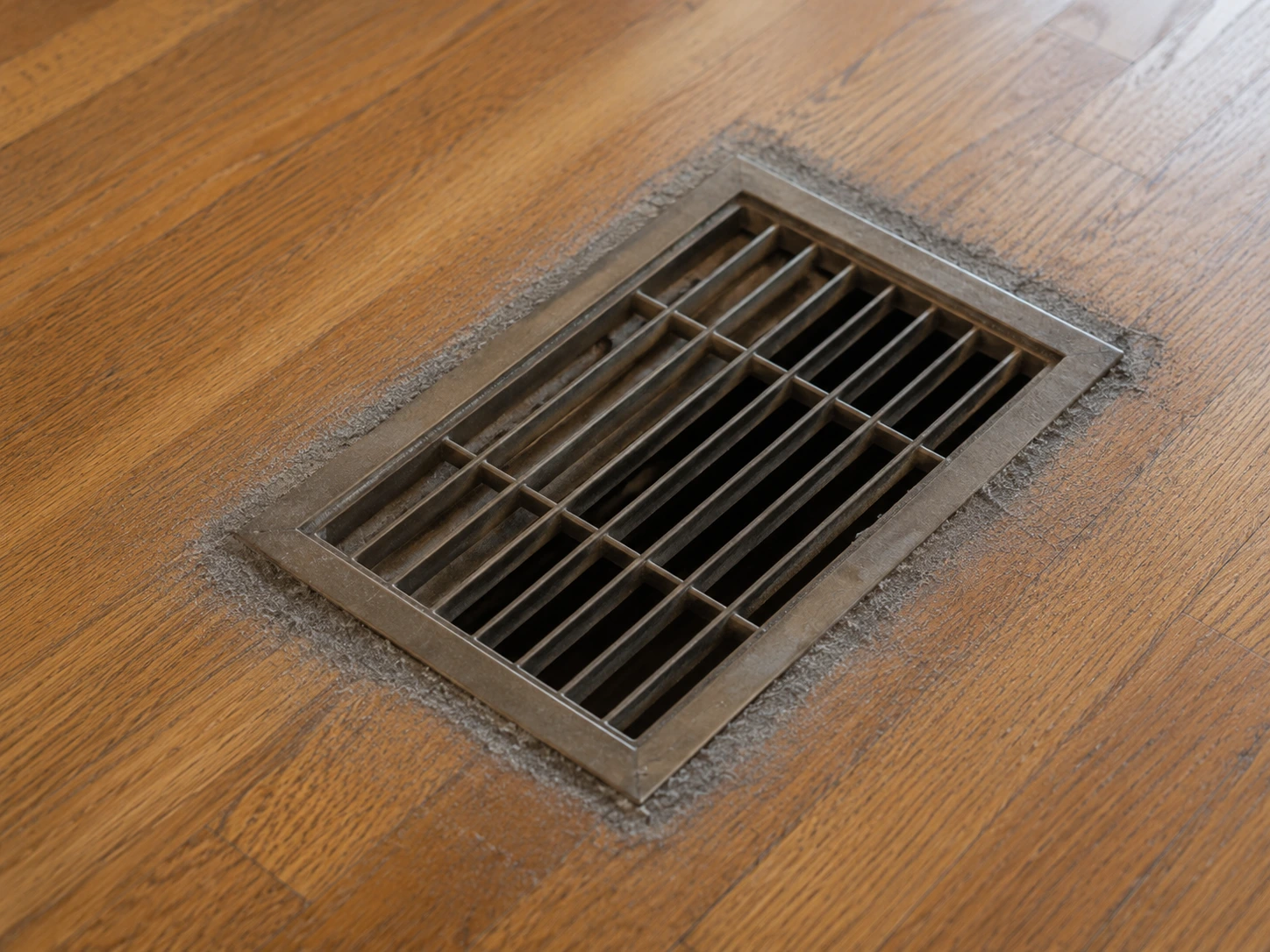
Quick Answer: Older Saskatchewan homes often need duct cleaning sooner than newer builds. Original ductwork, floor registers, and decades of renovations can create buildup and access issues that standard cleaning schedules don’t account for. A NADCA-recommended assessment helps determine whether the system needs cleaning, repair, or, in rare cases, replacement.
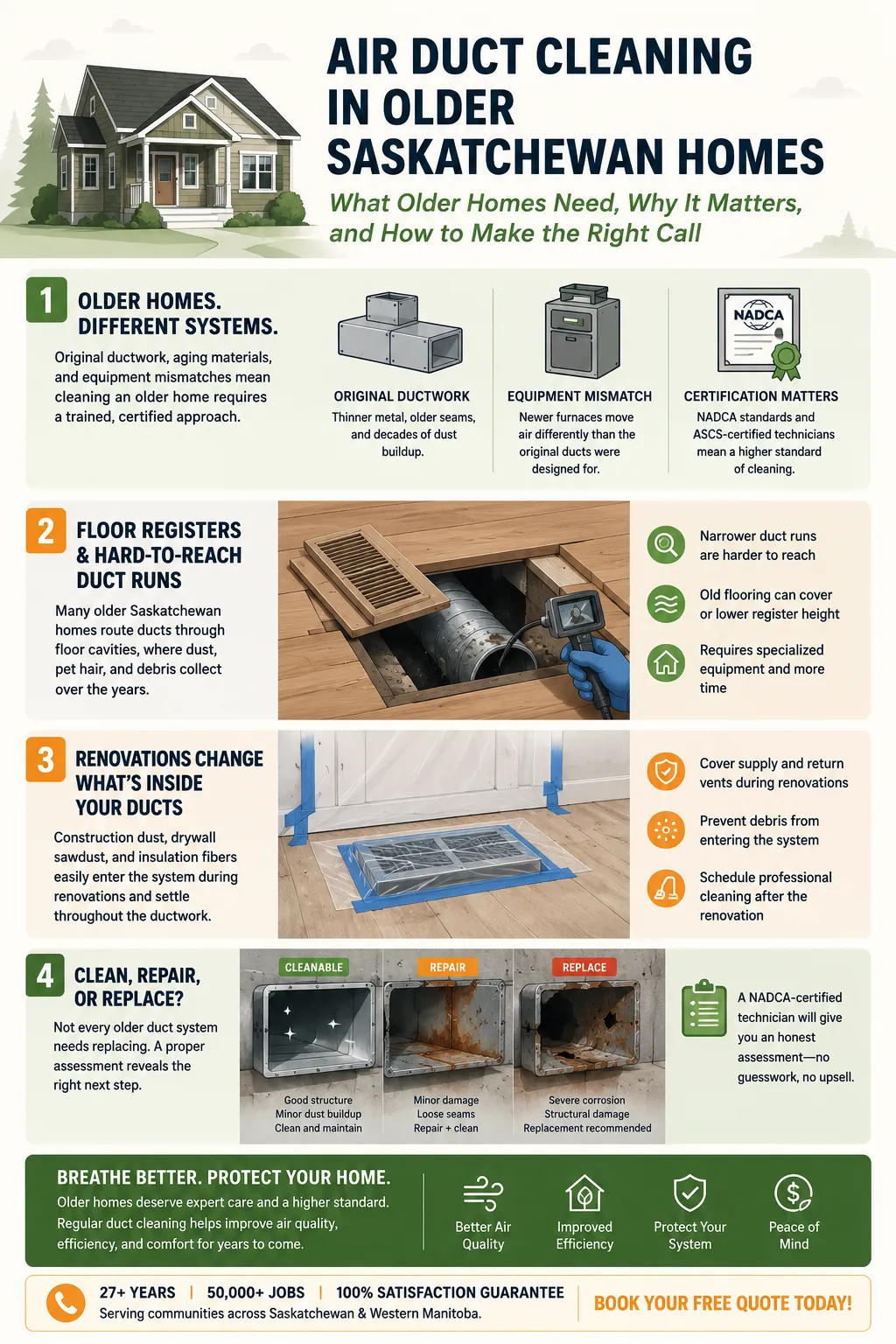
What Makes Air Duct Cleaning in Older Saskatchewan Homes Different
Many homeowners assume duct cleaning is the same for every house. In reality, original ductwork in an older Saskatchewan home behaves differently than ductwork in newer construction. Technicians usually notice those differences as soon as they open the system.
One thing our technicians run into constantly on original ductwork is thinner metal, seams sealed with materials the industry no longer uses, and duct runs installers originally sized for a furnace that homeowners later replaced with a more efficient model. That mismatch between an older duct layout and newer equipment can affect airflow and make buildup more noticeable in certain sections of the system.
Certification matters here more than most homeowners realize. NADCA establishes recognized air system cleaning standards and administers the Air Systems Cleaning Specialist (ASCS) credential.
As part of our NADCA-certified furnace duct cleaning process, our ASCS-certified technicians recognize these mismatches and adjust their approach section by section. That attention to detail helps them catch issues that a general contractor or uncertified crew might overlook.
Floor Registers and Inaccessible Runs: Where Old House Duct Cleaning Gets Complicated
In 1960s and ’70s bungalows, our technicians often find musty smells near floor vents that return every heating season, even when homeowners change filters regularly and the furnace checks out fine.
Floor registers usually cause the problem. Older homes often route ductwork through floor cavities instead of ceilings or walls. Those cavities can collect debris, pet hair, and sometimes moisture more easily than ceiling-run ducts in newer homes.
When we inspect a 1970s or older system, we often find floor-register duct runs that are narrower and harder to reach than modern equipment expects. Previous owners sometimes install new flooring without adjusting the register height. That layout isn’t defective, but it does require different equipment and more time. We see this often in older neighbourhoods throughout Yorkton and Regina, where original floor-register ductwork remains common.
If your home has floor registers and you’ve never had the ductwork professionally cleaned, consider scheduling an inspection. The same advice applies if it’s been several years since the last cleaning. For older homes, those factors matter more than a generic cleaning schedule.
How Renovations Affect Air Duct Cleaning in Older Saskatchewan Homes
Most homeowners think of a kitchen remodel or basement finish as separate from their HVAC system. In reality, the two are often connected.
Drywall dust, sawdust, and insulation debris can travel through the return air system and settle inside ductwork. The U.S. EPA’s guidance on residential air duct cleaning also recognizes that dust and debris can contaminate duct systems. Homeowners often don’t notice the buildup until airflow drops or the furnace starts circulating dusty air.
Renovations sometimes make sections of ductwork harder to reach. Finished basement walls, crawlspaces, and room additions can block access. We clean every accessible section. If another section requires opening drywall or removing cabinetry, we’ll explain that instead of claiming we cleaned it.
If you’re planning a renovation, cover supply and return vents during construction to limit dust entering the HVAC system, as recommended in EPA guidance for renovation work. Once the renovation is complete, schedule a professional cleaning if debris entered the ductwork.
Original Ductwork Cleaning in Older Saskatchewan Homes: Clean, Repair, or Replace?
For anyone weighing original ductwork cleaning in an older Saskatchewan home, this is the question that matters most, and cleaning alone can’t always answer it. We generally place original ductwork into three categories: systems that remain sound enough to clean and continue using, systems that need repairs before or alongside cleaning, and systems that have deteriorated enough to justify a replacement discussion.
Cleaning restores airflow and removes accumulated debris. It does not fix physical damage such as separated seams, crushed sections, or corrosion.
NADCA guidance recommends assessing the system first to determine whether cleaning, repair, or replacement is the right solution. If our technicians find structural damage during a cleaning, we’ll explain the issue instead of pretending cleaning alone solved it.
We’re not a duct repair or replacement contractor. If a system needs structural work beyond cleaning, we’ll tell you plainly instead of working around the problem.
After more than 27 years and 50,000+ completed jobs across our service area, we’ve found that most older Saskatchewan homes don’t need replacement. They need a thorough, properly certified cleaning and, in some cases, a referral for a second opinion on a specific section.
Not sure which category your ductwork falls into? A NADCA-certified technician can tell you during an assessment — no guesswork, no upsell. Get in touch for a straight answer.
Furnace Cleaning in an Older Home: What Furnace Age Tells You About Your Ductwork
A newer furnace doesn’t necessarily mean newer ductwork. Homeowners in older Saskatchewan homes often replace the furnace once or twice over the decades while leaving the original ductwork in place for 40, 50, or more years. Furnace cleaning in an older home often uncovers more debris than in a newer build because dust has had decades to accumulate and because the original ductwork wasn’t designed or sealed for today’s equipment.
That gap matters because a new high-efficiency furnace moves air differently than the older unit the original ductwork was designed to support. In some homes, that change makes long-settled dust more noticeable.
If you replaced the furnace recently but never cleaned the ductwork, that combination can increase visible household dust. The new furnace isn’t the problem. Instead, the original ductwork often needs the same level of attention.
Frequently Asked Questions
How often does air duct cleaning in older Saskatchewan homes need to be done?
There’s no fixed multiplier, but older Saskatchewan homes with original ductwork, floor registers, or a renovation history typically need cleaning more frequently than a newer home with sealed, ceiling-run ducts. A technician can give you a realistic interval based on your specific system rather than a generic timeline.
Will duct cleaning damage old or fragile ductwork?
Properly trained technicians adjust their equipment and approach based on the condition of the ductwork they’re working with. Fragile or older sections require a gentler technique than newer, sturdier ducts — which is part of why certification and experience matter more in older homes than in new construction.
Can duct cleaning fix a musty smell that only shows up near floor vents?
Often, yes — floor-register buildup is a common source of that specific smell. If cleaning doesn’t fully resolve it, that’s usually a sign of a moisture issue elsewhere in the system worth investigating separately.
Should I clean the ducts before or after a planned renovation?
Ideally, do both. Cover supply and return vents during the renovation to keep debris out of the system, then schedule a professional cleaning afterward to remove any construction dust that entered the ductwork.
Find Your Local Service Page
- Air Duct Cleaning in Yorkton, SK
- Air Duct Cleaning in Regina, SK
- Air Duct Cleaning in Saskatoon, SK
- Air Duct Cleaning in Weyburn, SK
Original ductwork deserves an honest assessment, not a one-size-fits-all quote. With 27+ years and 50,000+ completed jobs across Saskatchewan and Western Manitoba, we’ll tell you exactly what your system needs — backed by our 100% Satisfaction Guarantee.