

Winter duct cleaning in Saskatchewan isn’t something every home needs on a fixed schedule. Prairie air ducts work through a long heating season, homes stay closed up tight, boots track grit in from snowy yards, and indoor air gets very dry.
Here’s what that mix does to your filter, your ductwork and your ventilation, and how to tell an ordinary winter from a system that deserves a closer look.
Quick Answer: Long heating seasons, closed-up homes and tracked-in grit put extra demand on filters and ducts through a Saskatchewan winter. Check your filter monthly, and consider a duct cleaning only if you see real buildup at the vents or in the returns, not simply because of the calendar.
In this post
What Long Furnace Run Times Do to Saskatchewan Winter Air Ducts
During a cold stretch, the furnace blower can run for long periods. Each cycle moves house air through the return ducts, past the filter and back out through the supply side.
Longer run times mean more indoor air passes through the system, so the filter has more opportunities to capture airborne particles while the HVAC system is operating. The U.S. EPA’s Guide to Air Cleaners in the Home notes that central HVAC filters clean air only while the system is operating. Dust can also collect around return registers over time.
With the furnace off, a visual check around return and supply registers can give you a useful first look at the system. The U.S. EPA’s air-duct cleaning guidance notes that return registers commonly become dusty because dust-laden air is pulled through them and recommends visually inspecting both return and supply portions of the system.
The Mudroom Problem: Where Winter Grit Actually Enters the System
Fine grit on the floor near an entryway return vent is the clearest picture of this. Winter brings snow-packed boots, sand and grit from roads and driveways, and coats shed right inside the door. Some of it gets ground into carpet and can be stirred back into the air as people walk through.
Acreage and farm homes may have heavier entry traffic from work boots, outdoor grit and seasonal debris, so keeping entry areas and nearby returns clean can be especially useful.
At the household level, the fix is simple: boot trays, a doormat that gets shaken out, and returns kept clear of furniture and clutter. It won’t stop all of it, but it slows how fast grit reaches your ducts.

Seeing a film of grit around your returns or dust blowing out of the registers? A quick conversation can help sort out whether it’s normal winter dust or something worth a look. Ask our team, no pressure.
Why Closed-Up Winter Homes Feel Dustier
Dry air tends to make dust and static more noticeable, which is one reason a house can feel dustier in February than in July. It isn’t the whole story, though.
During winter, homes are often kept closed for long periods, making filtration and mechanical ventilation especially important for managing indoor particles and stale air. Cold-climate homes are also built tighter to hold heat, and ventilation setups vary from house to house. Natural Resources Canada explains that HRVs and ERVs, also called air exchangers, bring fresh outdoor air into the home while removing stale indoor air and retaining heat. If your home has one, our air exchanger cleaning page covers that system in more detail.
Winter HVAC Maintenance in Saskatchewan Starts With the Filter
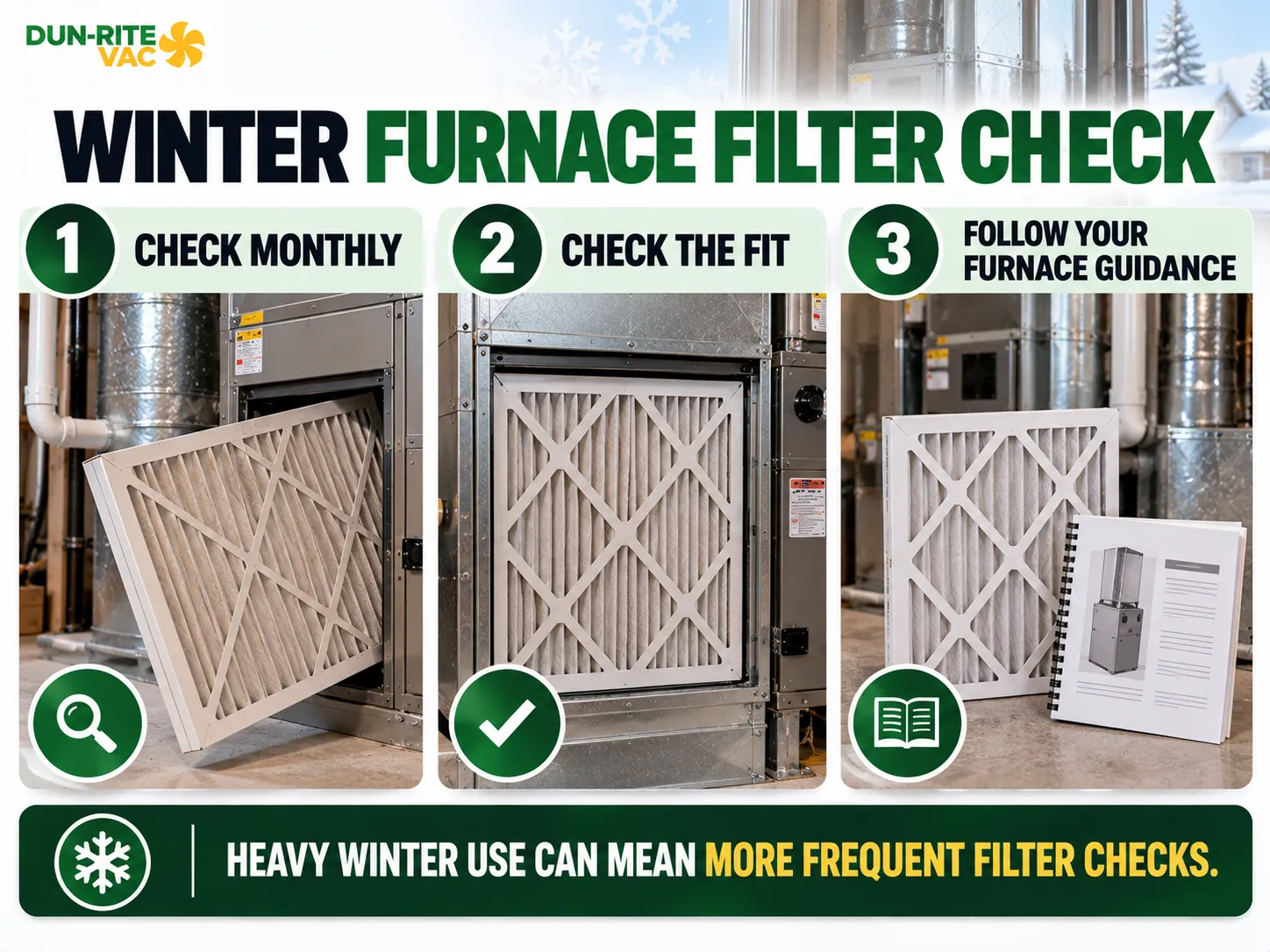
Winter is a good time to pay closer attention to the furnace filter, especially during periods of heavy heating use. ENERGY STAR recommends checking furnace filters every month, particularly during heavy-use winter and summer months, and replacing them when they are dirty.
Homeowners end up weighing two risks for furnace ducts in winter. A clogged filter restricts airflow and can make the furnace run longer, while a missing or poorly fitted filter can allow more dirt into the HVAC system. The U.S. EPA’s filtration guidance notes that dirty filters can substantially reduce airflow and recommends using only the highest-rated filter the system fan and filter slot can accommodate. The EPA’s air-duct cleaning guidance also recommends preventing missing filters and filter bypass so dirt does not enter the system.
- Inspect the filter monthly during the cold months. Replacement timing varies with filter type, furnace guidance and household conditions.
- Make sure the filter is the right size and seated properly, so air isn’t bypassing it.
- Check it after the first cold snap, since that’s when buildup tends to show up fastest.
Cold Climate Duct Cleaning: Now, or After the Season?
Not every home needs its ducts cleaned every winter, and we’d rather say so than oversell it. Many homeowners schedule cleaning before the heating season starts in the fall, or after winter in the spring, once the long season is behind them.
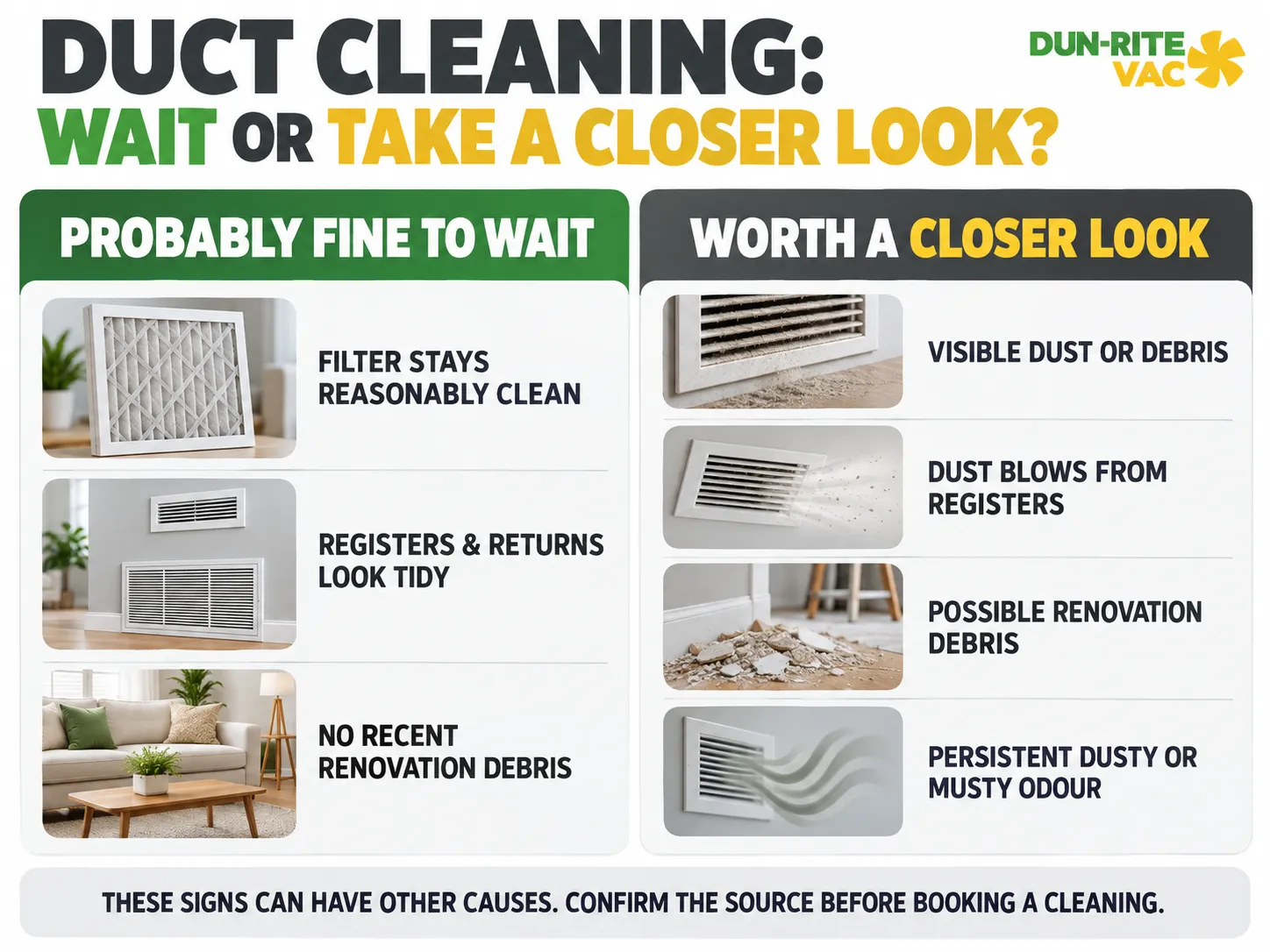
Probably fine to wait if:
- Your filter stays reasonably clean between changes
- Registers and return grilles look tidy
- You haven’t had recent renovation work
Worth a closer look if:
- You see visible dust or debris at registers or returns
- Dust blows out when the furnace starts
- Renovation debris may have reached the system
- A persistent dusty or musty smell comes with the furnace running
Those signs can have other causes, such as an overdue filter, so treat them as a reason to investigate. If buildup is confirmed inside the ductwork, professional cleaning may be worth considering.
Who does the work matters, too. Dun-Rite Vac is a third-generation, family-run company in business since 1998. We’re NADCA certified, our technicians are ASCS certified, and we’ve completed over 50,000 jobs across the region.
For the full process, see our furnace duct cleaning page, or the residential furnace duct cleaning page for homes. If you manage a building rather than a house, our commercial cleaning page covers what’s different.
We serve homes and businesses in Saskatoon, Yorkton, Regina and Weyburn, as well as the wider Saskatchewan and Western Manitoba region.
Frequently Asked Questions
Does running the furnace constantly during a cold snap make my ducts dirtier faster?
It can contribute. More run time means more indoor air passes through the system, so the filter has more air and airborne material to handle. That’s one reason to check it more often during a cold stretch.
Is dust around my vents in January a sign of dirty ducts, or just a dry house?
It can be either. Light dust is common in dry winter air. A visible film around the registers, dust blowing out when the furnace starts, or a persistent dusty or musty smell is worth investigating, though an overdue filter or another issue can cause the same signs.
Should a farm or acreage home treat its ducts differently than a town home?
There’s no fixed schedule. Acreage and farm homes may see heavier entry traffic from work boots and outdoor grit, so keeping entry areas and nearby returns clean can help. Watch your filter and vents, and reach out if you’re unsure what you’re seeing.
If winter has you wondering what’s going on inside your ducts, we’re happy to look at your situation and give you a free quote. Every job comes with our 100% Satisfaction Guarantee, so you can ask without any pressure.