
The technicians have packed up, the vents are open, and the furnace is humming again. Most people expect the house to feel different right away. What you notice after air duct cleaning is usually quieter and more gradual than that, and knowing what is realistic keeps you from either overestimating the job or worrying about nothing.
This guide covers what happens after duct cleaning, how to read your before-and-after photos, and the situations where a different HVAC problem still needs attention.
Quick Answer: Visible loose debris should have been removed from the areas that were cleaned, though you may still notice some light residual dust. Airflow improves only if debris was actually restricting it. A properly fitted, up-to-date furnace filter is the most useful follow-up, and lingering odours, uneven heating or noisy equipment are worth having assessed rather than assuming the ducts are the cause.
In this article
- What to Expect After Air Duct Cleaning: Dust and Airflow
- Furnace Filter Replacement After Duct Cleaning: Fit and Condition Matter
- Air Duct Cleaning Results in Photos: What They Can and Can’t Show
- A Persistent Odour: Find the Source Before Choosing a Fix
- When Duct Cleaning Isn’t the Whole Answer
- Post Duct Cleaning Maintenance Through a Saskatchewan Heating Season
- Frequently Asked Questions
What to Expect After Air Duct Cleaning: Dust and Airflow
Properly performed HVAC system cleaning is designed to capture loosened contaminants while limiting their spread into occupied areas. NADCA’s General Specification for HVAC system cleaning calls for vacuum collection and negative-pressure controls during cleaning to contain debris and prevent contaminant migration. How much is removed still depends on the system, access and the amount of buildup present. If you notice a light film of dust on surfaces afterward, watch whether it settles down or continues returning rather than assuming from that alone that the cleaning failed.
If dust keeps collecting noticeably or something simply doesn’t seem right, contact the company that did the work and ask them to take a look. It’s a reasonable request, and they can assess your particular system rather than you guessing at the cause.
Airflow is another place expectations drift. Removing a meaningful obstruction may improve airflow through that section of ductwork, but cleaning cannot correct an underlying design or equipment limitation. U.S. Department of Energy HVAC guidance identifies factors such as duct size, length, bends, restrictions, equipment settings and the condition of the air-distribution system as influences on airflow. If a room was weak because of duct sizing, system balance, blower capacity or layout, cleaning alone may not change that.
Furnace Filter Replacement After Duct Cleaning: Fit and Condition Matter
Homeowners often treat the cleaning as the finish line, but the filter is part of what limits new particles entering the system from here on. The U.S. EPA’s Guide to Air Cleaners in the Home advises that HVAC filters should fit snugly so air does not leak around them. A damaged, incorrectly sized or poorly seated filter can allow bypass airflow and reduce how effectively the filter does its job.
Install a filter that fits your furnace correctly, and follow the furnace and filter manufacturer’s replacement guidance. Between replacements, inspect it periodically because filter loading can increase resistance to airflow. The U.S. EPA’s technical summary on residential air cleaners explains that pleated and higher-efficiency filters can have greater airflow resistance and need to be compatible with the HVAC system. If you are unsure which filter type your furnace is designed to handle, check the furnace manual or ask your HVAC technician.
Air Duct Cleaning Results in Photos: What They Can and Can’t Show
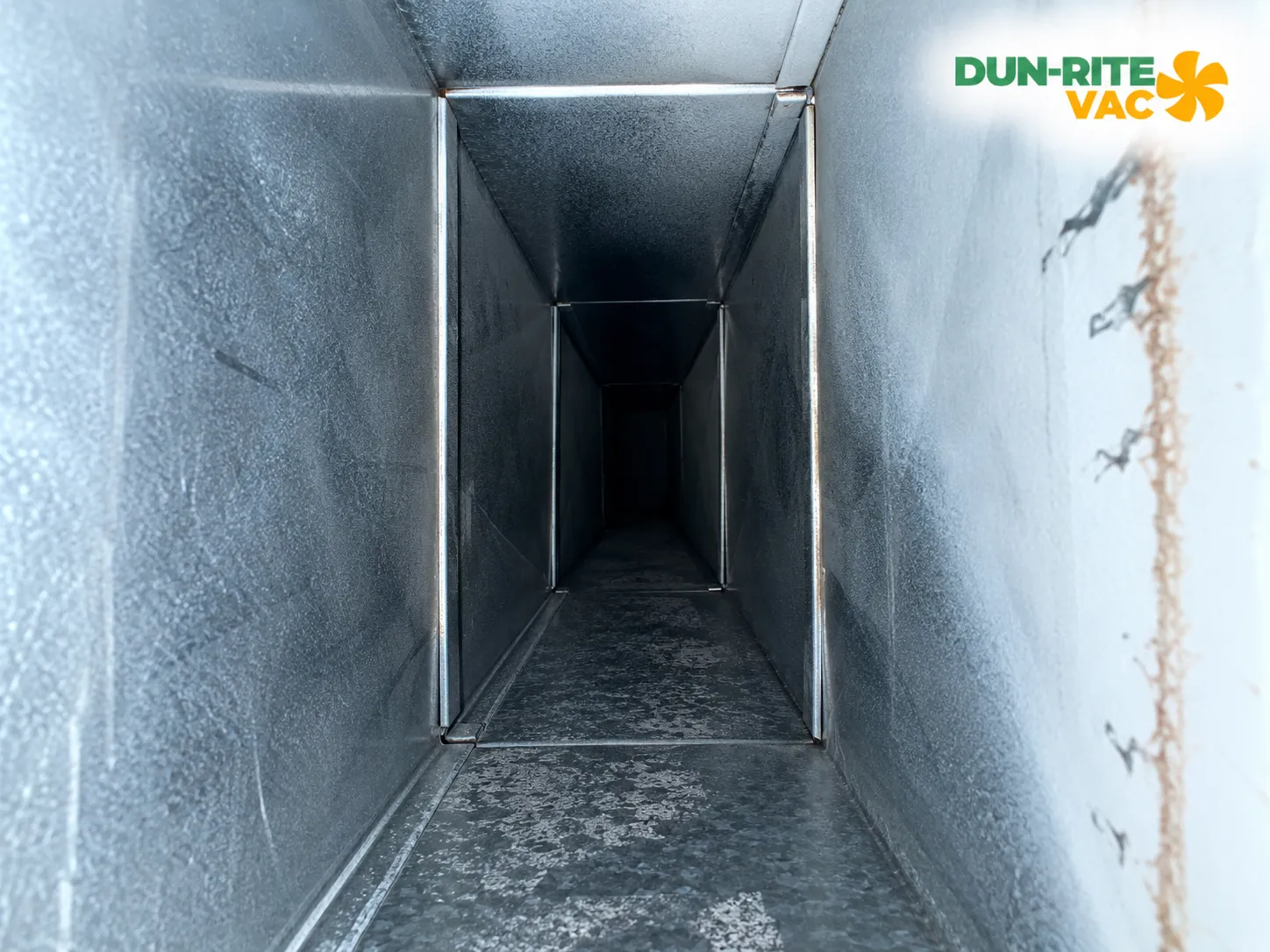
A common assumption is that a good before-and-after photo should show spotless metal. That’s a misleading standard. Ductwork is not a mirror, and discolouration, seam marks and galvanized texture are simply how the metal looks, so appearance alone doesn’t tell you whether cleaning was adequate.
What to look for instead is the debris: loose dust, lint, construction residue or heavy buildup in the “before” shot that is gone in the “after”. Ask your technician for photos taken at the same access point, so you’re comparing like with like rather than a dusty trunk line against a clean register boot. Photos are documentation, not a substitute for a clear explanation of what was cleaned.
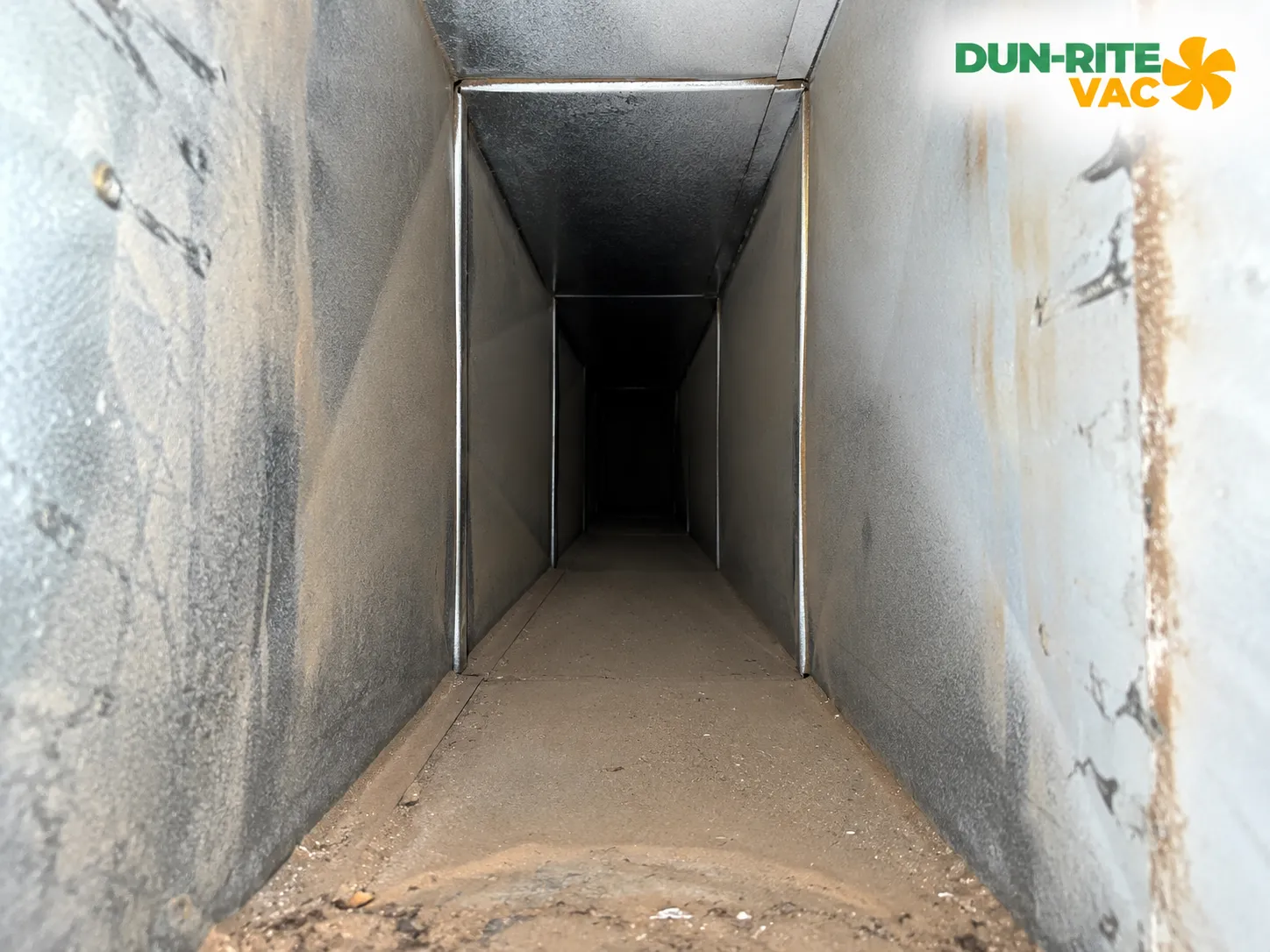
A situation our technicians run into on older bungalows is a homeowner who expects every room to feel identical afterward. The photos may show clean ducts, but a long run to a back bedroom can still feel cooler than the living room. That is a design characteristic, not a cleaning failure.
A Persistent Odour: Find the Source Before Choosing a Fix
Odours are hard to trace by smell alone. If an odour is unusual or doesn’t go away, treat it as something to investigate, not something to wait out or assume is the ductwork.
Possible sources include HVAC components, moisture, household materials or other building conditions. If moisture is involved, that source needs to be identified and corrected first. U.S. EPA guidance on residential air ducts emphasizes correcting moisture problems and notes that biocides should only be used when appropriate and according to the product label. Our HVAC sanitization service is separate from standard cleaning and is not a substitute for correcting an underlying moisture source.
When Duct Cleaning Isn’t the Whole Answer
Cleaning removes debris. It doesn’t repair equipment. In our experience, some comfort complaints turn out not to be about dirty ducts at all. If any of these continue afterward, an HVAC repair technician is the right next call:
- The furnace cycles on and off frequently. That is an equipment or control symptom that should be assessed by an HVAC repair technician.
- Some rooms stay cold. Duct condition, system balance and layout are all worth having checked.
- The blower is loud or rattling. That’s a mechanical concern, not a dust one.
- The home feels stuffy or humid. Humidity can have several sources. In tightly sealed Prairie houses, ventilation or air exchanger operation is one possible factor worth checking, and our air exchanger cleaning service covers that piece.
If any of these were already happening before the visit, tell your technician. We would rather say plainly that a repair is needed than have you assume the cleaning should have fixed it.
Not sure whether what you’re noticing is normal or needs another look? Send us a quick note describing what changed, and we’ll tell you plainly whether it sounds like a cleaning matter. Reach out here and we’ll point you in the right direction.
Post Duct Cleaning Maintenance Through a Saskatchewan Heating Season
Post duct cleaning maintenance is mostly about habits that cost very little. Keep the filter changed according to the manufacturer’s guidance, keep supply and return vents clear of furniture and rugs, and vacuum the registers during regular cleaning. With a long heating season keeping the furnace running, small habits like these add up.
Acreage homes may see additional field or gravel-road dust depending on location and how much outdoor air enters the home, so entryways and the filter deserve a little extra attention there. After renovation work or an unusually dusty stretch, it’s reasonable to book a visit sooner than usual.
For commercial buildings and multi-zone systems, equipment, filters and access points can differ from one zone to the next. Ask your HVAC contractor which units and filters were serviced, and keep that visit in your maintenance records alongside filter changes so tenants’ and staff’s comfort concerns can be traced back later. The commercial duct cleaning page covers building-specific considerations.
You also don’t need cleaning on a rigid calendar. Whether you need another visit depends on your household, pets, smoking or renovations, and how well your filter is doing its job. Our residential duct cleaning page explains how to judge that for a home.
Because this is such a mixed industry, credentials matter here too. Dun-Rite Vac is a third-generation, family-run company that has been cleaning systems since 1998. We are a NADCA member company, our technicians hold ASCS certification, and we have completed more than 50,000 jobs. That experience is why we’ll tell you what to expect, including the parts cleaning cannot change. The full picture of our approach is on our furnace duct cleaning page.
Frequently Asked Questions
Is it normal to see some dust on surfaces right after a duct cleaning?
Some people notice a light film of dust afterward. If it seems excessive or keeps returning, contact the company that did the work and ask them to assess your system.
Should I open windows or run the furnace fan afterward?
There’s no special required routine, and running the system normally is fine. Brief ventilation can help if you like, but skip it when outdoor air is a concern, such as during wildfire smoke or extreme cold.
Why does one room still feel colder than the rest after cleaning?
Cleaning doesn’t change duct sizing, layout or balance. If a room was cold before, an HVAC technician can look at the duct condition and system balance.
Will my allergies improve after duct cleaning?
Allergy symptoms have many possible triggers, including pets, bedding, carpets and outdoor air, so duct cleaning shouldn’t be expected to deliver a specific health outcome. If symptoms are a concern, speak with your doctor.
Want your results explained, or a system that’s overdue for attention?
Every job we do is backed by our 100% Satisfaction Guarantee, so you can ask your questions without any pressure. Request a free quote and we’ll walk you through what your home or building actually needs.