
How to Prevent Central Vacuum Clogs
Most central vacuum clogs don’t happen because the system failed. They happen because something entered the inlet that the line was never designed to move. By the time you notice weak suction at one end of the house, the blockage may have already been building for weeks. Knowing how to prevent central vacuum clogs comes down to a few habits: what you allow into the system, how you use your hose and attachments, and how often you check filters and canisters.
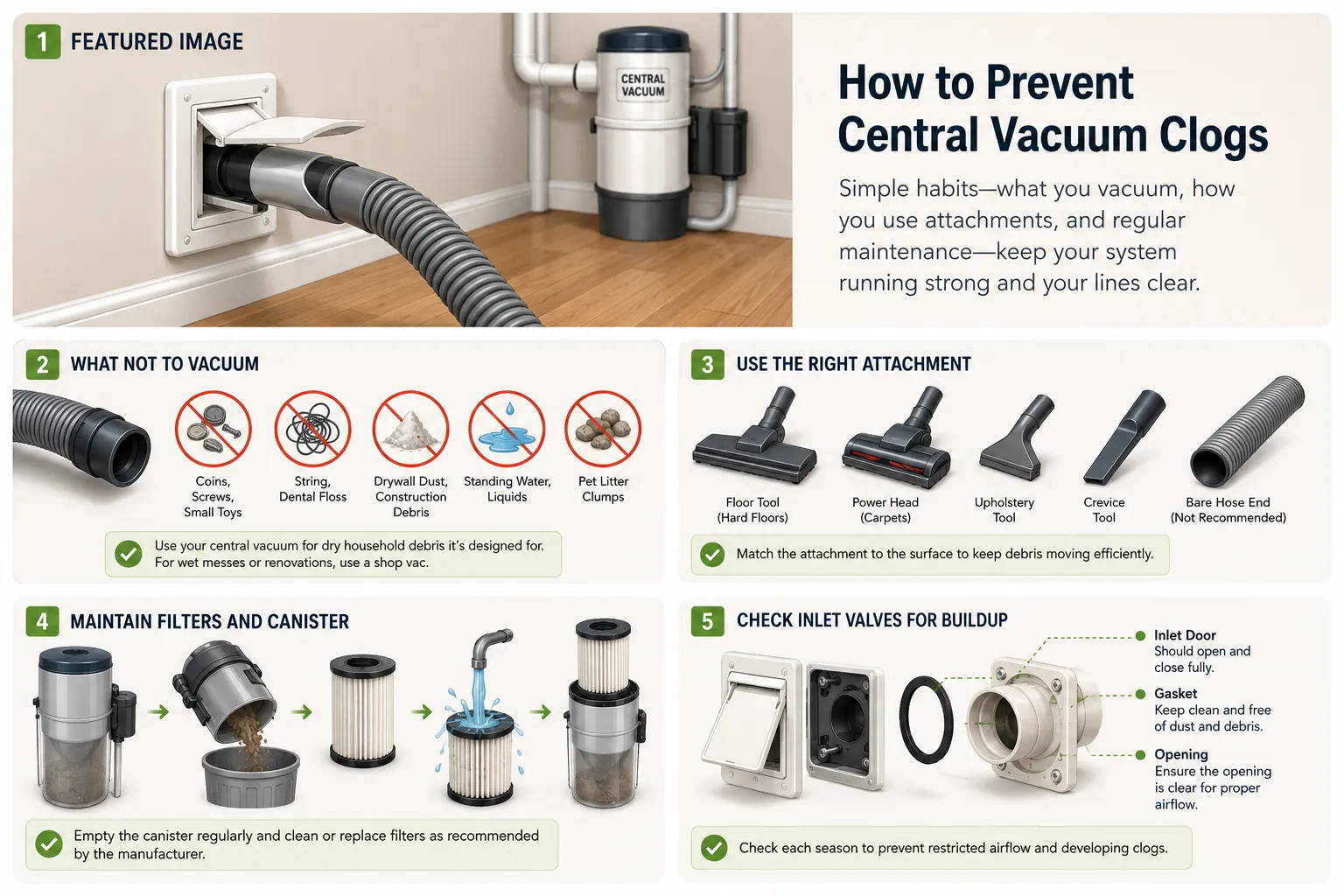
Quick Answer: Central vacuum blockage prevention comes down to four habits: avoid vacuuming hard debris, standing water, or fine construction dust; use the correct attachment for each surface; empty the canister and maintain filters regularly; and check inlet valves for buildup each season.
What Not to Vacuum With a Central Vac (and Why It Clogs the Lines, Not Just the Canister)
A central vac’s tubing runs through walls and framing with narrow passages and tight bends. Anything that cannot move smoothly through those bends can create a problem. Coins, screws, small toys, string, dental floss, clumped pet litter, long pet hair, and broken glass may travel partway before getting stuck. Once something catches, additional debris can build up behind it.
One thing we see regularly on Prairie homes, especially during renovation season, is drywall dust or sanding debris getting pulled into the system after a renovation project. Central vacuum manufacturers generally recommend avoiding drywall and other fine construction dust because it can pass through standard filtration and damage components. In our experience, it is also a common reason we get called out for a full blockage rather than reduced suction. (Drainvac: 3 Things You Should Avoid With a Central Vacuum).
Standing water and damp spills create a separate risk. Most residential central vac systems are not designed for wet pickup. Manufacturers advise against vacuuming liquids with standard residential systems. (MD Central Vacuum Owner’s Manual). In our experience, moisture mixed with dust can also create buildup inside the line.
If you’re mid-renovation or dealing with a wet mess, a shop vac is the safer tool for that specific job — save the central vac for dry household debris it’s actually rated for, and you’ll prevent central vacuum clogs before they have a chance to start.
Central Vacuum Blockage Prevention: Use the Right Attachments
Homeowners often treat the hose end as interchangeable — grab whatever’s closest and go. But the attachment matters for more than cleaning performance: the wrong one for the job makes it easier to pull in more debris than the line can clear efficiently in one pass.
What we see most often on service calls is this pattern: a bare hose or incorrect attachment pulls in more debris than the system can move efficiently. The debris slows down, settles in the line, and collects more material during later cleaning. Matching the attachment to the surface helps keep debris moving properly. Use a proper floor tool or power head for carpets and fine debris instead of relying on a bare hose.
Kinked or crushed hose sections cause a similar problem from a different angle: a kink narrows the passage the same way a partial blockage would, so airflow drops before debris even reaches a bend in the wall piping. Walking the hose out fully before use, rather than dragging it around furniture legs, avoids this.
If you’re already noticing a spot in the house where suction seems to drop off no matter which attachment you use, that’s usually a sign something’s sitting in the line rather than a habit issue. Get in touch for a free quote and we’ll take a look before it turns into a full blockage.
Filter and Canister Habits That Help Prevent Central Vacuum Clogs
It’s easy to assume a full canister only means less room for dirt. In practice, it can affect airflow through the system. Manufacturers note that a full dirt receptacle is one possible cause of reduced suction. As the canister fills, airflow may decrease and debris may become more likely to slow down inside the tubing. In our experience, buildup often starts at bends in the line. (CentralVac.com Maintenance Guide).
Filters follow the same logic. A clogged filter restricts airflow at the canister end, reducing suction throughout the house. Central vacuum manufacturers specifically recommend keeping filters free of dust, lint, and hair so airflow isn’t restricted. In our experience, lower airflow also makes it easier for debris to stall before reaching the canister. Checking and emptying the canister on a regular schedule, and cleaning or replacing the filter per the manufacturer’s interval, are the simplest habits to maintain central vacuum lines without much extra effort. (Drainvac Compact Automatik Owner’s Manual).
We’re NADCA-certified and our technicians hold ASCS certification, so when a system does need a professional look, we’re checking airflow through the whole line the same way on every job — not guessing at where the restriction is. If it’s been a while since your system had a full professional cleaning rather than just a canister empty-out, our central vacuum cleaning service covers that, or our guide to cleaning a central vacuum system walks through what you can handle yourself.
Why Inlet Valves Are the First Place a Developing Clog Shows Up
Saskatchewan’s long, dry heating season means most homes are running furnaces for months at a stretch, which keeps dust circulating and settling into wall inlets even between vacuum sessions. In tightly sealed Prairie construction, that dust has fewer places to go — it accumulates around the inlet valve door and gasket rather than dispersing.
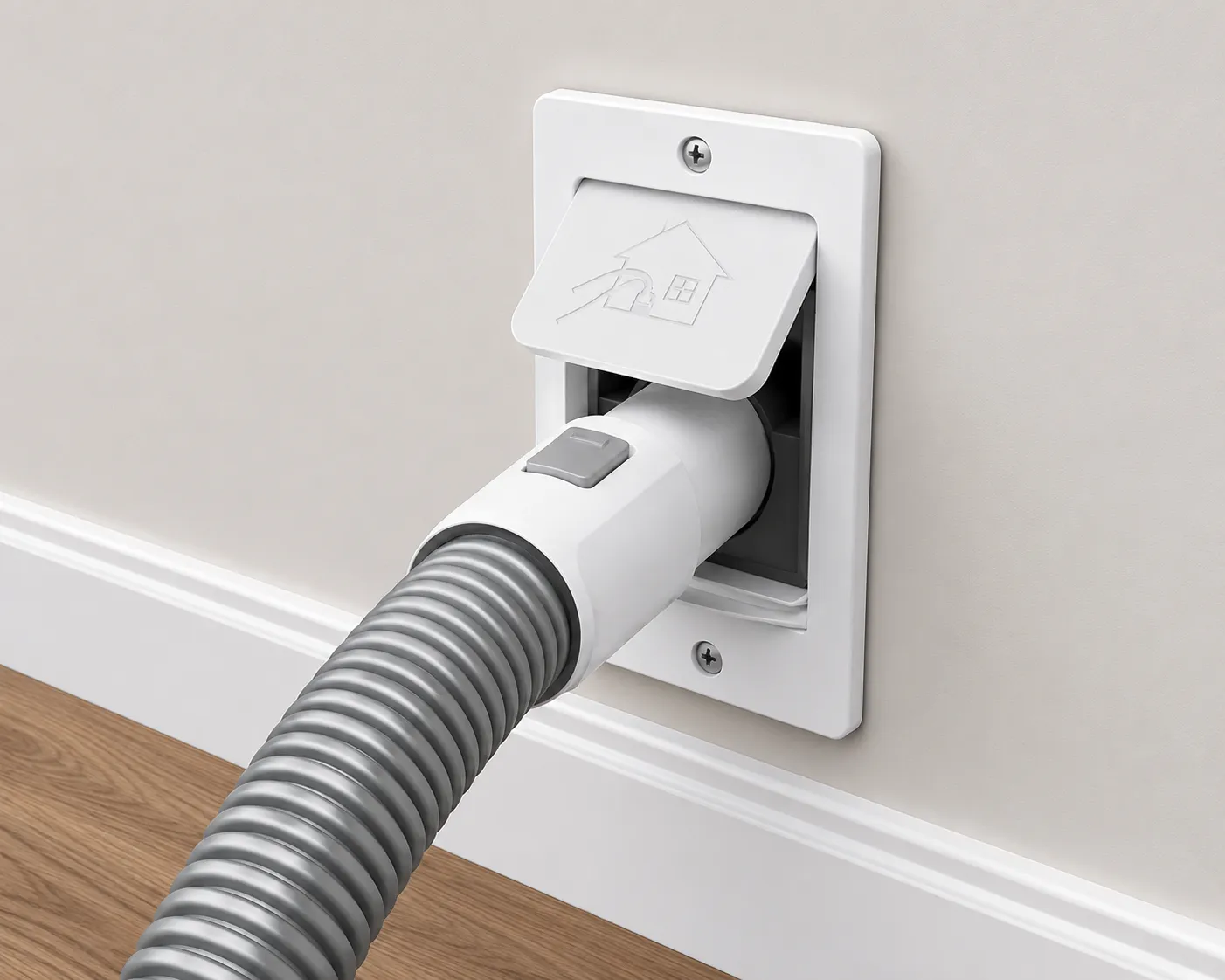
In jobs across older Yorkton homes, the pattern is typically the same — nobody’s checked the inlet valve gaskets in years, and a buildup of dust and debris around the seal has started narrowing the actual opening the hose plugs into. That narrowed opening restricts airflow right at the point where the hose connects, which puts the same kind of stress on the system as a hose kink does, just at the wall end instead of the hose end. A quick seasonal check — making sure the valve door closes fully and the gasket is free of buildup — is one of the easiest habits for keeping central vacuum lines clear before a clog can start.
Early Signs You Need to Prevent Central Vacuum Clogs
Not every dip in suction means a blockage is forming. A canister that’s due for emptying, or a filter that’s overdue for cleaning, will both cause a mild, house-wide suction drop that clears up as soon as you service them — that’s normal wear, not a developing clog.
What’s different is suction loss that’s isolated to one or two inlets while the rest of the house performs normally. Other signs worth watching for include a whistling or rattling sound partway through a cleaning session, or a sudden change in how hard the hose grips the surface right before performance drops. If you’re seeing a pattern like this, it’s worth reading through common central vacuum problems to narrow down whether it’s a simple fix or something that needs a technician.
FAQ
Can my central vacuum clog even if I never vacuum anything obviously too big?
Yes. Fine debris like drywall dust, plaster dust, or a full canister reducing airflow can cause a blockage just as easily as a single large object — it’s usually a gradual buildup rather than one bad pickup, which is why habits matter as much as any single item you avoid. Staying on top of them is the simplest way to prevent central vacuum clogs before they start.
How often should I check my inlet valves for buildup?
A quick check at each change of season is enough to catch buildup around the gasket before it narrows the opening enough to affect suction.
Does a developing clog put strain on the motor, or does it only affect suction?
A restricted line can reduce airflow and may place additional strain on the motor over time. Central vacuum manufacturers warn that restricted airflow can contribute to motor overheating. Day to day, though, the more noticeable effect for most homeowners is reduced cleaning performance rather than motor damage. (Drainvac Compact Automatik Owner’s Manual).
What should I do if central vacuum blockage prevention doesn’t work?
If suction is dropping at one or two inlets specifically, or you’re hearing whistling or rattling mid-clean, it’s worth having it looked at before it turns into a full blockage rather than working around it. Reach out for a free quote and we’ll check the line properly.
You Might Also Find This Helpful
Not sure whether it’s a habit fix or a real blockage? Our NADCA-certified, ASCS-trained technicians will check it out and help you prevent central vacuum clogs going forward.