
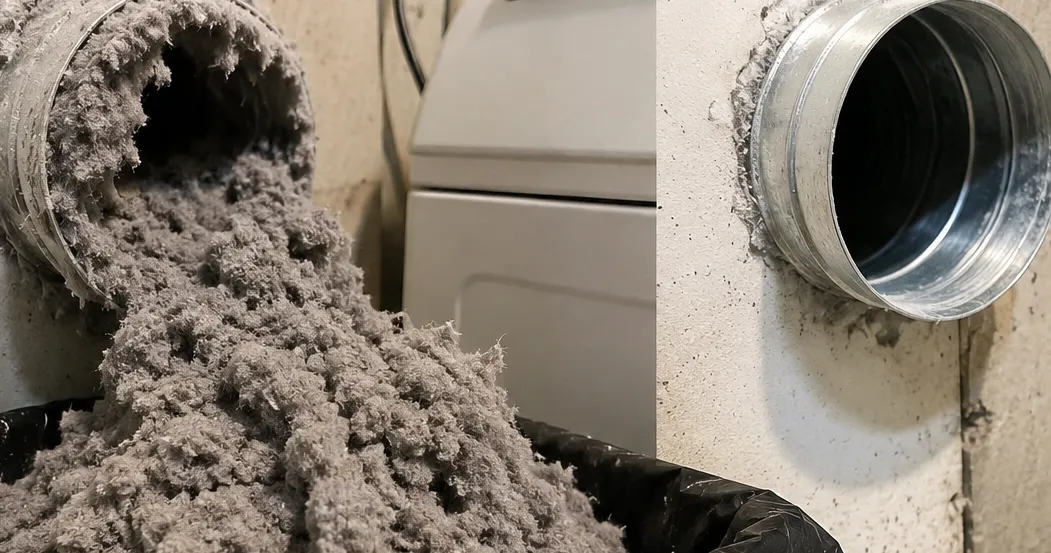
If you’ve searched “which HVAC cleaning services do I need?”, something specific probably prompted it. Maybe one room has weak airflow, your dryer is taking longer than usual, you notice an odour near your air exchanger, or your central vacuum has lost suction.
Those symptoms can help identify which system deserves attention, but they don’t always tell you what the underlying problem is. Cleaning may be the right solution in some cases; in others, the issue may involve maintenance, a blockage, equipment condition, duct leakage, moisture, or another problem that needs to be identified first.
Quick Answer: Use the symptom to identify which system should be checked rather than assuming which cleaning service you need. Weak airflow can have several HVAC causes. Longer dryer cycles can indicate restricted exhaust but can also involve the appliance or laundry load. An odour near an HRV or air exchanger should prompt inspection of the unit and possible moisture sources. Central vacuum suction loss can result from filters, hoses, blockages, inlets, or the power unit. Inspection helps determine whether professional cleaning is actually the appropriate next step.
Which HVAC Cleaning Services Do I Need? Why Duct Cleaning Isn’t Always the Answer
People sometimes call about duct cleaning when the problem they are noticing involves a different system entirely. Your furnace and ductwork, dryer exhaust, air exchanger, and central vacuum perform different jobs and have different maintenance requirements.
The symptom you notice can help narrow down which system deserves inspection, but it should not automatically determine the service you book. A good starting point is to identify where the problem occurs and then determine what is actually causing it.
Which HVAC Service Helps With Weak Airflow?
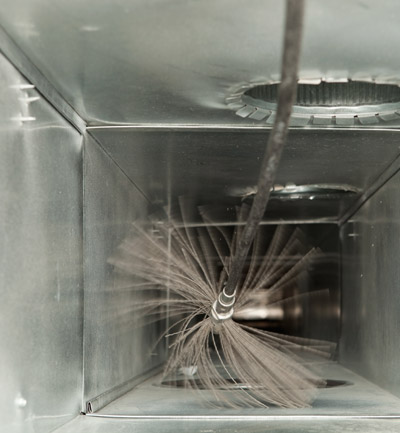
If one or two rooms receive noticeably less airflow or stay at a different temperature from the rest of the house, the duct system is one possible place to investigate—but accumulated debris is only one potential cause.
Airflow problems can also involve a dirty or inappropriate filter, closed or improperly adjusted registers or dampers, duct leakage, disconnected or damaged ductwork, system balancing, blower performance, equipment sizing, or other HVAC conditions. ENERGY STAR notes that duct leakage can contribute to uneven temperatures and heating or cooling performance problems.
Professional duct cleaning may be appropriate when inspection finds that portions of the HVAC system are clogged with excessive dust or debris. The EPA recommends condition-based duct cleaning rather than assuming airflow symptoms alone mean the ducts need to be cleaned.
If accumulated material is actually contributing to the problem, Dun-Rite Vac’s residential furnace and duct cleaning service may be appropriate. You can also review the broader furnace and duct cleaning process.
Which Service Helps When Your Dryer Takes Longer Than Normal?
A dryer taking noticeably longer than normal to dry clothes is worth investigating. Restricted exhaust airflow is one possible cause, particularly when lint has accumulated inside the exhaust duct or the outside vent is blocked.
It isn’t the only possibility. Laundry load size, the lint screen, moisture sensors, dryer settings, appliance condition, and the exhaust configuration can also affect drying time.
The National Fire Protection Association identifies longer-than-normal drying times as a possible sign that the lint screen or exhaust duct is blocked. NFPA recommends cleaning lint from the dryer vent pipe once a year and checking that the outside vent flap opens when the dryer is operating.
Health Canada also advises regularly checking and cleaning dryer screens and exhaust piping because accumulated lint can ignite.
If the exhaust duct contains accumulated lint or another obstruction that you cannot safely remove, professional dryer vent cleaning may be appropriate.
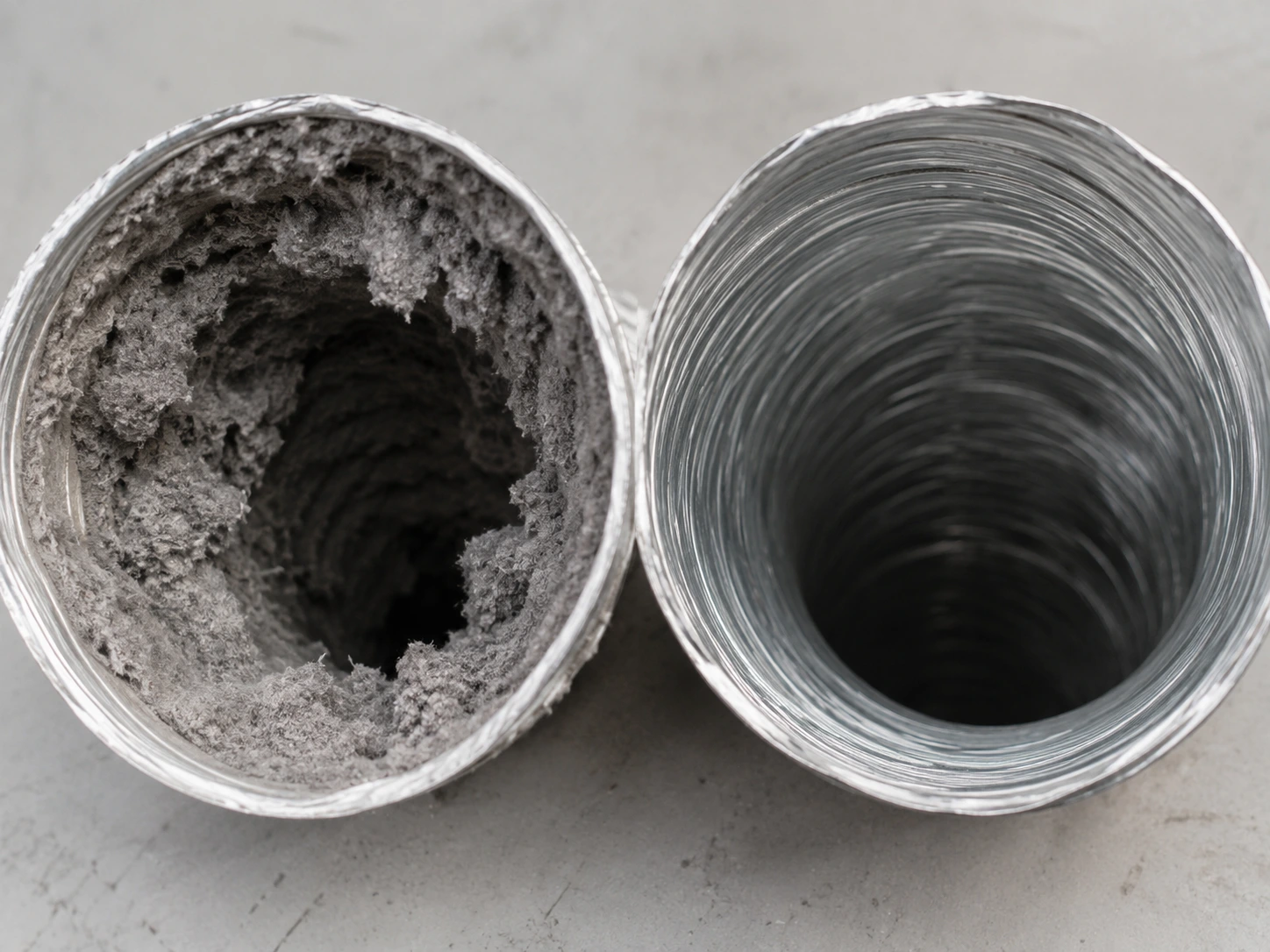
If drying time has increased or the exterior exhaust appears restricted, check the lint screen and accessible outside vent first. If the problem continues or the full exhaust run cannot be safely inspected and cleaned, contact Dun-Rite Vac for a dryer vent cleaning quote.
Which Service Helps With a Musty or Stale Smell Near an Air Exchanger?
An odour near an HRV or air exchanger does not automatically mean that the unit or its ductwork needs professional cleaning. Odours can have several possible sources, including dirty filters, accumulated material inside accessible components, a condensate drain issue, blocked exterior openings, excess moisture, or conditions elsewhere in the home.
CMHC recommends routine HRV maintenance that includes checking or cleaning filters, exterior intake and exhaust hoods, condensate drainage, the heat-exchange core, grilles, ductwork, and fan components. Homeowners should also follow the instructions for their particular unit.
Many of those basic maintenance tasks can be completed by homeowners when the equipment is designed for safe homeowner access. If a more thorough cleaning is required or a problem continues after routine maintenance, professional air exchanger cleaning may be appropriate.
A persistent musty smell should also prompt investigation for moisture rather than being treated as proof that contamination is inside the air exchanger.
Which Service Helps With Central Vacuum Suction Loss?
Reduced central vacuum suction can have several causes. Depending on the system, possibilities can include a full dirt container or bag, a dirty filter, a blockage in the hose or piping, an inlet that is not sealing properly, a leak in the system, or a problem with the power unit itself.
Start with the basic checks recommended by the manufacturer for your central vacuum model. If accessible filters and containers are in good condition and suction remains weak, the system may need further troubleshooting.
If an obstruction or accumulated material is found within the piping, central vacuum cleaning may be appropriate. If the problem involves the power unit, electrical system, or another mechanical component, cleaning alone may not resolve it.
Visible Dust or Debris Around Vent Covers
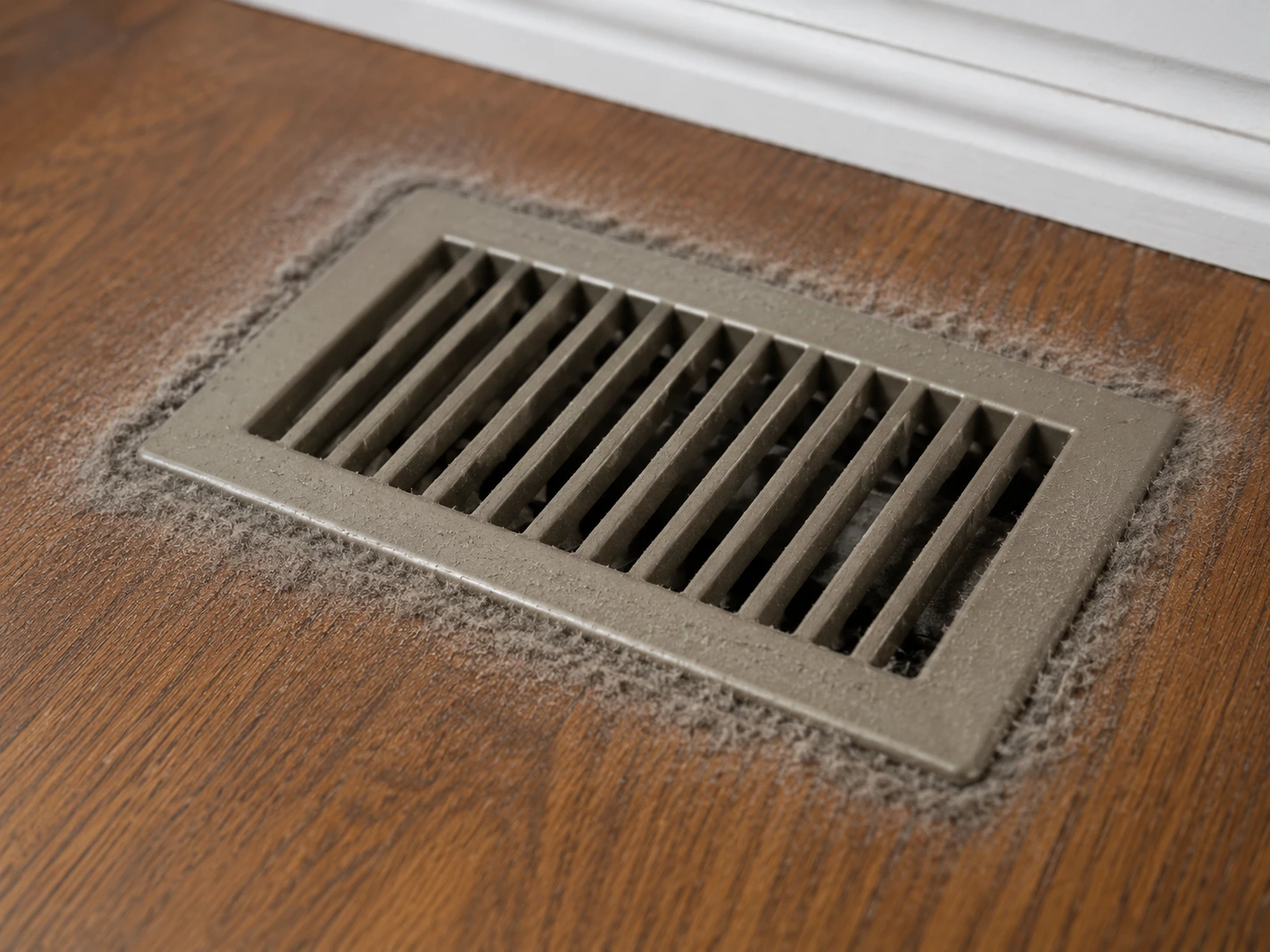
Dust around a register or return grille can look concerning, but it does not automatically mean the duct system requires professional cleaning.
The EPA notes that dusty return registers are common because dust-laden air passes through the grille. The register itself can usually be vacuumed or removed and cleaned. Surface dust does not establish that the ducts contain substantial deposits.
Professional cleaning becomes more relevant when inspection shows excessive amounts of dust or debris inside the duct system, particles are actually being released from supply registers, there is vermin contamination, or another condition identified by EPA is present.
Which HVAC Cleaning Services Do I Need If I Have More Than One Symptom?
Two symptoms can appear at the same time without being related. Your furnace and ductwork, dryer exhaust, air exchanger, and central vacuum are separate systems, so each concern should be evaluated on its own.
For example, a dryer taking longer to finish a load and weak airflow from a bedroom register should not automatically lead to booking dryer vent cleaning and duct cleaning together. The dryer exhaust should be checked for restriction, while the HVAC airflow issue should be evaluated for its own possible causes.
If inspection shows that more than one system genuinely needs cleaning, combining services into one visit may be convenient. Bundling should be based on what each system needs rather than the number of symptoms you notice.
Our cleaning services overview explains Dun-Rite Vac’s different service options. You can also use our seasonal HVAC maintenance checklist for routine maintenance tasks that do not automatically require professional cleaning.
FAQ: Which HVAC Cleaning Services Do I Need?
Can someone look at my system and help determine which cleaning service I need?
Yes. Symptoms can help narrow down where to look, but inspection is more useful than guessing. Dun-Rite Vac can assess cleaning-related conditions in the systems it services and explain whether professional cleaning appears appropriate. Mechanical HVAC problems may require diagnosis by an appropriately qualified HVAC service professional.
What if I have more than one symptom at once — do I need to book every service?
No. Each symptom should be evaluated based on the system involved and its likely causes. More than one service may be appropriate if separate systems genuinely need cleaning, but multiple symptoms do not automatically mean multiple cleaning services are required.
Is it possible my airflow problem isn’t caused by dirty ducts?
Yes. Filters, registers, dampers, duct leakage, damaged ductwork, system balancing, blower performance, equipment sizing, and other HVAC conditions can all affect airflow. Duct cleaning is most relevant when excessive accumulated material is actually contributing to the problem.
Does a dryer taking longer than normal always mean the vent needs professional cleaning?
No. Longer drying time can be a warning sign of a blocked lint screen or restricted exhaust duct, but appliance condition, load size, settings, sensors, and other factors can also affect drying time. NFPA recommends checking for exhaust restriction and cleaning lint from the dryer vent pipe annually.
Should a dryer exhaust problem be treated as a safety concern?
Lint accumulation in dryer exhaust systems is a fire-safety concern. Health Canada advises regularly cleaning dryer screens and exhaust piping because lint can ignite, while NFPA recommends annual vent-pipe cleaning. If you notice a burning smell, unusual overheating, smoke, or another immediate safety concern, stop using the dryer until the cause has been evaluated.
Does a musty smell near my HRV mean it needs professional cleaning?
Not necessarily. Start with manufacturer-approved maintenance such as checking the filters, heat-exchange core, exterior openings, condensate drainage, grilles, and accessible components. Persistent odours or moisture should be investigated rather than automatically attributed to a dirty air exchanger.
You Might Also Find This Helpful
- Dryer Vent Cleaning vs. Air Duct Cleaning: What’s the Difference?
- A Seasonal HVAC Maintenance Checklist for Saskatchewan Homes
- How Often Should You Clean Your Air Ducts?
Not sure which system needs attention?
Contact Dun-Rite Vac for a free quote and we’ll help determine whether one of our cleaning services is appropriate for your home or business.