
Pulling lint out of your dryer vent and wondering when it was last cleaned is a common experience. Many homeowners forget about this maintenance task until clothes start taking longer to dry or airflow at the exterior vent becomes noticeably weaker. How often your dryer vent needs attention depends partly on the dryer, vent design, and how heavily it is used, but there is useful safety guidance homeowners can follow.
Quick Answer: The National Fire Protection Association recommends cleaning lint from the dryer vent pipe once a year, or more often if clothes begin taking longer than normal to dry. Health Canada also advises regularly checking and cleaning dryer filters, screens, and exhaust piping. If airflow is restricted, lint is accumulating, or drying performance changes, don’t wait for the annual mark to investigate the vent.
How Often Dryer Vent Cleaning Is Needed
For homeowners looking for a practical starting point, the National Fire Protection Association recommends cleaning lint from the dryer vent pipe once a year, or more often when clothes begin taking longer than normal to dry.
Health Canada likewise advises regularly checking and cleaning dryer filters and screens because lint left in the screen and exhaust piping can ignite at high temperatures.
The condition of the vent still matters. Factors that can contribute to lint accumulation or restricted airflow include:
- Frequent dryer use
- Long exhaust runs
- Multiple bends or restrictive vent routing
- An exterior vent flap that doesn’t open freely
- Lint that continues to accumulate despite regular cleaning of the dryer’s lint screen
The U.S. Department of Energy recommends keeping dryer vent runs as short and straight as practical and using appropriate metal duct material because long runs, excessive bends, and unsuitable vent materials can interfere with airflow and drying performance.
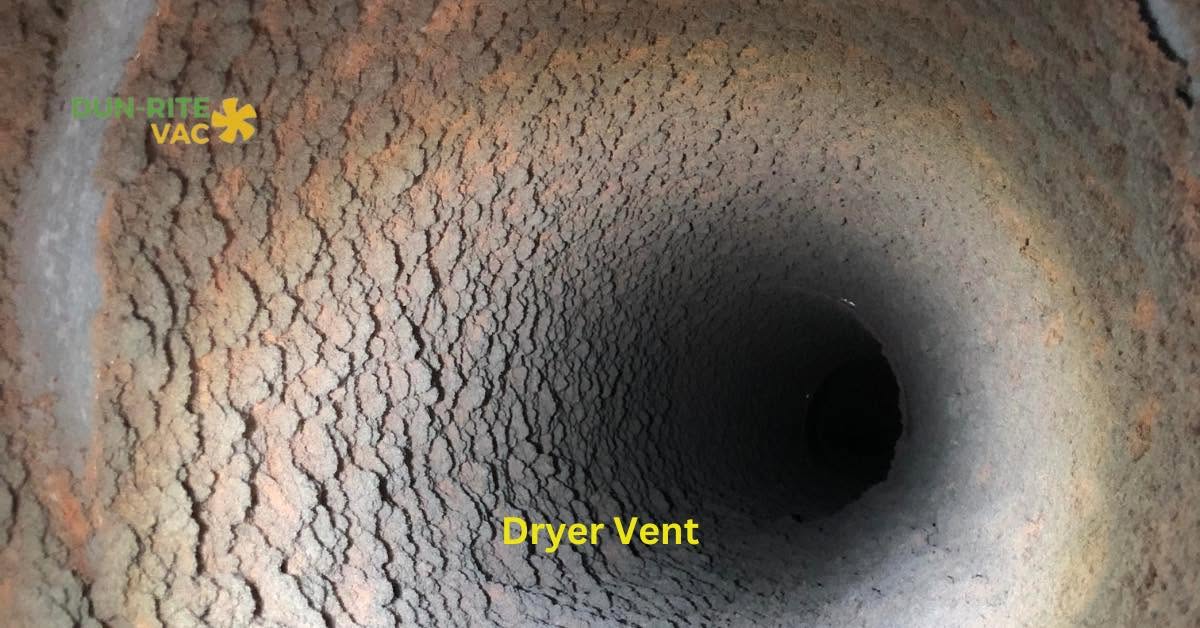
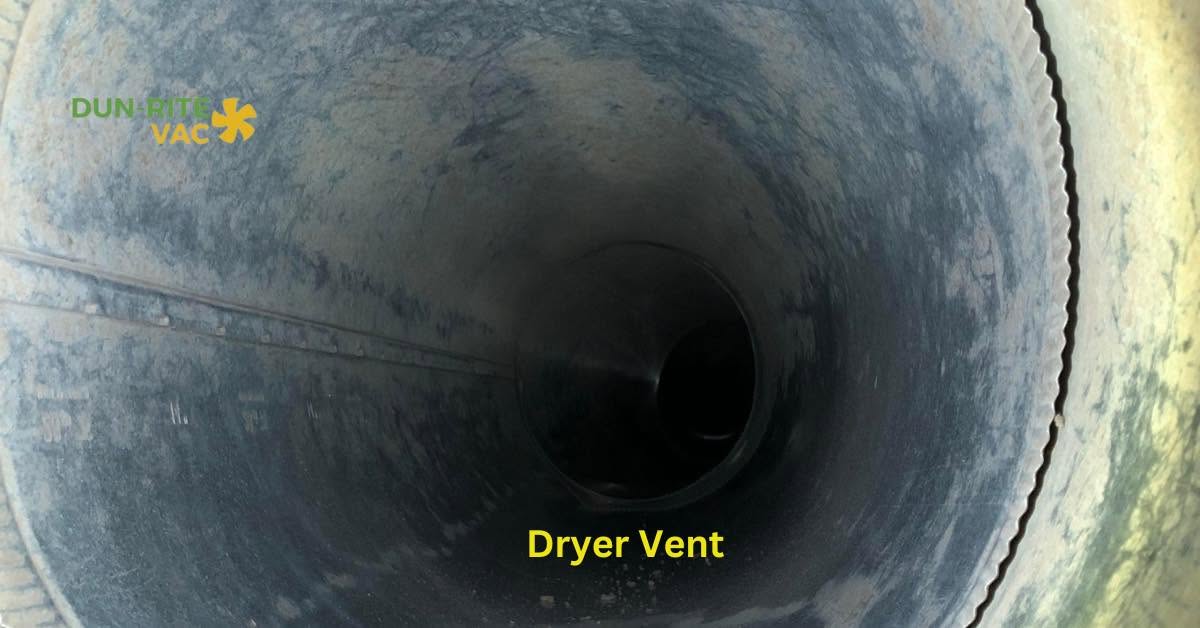
Rather than automatically moving to a six- or nine-month professional cleaning schedule, watch how the dryer and exterior vent are performing. Longer drying times or noticeably reduced exhaust airflow are reasons to inspect the system sooner.
Why Dryer Vent Cleaning Matters
Is dryer vent cleaning necessary, or is it just another maintenance recommendation? Keeping the exhaust path clear matters for both dryer performance and fire safety.
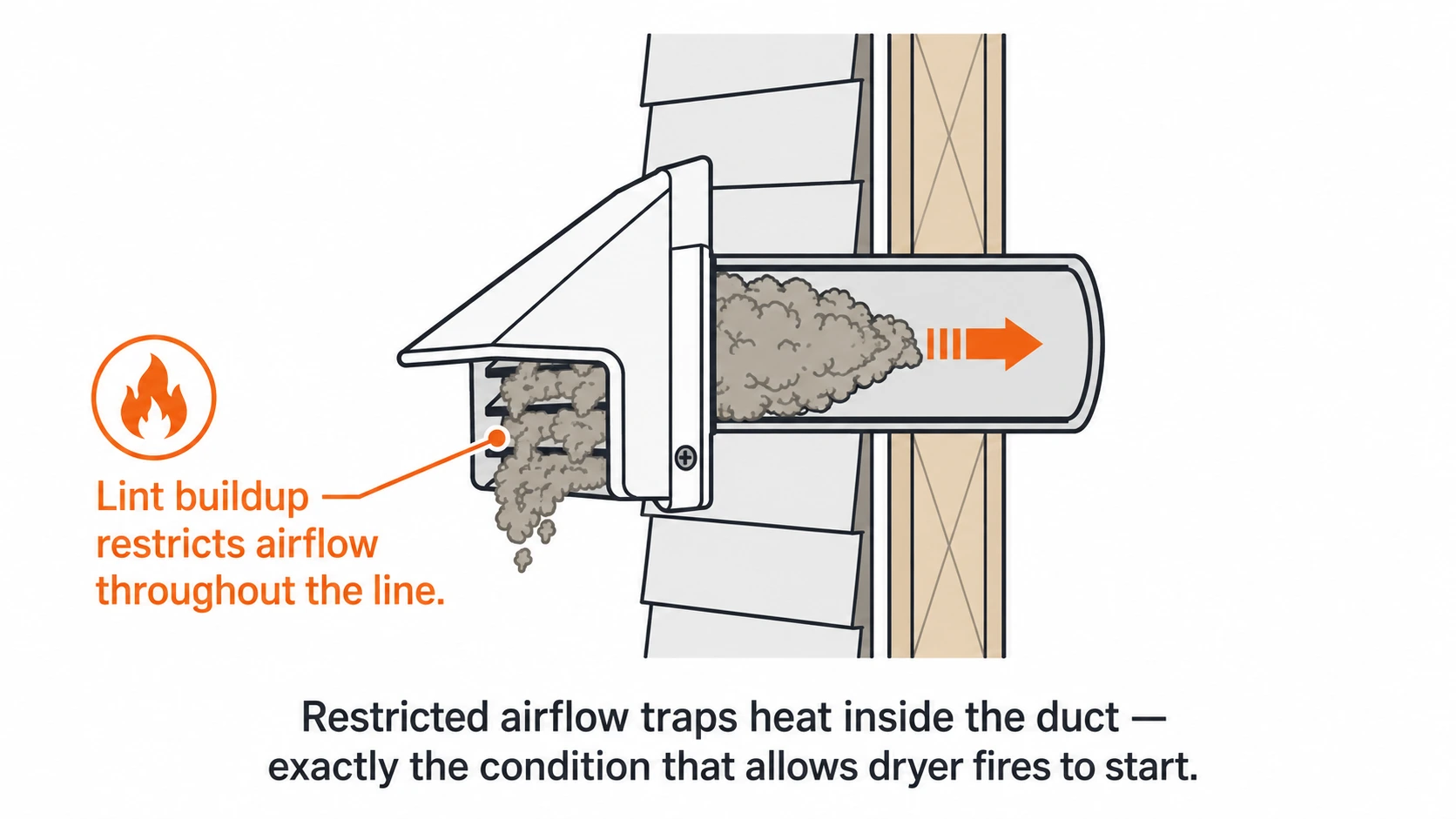
A restricted dryer exhaust can increase drying time because the appliance has more difficulty moving warm, moist air outside. The Department of Energy specifically notes that long vent runs and excessive bends can increase drying time, which is why proper vent routing and maintenance matter.
Fire safety is the more important concern. Lint can ignite, and both Canadian and U.S. safety organizations advise keeping dryer exhaust systems free of lint accumulation. NFPA identifies failure to clean as the leading cause of home clothes-dryer fires in its safety guidance.
Dryer Vent Maintenance During Prairie Winters
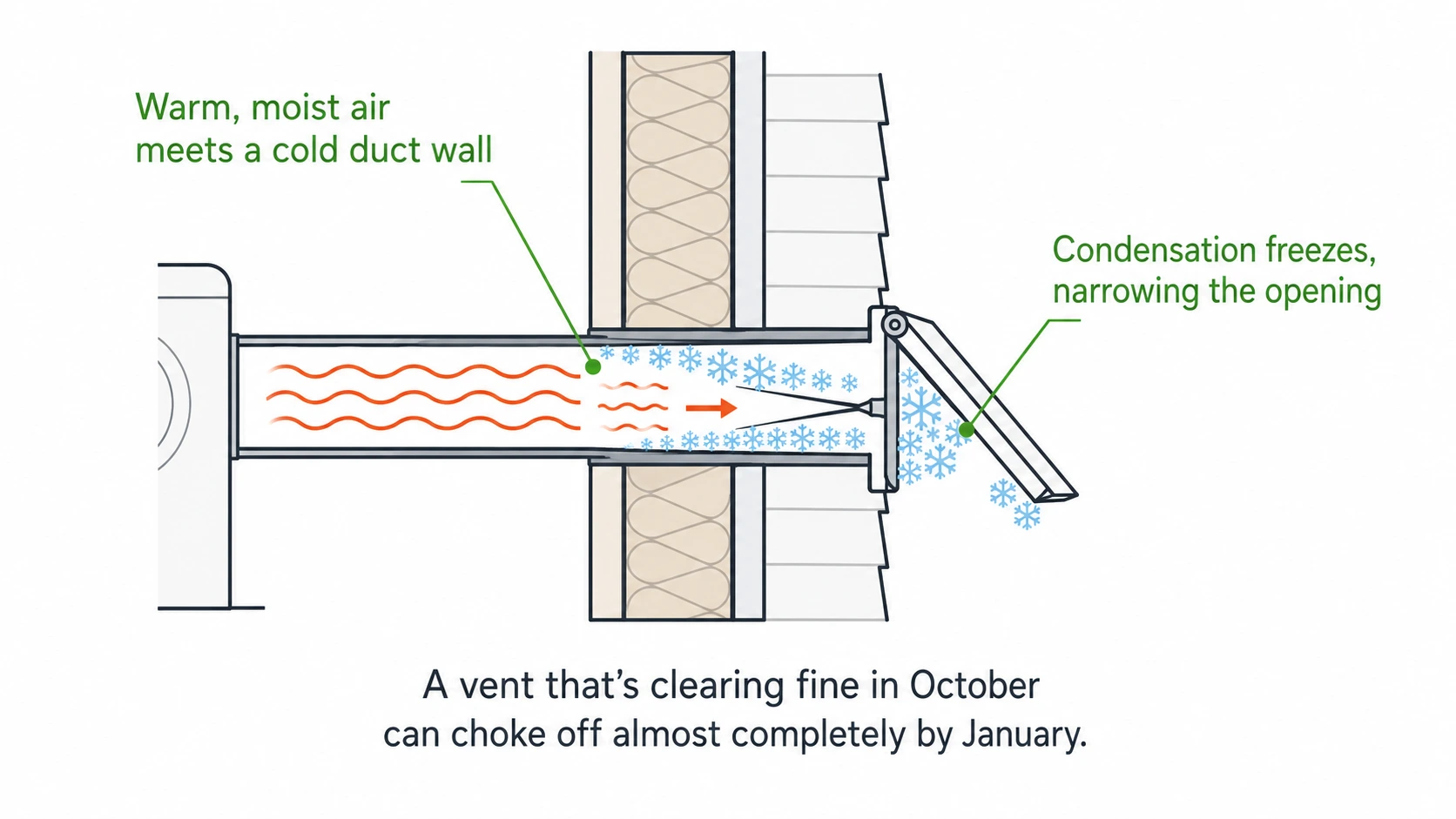
Winter adds another maintenance consideration for Saskatchewan homeowners: the exterior dryer vent needs to remain unobstructed.
Health Canada specifically recommends routinely inspecting the outside exhaust vent and keeping it clear of obstructions such as snow and foliage. NFPA also advises checking that the outdoor vent flap isn’t covered by snow.
During Saskatchewan winters, check the exterior termination periodically and make sure the flap can open when the dryer is operating. Snow, lint, or another obstruction at the termination can reduce airflow even if the rest of the vent is reasonably clean.
Signs Your Vent Needs Attention Sooner
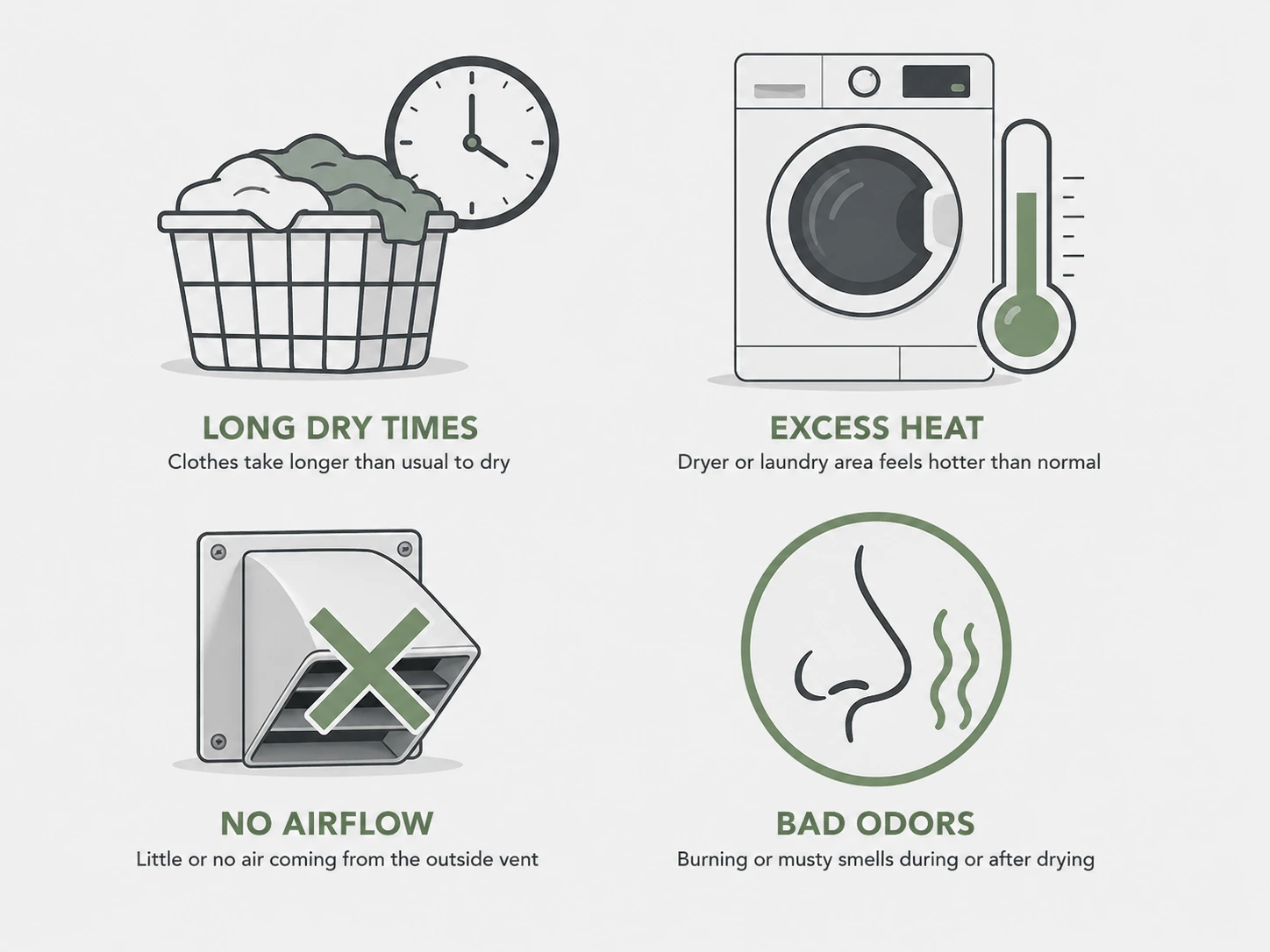
Don’t wait for the calendar if the dryer or exhaust system starts showing signs of restricted airflow:
✅ Clothes take noticeably longer to dry than they normally do for a similar load.
✅ Airflow at the exterior vent appears weak while the dryer is operating.
✅ Lint is accumulating around the exterior vent or preventing the flap from opening properly.
✅ The exterior vent is blocked by snow, vegetation, or another obstruction.
✅ You notice unusual heat or a burning smell. Stop using the dryer if you smell burning or suspect an overheating or electrical problem and have the appliance and exhaust system checked before using it again.
If you’re seeing warning signs or can’t determine whether the full exhaust run is clear, a professional inspection and cleaning may be appropriate.
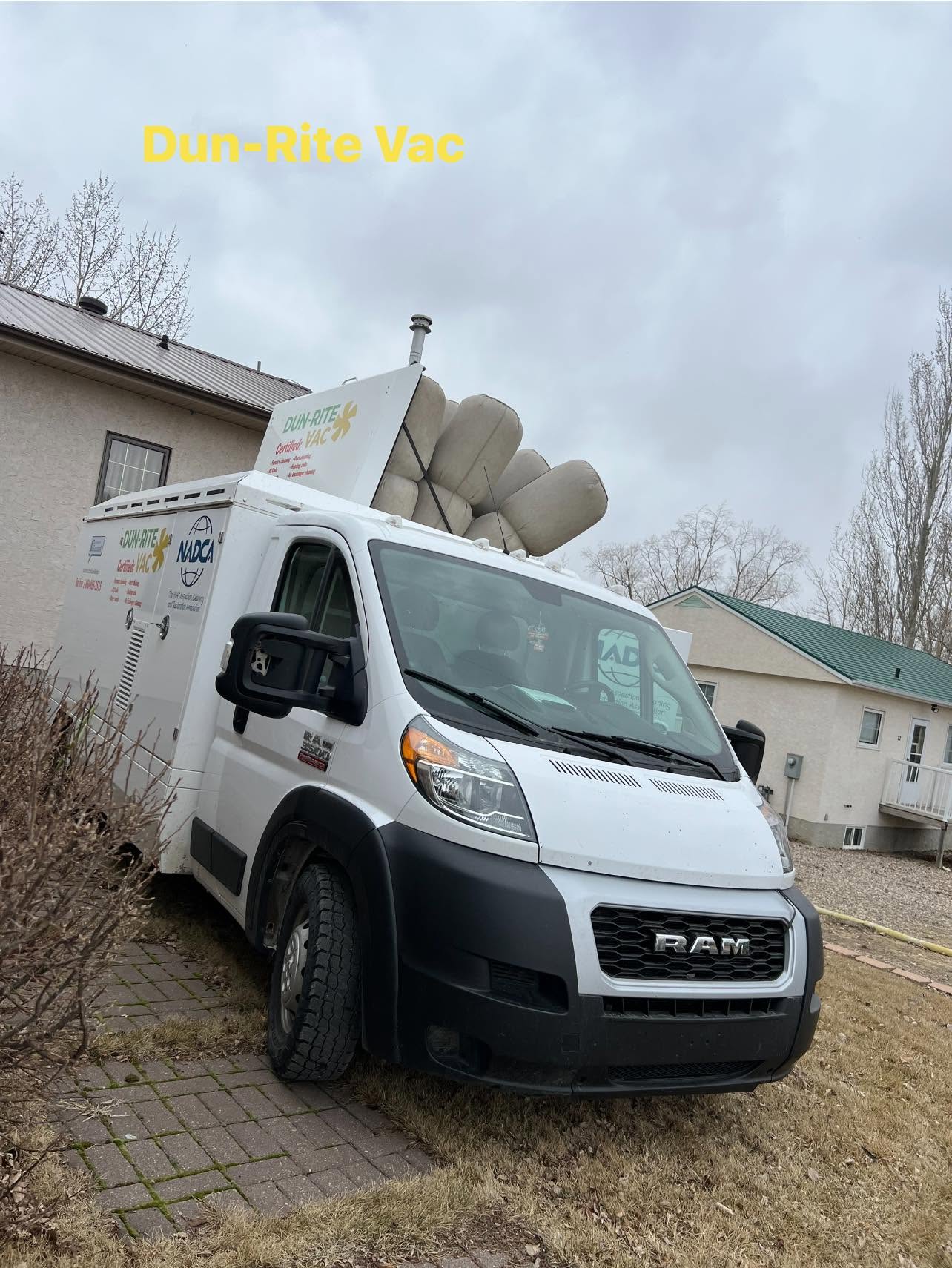
Dun-Rite Vac has served customers since 1998 and provides professional dryer vent cleaning throughout its Saskatchewan service areas. The service addresses accumulated lint and debris along the accessible dryer exhaust path rather than only cleaning what is visible at the laundry-room connection.
FAQ
Can I clean a dryer vent myself, or does it need to be professional?
Homeowners should clean the lint screen as directed by the dryer manufacturer and keep the exterior vent opening free of visible lint and obstructions. If you plan to clean farther into the exhaust duct yourself, follow the appliance manufacturer’s instructions and avoid damaging or disconnecting the vent system.
Professional cleaning can make sense when the exhaust run is long, difficult to access, has multiple bends, or remains restricted after accessible lint has been removed.
Does dryer vent cleaning help with energy bills?
If a vent is restricted enough to increase drying time, removing the restriction may allow the dryer to complete loads more normally and avoid unnecessary runtime. The actual effect on energy use depends on the dryer, the severity of the restriction, load size, vent configuration, and other operating conditions, so a specific energy saving shouldn’t be guaranteed.
Is dryer vent cleaning different from furnace duct cleaning?
Yes. They’re separate systems. Dryer vent cleaning addresses the dedicated exhaust line carrying air from the clothes dryer outdoors, while furnace and air duct cleaning addresses the home’s heating and air-distribution system. Each should be maintained according to its own condition and requirements.
What time of year is best to book a cleaning?
There is no required season. If the vent needs cleaning or the dryer is showing signs of restricted airflow, address it when the problem is identified. Before and during winter, it is also worth checking that the exterior termination remains clear of snow and other obstructions.
Should a dryer vent really be cleaned every year?
NFPA recommends cleaning lint from the vent pipe once a year, or more often if clothes take longer than normal to dry. Health Canada recommends regularly inspecting and cleaning dryer screens and exhaust piping. Your dryer’s manufacturer may provide additional maintenance instructions for your particular appliance and vent configuration.
Booking a Dryer Vent Cleaning
If your dryer vent hasn’t been cleaned in about a year, its maintenance history is unknown, or you’re noticing longer drying times or restricted airflow, it may be time to have the exhaust system checked. Learn more about our dryer vent cleaning service, or if you’re in the Yorkton area, see how we serve homes and businesses locally.