

When someone asks about furnace cleaning and service, it’s important to clarify what they mean. Cleaning accumulated material from accessible furnace and HVAC components is different from a mechanical furnace tune-up, safety inspection, or repair performed by a qualified heating contractor.
This guide explains what furnace cleaning can involve, how it relates to duct cleaning, and why regular heating-system maintenance still matters. The exact work included in any appointment should always be confirmed before booking.
Quick Answer: Furnace cleaning focuses on accumulated material in accessible furnace or air-handling components, while a furnace tune-up or maintenance visit can also involve mechanical, electrical, combustion, and safety checks. ENERGY STAR recommends an annual pre-season heating-system check-up by a qualified contractor. Cleaning itself should be based on the equipment, its condition, the manufacturer’s instructions, and the scope of service being performed.
What Furnace Cleaning Can Include
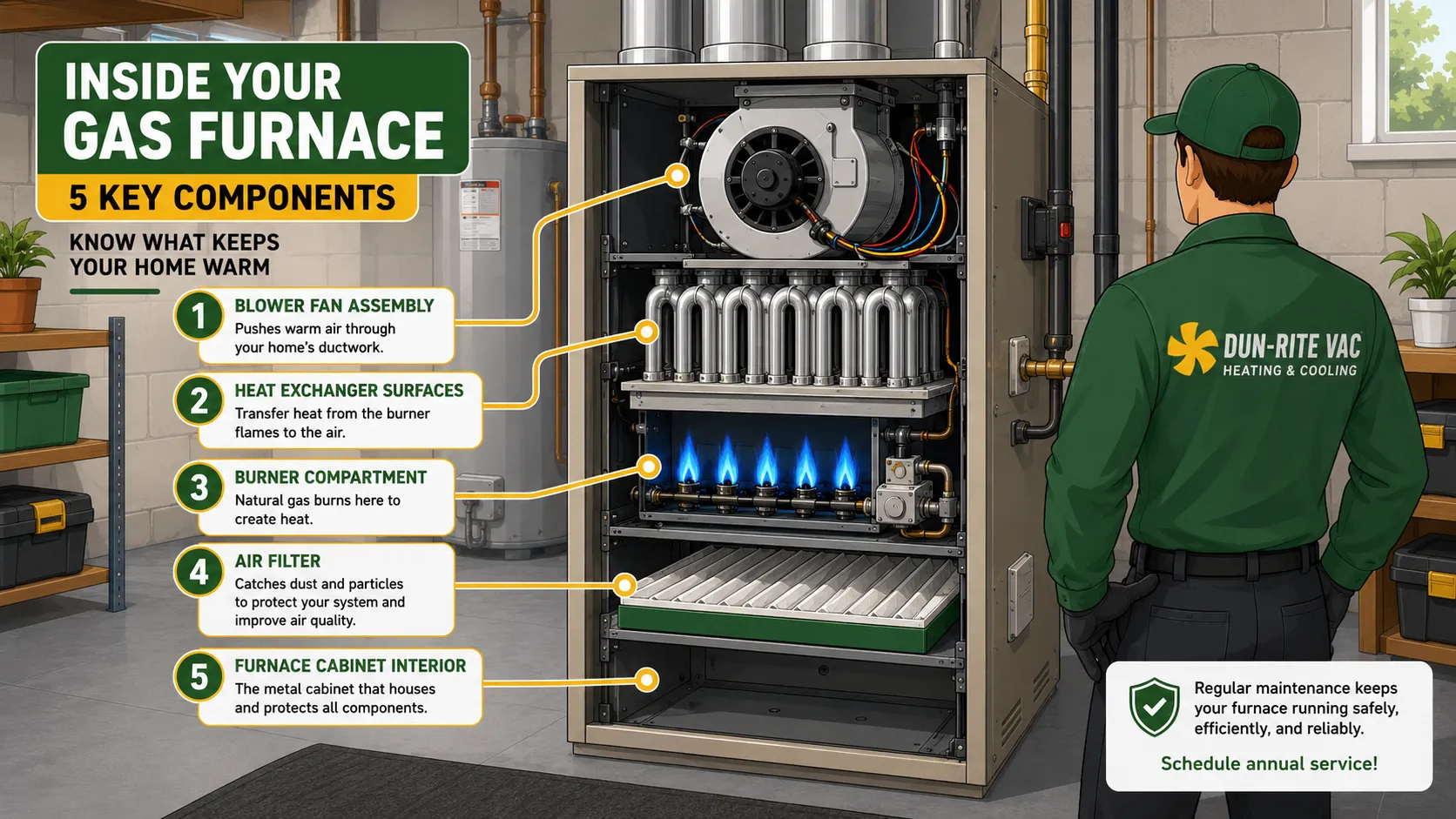
Furnace cleaning focuses on the furnace or air-handling equipment rather than only the network of ducts connected to it. Depending on the equipment, its condition, accessibility, and the service scope, cleaning may involve accessible components such as the blower assembly, cabinet, heat exchanger surfaces, coils, filters, or other HVAC components.
NADCA recommends taking a whole-system approach when HVAC cleaning is warranted. Its guidance identifies components including air ducts, registers, plenums, blower motors and assemblies, heat exchangers, coils, filters, and air cleaners as parts of the overall HVAC system that may need to be addressed. See NADCA’s proper cleaning methods.
That does not mean every component automatically requires cleaning during every visit. The appropriate scope depends on the system and what is actually found.
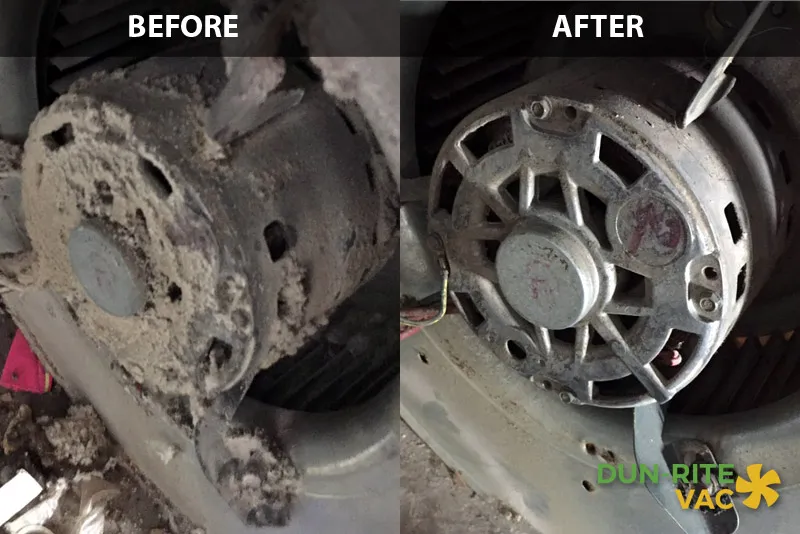
Blower components are particularly important to inspect because they help move air through the HVAC system. ENERGY STAR includes cleaning and adjusting blower components as part of its heating and cooling maintenance checklist when needed to maintain proper system airflow.
If your system also includes an air-conditioning coil, that component has its own inspection and cleaning requirements. Ask what is included before assuming coil cleaning is part of a furnace or duct-cleaning appointment.
Furnace Cleaning vs. Duct Cleaning: Why the Scope Is Different
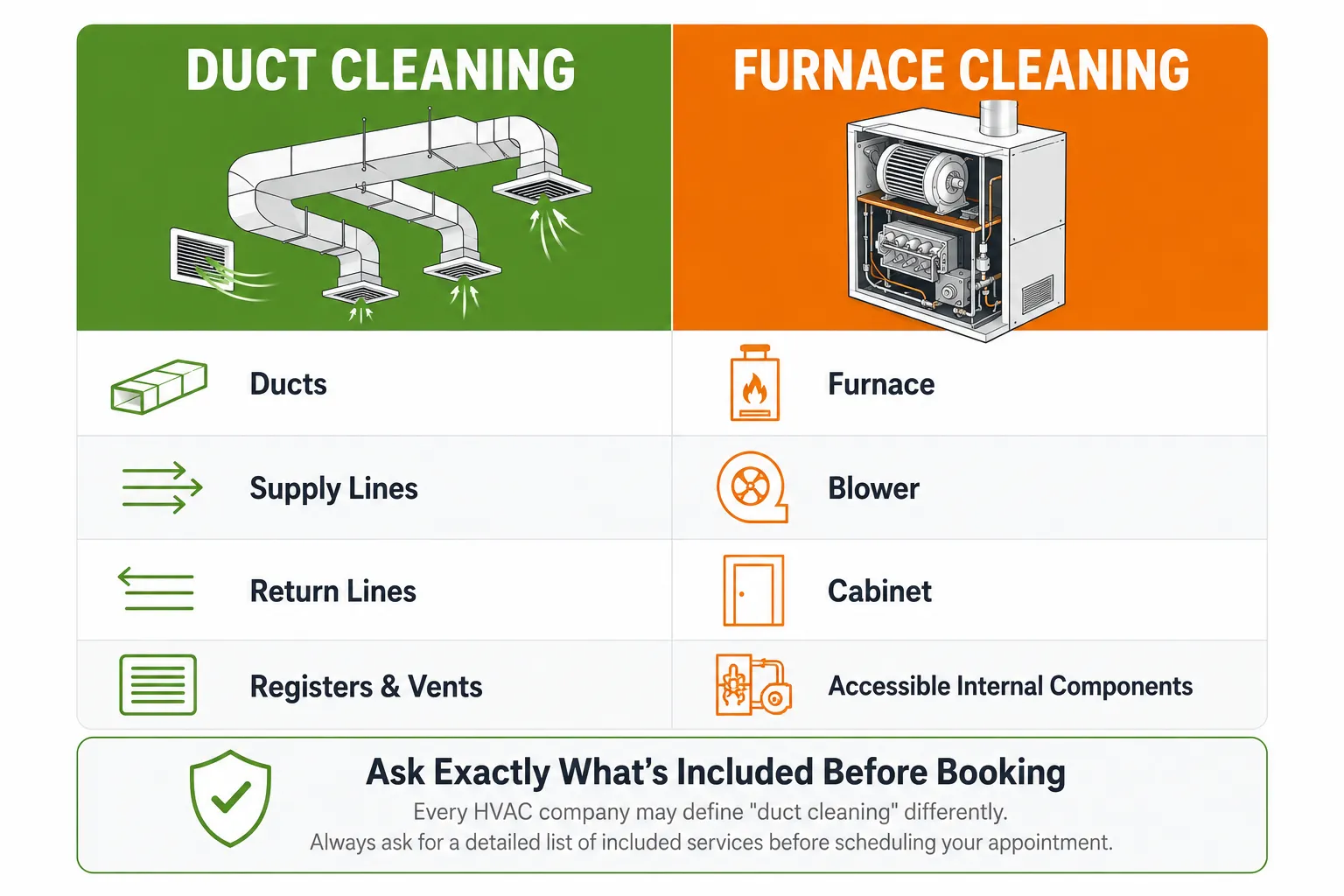
Furnace cleaning addresses components within the furnace or air-handling equipment, while duct cleaning addresses the supply and return pathways that distribute air throughout the home.
They are connected parts of the same HVAC system, but the terms aren’t interchangeable. A quote described as “duct cleaning” may include certain furnace components, while another contractor may price those components separately.
If you’re comparing services, read our duct cleaning vs. furnace cleaning guide and review what is included in Dun-Rite Vac’s furnace and air duct cleaning services.
How Often Should a Furnace Be Serviced?
Regular furnace maintenance is important, particularly in homes that rely heavily on heating through Saskatchewan’s colder months. However, it’s useful to distinguish an annual HVAC maintenance check from automatically scheduling a deep cleaning every year.
ENERGY STAR recommends annual pre-season check-ups for heating and cooling equipment and suggests having the heating system checked in the fall before contractors become busiest during winter.
A typical professional maintenance check can include inspecting controls, electrical connections, burner operation, gas or oil connections where applicable, and the heat exchanger. Cleaning may also be appropriate when components such as the blower or coils have accumulated material that needs to be removed.
The exact maintenance and cleaning requirements for your furnace should also follow the equipment manufacturer’s instructions. Different furnace types and models can have different procedures and service requirements.
Between professional maintenance visits, pay particular attention to the furnace filter. ENERGY STAR recommends checking filters monthly and cleaning or replacing them when dirty. Your furnace or filter manufacturer may specify a different replacement interval for your particular equipment.
For information about the cleaning portion of Dun-Rite Vac’s residential service, visit our residential furnace and air duct cleaning page.
What Affects the Cost of Furnace Cleaning?
The price of furnace cleaning can vary because furnace designs, accessibility, condition, and service scopes differ. Rather than assuming every furnace requires the same amount of work, compare exactly what is included in the quote.
Factors that can affect the scope include:
- ✅ Equipment type and condition — different furnace and air-handling systems have different components and access requirements.
- ✅ Accessibility — a furnace in an open mechanical room may be easier to work around than equipment in a tight or obstructed location.
- ✅ Amount of accumulated material — components with significant buildup can require more cleaning than components that are already reasonably clean.
- ✅ Additional services — adding duct cleaning, coil cleaning, dryer vent cleaning, or other work changes the overall scope.
Ask what the quote includes before comparing prices so you know whether you’re comparing similar services.
When to Have Your Furnace Checked
Annual pre-season maintenance is a useful baseline, but certain symptoms deserve attention when they occur rather than waiting for the next scheduled visit.
If you notice an unusual burning or electrical smell, repeated shutdowns, unusual noises, visible soot, a carbon monoxide alarm, or another change in how the furnace operates, stop treating it as a routine cleaning question and contact an appropriately qualified heating professional.
Changes in heating costs can also have many causes, including weather, thermostat settings, filters, furnace condition, duct leakage, insulation, and equipment performance. A higher utility bill by itself does not prove that the furnace needs cleaning.
ENERGY STAR does note that maintenance matters for HVAC efficiency. Dirty cooling coils can increase operating time, and blower airflow problems can reduce system efficiency. But that is not the same as promising a specific 10–25% energy reduction from furnace cleaning.
If you’re unsure whether accumulated material in your furnace and duct system warrants professional cleaning, contact Dun-Rite Vac for a free quote. For mechanical, combustion, electrical, or safety concerns, use an appropriately qualified HVAC service professional.
Frequently Asked Questions
Does furnace cleaning include cleaning my air ducts too?
Not automatically. Furnace cleaning and duct cleaning address different parts of the HVAC system. Some service packages include both, while others don’t. Always confirm exactly which components are included in your quote.
How long does furnace cleaning usually take?
There is no universal appointment length. The time depends on the furnace, accessibility, condition, the components being cleaned, and whether other HVAC or duct-cleaning work is being completed during the same visit.
Does my furnace need professional maintenance every year?
ENERGY STAR recommends an annual pre-season heating-system check-up. Your furnace manufacturer may also specify maintenance requirements for your particular model. An annual check-up does not necessarily mean every component requires deep cleaning each year—the work should be based on the equipment and its condition.
What’s the difference between furnace cleaning and a furnace tune-up?
They should not automatically be treated as the same service. Furnace cleaning focuses on removing accumulated material from appropriate components. A tune-up or maintenance visit may also involve mechanical, electrical, control, fuel, combustion, and safety checks. Because companies use these terms differently, ask for a written scope of work before booking.
Can Dun-Rite Vac diagnose or repair a furnace problem?
Dun-Rite Vac’s furnace and duct cleaning service focuses on professional HVAC cleaning. If the issue involves furnace repair, combustion, electrical components, controls, or another mechanical problem, an appropriately qualified HVAC service professional may be required.
You Might Also Find This Helpful
Dun-Rite Vac has served customers since 1998, is listed with NADCA, and has ASCS-certified personnel. If you’re not sure whether your furnace and duct system needs professional cleaning, contact our team and we’ll explain what is included in the service.