
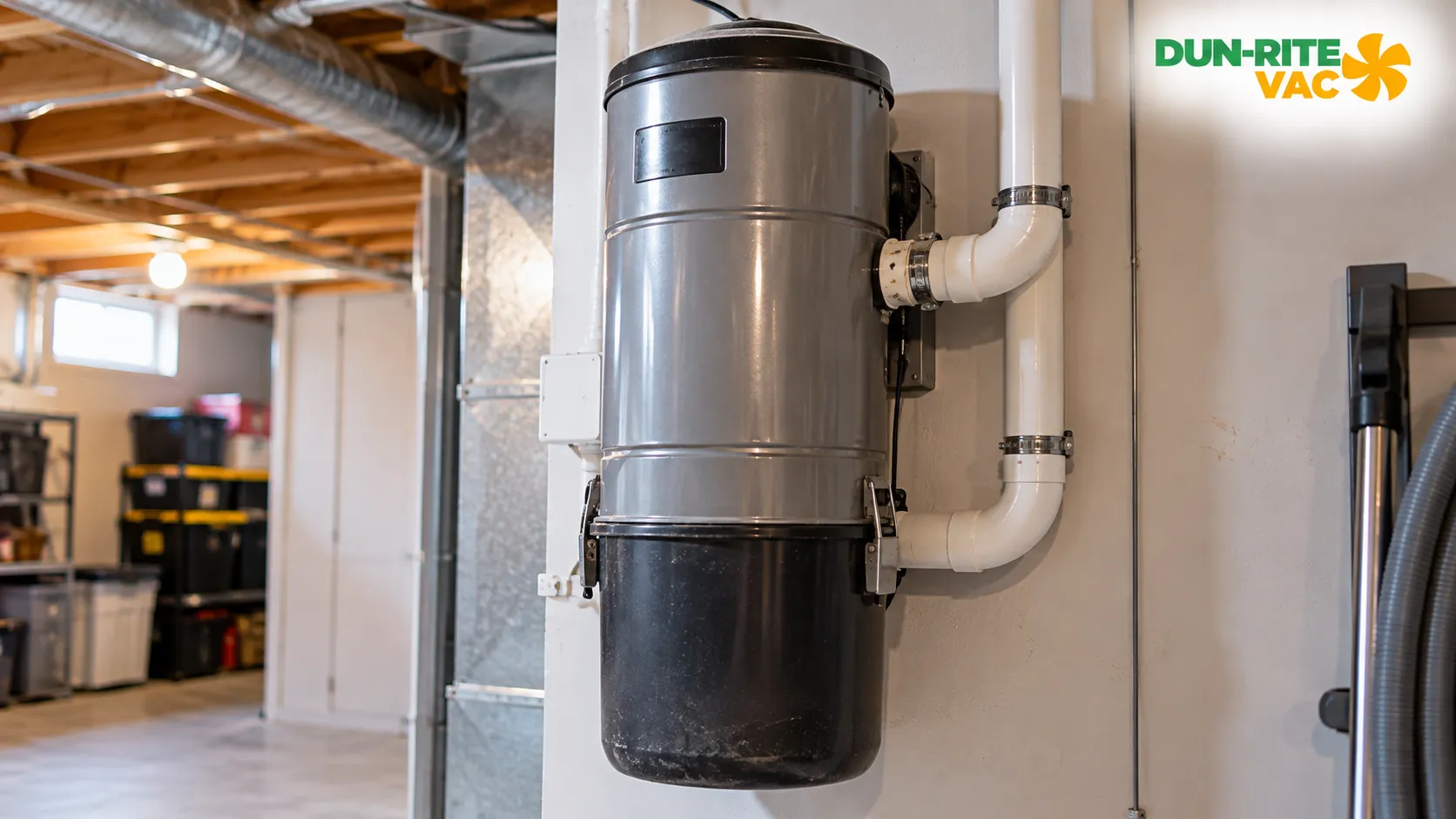
You switch the system on, and a few seconds later the house smells like a damp basement or something that has been sitting too long. If your central vacuum smells bad, the cause could be the canister, the filter, the exhaust, or the pipe network running through your walls.
Odour alone can’t pinpoint the problem, but it gives you a useful first clue about where to check. This guide covers what different smells may point to, which checks are safe to do yourself, and when it makes sense to look further.
Quick Answer: A central vacuum can smell bad because of a full canister or bag, a dirty filter, moisture in collected debris, or buildup elsewhere in the system. Start with the canister and filter, following your manufacturer’s instructions. If the odour persists, or seems tied to one inlet, it’s reasonable to have that part of the system looked at, and cleaning is only worthwhile if buildup is actually found.
In this article
When Your Central Vacuum Smells Bad: Where to Look First
Treat the type of smell as a first clue, not a verdict. Several different problems can produce similar odours, so use this table to decide what to check first.
| What you notice | Possible cause | First thing to check |
|---|---|---|
| Stale, dusty odour | Full canister or bag, or a dirty filter | Empty or replace the bag; inspect the filter |
| Musty or damp smell | Moisture affecting collected debris | Look inside the empty canister for dampness |
| Smell mainly at one inlet | Something affecting that inlet or its branch of pipe | Compare against other inlets, one at a time |
| Burning or hot smell | Possible power-unit, motor or electrical problem | Stop using the system (see the FAQ below) |
A burning or hot smell is the one that calls for stopping immediately. For any other unusual odour that doesn’t fit the table, treat it as a reason to look further rather than assuming it’s harmless.
What the Exhaust Location Can Tell You
Many people assume the odour comes from whatever they just vacuumed. Sometimes it does, but air from the whole system leaves through the exhaust, so a central vacuum exhaust smell may reflect the canister, the filter, or anything else the air has passed through.
Where the exhaust ends up matters. In basement utility rooms, we sometimes find a power unit exhausting into a closed-in space, so the smell lingers in that room and gets noticed throughout the house. If the odour is strongest right around the power unit, that helps you decide whether to focus on the unit itself or on the inlets.
If your system vents outdoors and you notice a change in suction or airflow, the exhaust is one place worth checking. Cana-Vac’s central vacuum troubleshooting guidance lists a clogged exhaust line as one possible cause of decreased suction and recommends checking that nothing is blocking the exhaust. If an odour is present too, treat the exhaust as one item to rule out rather than assuming it is the cause.
How Moisture Causes a Musty Central Vacuum Smell
Moisture is one factor worth checking when a central vacuum develops a musty smell. Drainvac maintenance guidance warns about residual moisture in vacuum-system components and the odour and mould problems that can develop when moisture is not properly removed. If you notice a damp or earthy smell, inspect the canister and filter for moisture before assuming the problem is deeper in the pipe network.
It’s also important to know what your system is designed to pick up. The BEAM central vacuum owner’s manual, for example, warns against using the system on wet surfaces or picking up burning or smoking material such as hot ashes. If wet material has entered your system, inspect the canister and filter and follow the manufacturer’s instructions before continuing to use it.
When we open up inlet valves and pipe runs during a cleaning, we sometimes find packed dust built up inside. If the system has taken in wet or fine material in the past, that buildup is one thing worth considering when a musty smell keeps coming back.
Checks You Can Safely Do Yourself
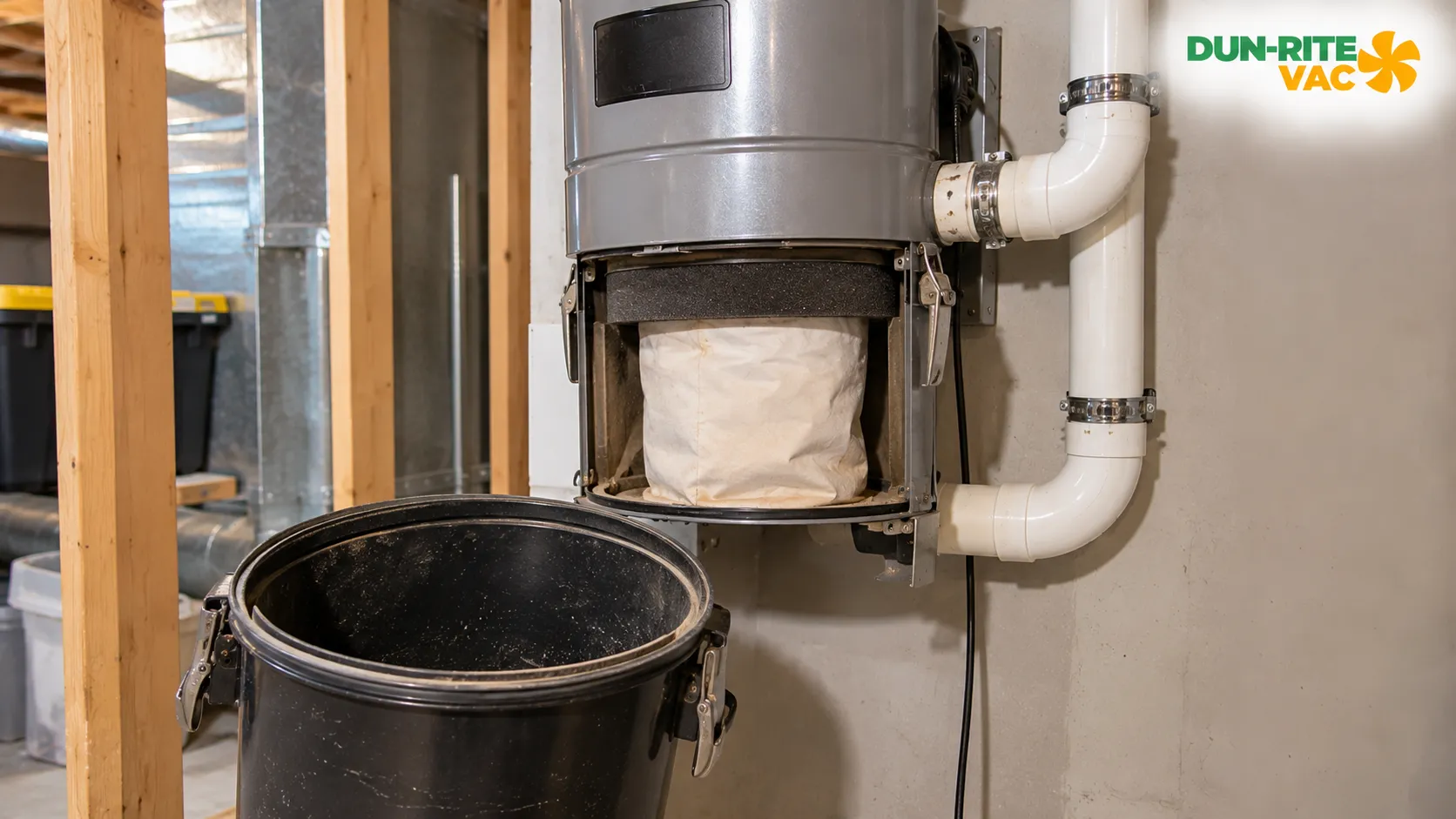
Before opening the unit, shut off power following your manufacturer’s instructions. Then work through these:
- ✅ Empty the canister or replace the bag. A full canister or a bag that’s been in place for months is one of the first things to check.
- ✅ Inspect the filter. Replace or clean it as your manual describes. If your filter is washable, let it dry completely before reinstalling.
- ✅ Look inside the empty canister. Dampness, residue or a sour smell suggests moisture got in. Wipe it out and let it air dry.
- ✅ Check the exhaust outlet. If it vents outdoors, make sure the cover isn’t blocked by snow, ice, nests or debris.
- ✅ Compare inlets one at a time. If the smell shows up mainly at one inlet, that may help narrow the issue to that inlet or branch.
Two things to avoid. Check your manual for approved cleaning products and don’t spray deodorizer or disinfectant into the inlets or canister unless the manufacturer allows it. And don’t take the in-wall pipe network apart yourself, since a disturbed joint can cause problems of its own.
Checks done and the smell is still there? You’re welcome to contact us for a free central vacuum quote. We’ll tell you honestly whether a cleaning would help or whether the cause is likely elsewhere.
When It’s Worth Looking Further Into the Pipes
Plenty of smelly central vacuums are fixed by emptying the canister and changing a filter. But a few signs justify further troubleshooting or having the system inspected during a cleaning:
- The smell returns within days of emptying the canister and replacing the filter.
- One or two inlets smell noticeably worse than the rest.
- Suction has dropped alongside the odour. Cana-Vac’s central vacuum owner’s manual lists several possible causes of low suction, including filter or canister issues, hose or piping obstructions, wall-valve or tubing problems, and power-unit issues. That means reduced suction does not automatically prove there is buildup in the pipes.
- You notice whistling, fluttering or a change in the motor’s sound when a particular inlet is open.
- The system has picked up fine debris like drywall dust, or wet material from a renovation or flooding.
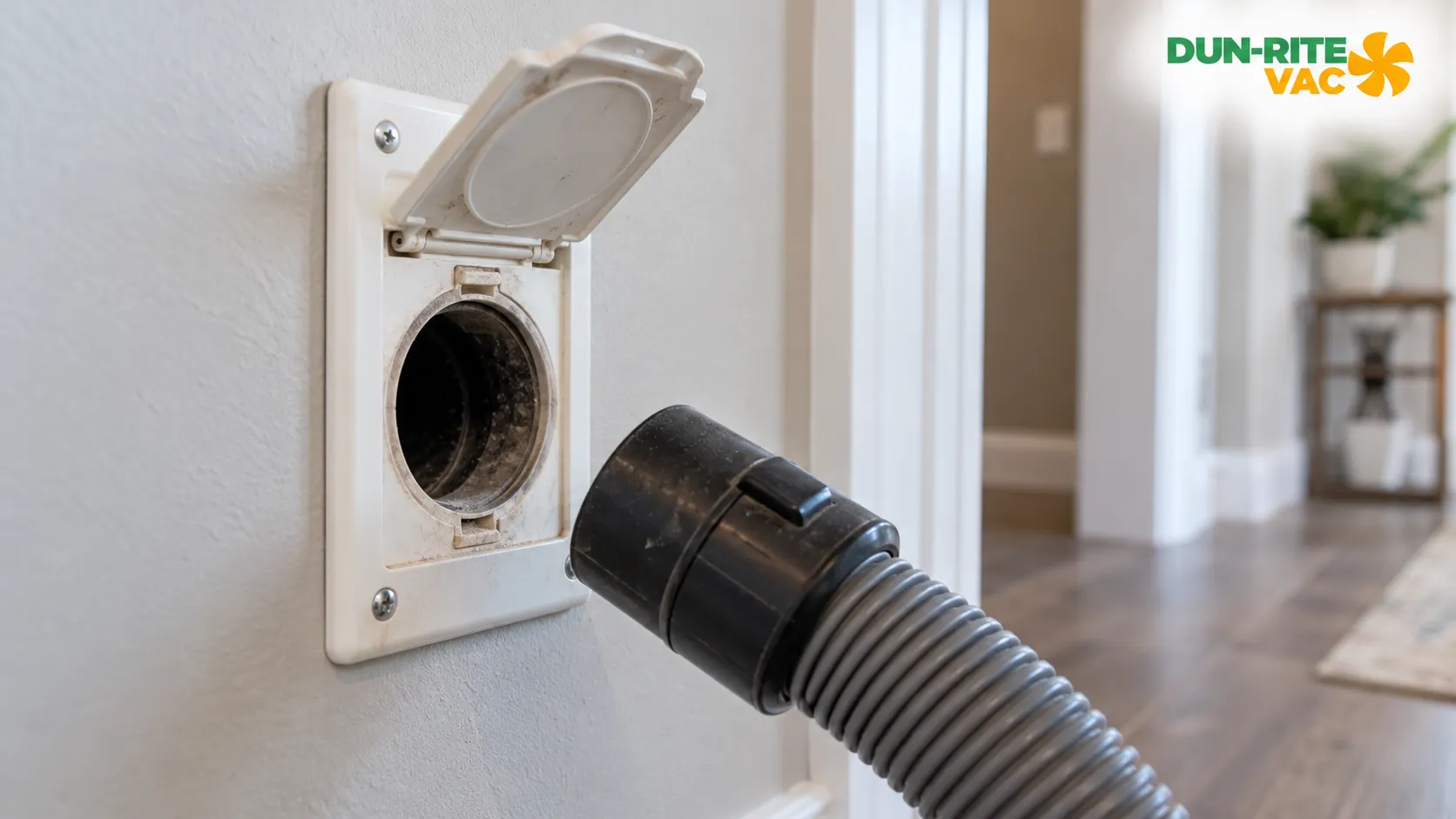
Some homes we see have had a central vacuum in use for years without the pipes ever being cleaned. If buildup in the pipe network turns out to be contributing to the odour or a restriction, cleaning may address that source, but it won’t solve a problem that’s actually coming from somewhere else.
Dun-Rite has been doing this work since 1998. We’re a 3rd-generation, family-run business, NADCA certified, with ASCS-certified technicians and over 50,000 completed jobs. If you’d like to know what a pipe cleaning involves, see our central vac cleaning page.
Frequently Asked Questions
Is it safe to keep using the system if it smells like something is burning?
No. Stop using it and shut off power following your manufacturer’s instructions. CentralVac’s central vacuum troubleshooting guide identifies a burning smell as a possible sign of motor trouble, overheating, faulty wiring or another power-unit problem. The cause should be evaluated before the system is put back into use.
Will a deodorizing tablet or scented product in the canister fix the smell?
It may cover the odour for a while, but fragrance masks a smell rather than identifying or removing its source. Check your manual before adding any product to the canister or filter.
Does a bagged or bagless canister make odours more likely?
It depends on the model and manufacturer. Both types need routine emptying or bag changes as the manual describes, and odours are more likely when debris sits in the system for a long time.
Not sure what’s causing the smell? Tell us what you’re noticing and we’ll help you work out where to look. Every job is backed by our 100% Satisfaction Guarantee, and a free quote carries no obligation.