

Most homeowners can tell you where their air exchanger is, usually in the basement or a utility room. Far fewer can say whether it’s an HRV or an ERV. That matters because the HRV vs ERV question affects how your home handles winter humidity and how the unit should be maintained.
This guide will help you work out which type you have and what it needs. We clean air exchangers, but we don’t install, replace or convert them, so for those questions you’ll want an HVAC contractor.
Quick Answer: In general, an HRV (heat recovery ventilator) is designed to transfer heat between outgoing and incoming air, while an ERV (energy recovery ventilator) also transfers some moisture. Both need regular filter care and occasional core cleaning, but cleaning methods can differ by core type, so confirm your unit and follow the manufacturer’s instructions before washing anything.
In this post
Why Prairie Winters Turn HRV vs ERV Into a Real Decision
Many newer, tighter-built homes in Saskatchewan and Western Manitoba are designed to hold heat through a long heating season. A sealed house also holds on to stale air and indoor moisture, which is where mechanical ventilation comes in.
Both types of air exchanger bring outdoor air into the home while exhausting stale indoor air, with heat transferred between the two air streams. The typical design difference is moisture transfer. According to Health Canada guidance on residential ventilation, both HRVs and ERVs transfer heat, while ERVs also transfer moisture from the more humid air stream to the drier one. Actual behaviour can still vary with the unit, core design and manufacturer.
The practical effect becomes especially noticeable in winter. Health Canada notes that homes with high occupancy or frequent moisture-producing activities such as cooking and showering may use HRV ventilation to help reduce indoor relative humidity, while an ERV’s moisture transfer can be useful in homes that already tend to run dry. Indoor humidity still depends on factors such as occupancy, airtightness, season, climate, ventilation rate and how the system is operated, so neither unit type is a cure-all.
The unit in your home may have been chosen by the builder, a designer or a previous installer, and you may never have been told why. That’s the reason to confirm what you actually have.
Reading Your Unit’s Label Before You Assume Which One You Have
Start with a symptom, since that’s usually what sends people to look. Maybe the windows fog up every January, or the air feels dry no matter what you do. Neither symptom tells you which unit you have, and guessing from the symptom alone is a common mistake.
The more reliable route is the data plate or model label, which is commonly found on the cabinet or inside the access panel. Placement and wording vary by manufacturer, so if it only shows a model number, use that number and your manual (or the manufacturer’s website) to confirm whether it’s an HRV or an ERV.
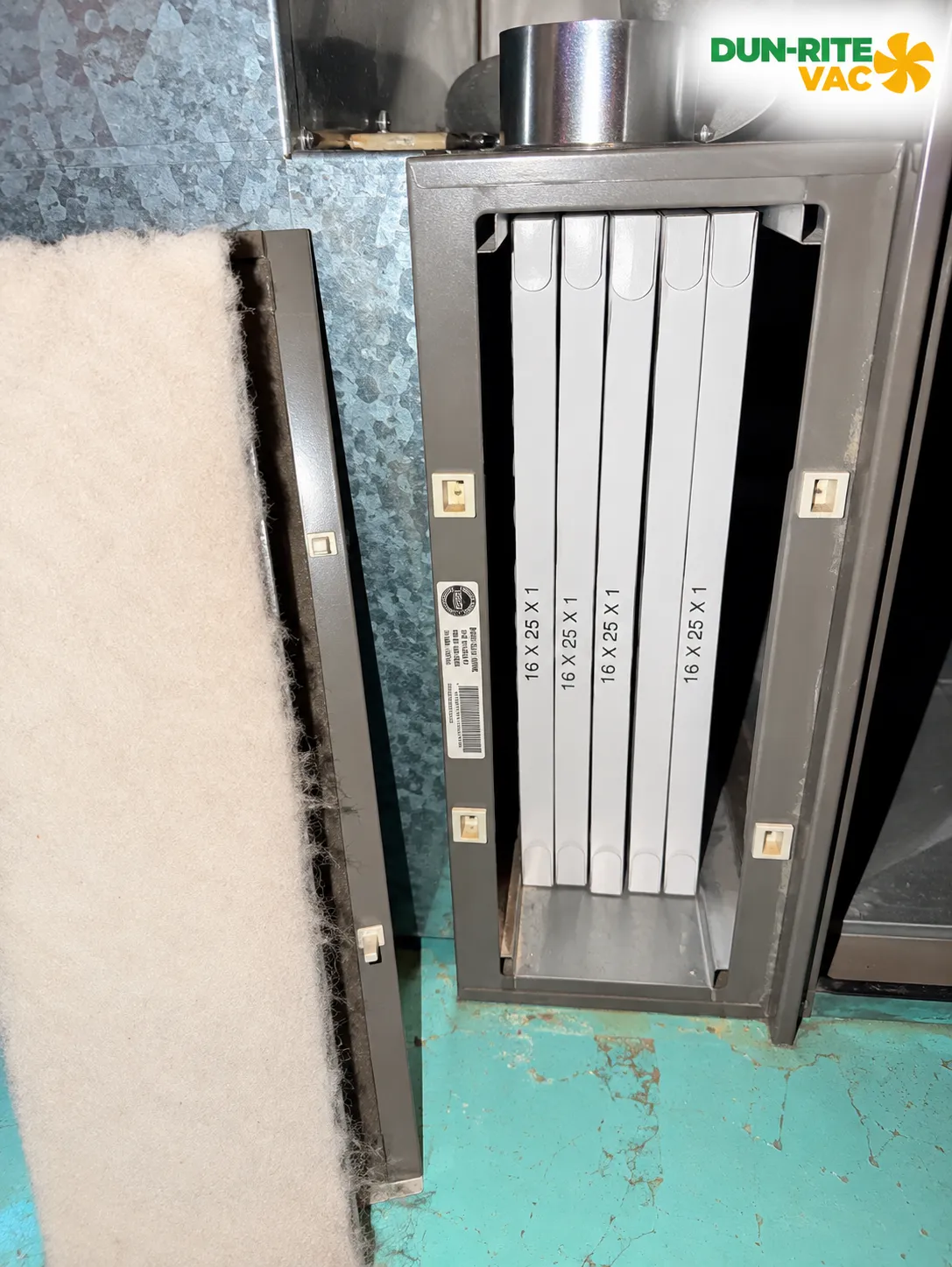
Pulling out the core can offer a clue, but only a clue. Cores are made from different materials depending on the manufacturer, so don’t treat appearance as proof. If you can’t confirm the type, leave the core alone and ask before cleaning it.
Why HRV and ERV Core-Cleaning Instructions Can Differ
Core-cleaning instructions can differ substantially by manufacturer and core type. For example, the Lifebreath HRV/ERV service and maintenance manual allows mild detergent and warm water for the HRV cores covered by that manual, while its ERV cores are to be vacuumed or cleaned with low-pressure air and specifically not washed or submerged. That is why it is safer to identify the unit and follow its own manual rather than assume every core can be cleaned the same way.
The two types share the same basic ventilation job but not always the same maintenance procedure. The comparison below covers typical design differences; for core cleaning, drains and other model-specific maintenance, your manufacturer’s instructions always take priority.
| HRV (typical design) | ERV (typical design) | |
|---|---|---|
| Heat transfer | Yes | Yes |
| Moisture transfer | Designed not to return moisture; it leaves with exhaust air | Designed to return some moisture with incoming air |
| Condensation / drain | Many models include a drain or condensate path to keep clear; check yours | Varies by model; check your manual |
| Core handling | Varies by manufacturer; follow the manual | Varies by manufacturer; some cores are more sensitive to water and handling |
The takeaway is that “clean the air exchanger” isn’t one fixed set of steps. Our technicians identify the unit before deciding how to treat it, and that’s part of our air exchanger cleaning service.
Not sure what you have or how it should be cleaned? Send us the model number off the label and we’ll point you in the right direction. The quote is free, and our contact page is the quickest way to reach us.
The Filter Habit Both Systems Depend On
It’s tempting to assume the type of unit decides everything about air exchanger maintenance. Often the bigger issue is simpler: an air exchanger filter that nobody has looked at in a long time.
A running air exchanger can still need filter maintenance. Fantech’s ventilation maintenance guidance explains that filters can become clogged over time, restricting designed airflow and reducing the amount of fresh air delivered to the home. If you are also dealing with stuffiness or lingering window moisture, treat those as reasons to check the overall ventilation setup rather than assuming the filter is the only cause.
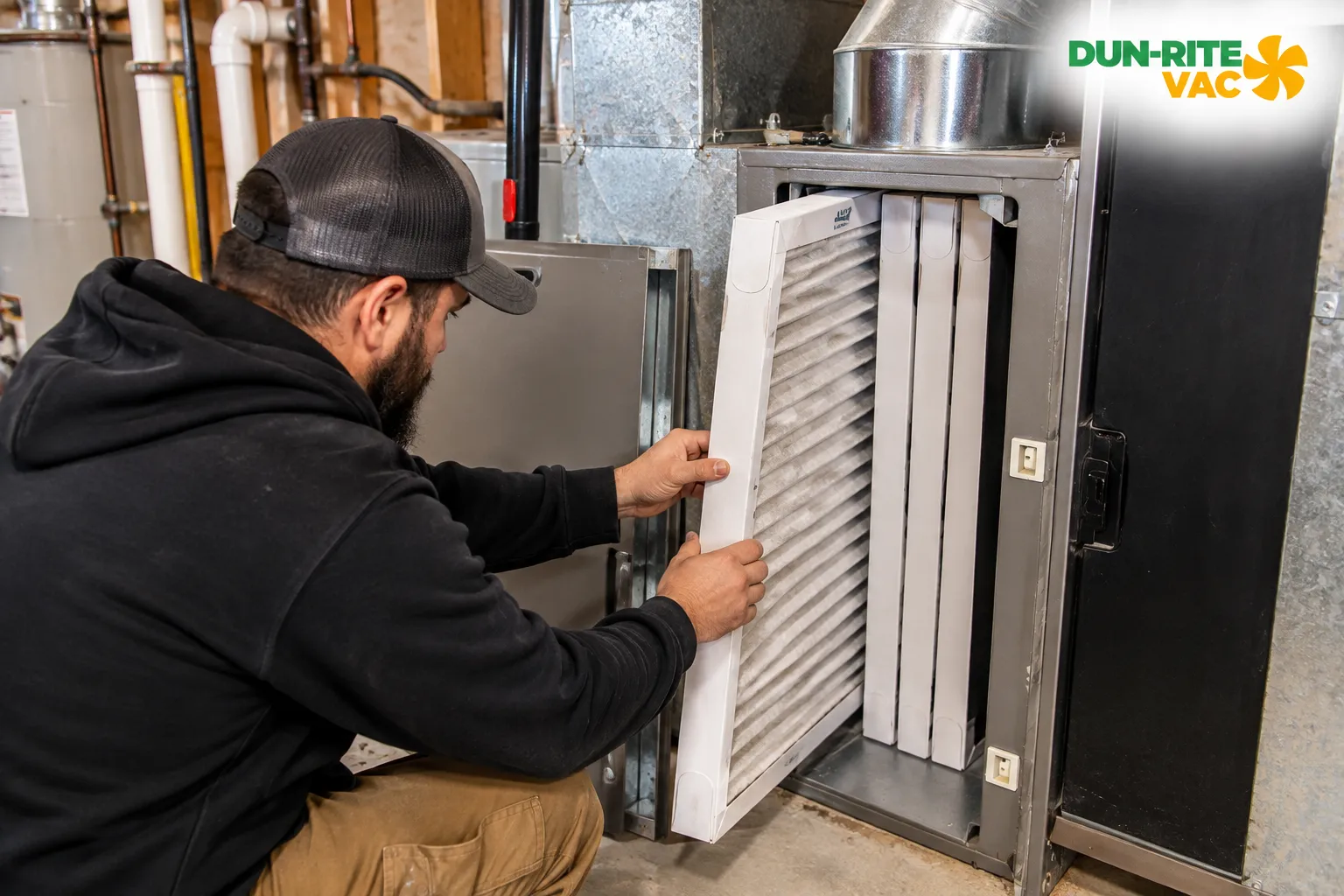
Your manufacturer’s specified inspection and cleaning frequency is the one to follow. Beyond that, two practical reminders help: check before the heating season starts, since the unit tends to run more once the house is closed up, and check again in spring after a winter of heavy use. System layouts vary, and furnace ducting is a separate service from the air exchanger, so if you’re also thinking about the rest of your home’s air system, our furnace duct cleaning page covers that.
When Your Air Exchanger Probably Doesn’t Need Service Yet
Not every unit needs a professional visit this season. If your filters are clean, airflow feels normal and the unit is quiet, that’s a good sign, but it doesn’t replace the maintenance schedule in your manual. We’d rather tell you that than book you for something unnecessary.
Some signs are worth acting on, whether that means checking your manual or having the unit looked at: reduced airflow, persistent odours, visible dust or buildup around the core, a drain that isn’t clearing, or a unit that hasn’t been maintained in years. We’ve been doing this for 27+ years, with NADCA certification, ASCS-certified technicians and more than 50,000 completed jobs behind us, and we’ll tell you honestly what we find.
Frequently Asked Questions
If my windows fog up in winter, does that mean I have the wrong type of unit?
Not necessarily. Health Canada notes that winter indoor humidity is affected by ventilation, occupancy, household moisture-producing activities, airtightness and seasonal conditions. Confirm your unit type, check its filters and settings, and consider the home’s overall humidity before assuming an HRV or ERV is the problem.
Can I switch from an HRV to an ERV, or the reverse?
That’s a ventilation design and installation question, best answered by an HVAC contractor who can assess your home. We clean air exchangers rather than install or replace them.
Can I rinse the core myself?
Only if your manufacturer’s instructions say that’s safe for your specific core. Some cores can be cleaned gently, while others can be damaged by soaking or scrubbing. When in doubt, check the manual or ask a professional first.
Ready for a second opinion on your air exchanger?
Every job comes with our 100% Satisfaction Guarantee, and getting a free quote takes just a quick message. Tell us about your unit and we’ll take it from there.