
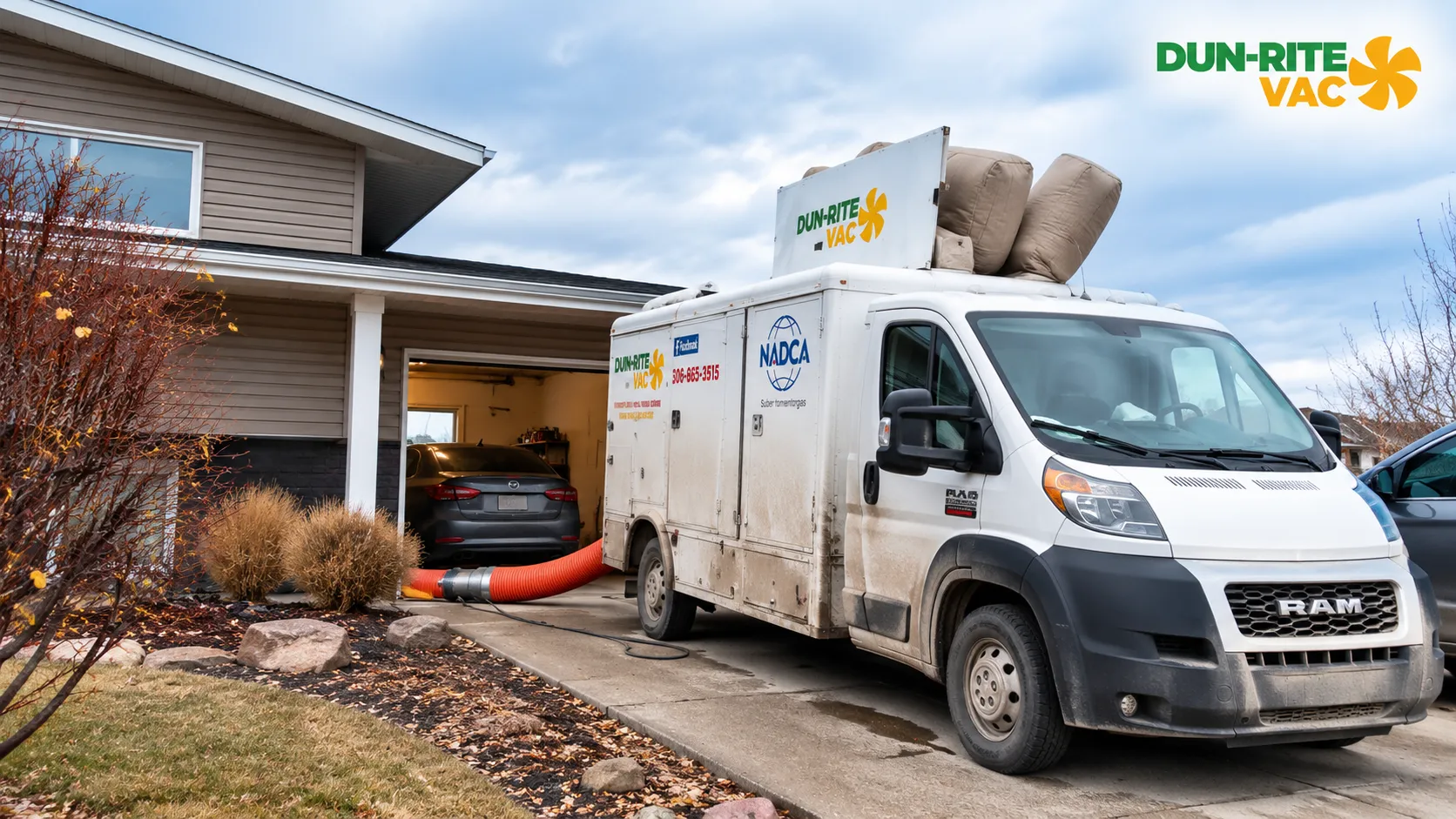
Heating a farmhouse or acreage home is a different job from heating a town bungalow, and the ductwork can reflect that. Air duct cleaning for acreages has to account for larger layouts, sometimes more than one furnace, dust from gravel roads and fields, and heat sources that town homes rarely have.
Dun-Rite Vac has served rural properties across Saskatchewan and Western Manitoba, and rural home duct cleaning comes with its own set of questions. This guide covers what’s different, what’s worth your attention, and what to sort out before you book a visit.
Quick Answer: Acreage homes often need duct cleaning scoped differently, not necessarily more often. Multiple furnaces, additions with their own duct runs, road and field dust, wood heat and pets can all change what a cleaning involves. Telling us about them in advance helps us scope the work accurately and work out whether it can be done in one appointment.
In this article
- Air Duct Cleaning for Acreages Starts With the Layout, Not Just the Square Footage
- Gravel Roads and Field Dust: Where the Extra Debris Can Come From
- Wood Heat, Smoke and Your Home’s Ductwork
- Dogs, Barn Boots and Shop Dust Moving Through the House
- Booking a Rural Visit: What to Tell Us Before We Drive Out
- Air Duct Cleaning for Acreages: Common Questions
Air Duct Cleaning for Acreages Starts With the Layout, Not Just the Square Footage
It’s easy to assume a bigger house simply means a bigger quote for the same job. Square footage alone doesn’t tell the whole story. The number of furnaces, branches, additions and access points can matter just as much when scoping the work, and farmhouses are often added onto over decades, each addition bringing its own duct run or its own furnace.
Additions and multi-zone layouts can make an HVAC system more complex than square footage alone suggests. U.S. Department of Energy remodeling guidance notes that ductwork serving additions requires attention to duct layout, airflow, sealing and balancing. On an acreage with several furnaces, additions or long duct runs, mapping which system serves each area helps define the cleaning scope before work begins.
That’s why every furnace and every branch needs to be accounted for before work starts. A single-furnace plan applied to a three-furnace property would leave part of the system untouched. Our residential furnace duct cleaning page covers the standard process; acreage jobs follow the same principles with more zones to work through.
Gravel Roads and Field Dust: Where the Extra Debris Can Come From
A dustier-than-expected home can have several causes, so surface dust alone doesn’t tell you what is happening inside the ductwork. On rural properties, outdoor dust exposure is simply one factor worth considering alongside filtration, duct sealing and the condition of the system.
Outdoor dust can enter a home in several ways before it ever reaches the HVAC system. Health Canada’s healthy-home guidance recommends leaving outdoor footwear at the door to reduce dirt and contaminants tracked indoors. Duct condition matters too: U.S. Department of Energy guidance on duct sealing explains that return-side leakage can draw contaminated air into the system. On a gravel-road or field-side property, how much outdoor dust reaches HVAC components can therefore vary with entry habits, filter fit, duct sealing and the way the system is configured.
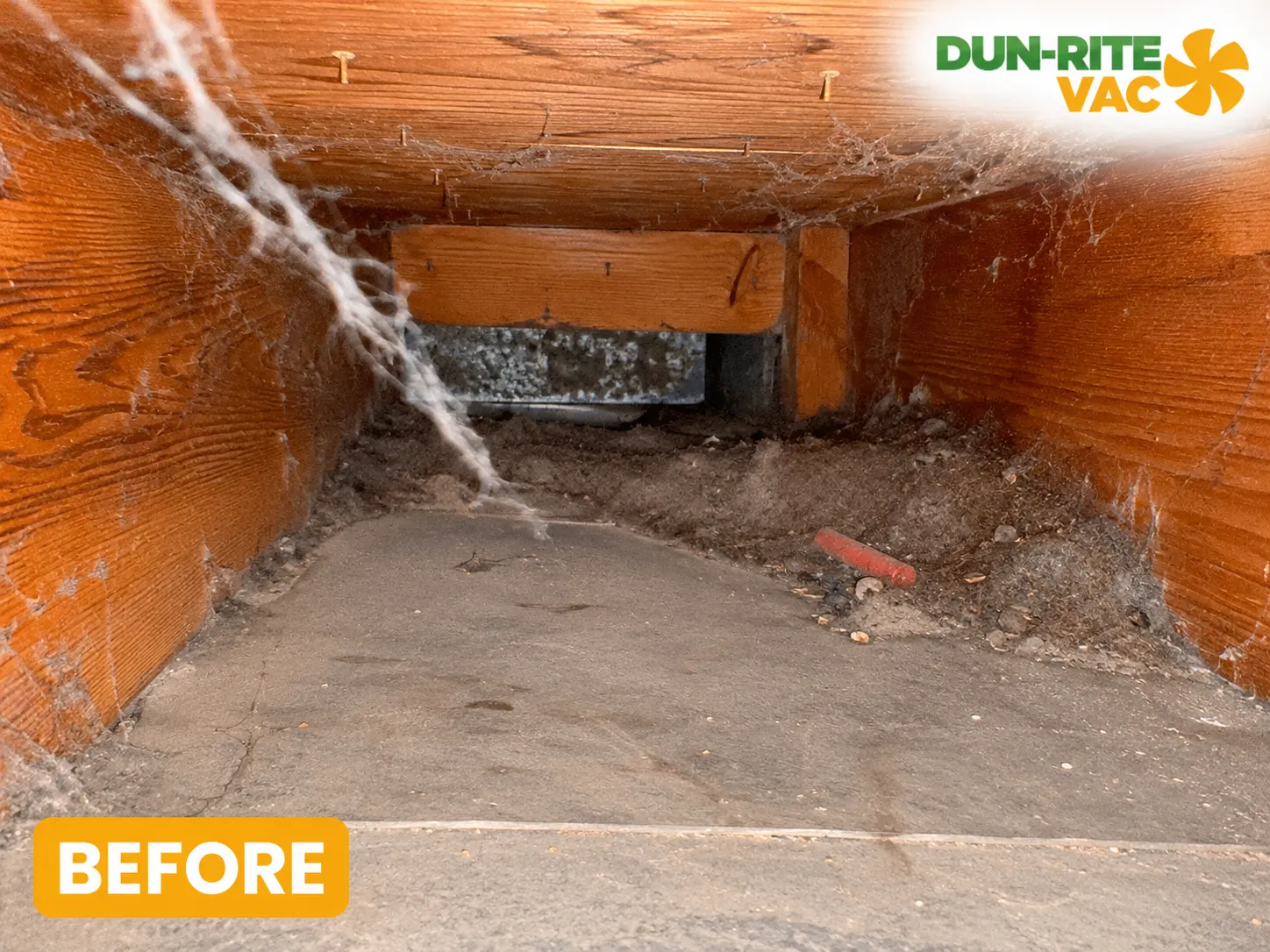
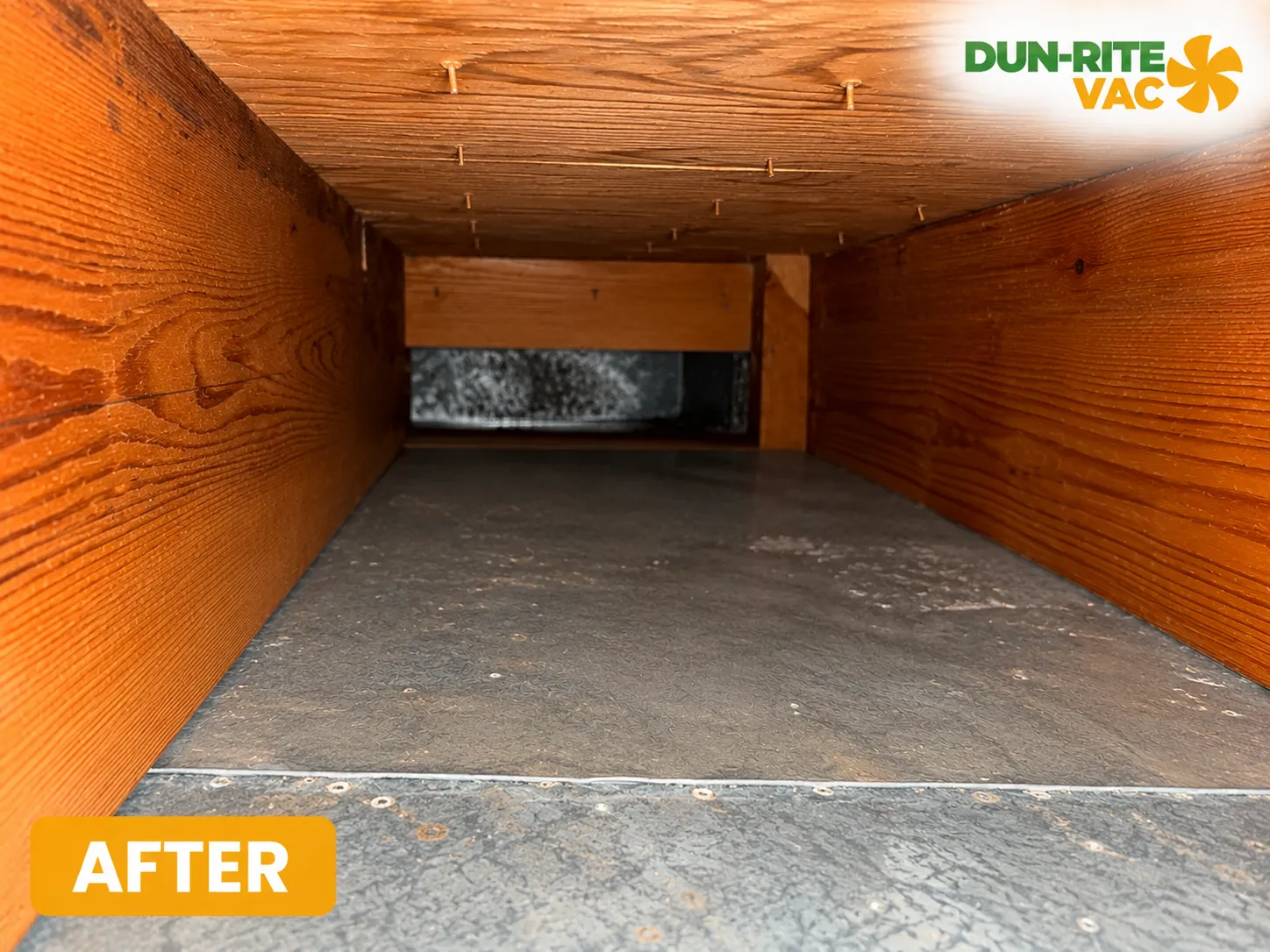
A real Dun-Rite Vac before-and-after example showing the condition of residential ductwork before and after cleaning.
The honest tradeoff: more dust doesn’t automatically mean cleaning every year. A well-fitted filter changed often does a lot of the work. For dust-heavy properties, a better trigger than a calendar interval is visible buildup at the registers or in the return. Spring, after a winter of closed-up living, is one reasonable time to take a look.
Wood Heat, Smoke and Your Home’s Ductwork
Wood stoves can serve as either a main or backup source of heat, and wood smoke contains fine particulate matter. Health Canada’s wood-smoke guidance notes that smoke can enter indoor air when a stove is opened to add or stoke wood and through leaks in a poorly maintained appliance. If you notice a smoky smell or fine residue around the home, it is worth considering the stove, fireplace and HVAC system together rather than assuming the ductwork is the source.
To be clear about scope: we clean the furnace and ductwork side of the system. Chimney and flue sweeping is a separate trade, and if your stove or fireplace isn’t drawing properly, that’s worth sorting out with a qualified chimney professional first.
Noticing a smoky smell or a soft grey film around your vents? We’re happy to talk through what you’re seeing, with no pressure to book. Send us a message and we’ll tell you what we’d look at first.
Dogs, Barn Boots and Shop Dust Moving Through the House
Acreage life brings more ways for debris to enter a home: working dogs, a mudroom that serves as the main entry, and an attached shop or garage where cutting, grinding or feed handling happens. None of these are problems on their own. The question is where the air goes next.
Where the return side of a duct system draws its air matters. U.S. Department of Energy duct-sealing guidance explains that return-side leakage in unconditioned spaces can draw contaminated air into the duct system and distribute it through the home. On acreage properties with mudrooms, attached shops or garages nearby, keep returns unobstructed and tell us about those spaces when booking so we can understand how the system is laid out.
One scope note: the furnace duct cleaning discussed here doesn’t automatically include air exchanger cleaning, which is its own service. If your home has an air exchanger, let us know and we can talk through both.
Booking a Rural Visit: What to Tell Us Before We Drive Out
Rural appointments involve a few things that town jobs don’t, and the details you share up front shape how the work is scoped and scheduled. Complex or unusual systems may take longer or be handled differently, and we’d rather tell you that before the day than during it.
- Number of furnaces and where they are. Include any in basements, additions or attached shops connected to the house system. If a shop or outbuilding has its own separate furnace, mention it so we can confirm what applies.
- Heat sources. Mention wood stoves, fireplaces or wood-fired units so the crew arrives prepared.
- Access to the furnace. Let us know if it’s reached through a walk-out door, an outside hatch or tight stairs.
- Pets and parking. Tell us about dogs on the property and where vehicles can park, especially after rain or snow on gravel approaches.
- Your location. We serve the Saskatoon, Yorkton, Regina and Weyburn areas and the wider Saskatchewan and Western Manitoba region, so tell us where you are and we’ll work out the logistics together.
Dun-Rite Vac has been a family-run business since 1998, and we’ve completed more than 50,000 jobs. Our technicians are ASCS certified and Dun-Rite Vac is a NADCA member company. That experience matters on rural properties where multiple systems, additions and unusual layouts can affect the scope of the work. If you’re near one of our hubs, you can also see our pages for Yorkton, Saskatoon, Regina and Weyburn. For the full picture of what a cleaning covers, see our furnace duct cleaning service page.
Air Duct Cleaning for Acreages: Common Questions
Do I need every furnace on my property cleaned at once?
Not necessarily. If one furnace serves a rarely used guest suite and another runs daily, the heavily used system may be the one to start with. Tell us how each is used and we’ll talk through the options, including whether acreage furnace cleaning in Saskatchewan homes with several units makes sense in one appointment or in stages.
My farmhouse has older, patched ductwork. Can it still be cleaned?
It depends on the condition of the system. For farmhouse duct cleaning, unusual, damaged or patched sections are assessed before work goes ahead on those areas, and their condition can affect the scope. If a section can’t be cleaned properly, we’ll tell you plainly rather than pushing ahead.
Does a fine layer of dust on my vents mean the system needs cleaning?
Not by itself. Some dust at the registers is normal in any home, and more so near gravel roads. Dust that returns quickly after cleaning, visible buildup inside the vents, or a musty or smoky smell when the furnace starts can be reasons to have the system looked at, and we’re happy to talk through what you’re seeing.
Not sure what your acreage system needs?
Every job is backed by our 100% Satisfaction Guarantee, and a quote costs you nothing. Tell us about your furnaces, heat sources and location, and we’ll point you in the right direction.