
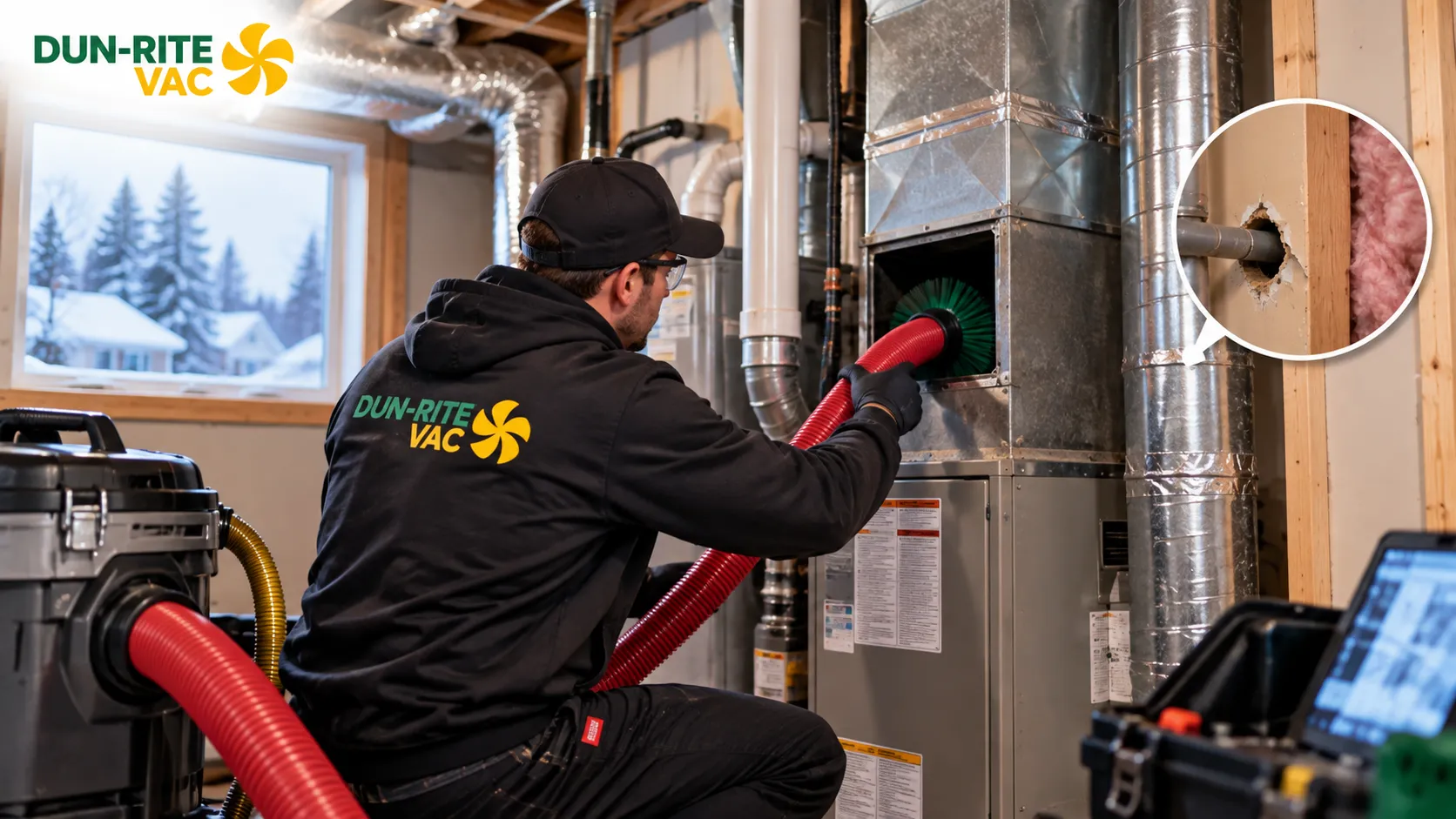
Hearing scratching behind a wall is bad enough. Learning that mice or rats have been moving through your heating system is worse, and it raises an immediate question: when should air duct cleaning after rodents happen, and what has to come first? The order matters more than most people expect, because cleaning before the pests are dealt with can leave you with the same problem and repeat work.
This guide walks through the sequence for Saskatchewan homeowners, from removing the animals and blocking their way in to deciding whether the ducts need cleaning alone or something more.
Quick Answer: Have the active infestation dealt with and the identified entry points sealed first. After that, have the ductwork cleaned, and only then decide whether sanitizing or duct repair is needed. Cleaning while animals still have access risks re-contamination.
In this article
Why Air Duct Cleaning After Rodents Shouldn’t Be the First Call
The natural instinct is to call a duct cleaner the moment you spot droppings near a vent. It feels like the fastest way to make the house safe again. But if mice are still getting in, the ducts remain a warm, sheltered route, and any cleaning can be undone.
There is also a health reason to go carefully. The Government of Saskatchewan notes that hantavirus can be contracted by breathing in contaminated airborne particles from the droppings, urine and saliva of infected deer mice. The Public Health Agency of Canada advises against sweeping or vacuuming rodent droppings because it releases particles into the air. Both sources point to preventing infestations and cleaning with disinfectant rather than dry methods.
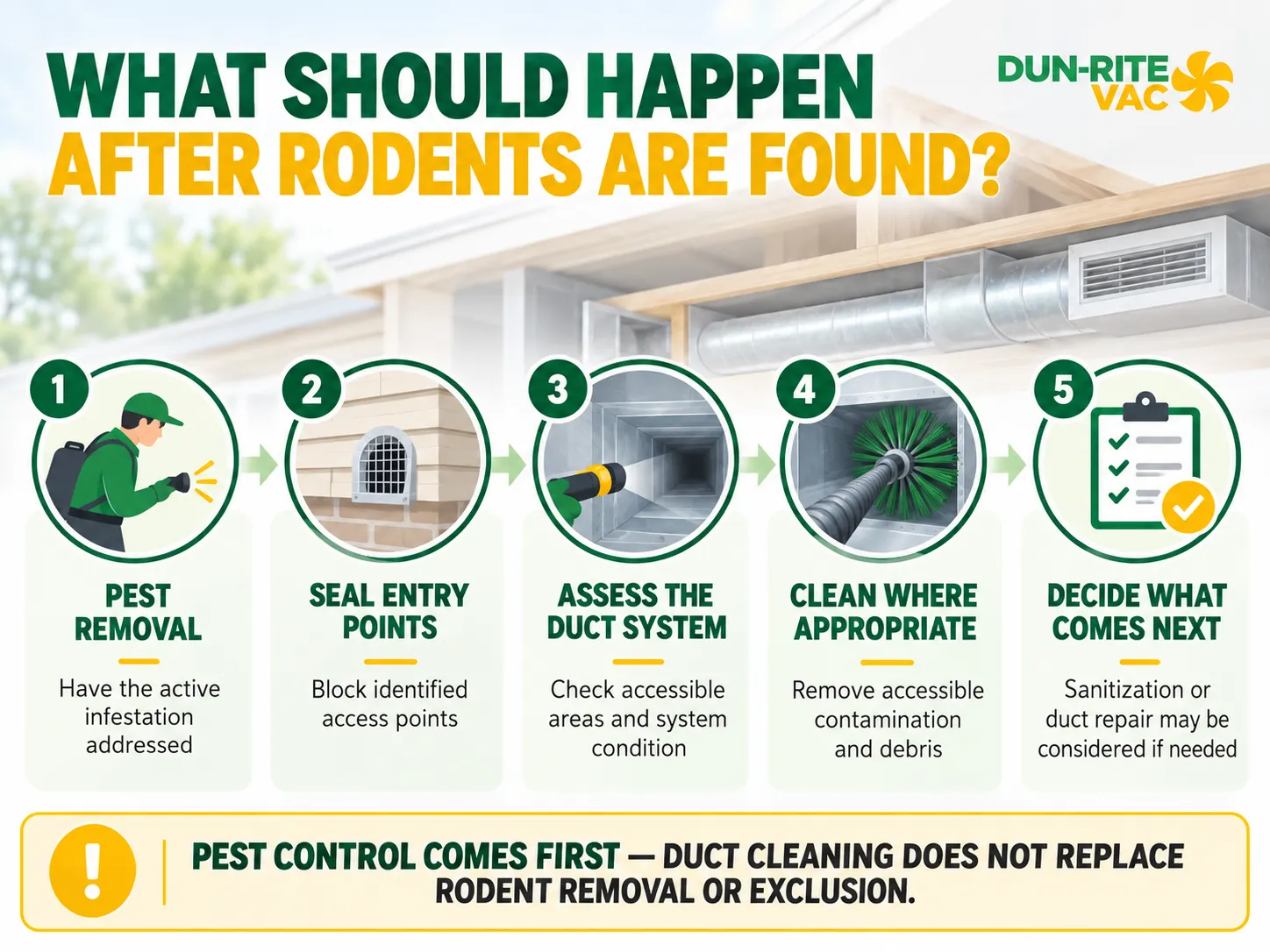
That is why the order matters. Health Canada’s rodent-control guidance recommends blocking openings that allow rodents into the home, while the U.S. Environmental Protection Agency’s air-duct guidance advises correcting underlying causes before duct cleaning so the problem does not simply recur. In practice, the sequence looks like this:
- Have the active infestation removed by a pest-control professional.
- Seal the entry points that were identified.
- Have the duct system assessed during a cleaning visit.
- Clean, where cleaning is appropriate.
- Decide whether sanitization or duct repair is needed.
Cleaning before the infestation is controlled creates a risk of re-contamination and repeat work.
How Mice Get Into Ductwork on Prairie Properties
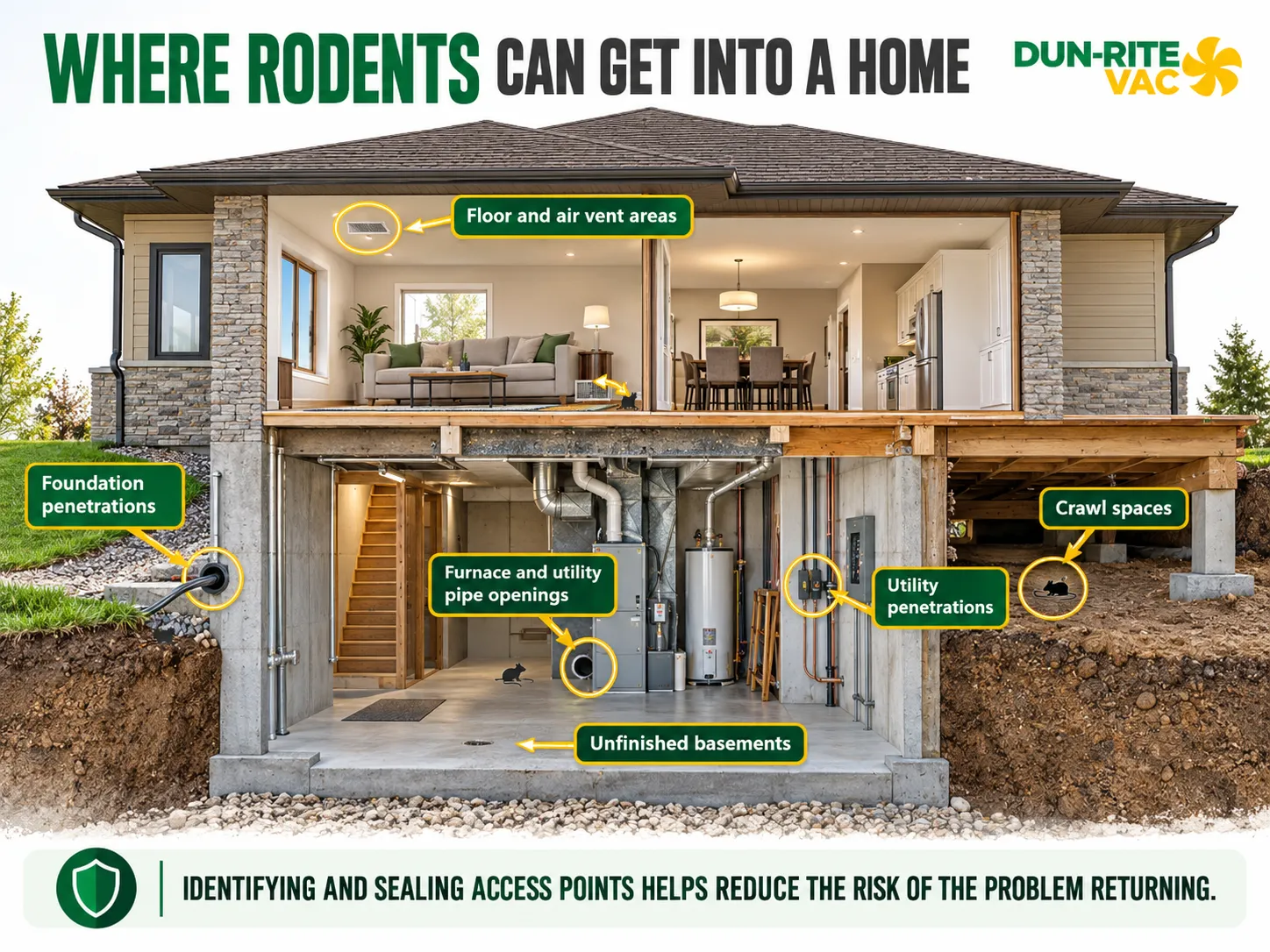
Rodents can enter homes through small openings around building penetrations. The U.S. Centers for Disease Control and Prevention’s rodent-exclusion guidance recommends checking areas around furnace pipes, floor and air vents, basements, crawl spaces and other openings where utilities pass through the building.
On some older and rural properties we service, we have found potential entry areas around foundation penetrations, crawl spaces and unfinished basements. Whatever the route, identifying and sealing the access point is an important part of keeping the problem from returning.
Trapping, removal and exclusion belong to a licensed pest-control professional. That is outside what we do, and duct cleaning cannot substitute for it. Once that work is done, you can move on to the ducts knowing the cleaning is likelier to last.
What Technicians Look For Once the Pests Are Gone
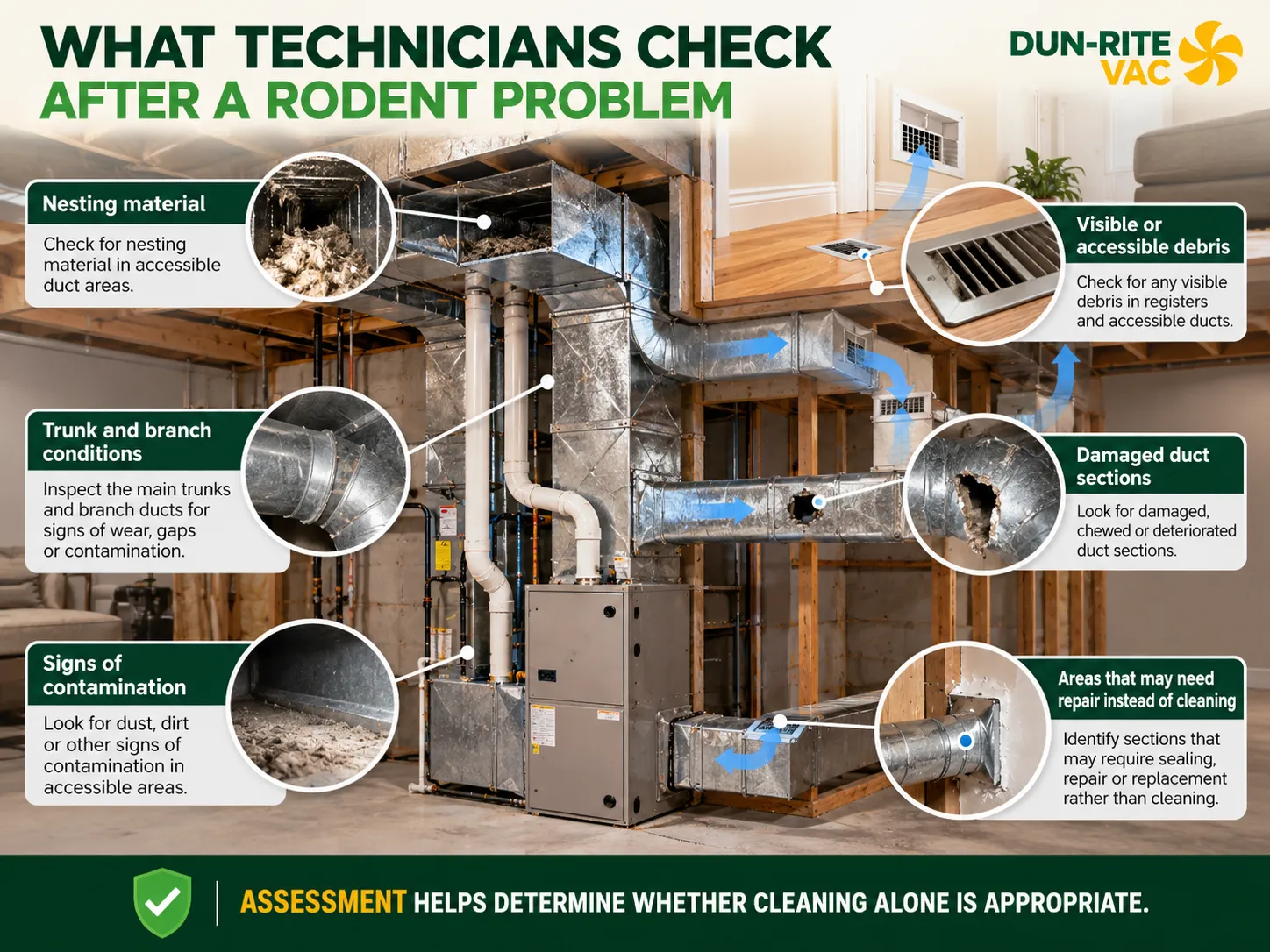
Droppings at a floor register are only the visible part of the story. What we have come across when opening up ductwork after a mouse problem includes droppings concentrated near the furnace, shredded insulation or paper used for nesting, and sometimes chewed material at joints and boots.
As part of a cleaning visit, our technicians look through the accessible parts of the system to see how far the contamination goes. Is it confined to one run, or has it spread into the trunk lines? Is there damaged ductwork that cleaning cannot fix? The NADCA ACR Standard includes assessment of HVAC-system conditions and component cleanliness when determining an appropriate cleaning or restoration scope. Our own assessment focuses on what is visible and accessible in the system rather than guessing from the registers alone.
Dun-Rite Vac is NADCA certified and our technicians hold ASCS certification. After 27+ years and more than 50,000 completed jobs, we have encountered a wide range of rodent-related contamination and duct damage. We would rather tell you plainly what we found than sell you more than the situation needs.
Not sure how far the problem has spread? Send us a note describing what you’ve seen and we’ll talk through your next step. A free quote carries no obligation, and our contact page is the quickest way to reach us.
Rodent Droppings in Air Ducts: When Is Cleaning Enough?
Not every rodent problem calls for the same response. The EPA’s guidance on air-duct cleaning notes that vermin infestation can be a reason to consider duct cleaning, but the condition and material of the duct system also matter. Some contaminated or damaged materials may need repair or replacement rather than cleaning alone.
- Contained, accessible debris: cleaning may be appropriate when the affected material can be safely accessed and removed. See our residential furnace duct cleaning service for what a visit involves.
- When sanitization is being considered: HVAC sanitization is separate from physical debris removal. The EPA’s guidance on disinfectants and sanitizers in HVAC systems says systems should first be inspected, cleaned and, where necessary, repaired into sound mechanical condition before antimicrobial treatment is considered. Sanitization does not replace removing debris or repairing damaged ductwork.
- Damaged ductwork: chewed, collapsed, wet or otherwise compromised sections may need repair or replacement by an HVAC contractor rather than additional cleaning. We’ll tell you honestly when what we can see points beyond the scope of duct cleaning.
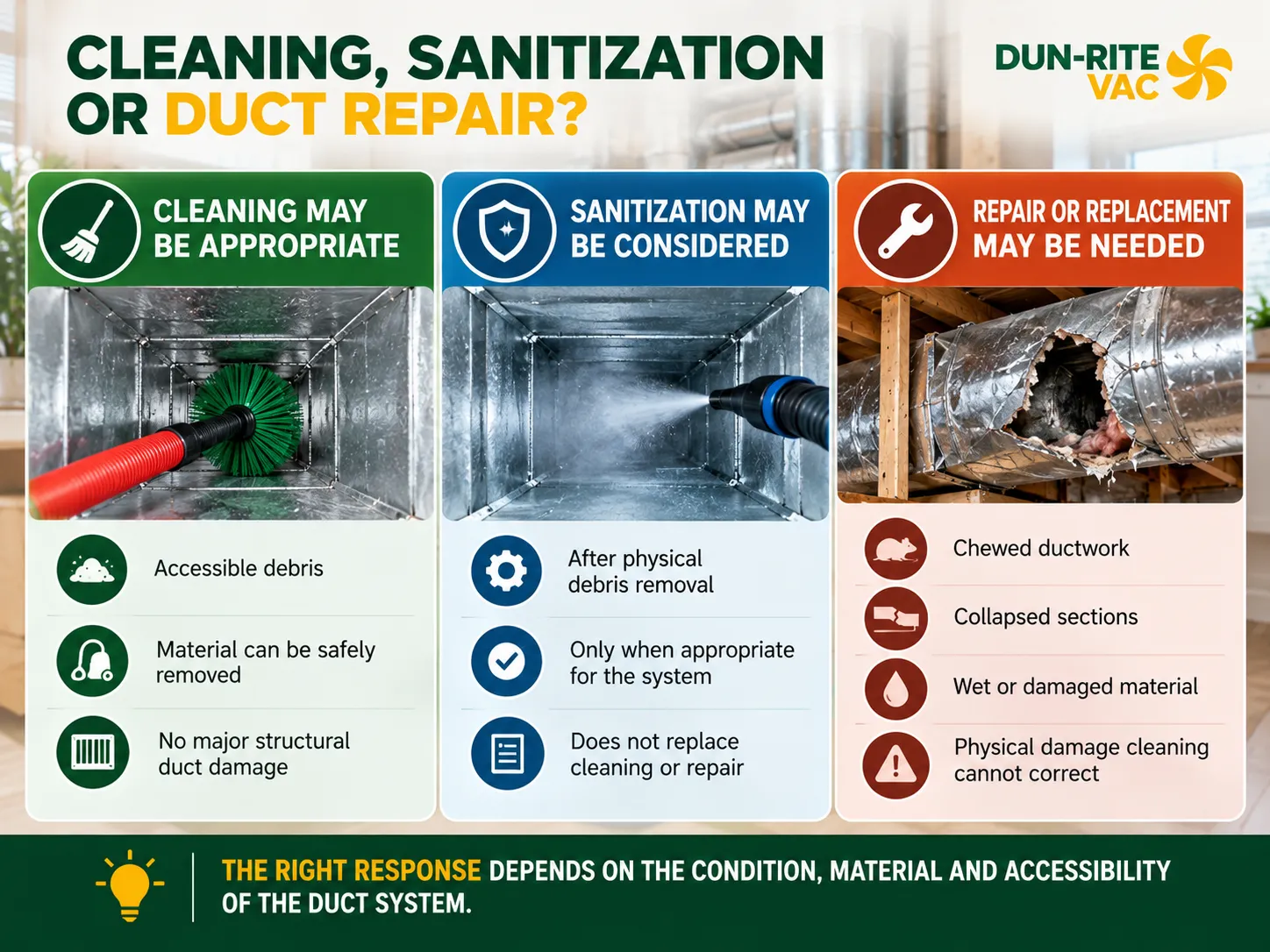
If your situation goes beyond duct cleaning and sanitizing, we’ll say so and point you in the right direction rather than overselling.
For the broader picture of what a certified cleaning covers, see our main furnace duct cleaning page.
Cleaning Ducts After a Pest Infestation: Your Questions Answered
How soon after pest control can the ducts be cleaned?
Once your pest-control professional confirms the animals are gone and the entry points are sealed, cleaning can go ahead. Waiting for that confirmation lowers the risk of re-contamination, so check with them first.
Should I keep my furnace running if I think mice are in the ducts?
Don’t shut off essential heating on your own, especially in a Saskatchewan winter. The right approach depends on the contamination and your equipment, so ask your pest-control and HVAC professionals for guidance and arrange the duct cleaning once the infestation is controlled.
Can I clean up rodent droppings from my vents myself?
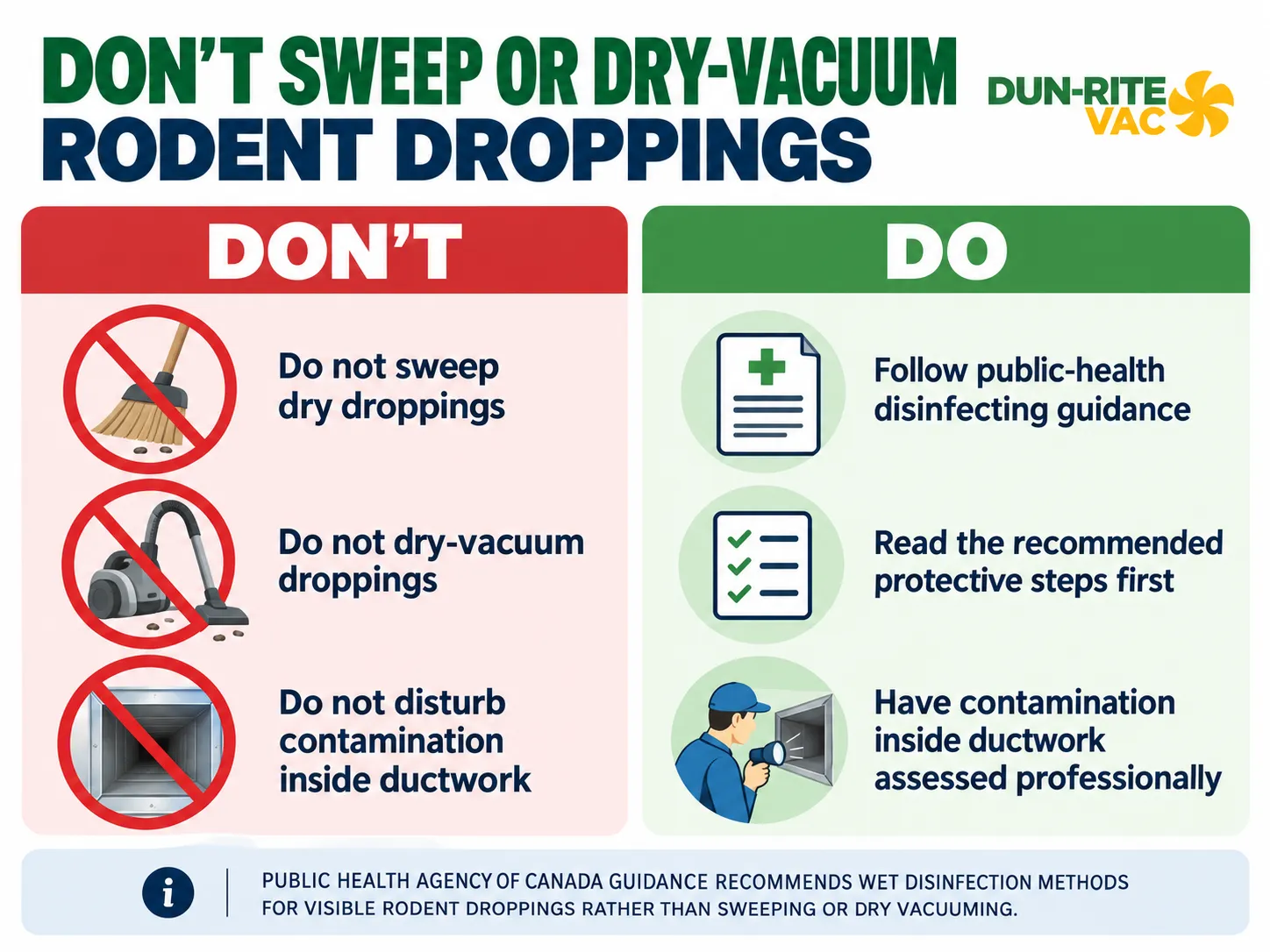
For droppings you can see on a surface, the Public Health Agency of Canada advises against sweeping or vacuuming them. Its guidance is to spray them with disinfectant, let them soak, then wipe them up, and it lists protective steps you should read first on its hantavirus prevention page. Don’t try to clear droppings out of the ductwork itself, as disturbing them can put particles in the air. Leave that to professionals.
Will cleaning the ducts get rid of the smell?
It depends on where the odour is coming from. Duct cleaning removes accessible debris from the duct system, but we don’t promise that cleaning alone will eliminate every odour. If a smell remains afterward, let your technician know so the next step can be discussed rather than assuming more cleaning will solve it.
Ready to put this behind you?
Every job is backed by our 100% Satisfaction Guarantee, so you can book with confidence once the pests are dealt with. Reach out for a free quote and we’ll help you plan the cleaning.