
Dryer vent condensation in winter can show up as longer drying times, ice around the exterior vent hood, or a flap that will not close properly. If a load suddenly needs two cycles to dry during a Saskatchewan cold snap, the vent may be struggling with moisture, freezing temperatures, or restricted airflow.
A dryer pushes a lot of warm, wet air through a pipe that, for part of its length, is surrounded by freezing air. This post walks through where that goes wrong, what to look for, and which problems a cleaning can address versus which come from how the vent was built.
Quick Answer: Dryer exhaust is warm and full of moisture. When it travels through a cold duct, the moisture can condense on the pipe walls and freeze, especially in long, poorly insulated, sagging or lint-restricted runs. Removing lint restrictions can improve airflow, while crushed, sagging, poorly insulated or badly routed ductwork may need repair or rerouting by a qualified installer.
In this post
- Why Dryer Vent Condensation in Winter Starts Inside the Pipe
- Ice at the Hood: Reading the Symptom Backwards
- Long Runs Through Unheated Space
- Crushed Ducts and Sags That Hold Water
- Lint, Flaps and Screens: Where Moisture Gets Stuck
- Deciding What Actually Needs Doing
- Frequently Asked Questions About Dryer Vent Freezing in Winter
Why Dryer Vent Condensation in Winter Starts Inside the Pipe
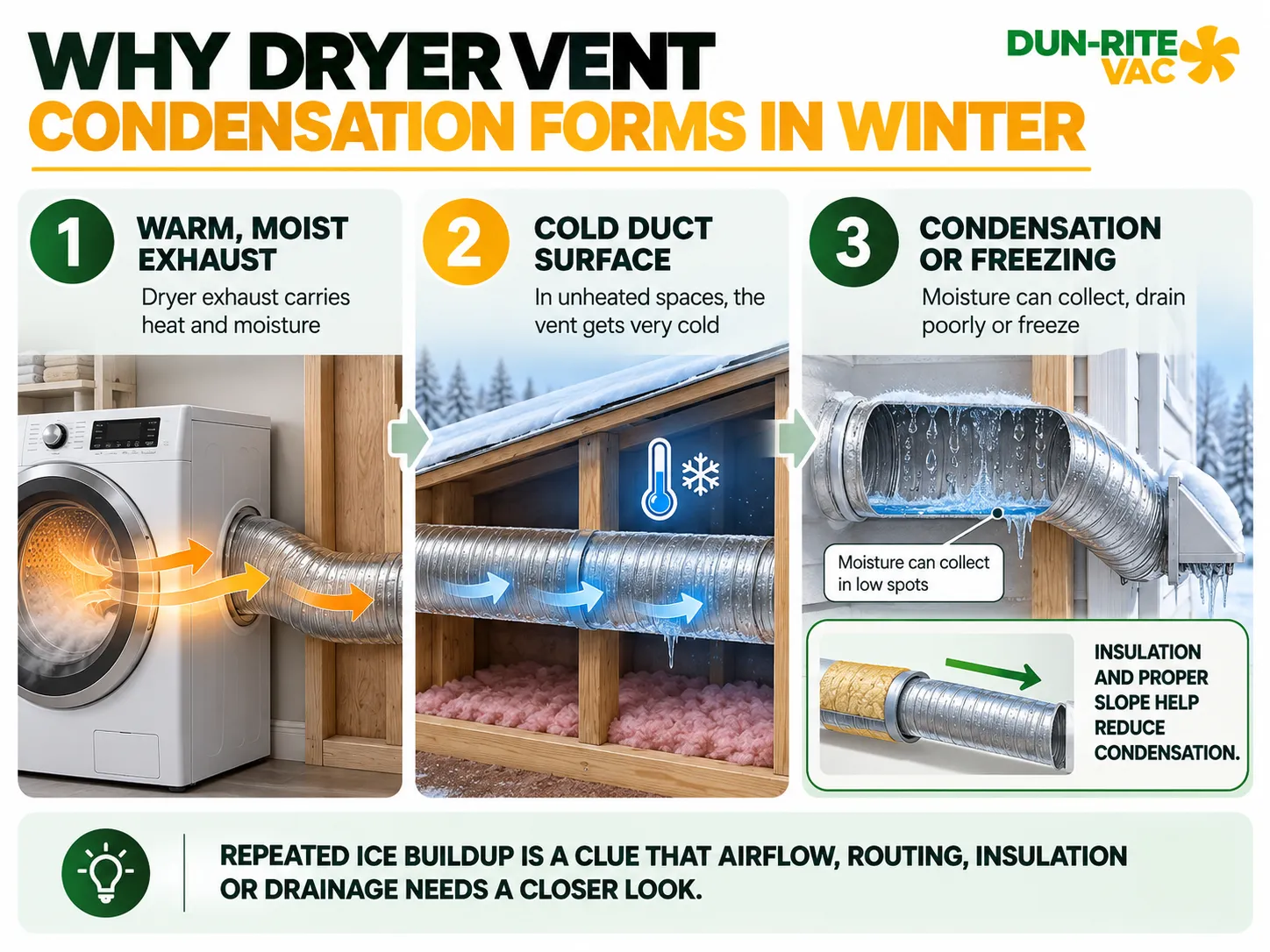
Warm, moisture-laden dryer exhaust can condense when it moves through cold ductwork. That matters most when the vent passes through an unheated space or has a low spot where moisture can collect. The Building America Solution Center’s dryer-vent guidance recommends slightly sloping horizontal runs so condensation can drain and insulating ducts in unconditioned spaces, especially in cold climates, to help prevent condensation.
In a Saskatchewan winter, moisture that remains in a very cold section of vent can freeze rather than drain away. Repeated ice buildup is therefore worth treating as a clue that the vent’s airflow, routing, insulation or drainage needs a closer look.
Ice at the Hood: Reading the Symptom Backwards
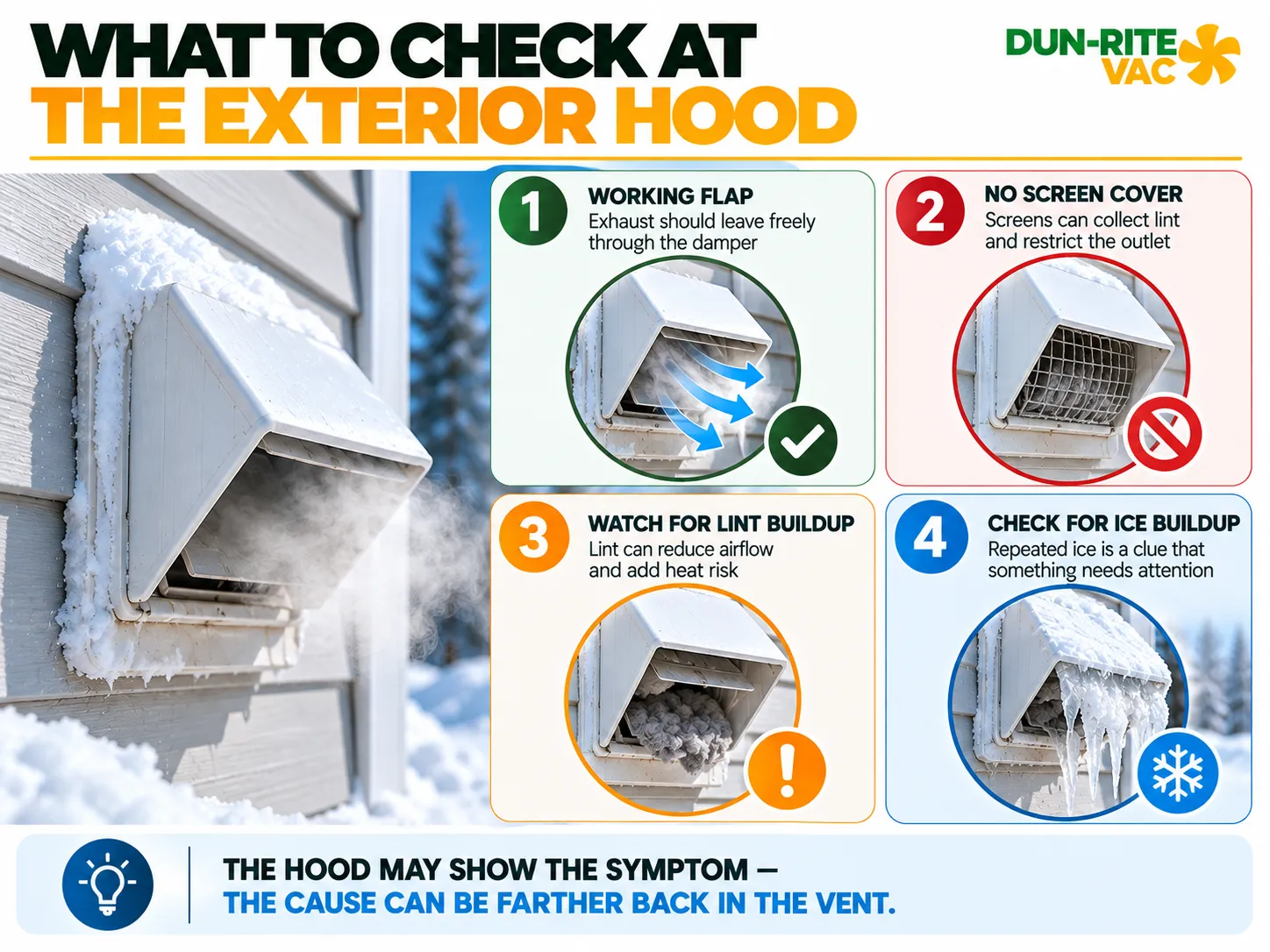
Most people notice the problem at the exterior hood: ice around the opening, a frozen dryer vent hood flap stuck open or shut, or water streaking the siding below it. It’s natural to treat that as the problem. Often it’s just the last place the problem shows up.
Icing can come from several causes: a cold duct, a long run, thin or missing insulation, a sag, or a damaged flap. One pattern we run into is exterior icing paired with restricted airflow farther back in the vent. Slower airflow gives the exhaust more time to cool before it exits, so more moisture condenses near the cold end. Chipping off the ice clears the symptom for a day or two, but it doesn’t tell you why the ice formed.
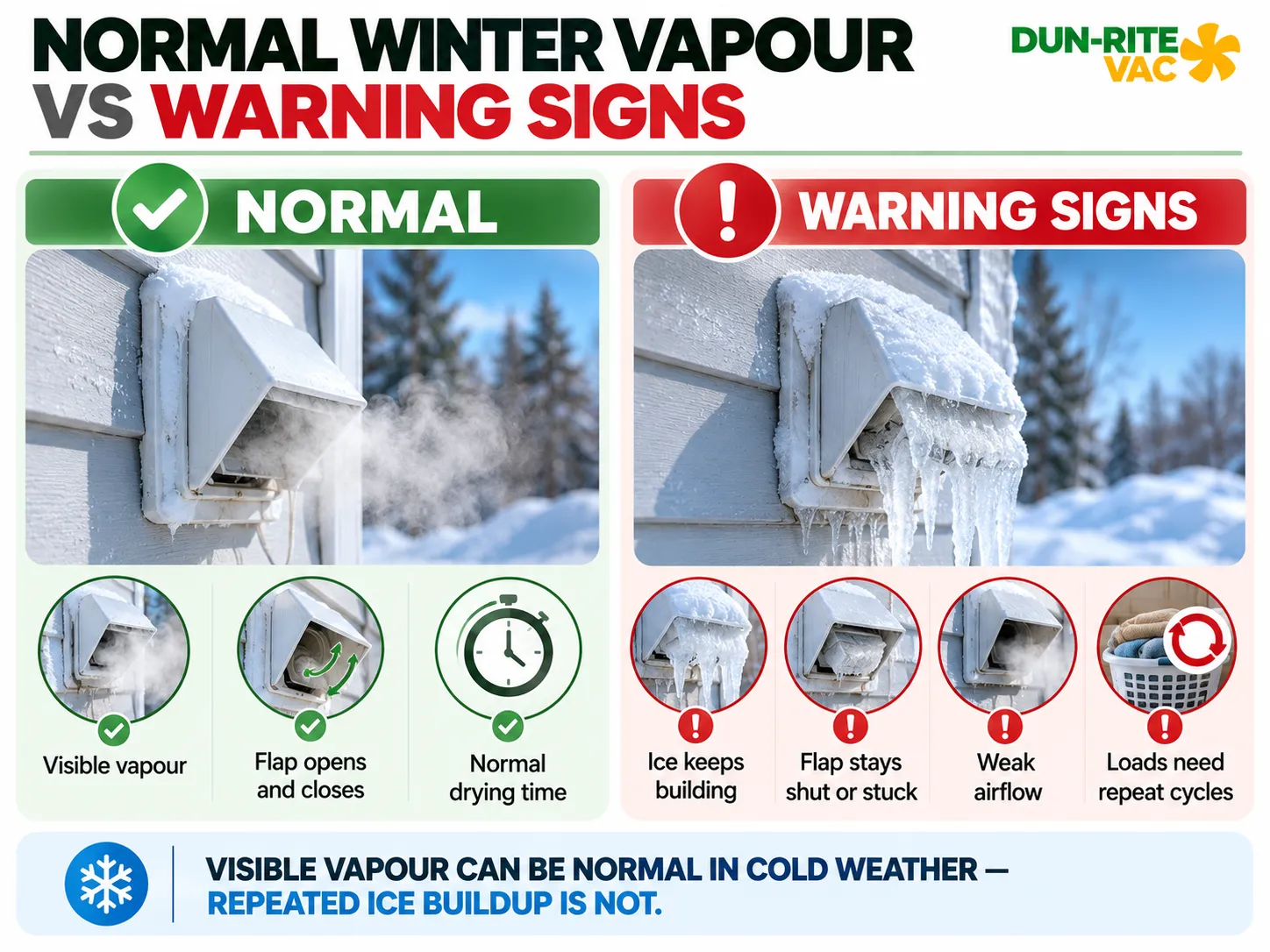
A bit of visible steam leaving the hood on a cold day is normal. Ice that keeps building, a flap that stays shut, or clothes that need repeat cycles are not.
Long Runs Through Unheated Space
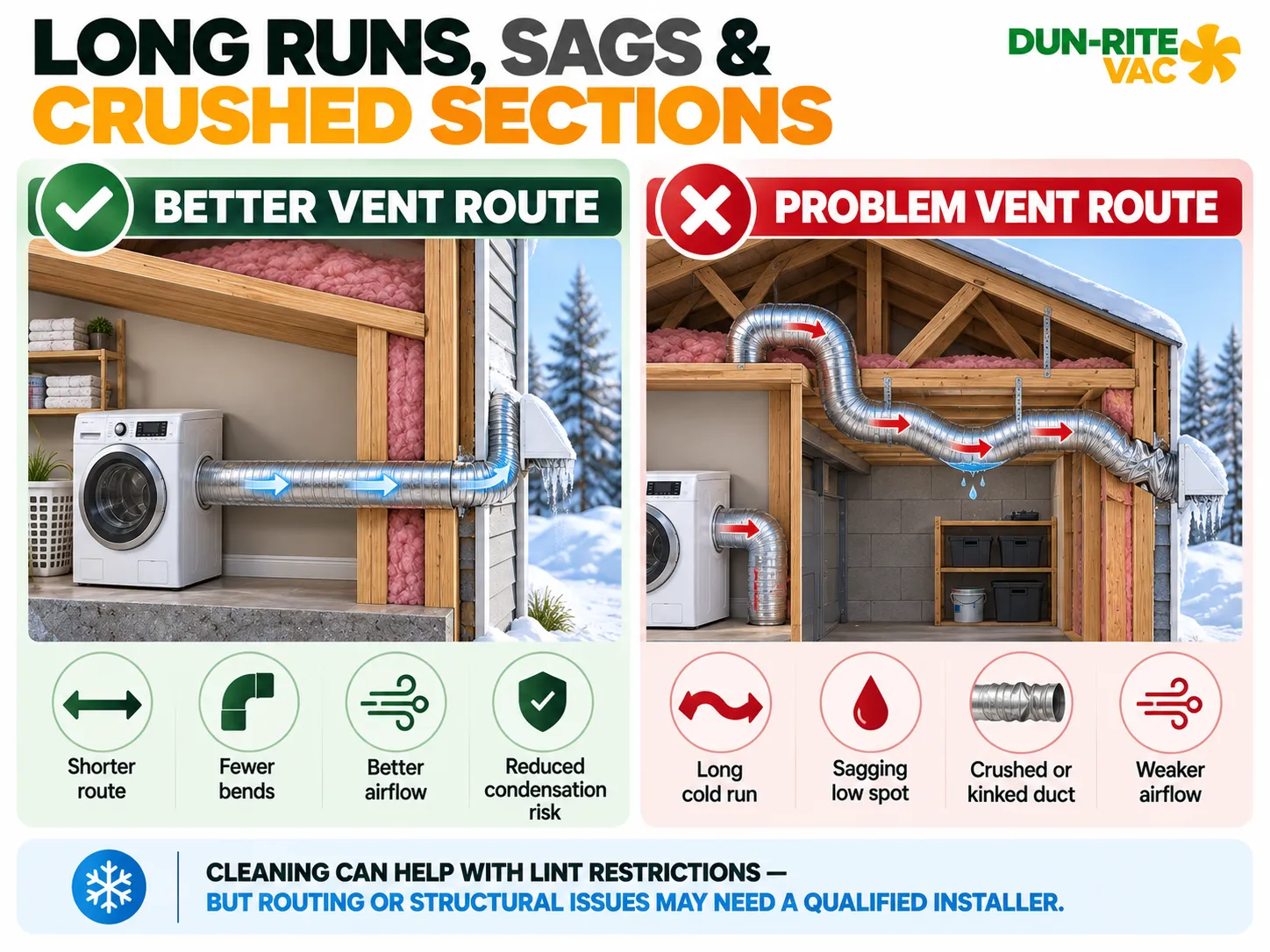
Duct length and location both matter. A short, straight run gives the exhaust less resistance than a long route with several bends, and a vent that crosses an unheated crawl space, garage ceiling or attic is also exposed to much colder surroundings. The Building America Solution Center recommends short, straight dryer exhaust runs and insulation where ducts pass through unconditioned spaces, especially in cold climates.
A common situation our technicians run into during dryer vent cleanings is moisture or lint trouble showing up around colder or more restricted portions of the vent, especially in older bungalows where a laundry area was moved or a vent was extended, and on acreage properties with additions or detached laundry spaces. Those conditions become more noticeable when winter temperatures stay low.
Insulating exposed pipe or shortening or rerouting an inefficient vent may help, but structural changes are a job for a qualified installer. Vent limits also vary by appliance: Whirlpool’s dryer venting guidance advises keeping venting as short and straight as possible and following the dryer’s specified vent-length and elbow limits.
Crushed Ducts and Sags That Hold Water
A vent doesn’t need to be blocked solid to develop a drainage or airflow problem. A low spot can allow condensation to collect instead of moving toward the exterior. The Building America Solution Center specifically recommends avoiding sags and using a slight downward slope where possible so condensation can drain.
Crushed and kinked sections create a different problem by restricting airflow. Whirlpool notes that a dryer can be pushed back into its venting and crush the duct behind the appliance, reducing air movement and contributing to longer drying times.
If you’ve moved your dryer recently, or the vent behind it looks squashed or sharply bent, that is a sensible place to check first.
Lint, Flaps and Screens: Where Moisture Gets Stuck
Lint caught in a cold, condensing section of pipe can hold moisture and become harder for air to move past. It tends to collect on rough spots like joints, screw ends and the inside of the hood, and the more it builds, the more that spot restricts airflow.
The exterior end deserves its own look. The termination should allow exhaust to leave freely through a working damper or flap. The Building America Solution Center’s dryer-vent guidance says the exterior termination should have a backdraft damper and should not be covered with a screen, which can collect lint and restrict the outlet. Lint restriction is also a fire-safety issue: the U.S. Consumer Product Safety Commission warns that lint buildup in the dryer or exhaust duct can block airflow, create excessive heat and contribute to dryer fires. We cover that risk in more detail on our dryer vent cleaning page.
If your dryer is taking longer every week and the hood keeps icing over, the vent has probably been telling you something for a while. Our NADCA-certified team can take a look during a cleaning visit and tell you plainly what we find. Reach out for a free quote whenever you’re ready.
Deciding What Actually Needs Doing
Not every frosty hood needs a service call. Here’s a reasonable way to sort it, including who fixes what:
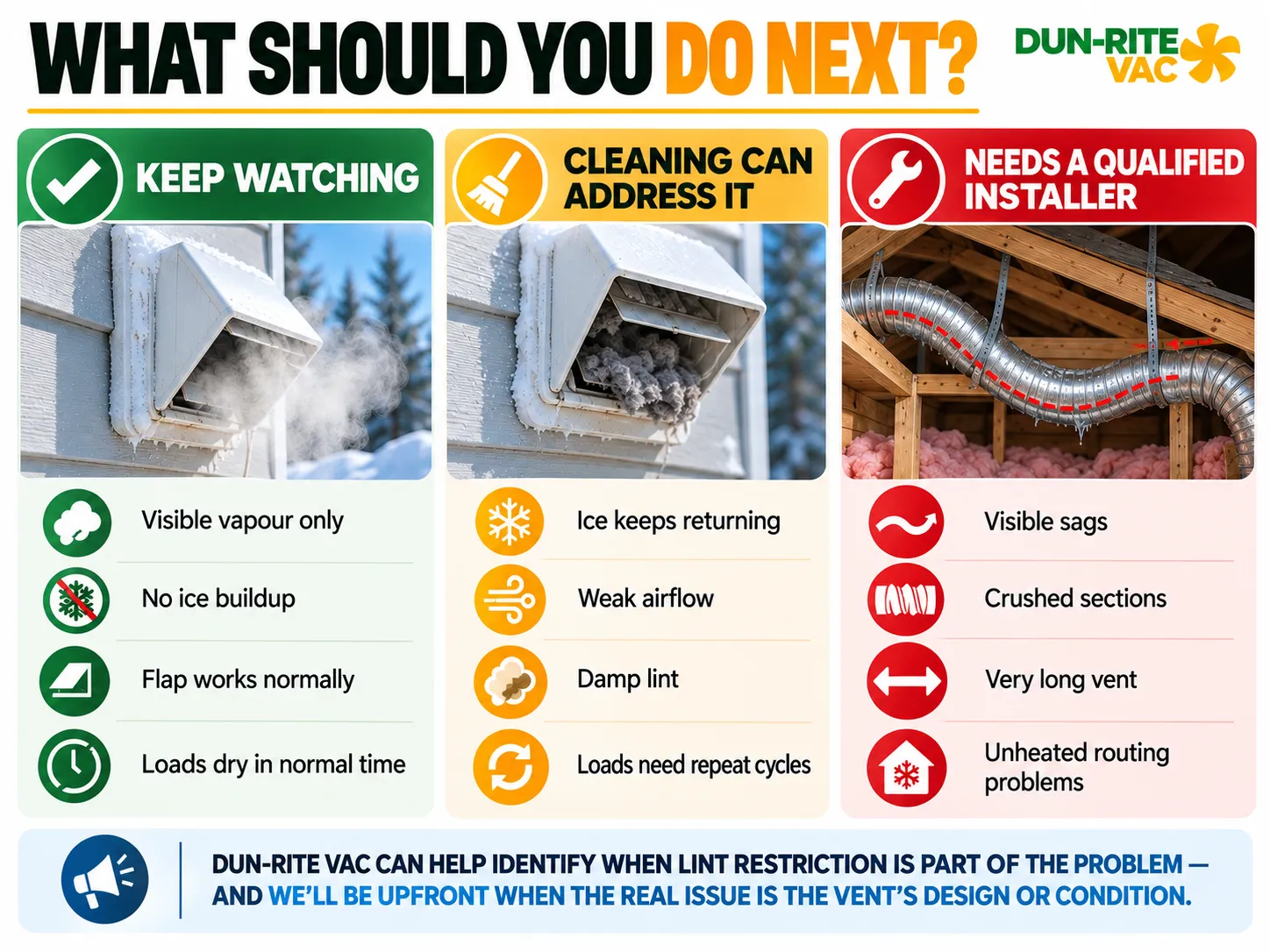
- Keep watching: You see visible vapour at the hood in the cold, but no ice buildup, the flap opens and closes, and loads dry in normal time. Clear the lint trap every load and check the hood after the next cold snap.
- Cleaning can address it: Ice keeps returning after you clear it, lint is damp, airflow at the hood is weak, or loads need repeat cycles. A professional dryer vent cleaning removes lint restrictions and shows whether the layout is part of the problem.
- Needs a qualified installer: You can see sags or crushed sections, or the vent is very long or passes through unheated space. Cleaning will still help with lint, but the real fix may be rerouting, insulating or replacing the duct.
We’re upfront about that last category. Our job is cleaning, and when the cause is how the vent was built, we’ll say so rather than let you pay for repeat visits that can’t solve it.
That candour comes from experience. Dun-Rite has been a family-run business since 1998, with 50,000+ completed jobs, NADCA certification and ASCS-certified technicians.
Frequently Asked Questions About Dryer Vent Freezing in Winter
Is it normal to see steam coming out of my dryer vent in winter?
Yes. Warm, moist air meeting freezing air makes visible vapour, and that’s not a problem by itself. What isn’t normal is ice building up on or around the hood, a flap that stays frozen shut, or exhaust that barely moves.
Can I just chip the ice off the vent hood and keep using the dryer?
It’s a short-term fix at best. If the hood is frozen shut, hot moist air has nowhere to go, so stop the dryer until the opening is clear. The ice will likely come back unless the lint, low spot or cold stretch behind it is dealt with.
What should I do if I have a gas dryer and the vent is frozen or blocked?
A blocked vent on a gas dryer deserves extra caution because the appliance burns fuel. Don’t keep operating the dryer with a blocked exhaust, and make sure your home’s carbon monoxide alarms are working. SaskEnergy’s carbon monoxide safety guidance advises Saskatchewan homeowners to keep exterior intake and exhaust vents clear of ice and snow, maintain fuel-burning appliances including dryers, and have gas equipment and venting systems handled by qualified gas contractors. If you suspect an appliance or combustion problem, contact a qualified gas technician. Dun-Rite’s role here is dryer vent cleaning, not diagnosing gas equipment.
Will a dryer vent cleaning stop the freezing for good?
It can help when lint and moisture-holding buildup are contributing. If the freezing comes from a long, poorly insulated or sagging run, cleaning may not be enough on its own, and we’ll tell you what we see.
Want a second set of eyes on your vent before the next deep freeze?
Every Dun-Rite job is backed by our 100% Satisfaction Guarantee, and quotes are free. Tell us what you’re seeing and we’ll take it from there.