
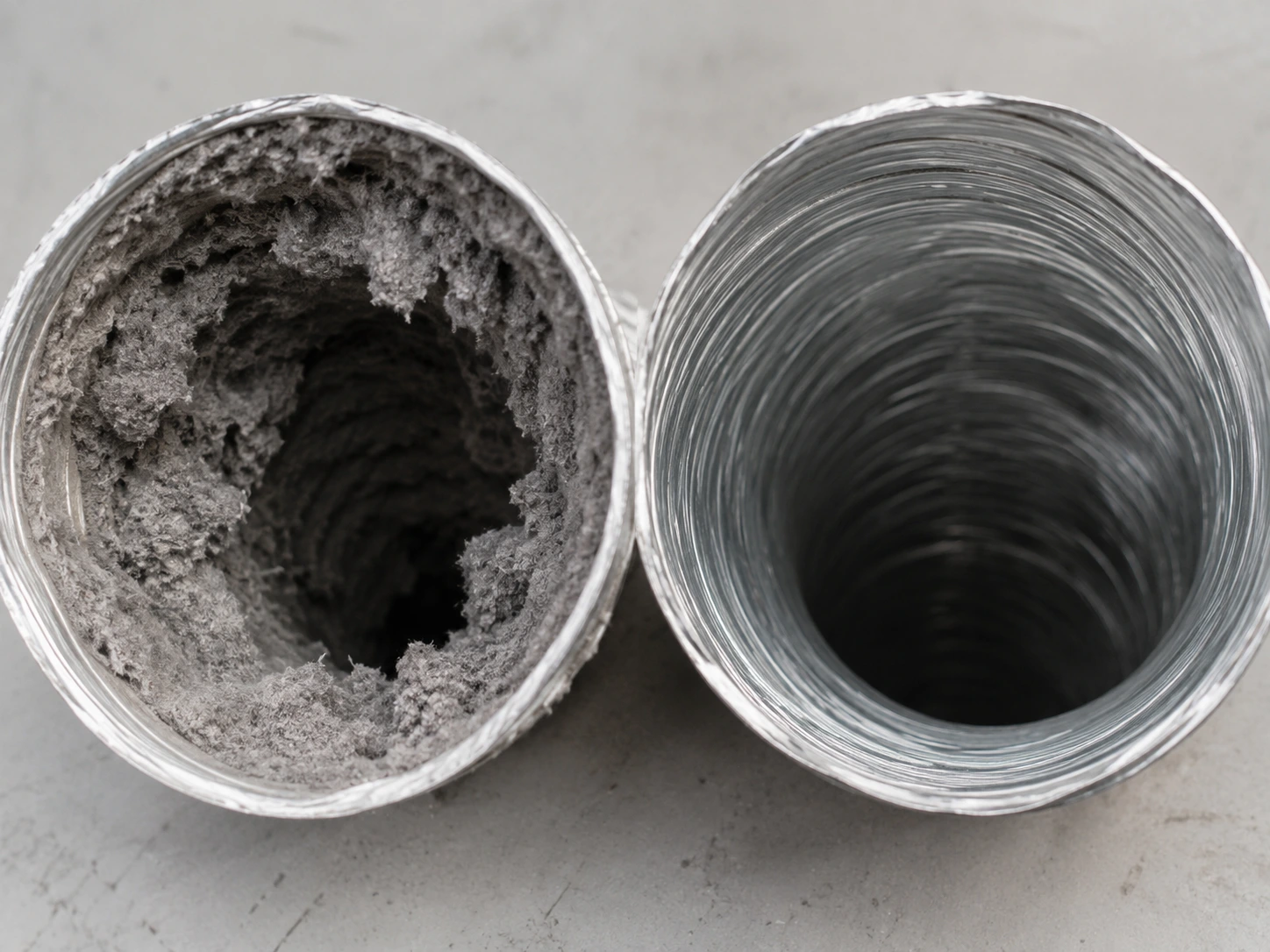
It’s a fair question. If you’ve searched “does duct cleaning actually work?” or wondered whether whole house duct cleaning is worth it, you’ve probably found two extremes online. Some companies promise dramatic health improvements from every cleaning, while others claim the service never makes a difference.
The reality is more nuanced. Whether duct cleaning is worthwhile depends on the condition of your HVAC system, whether substantial contamination is actually present, and how the work is performed. Professional cleaning can be appropriate in certain situations, but it isn’t a cure-all for indoor air quality problems and isn’t something every home needs on a fixed schedule.
Quick Answer: Whole-house duct cleaning can be worthwhile when the HVAC system contains excessive dust or debris, particles are being released from supply registers, pests have entered the system, or another confirmed contamination problem needs to be addressed. The U.S. Environmental Protection Agency (EPA) recommends considering duct cleaning based on the condition of the system rather than treating it as routine maintenance.
Why So Many People Question Duct Cleaning
Much of the skepticism comes from exaggerated claims and poor-quality work. If a contractor only vacuums around visible registers or rushes through the job, homeowners understandably question whether anything meaningful was accomplished.
Professional HVAC cleaning uses a more complete source-removal process. NADCA’s recommended cleaning methods combine agitation with vacuum collection while the HVAC system is maintained under continuous negative pressure. The goal is to loosen accumulated material and collect it instead of allowing it to spread through the occupied space.
A clean-looking register doesn’t necessarily tell you what condition the rest of the HVAC system is in. At the same time, ordinary dust around a register does not prove that the deeper ductwork needs professional cleaning. When there is a question about the condition of the system, inspection is more useful than judging from the vent opening alone.

When Duct Cleaning Can Be Worthwhile
Rather than asking whether every home should have its ducts cleaned, look for conditions that provide a specific reason to inspect or clean the system.
- Excessive dust or debris is present. EPA recommends considering cleaning when ducts are clogged with substantial deposits or particles are actually being released into the home from supply registers.
- Pests have entered the duct system. Rodent or insect infestation is another condition EPA identifies as a reason to consider cleaning after the underlying pest problem is addressed.
- There is substantial material suspected to be mold. The moisture source needs to be corrected, and material that appears to be mold may need proper identification before deciding how to address it.
- Renovation or construction debris entered the HVAC system. Significant drywall dust, sawdust, insulation material, or other debris can justify inspecting the system after construction work.
- The maintenance history is unknown. Moving into an older or previously owned home can be a reasonable reason to inspect accessible HVAC components, but unknown history alone does not automatically mean the ducts need cleaning.
Pets, the age of the home, and the number of years since the previous cleaning can provide useful context, but none of those factors by themselves proves that professional duct cleaning is necessary.

| Situation | What to Consider |
|---|---|
| Excessive dust or debris inside the duct system | Professional inspection and cleaning may be appropriate. |
| Particles visibly being released from supply registers | Investigate the HVAC system and determine whether contamination is the cause. |
| Pest infestation inside the system | Address the infestation and evaluate affected ductwork and HVAC components. |
| Significant renovation or construction debris | Inspect the system and clean it if substantial material entered the ductwork. |
| Light household dust with no other concerns | Professional cleaning may not be necessary. |
Not sure whether your system actually needs cleaning?
Dun-Rite Vac is listed with NADCA and has ASCS-certified personnel. Request a free quote if you’d like to discuss the condition of your furnace and duct system.
What Duct Cleaning Cannot Fix—and That’s Important to Know
Professional duct cleaning has limits. It won’t eliminate every allergy trigger, correct poor humidity control, repair leaking ducts, solve moisture problems elsewhere in the home, or replace regular furnace and HVAC maintenance.
Indoor air quality is influenced by many sources, including outdoor pollutants, cooking, cleaning, smoking, pets, moisture, ventilation, filtration, furnishings, and everyday household activities. The EPA notes that duct cleaning has not been shown to prevent health problems and that much of the dust found inside ducts adheres to duct surfaces rather than continuously entering living spaces.
If someone promises that duct cleaning alone will solve respiratory symptoms, allergies, or every indoor-air problem, that claim goes beyond the available evidence. Cleaning should be recommended because the condition of the HVAC system warrants it—not because of guaranteed health outcomes.
If you’re specifically researching allergy concerns, we’ve covered that topic separately in our allergy-focused guide.

What Saskatchewan Homeowners Should Consider
Saskatchewan homes rely heavily on heating during the colder months, so filters, furnaces, blowers, ductwork, and other HVAC components remain important parts of home maintenance.
A long heating season does not, however, create a fixed duct-cleaning requirement. One system may remain relatively clean with appropriate filtration and maintenance, while another may need attention after renovations, pest activity, excessive debris, or another contamination event.
The EPA recommends cleaning ducts as needed rather than according to a routine schedule. If saving energy is also part of your decision, it’s important to distinguish cleaning ducts from cleaning other HVAC components. EPA notes that some research suggests cleaning dirty coils, fans, and heat exchangers may improve system efficiency in some circumstances, but there is little evidence that cleaning only the ducts improves efficiency.
For Saskatchewan homeowners, the practical approach is to maintain filters and equipment appropriately, inspect the system when there is a reason for concern, and base professional duct cleaning on what is actually found.

Why the Cleaning Process Matters
If you’ve decided that duct cleaning is appropriate, the process used by the contractor matters.
NADCA describes professional source removal as a combination of mechanical agitation and vacuum collection. During cleaning, the HVAC system is kept under continuous negative pressure so loosened material can be collected and removed rather than released into the occupied space. Read NADCA’s proper cleaning methods.
Dun-Rite Vac has served customers since 1998, is listed with NADCA, and has ASCS-certified personnel.
If you’re comparing contractors, our guide on choosing an air duct cleaning company explains questions worth asking before booking. You can also learn more about our professional furnace and air duct cleaning service and what is included in the service.
Frequently Asked Questions
Do air ducts really need cleaning if my home seems clean?
Not necessarily. A clean home doesn’t tell you everything about the HVAC system, but ordinary household dust alone also doesn’t establish a need for professional duct cleaning. Look for actual conditions such as excessive debris, particles being released from registers, pest activity, or contamination following renovation work.
Should you have the air ducts in your home cleaned before selling?
There is no general requirement to clean air ducts before selling a home. If inspection shows substantial contamination or another condition that warrants cleaning, addressing it may make sense before listing. Otherwise, routine duct cleaning solely because the property is being sold may not be necessary.
Does duct cleaning actually work for improving airflow?
If a significant physical obstruction or excessive debris is restricting a portion of the air path, removing that material may help restore normal airflow through the affected area. However, airflow problems can also result from filters, dampers, equipment condition, duct sizing, leaks, system balancing, or other mechanical issues. Cleaning is not a universal solution for poor airflow.
Does duct cleaning make an HVAC system more efficient?
Cleaning dirty HVAC components such as coils, fans, and heat exchangers may improve efficiency in some circumstances. EPA says there is little evidence that cleaning only the duct system improves HVAC efficiency, so energy savings should not be promised simply because the ducts are cleaned.
How do I know whether I need cleaning now?
If you’re unsure, read our guide explaining when duct cleaning may be appropriate. It covers the conditions worth looking for and when professional cleaning may not be necessary.
You May Also Find These Helpful
- Is Air Duct Cleaning Necessary?
- Is Duct Cleaning a Scam?
- Duct Cleaning vs. Furnace Cleaning: What’s the Difference?
Have Questions About Your Home’s Duct System?
Every HVAC system is different. If you’d like help deciding whether professional cleaning makes sense for your situation, contact Dun-Rite Vac. We’ve served customers since 1998, are listed with NADCA, and have ASCS-certified personnel.